 EVE卫浴
EVE卫浴
Why Are Your Faucets Dripping Hot or Cold Water — and How Do You Tell Which Side Is Failing?
浏览次数:196 分类:Repair
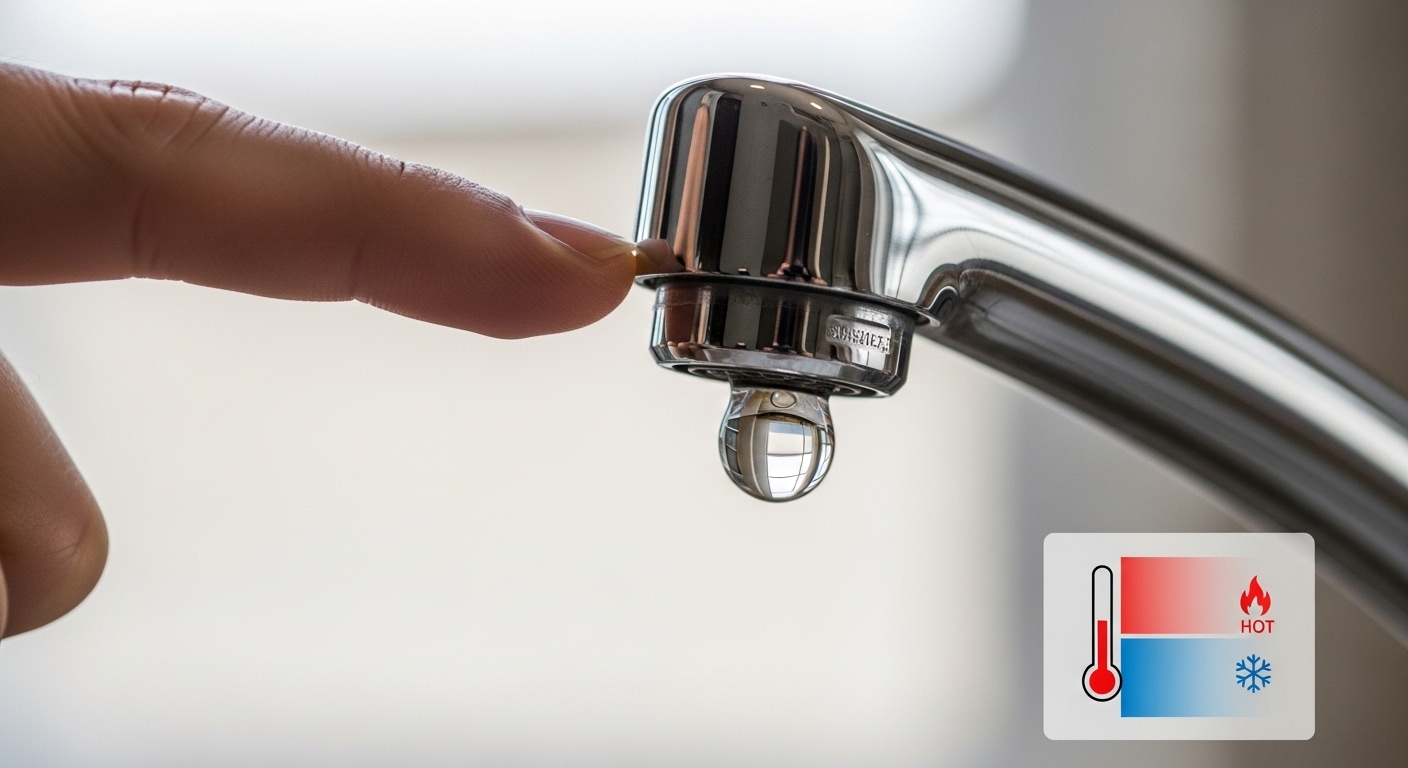
If you’ve got dripping faucets — hot or cold water beading off the spout minutes after you shut it off — the single most useful clue is right there under your fingertip: is the drip warm, cold, or somewhere in between? Most people ignore it and just tighten the handle harder, which almost always makes things worse. A dripping faucet is a worn internal seal, not a loose handle, and the temperature of the water tells you which seal is worn. Below, we’ll walk through how to read that clue, what part it points to, and how to fix each case yourself — usually in under 30 minutes with a $6 to $25 part.
How do you tell if it’s the hot or the cold side dripping?
Hold a dry fingertip under the spout and catch a fresh drip about 60 seconds after the water’s been off. Warm means the hot supply is leaking past its seal; cold means the cold supply is; lukewarm means both are seeping — which almost always means one mixing cartridge is shot. That one test narrows your repair from “the whole faucet” down to a single part.
Here’s why it works. In any faucet, hot and cold water arrive on two separate supply lines and meet at a valve. When you shut the handle, that valve is supposed to seal both lines completely. A drip means one seal isn’t fully closing. Since the water hasn’t mixed yet at the point of the leak, it keeps the temperature of whichever line is failing. So a warm drip is hot water squeezing past the hot seal; a cold drip is the cold seal. It’s genuinely that simple, and it saves you from replacing parts that are perfectly fine.
A quick caveat: give it a minute. The very first drop right after shutoff is often just water clinging in the spout and can be any temperature. Wait until the spout has drained, then judge the steady drip that keeps forming.
What if the drip is lukewarm or changes temperature?
A lukewarm or shifting drip almost always means a single mixing cartridge (ceramic-disc, ball, or sleeve cartridge) is worn on both faces, so hot and cold both seep and blend before they reach the spout. In that case you don’t diagnose “a side” — you replace the whole cartridge, which handles both temperatures at once. This is the most common scenario on modern single-handle kitchen and bathroom faucets, because one cartridge does all the work.
Why is my single-handle faucet dripping even though it’s a newer faucet?
A single-handle faucet drips because its one cartridge controls both hot and cold, so any wear on that cartridge causes a drip regardless of how new the faucet looks. “Newer” doesn’t protect you — a ceramic disc can develop a hairline chip or trap a grain of grit in under a year, especially on hard water. The good news is that a single-handle faucet gives you a shortcut: because both supplies pass through one cartridge, you rarely need to figure out hot versus cold at all. You just pull that cartridge and swap it.
Single-handle designs come in a few flavors, and the drip cause differs slightly for each:
- Ceramic-disc cartridge — two polished ceramic plates slide across each other. A trapped mineral flake or a tiny chip breaks the seal. Very common on kitchen faucets.
- Ball valve — a slotted metal or plastic ball rotates over rubber seats and springs. The springs weaken and the seats wear; classic on older Delta-style kitchen faucets.
- Cartridge/sleeve (Moen-style) — a replaceable cylinder with O-rings. The O-rings harden and the internal seals wear.
If you own a Delta specifically, the ball-and-seat or cartridge repair is well-documented, and we walk through the exact handle teardown in our guide on how to fix a leaking Delta faucet handle without calling a plumber. The tools and sequence there apply to most single-handle drips too.
Why does only the hot water drip and not the cold?
Only the hot side drips when the hot-side seal — a rubber seat washer on a compression faucet, or the hot half of a two-handle cartridge — has worn faster than the cold side. Hot water is the usual culprit here: heat accelerates rubber breakdown, so on a classic two-handle faucet the hot washer almost always fails first. If your warm drip comes from a two-handle sink, start by rebuilding the hot handle only.
On a compression faucet (the kind where the handle keeps turning and gets firmer as you close it), the fix is a rubber seat washer at the bottom of the stem, held by a single brass screw. Heat-degraded washers go flat, brittle, or grooved, and they can’t seal anymore. Replacing that one 20-cent washer stops the drip. While you’re in there, check the valve seat the washer presses against — if it’s pitted, a seat-dressing tool or a replaceable seat will finish the job.
Does that mean I should replace both washers anyway?
Yes — if the hot washer is worn, replace the cold one at the same time. You’ve already shut off the water and pulled the handles, and the cold washer is running on the same clock; it’s usually only months behind. A rebuild kit for one faucet costs a few dollars and includes both washers plus fresh O-rings. Doing both now saves you a second teardown next month.
Why is my faucet dripping cold water only?
A cold-only drip means the cold-side seal is the failure point, which most often happens after debris from the municipal line or a water-heater flush lodges on the cold seat. Cold rubber lasts longer than hot rubber, so when the cold side drips first, grit or a manufacturing flaw is usually the reason rather than age. The repair mirrors the hot side: rebuild or replace the cold stem washer on a compression faucet, or swap the cold-side cartridge on a two-handle cartridge faucet.
One thing worth checking before you tear into it: make sure the drip is genuinely cold supply water and not condensation. In a humid bathroom, a cold pipe can “sweat” and drip water that looks like a faucet leak but comes from the pipe surface. Dry the spout completely, watch where the next drop actually forms, and confirm it’s the spout tip — not the underside of the faucet body or the supply line. If water is pooling at the bottom of the faucet instead of dripping from the spout, that’s a different problem entirely, and our guide on why a kitchen faucet leaks at the base and how to fix it yourself covers that case.
Hot-side vs cold-side vs mixed drip: which part do you actually replace?
Use the table below to match your drip temperature and faucet type to the exact part. This is the fastest way to shop for the right repair kit before you even pick up a wrench.
| Drip temperature | Faucet type | Most likely cause | Part to replace | Typical cost |
|---|---|---|---|---|
| Warm / hot | Two-handle compression | Heat-worn hot seat washer | Rubber seat washer + O-ring | $3–$8 kit |
| Cold | Two-handle compression | Debris or flaw on cold seat | Cold seat washer (and seat if pitted) | $3–$10 |
| Warm or cold | Two-handle cartridge | Worn cartridge on that side | Matching hot or cold cartridge | $12–$25 each |
| Lukewarm / mixed | Single-handle ceramic-disc | Chipped or grit-fouled disc | Full ceramic-disc cartridge | $15–$40 |
| Lukewarm / mixed | Single-handle ball valve | Worn springs and seats | Ball + springs + seats kit | $10–$20 |
| Any, from spout base | Any | Failed body O-rings, not a valve | O-ring / body seal kit | $5–$12 |
Notice the last row: if the water shows up at the base of the spout rather than dripping from the tip, temperature won’t help you — that’s a body O-ring, not a valve seal, and it’s a separate fix.
How do you actually fix a dripping hot or cold faucet, step by step?
You fix it by shutting off the supply, opening the correct handle, replacing the worn seal, and reassembling — 20 to 40 minutes for most people, no plumber required. Here’s the reliable sequence that works whether your drip is hot, cold, or mixed:
- Shut off the water. Turn the two supply valves under the sink clockwise until firm. If there are no shutoffs, close the main. Then open the faucet to relieve pressure and confirm the water’s off.
- Plug the drain. Drop in the stopper or a rag so no screws vanish down the pipe.
- Attack the failing side only. Warm drip → hot handle. Cold drip → cold handle. Mixed drip on a single-handle → the one cartridge.
- Pop the cap and pull the handle. Pry off the decorative index cap, remove the handle screw, and lift the handle. Note the orientation with a phone photo before anything comes apart.
- Remove the stem or cartridge. Unthread the packing nut or pull the retaining clip, then withdraw the stem or cartridge straight up. Cartridges sometimes need a puller tool for a few dollars.
- Replace the worn seal. Swap the seat washer, O-rings, or the whole cartridge. Take the old part to the store to match it exactly — brand and model matter.
- Grease and reassemble. Coat new O-rings with plumber’s silicone grease (never petroleum jelly, which rots rubber), then reverse your steps.
- Turn the water back on slowly and test. Run hot and cold, shut off, and re-check the drip.
If the cartridge or stem is seized with mineral scale and won’t budge, don’t force it — you can crack the faucet body. Our walkthrough on taking apart a faucet part that won’t budge covers the penetrating-oil and gentle-heat tricks that free stuck internals without damage.
What about a leak coming out around the handle itself?
If water seeps from around the handle when it’s running — not from the spout — the packing or the stem O-ring is worn, not the valve seat. This is common on older two-handle and outdoor-style faucets. Tightening the packing nut a quarter turn sometimes stops it; if not, you re-pack the stem. We cover the exact material and technique in our guide on what outdoor faucet packing is and how to stop a leak around the handle, and the same principle applies to indoor stems.
When is a dripping faucet worth fixing vs. replacing?
Fix it if the faucet body is sound and parts are available — a $10 cartridge beats a $150 faucet every time. Replace it if the body is corroded, the finish is flaking, parts are discontinued, or you’ve already rebuilt it twice and it keeps dripping. A steady drip isn’t just annoying: one drip per second wastes roughly 3,000 gallons a year, so even a “small” leak is quietly costing you on the water bill and, if it’s the hot side, on the water-heating bill too.
If the faucet is a decade-plus old builder-grade unit and you’re already inside it, a replacement with a modern ceramic-disc cartridge will drip far less often over its life. When you do shop, match the deck holes and valve type to your sink so the swap is clean.
FAQ
Is it normal for a faucet to drip once or twice after I shut it off?
Yes. A drop or two right after shutoff is just water draining out of the spout and is completely normal, especially on a tall gooseneck. It’s only a problem when drips keep forming a minute or more after the handle is closed — that’s a worn seal, not residual water.
Can hard water make my faucet drip hot or cold?
Absolutely. Mineral scale from hard water builds up on ceramic discs and valve seats, and even a single grit flake wedged on a seat will hold the valve open enough to drip. Hard-water homes see cartridge failures much sooner, and the same buildup clogs aerators and sprayers. Regular descaling — like the vinegar method in our cleaning guides — extends cartridge life noticeably.
Why does my faucet drip more from the hot side than the cold?
Heat degrades rubber and plastic faster, so hot-side washers, O-rings, and cartridge seals almost always wear out before their cold-side twins. If you’re rebuilding a two-handle faucet and only the hot side drips, it’s simply aged faster — replace both sides while you’re in there so you don’t repeat the job.
Do I need to shut off the whole house to fix a dripping faucet?
No. Nearly every sink has two shutoff valves directly beneath it — one hot, one cold — so you only close those. Shut the whole house main only if the under-sink valves are missing, stuck, or leaking themselves. Always open the faucet afterward to bleed off pressure before you take anything apart.
How long should a faucet cartridge last before it starts dripping?
A quality ceramic-disc cartridge typically lasts 10 to 15 years in average water, but hard water, grit, and heavy use can cut that to a few years. Rubber seat washers on compression faucets wear faster — often 2 to 5 years. If a brand-new faucet drips within months, suspect debris on the seat or a defective cartridge covered under warranty rather than normal wear.
Author note: This guide was written by the evefaucet product and support team, drawing on thousands of customer repair questions about dripping hot- and cold-side faucets. As a dedicated faucet and bathroom-fixtures manufacturer, evefaucet designs, pressure-tests, and cycle-tests its cartridges to industry durability standards (typically 500,000+ open-close cycles) and backs its finishes and valves with a limited warranty — so if a cartridge fails within the coverage period, replacement parts are provided rather than sold. When you match a repair part, always confirm it meets the same testing and fit spec as the original; a $2 washer that doesn’t seat correctly just brings the drip right back.