 EVE卫浴
EVE卫浴
Faucet Aerator Disassembly: How Do You Take Apart a Faucet Aerator That Won’t Budge?
浏览次数:583 分类:公司产品
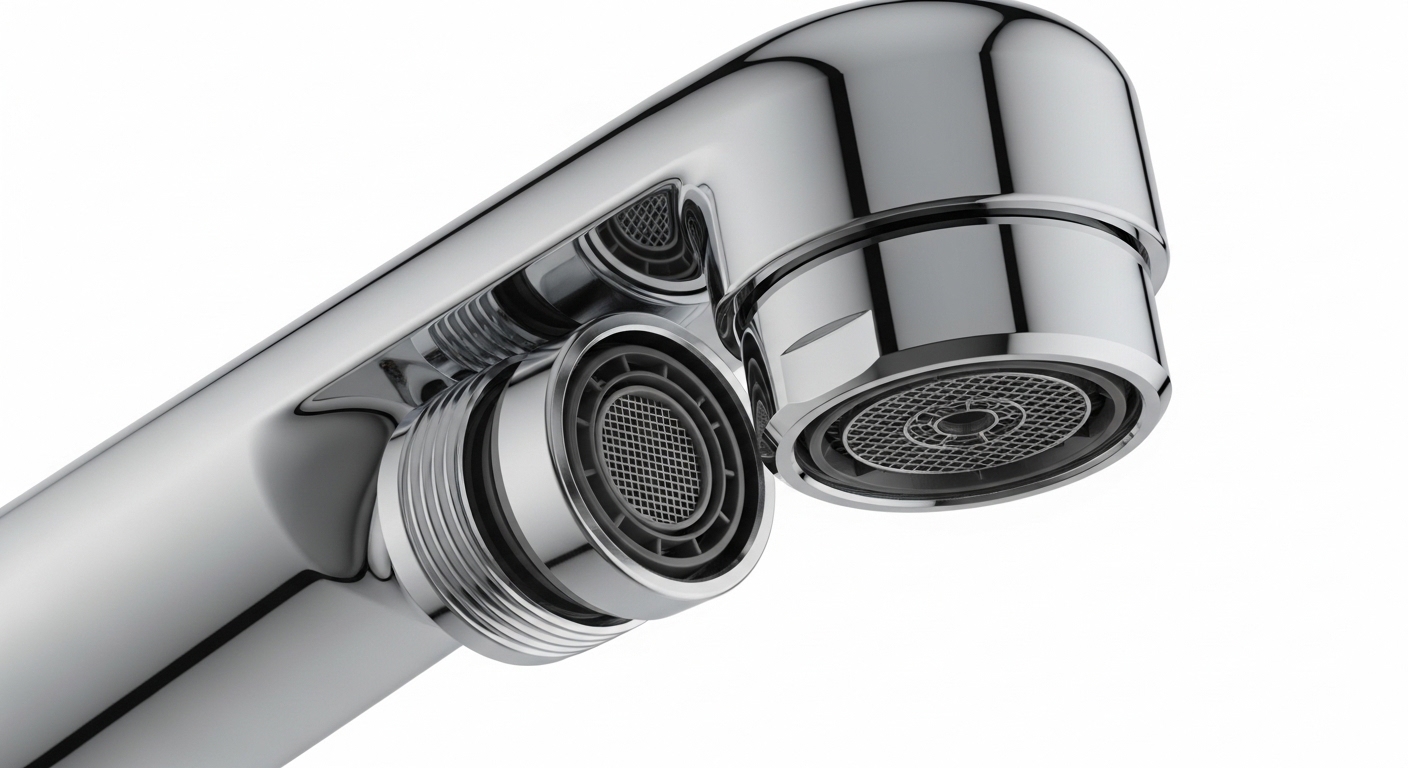
If you’ve landed here, your water is probably spraying sideways, dribbling to a trickle, or splashing all over the counter — and a proper faucet aerator disassembly is almost always the fix. The aerator is that little screw-on tip at the end of your faucet spout, and inside it is a surprisingly precise stack of screens, a flow restrictor, and a rubber washer. When those clog with mineral scale or grit, taking the aerator apart to clean it is a 10-minute job that restores full, straight flow — no plumber, no new faucet. This guide walks you through exactly how to disassemble one (even a stuck or hidden aerator), what each internal part does, and how to put it back together correctly.
At EveFaucet, aerator cleaning and disassembly is one of the most common questions we get from customers, because it’s the single easiest piece of faucet maintenance that dramatically improves performance. Let’s get into it.
What exactly is a faucet aerator, and why would you take it apart?
A faucet aerator is the small, removable insert threaded into the end of your spout that mixes air into the water stream. You take it apart to clean out mineral buildup, sediment, or debris that’s choking the flow — that’s the reason 9 times out of 10.
Here’s what it actually does: as water passes through the aerator, tiny screens break the single stream into many smaller streams and pull in air. That’s why the water from a healthy faucet looks soft, white, and bubbly instead of a hard clear jet. It also cuts your water use — a good aerator delivers a full-feeling stream at 1.0 to 2.2 gallons per minute (GPM) instead of the 3–5 GPM an open pipe would gush.
The problem: everything the aerator does depends on water flowing cleanly through those tiny holes. When you have hard water, calcium and magnesium scale slowly plaster the screens shut. Add a bit of pipe sediment or a rusty flake from your water heater, and suddenly your once-strong faucet is spitting, spraying at weird angles, or barely producing a stream. Disassembly lets you clear all of that out and get back to full pressure.
If your aerator clogs constantly rather than just once, that’s a different underlying issue worth reading up on — we cover the root causes in our dedicated guide on why a faucet aerator keeps getting clogged. For a general exterior cleaning of the spout tip without a full teardown, our walkthrough on how to clean a faucet head from hard water buildup without wrecking the finish pairs perfectly with this one.
How do you remove a faucet aerator by hand (and which way does it turn)?
Grip the aerator and turn it clockwise when viewed from below (which is the “loosen” direction from your standing position looking up at the spout tip). Most aerators come off with just firm hand pressure — no tools needed if it isn’t heavily scaled.
The direction trips people up, so here’s the simple rule: stand at the sink and look up at the underside of the spout. From that angle you unscrew it toward you the same way you’d loosen any bolt — but because you’re looking up at it, that reads as clockwise. If hand pressure isn’t enough, the tricks below almost always work before you reach for pliers:
- Dry your hands and the aerator, then use a rubber glove or a rubber jar-opener pad for grip. This alone frees most stuck aerators without any tool marks.
- Try warm-then-cold. Run hot water for 30 seconds (metal expands), turn it off, then try again. Sometimes a quick temperature swing breaks the scale’s grip.
- Soak the connection first. Wrap a paper towel soaked in white vinegar around the aerator, seal it with a small plastic bag and a rubber band, and wait 30–60 minutes to dissolve the scale locking the threads.
Before you unscrew anything, put a rag or a small cup in the drain. Aerators contain three or four tiny parts, and one dropped screen down an open drain will ruin your afternoon.
What tools do you need for a stuck aerator disassembly?
For a stuck aerator you need tongue-and-groove pliers (or an adjustable wrench) plus a strip of cloth or electrical tape to protect the finish — and for hidden “cache” aerators, a special aerator key. That’s the entire toolkit.
Never clamp bare metal pliers directly onto a visible aerator. The knurled or smooth chrome will gouge instantly, and once it’s chewed up it won’t seal or look right again. Here’s what each tool handles:
| Situation | Best Tool | How to Protect the Finish |
|---|---|---|
| Standard aerator, mild scale | Bare hands + rubber pad | No metal contact at all |
| Standard aerator, stuck hard | Tongue-and-groove pliers | Wrap 2–3 layers of electrical tape or a cloth around the aerator first |
| Recessed / hidden (“cache”) aerator | Plastic aerator key (usually shipped with the faucet) | Key is keyed to the notches — no scratching risk |
| Corroded / seized aerator | Pliers + penetrating vinegar soak | Tape wrap + patience; replace if it deforms |
That recessed style deserves a special note. Many modern faucets — including a lot of pull-down kitchen models — hide the aerator up inside the spout for a cleaner look. This is called a cache or recessed aerator, and you cannot grip it from outside. It requires the small plastic key that came in the box with your faucet. If you’ve lost it, the keys are cheap and sold by size (they’re marked M18.5, M21.5, M24, etc.); measure your spout opening or check your faucet’s manual for the size. EveFaucet includes the correct key with every pull-down and pull-out model for exactly this reason.
How do you take apart the inside of the aerator without losing the order?
Lay the parts out left-to-right in the exact order they come off, all facing the same way — that single habit is what makes reassembly foolproof. The internal stack is small but sequenced, and if a screen goes back flipped or out of order, the aerator will underperform or leak.
Once the aerator housing is off the spout, tip the internal components out onto a clean, light-colored towel (so you can see tiny washers). A typical aerator stack, from the spout side inward, looks like this:
- Outer housing / shell — the threaded metal or plastic body you unscrewed.
- Rubber washer (O-ring) — seals against the spout so water doesn’t leak from the threads. Note which way the flat side faces.
- Flow restrictor — a small disc (often colored) that limits GPM. Not every aerator has one.
- Mixing chamber / diffuser — the plastic piece that introduces air.
- Screens / mesh — one or more fine metal screens that break up the stream. This is what clogs most.
Push the stack out gently from the threaded end with your fingertip or a wooden toothpick — never a metal pick, which can tear the mesh. If the parts are cemented together with scale, drop the whole assembly into vinegar first, then separate them once softened. Take a quick phone photo of the layout before you start cleaning; it’s the fastest insurance policy for reassembly.
How do you clean the aerator parts once it’s apart?
Soak all the parts in plain white vinegar for 30 minutes to an hour, then scrub the screens with an old toothbrush and rinse under running water. Vinegar dissolves the calcium scale that no amount of scrubbing alone will remove.
Step by step:
- Soak: Submerge every part in a cup of undiluted white vinegar. For heavy buildup, go the full hour. Warming the vinegar slightly (not boiling) speeds it up.
- Scrub: Work the screens and the mixing chamber with a soft toothbrush. Hold screens up to a light — you should see clean, evenly lit holes, not dark clogged patches.
- Clear stubborn holes: Poke any remaining blocked holes from the back with a toothpick or a fine sewing needle. Be gentle; a torn screen means a spitting faucet.
- Rinse thoroughly: Run each piece under water so no grit or vinegar residue remains — leftover debris just re-clogs it immediately.
One caution on finishes: never soak a solid-brass or specialty-finish aerator housing (matte black, brushed gold, oil-rubbed bronze) in vinegar for more than about 15–20 minutes, and rinse it well. Prolonged acid contact can dull or etch certain PVD and painted finishes. The internal screens and plastic are always vinegar-safe; it’s only the visible finished shell you baby. If the housing itself is heavily corroded or cracked, replacing the whole aerator is cheaper than fighting it.
How do you put the faucet aerator back together correctly?
Reassemble in the exact reverse order you took it apart — screens first, then diffuser, flow restrictor, rubber washer last — drop the stack back into the housing, and hand-tighten the housing onto the spout. If you kept the parts in order on your towel, you just work right-to-left.
A few things that make the difference between a clean fix and a leaky redo:
- Hand-tighten first, always. Thread the aerator on by hand until snug. Cross-threading is the #1 reassembly mistake and it damages the spout threads.
- Only add a light pliers nudge if it drips. Turn on the water and check the threads. If there’s a small leak at the connection, snug it an extra eighth-turn with tape-wrapped pliers — no more.
- The rubber washer must be seated flat. A pinched or misaligned O-ring is the usual cause of a post-cleaning leak. Reseat it if you see any weeping.
- Test the stream. Full water should come out soft, straight, and bubbly. If it sprays sideways, a screen is flipped or torn — take it apart and check.
If, after all this, your flow is still weak, the aerator may not be the culprit. On pull-down and pull-out models the problem is often further up the line — a kinked or clogged hose or a bad diverter. Our guides on why a pull-out kitchen faucet isn’t working and handling a kitchen faucet pull-out hose replacement cover those next steps.
When should you just replace the aerator instead of cleaning it?
Replace the aerator if the housing is cracked, the threads are stripped, the screens are torn, or a full disassembly and cleaning doesn’t restore normal flow. A new aerator costs a few dollars, so there’s no reason to fight a failed one.
Cleaning wins in the vast majority of cases, but here’s how to decide:
| Symptom | Clean It | Replace It |
|---|---|---|
| Weak or sideways stream | ✔ Usually just scale | Only if cleaning fails |
| Cracked or deformed housing | — | ✔ Replace |
| Stripped / cross-threaded connection | — | ✔ Replace |
| Torn mesh screen | — | ✔ Replace (screens rarely sold separately) |
| Want higher or lower flow rate | — | ✔ Swap for a different GPM aerator |
| Finish badly corroded | — | ✔ Replace for looks + seal |
When you buy a replacement, match three things: the thread type (male threads on the outside vs. female threads on the inside of the aerator), the size, and the GPM you want. Bathroom lavatory faucets are typically fine at 1.0–1.5 GPM; kitchen faucets feel best at 1.8–2.2 GPM so you can fill pots quickly. Standards matter here — aerators sold in the U.S. are labeled with their maximum flow rate, and WaterSense-labeled models are independently certified to use 20% less water while still performing well, which is worth looking for.
A quick word on hard water — the reason you’re doing this at all
If you’re disassembling your aerator more than once or twice a year, hard water is the culprit, and the aerator is just the messenger. The same scale clogging your aerator is building up inside your faucet body, showerhead, and appliances. Regular aerator cleaning (every 3–6 months in hard-water areas) keeps flow strong, but if you’re on well water or notoriously hard municipal water, a whole-house or point-of-use filter dramatically cuts how often you’ll be back down here with a cup of vinegar. It’s the same principle behind changing your kitchen faucet filter on schedule — clean water in means less gunk everywhere downstream.
FAQ
Which way do you unscrew a faucet aerator?
Turn it clockwise as you look up at it from below the spout. Standing at the sink looking up, the “loosen” direction reads as clockwise. If it won’t budge by hand, wrap it in tape and use tongue-and-groove pliers, or soak it in vinegar for 30 minutes to break up the scale locking the threads.
Can I take apart a faucet aerator without any tools?
Usually, yes. Most aerators come off with firm hand pressure, especially if you use a rubber glove or jar-opener pad for grip. You’ll only need pliers (always tape-wrapped) if it’s stuck with scale, or a plastic aerator key if it’s a hidden recessed model tucked up inside the spout.
How do I know the order the aerator parts go back in?
Lay the parts out in the exact order they come off, all facing the same direction, and snap a phone photo before cleaning. Reassembly is simply the reverse: screens and diffuser first, then the flow restrictor, then the rubber washer, all back inside the housing. The rubber washer always sits at the top (spout side) to seal the connection.
What can I use if I don’t have a special aerator key for a recessed aerator?
The correct plastic key is safest and costs only a dollar or two by size (M18.5, M21.5, M24, etc.). In a pinch, some people use needle-nose pliers set into the notches very gently, but this risks scratching or cracking the housing. Ordering the right key — or contacting your faucet maker for the one that shipped with your model — is the smart move.
How often should I disassemble and clean my faucet aerator?
Every 3–6 months if you have hard water, or once a year with soft water. If you notice the stream weakening, spraying sideways, or splashing, that’s your cue to clean it regardless of the calendar. Frequent re-clogging (monthly) points to a hard-water problem worth solving upstream with a filter.
Is vinegar safe for cleaning all aerator parts?
Vinegar is completely safe for the internal metal screens, plastic diffuser, and flow restrictor — soak them as long as you need. The only caution is the visible finished housing on specialty finishes (matte black, brushed gold, oil-rubbed bronze), which should only soak 15–20 minutes and be rinsed well to avoid dulling the finish.
About the author: This guide was written by the EveFaucet product and service team, who design, bench-test, and service kitchen and bathroom faucets every day. We disassemble, flow-test, and cycle aerators as part of our standard QC before a faucet ships.
About EveFaucet: EveFaucet manufactures and sells kitchen and bathroom faucets, shower systems, and fixtures direct to homeowners. Every pull-down and pull-out faucet ships with the correct aerator key, and our fixtures are built to standard U.S. thread sizes and flow-rate standards (including WaterSense-eligible models) and backed by our finish and function warranty.