 EVE卫浴
EVE卫浴
Why Do You Hear a Dripping Faucet Sound Effect at Night — and How Do You Make It Stop for Good?
浏览次数:124 分类:Repair
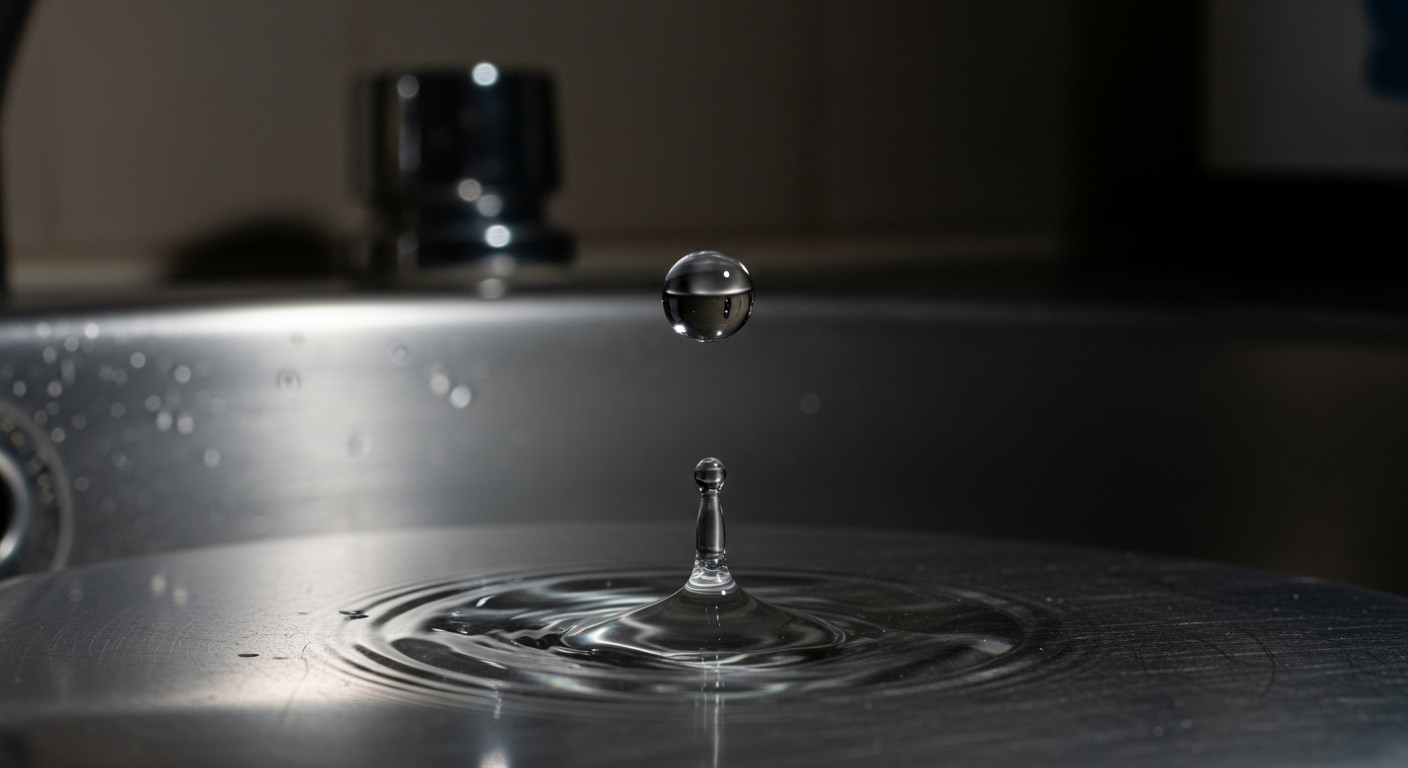
If you searched for a dripping faucet sound effect, you’re probably in one of two camps: you want the audio to help you sleep or mask noise, or — far more likely — you’re lying awake because a real faucet in your house is going drip… drip… drip… and you desperately want it to stop. This article is for the second group, because the maddening part is that the sound is a symptom, and the fix is usually simpler and cheaper than people fear. Below, we’ll explain exactly why that rhythmic drip happens, why it sounds so loud at 2 a.m., and the step-by-step way to shut it up permanently.
At evefaucet, we design and test faucet cartridges and valves, so we deal with the mechanical cause of that sound every single day. Let’s walk through it like a knowledgeable friend who’s fixed a hundred of these.
Why does a dripping faucet sound so loud and annoying at night?
A dripping faucet sounds louder at night because there’s less ambient noise to mask it, and the sound itself is surprisingly sharp physics. When a water droplet hits the surface below, it traps a tiny air bubble that oscillates and radiates a high-frequency “plink.” Your brain is wired to notice irregular, repeating sounds as potential threats, so it refuses to tune it out — which is exactly why it feels impossible to ignore once you’ve noticed it.
Three things make it worse:
- A hard, resonant landing surface. A drip into a stainless steel sink or an empty ceramic tub “rings” far louder than a drip into standing water or onto a soft cloth.
- A steady drip rate. A leak that drips every 1–2 seconds hits that perfect metronome tempo the human brain locks onto.
- Nighttime water pressure. When no one else in the neighborhood is using water, static line pressure often rises slightly overnight, which can turn a barely-there weep into an audible drip.
Here’s the quick, temporary trick before we get to the real fix: drape a small cloth or a paper towel over the drain or under the drip so the water lands silently, or leave a little standing water in the sink so drops fall into liquid instead of onto bare metal. That buys you one quiet night — but it does nothing about the leak, which is still wasting water and slowly worsening.
What actually causes the drip that makes the sound?
The drip is caused by a worn internal seal that can no longer fully block water when the faucet is off — most commonly a failed cartridge, a hardened rubber washer, or a cracked O-ring. Water finds the tiny gap, escapes past the seal, collects at the spout, and falls one drop at a time. The specific culprit depends on what type of faucet you have.
Modern single-handle faucets almost always use a cartridge — a cylindrical valve that mixes and shuts off water. When the seals on that cartridge wear, harden with mineral buildup, or get scratched by grit in the water, the faucet drips. This is by far the most common cause in kitchens and bathroom vanities today. If you want the full breakdown of that part and why it fails, we cover it in depth in What is the cartridge in a faucet handle, and why does it matter when your faucet drips?
Older two-handle “compression” faucets use a rubber washer that gets squeezed every time you turn the tap off. Over years, that rubber flattens, cracks, or tears, and the seal fails. Ceramic-disc faucets, meanwhile, rarely drip — but when they do, it’s usually mineral debris caught between the discs or a cracked disc from a water-hammer shock.
One clue worth listening for: is the water dripping cold, hot, or both? On a single-handle faucet, that tells you which side of the cartridge is failing and can save you diagnostic time. We break down that exact detective trick in Why are your faucets dripping hot or cold water — and how do you tell which side is failing?
Which part is leaking? Here’s how to tell in 5 minutes
To find the leaking part, identify your faucet type first, then match the symptom — the table below covers the four setups in almost every home. You don’t need special tools to diagnose; you just need to know what you’re looking at.
| Faucet type | How you recognize it | Most likely drip cause | Typical fix & part cost |
|---|---|---|---|
| Single-handle cartridge | One lever controls hot, cold & volume | Worn or scaled cartridge | Replace cartridge — $10–$40 |
| Two-handle compression | Separate hot/cold handles you screw tight | Flattened rubber washer / worn seat | Replace washer & seat — $3–$10 |
| Two-handle cartridge/ceramic | Handles turn only a quarter-to-half turn | Cracked ceramic disc or O-ring | Replace cartridge/stem — $12–$35 |
| Ball-type (older kitchen) | Single ball-and-cap under the lever | Worn springs, seats, or ball | Rebuild kit — $15–$25 |
Quick self-test: turn off the faucet firmly (don’t crank it — over-tightening actually destroys washers faster). Wipe the spout completely dry. Wait 60 seconds. If a drop forms and falls, the internal seal is the problem, not condensation or splashback. If the leak is instead coming from around the base of the handle rather than the spout, that’s usually an O-ring, and the diagnosis is different — a common issue on Delta-style single-handle units we walk through in How do you fix a leaking Delta faucet handle without calling a plumber?
How do you actually stop a dripping faucet yourself?
You stop the drip by shutting off the water, removing the handle, pulling the worn cartridge or washer, and dropping in an exact replacement — a job most people finish in 20–40 minutes with basic tools. Here’s the reliable sequence that works for the most common single-handle cartridge faucet:
- Shut off the water. Turn the two supply valves under the sink clockwise until they stop. Then open the faucet to release pressure and confirm the water is truly off. No shutoff valves? Turn off the main.
- Plug the drain. Drop in the stopper or a rag so no tiny screws vanish down the pipe. This one step saves more repairs than any tool.
- Remove the handle. Pop off the decorative cap, loosen the set screw (usually a hex/Allen screw), and lift the handle straight up.
- Pull the cartridge. Remove the retaining clip or nut, then pull the cartridge straight out with pliers. Note its orientation — snap a phone photo so you seat the new one exactly the same way.
- Match and replace. Take the old cartridge to the store or match the faucet brand/model number. Installing the wrong cartridge is the #1 reason a “fixed” faucet still drips.
- Reassemble and test. Reverse the steps, turn the water back on slowly, and run the faucet for 30 seconds. Check for drips at both the spout and the base.
If your faucet is a two-handle compression type, the idea is the same but you’re replacing a small rubber washer at the bottom of the stem (and lightly dressing the brass seat it presses against). For a full, photo-by-photo walkthrough of the cartridge version — the most common repair by far — see How do you replace a bathroom faucet cartridge on a single-handle faucet yourself?
One caution: apply plumber’s grease (not petroleum jelly) to new O-rings and cartridge seals before installing. It helps them seat correctly and dramatically extends their life against mineral wear — the exact wear that caused your original drip.
What if it’s not the sink faucet — could the sound be coming from the tub or shower?
Yes — a phantom “dripping faucet sound effect” with no obvious sink leak is very often a tub spout or shower valve dripping, and the sound travels through walls and tile so it seems to come from everywhere. If you’ve dried every sink and still hear it, check the bathtub. A tub spout that drips after you shut the water off usually points to a worn tub/shower cartridge or a diverter that isn’t sealing.
Tub and shower valves live behind the wall, so the water can drip down the spout long after you’ve turned it off, producing that echoey nighttime plink into an empty tub. We cover exactly why this happens and how to fix it in Tub spout leaking? Why is water dripping from your bathtub spout — and how do you fix it? Rule this out before you tear apart a sink that was never the problem.
How much water — and money — is a single dripping faucet really wasting?
A single faucet dripping once per second wastes roughly 3,000 gallons a year — enough for over 180 showers — and a faster drip can waste far more. That noisy nuisance isn’t just costing you sleep; it’s quietly padding your water bill every month it goes unfixed. Here’s the scale, based on the U.S. EPA’s drip math:
| Drip rate | Gallons wasted per day | Gallons per year | What that equals |
|---|---|---|---|
| 1 drip every 2 seconds (slow) | ~4 gallons | ~1,500 gallons | ~40 loads of laundry |
| 1 drip per second (steady) | ~8 gallons | ~3,000 gallons | ~180 showers |
| Fast drip / thin stream | ~30+ gallons | ~11,000+ gallons | A full backyard pool |
Put simply: a $10 cartridge that takes half an hour to install can pay for itself in a couple of billing cycles, on top of giving you a silent night. There is no version of this where ignoring the drip is the economical choice.
When should you replace the whole faucet instead of just repairing it?
Replace the entire faucet — rather than a cartridge or washer — when the faucet body is corroded, when the brand’s parts are discontinued, or when you’ve already rebuilt it once and it’s dripping again within a year. If the faucet is 15+ years old, made of low-grade pot metal, or you can see green corrosion or pitting inside, a full replacement is the smarter long-term move.
A few honest signals it’s time for a new faucet:
- You can’t source a matching cartridge because the model is obsolete.
- The threads or the valve seat are corroded and won’t hold a new seal.
- The finish is flaking and mineral buildup keeps returning even after cleaning.
- You’ve repaired it twice and the drip keeps coming back — usually a sign the valve body itself is worn.
When you do upgrade, look for a faucet built around a solid ceramic-disc cartridge and a lead-free brass or high-grade stainless body — these resist the exact mineral wear that causes drips in the first place. A quality valve is the single biggest factor in whether you’re back to that midnight plink in two years or enjoying a decade of silence.
FAQ
Is a dripping faucet an emergency, or can it wait?
A slow drip isn’t an emergency, but it shouldn’t wait long. It won’t flood your house, yet it wastes thousands of gallons a year, can stain the sink, and almost always worsens over time as the seal keeps eroding. Treat it as a this-weekend project, not a someday project — the repair only gets harder as mineral buildup locks the parts in place.
Why does my faucet still drip after I replaced the cartridge?
The most common reasons are installing a cartridge that isn’t an exact match for your model, forgetting to clear mineral grit from the valve body before inserting the new part, or debris sitting on the valve seat. Double-check the model number, flush the valve body with the water briefly before final assembly, and make sure the cartridge is seated in the correct orientation. If it still drips, the valve seat itself may be worn.
Can hard water cause a faucet to start dripping?
Absolutely. Hard water deposits mineral scale on cartridges, O-rings, and valve seats, which prevents seals from closing fully and scratches rubber components as the handle moves. Homes with hard water often see faucets start dripping years earlier than homes with soft water. A water softener or periodic descaling with vinegar extends the life of every faucet in the house.
Will turning the handle harder stop the drip?
No — and it makes things worse. Cranking the handle harder crushes the washer or cartridge seal against the valve seat, accelerating the exact wear that’s causing the leak. Faucets are designed to seal with light, firm pressure. If you have to muscle it off to stop the drip, that’s a clear sign the internal seal is already failing and needs replacing.
Is there really a “dripping faucet sound effect” people use on purpose?
Yes — some people search for a recorded dripping faucet sound effect as a focus or sleep aid, similar to rain or white noise. But if the sound is coming from an actual faucet in your home, it’s a leak, not ambient audio, and no amount of masking noise fixes the wasted water or the worn seal behind it. Fix the source; then choose your own bedtime soundtrack.
How long should a faucet cartridge last before it drips again?
A quality cartridge typically lasts 5–10 years, and a premium ceramic-disc cartridge in soft-water conditions can last 15+. If yours fails in under a couple of years, suspect hard water, grit in the supply line, or a low-quality replacement part. Using plumber’s grease on the seals and installing a manufacturer-matched cartridge are the two biggest factors in getting the long end of that range.
The bottom line
That dripping faucet sound effect keeping you awake is a solvable problem, not a fact of life. In the overwhelming majority of homes it’s a worn cartridge, washer, or O-ring — a repair that costs a few dollars, takes under an hour, and saves thousands of gallons a year. Diagnose the faucet type, match the exact replacement part, use plumber’s grease, and test before you call it done. Do that, and the only dripping sound in your house will be the one you chose to play.
Author note: This guide was written by the evefaucet product team, who design, pressure-test, and cycle-test faucet cartridges and valves to industry durability standards (including 500,000-cycle handle testing and lead-free compliance under NSF/ANSI 61 & 372). evefaucet backs its faucets with a limited lifetime warranty on finish and function, and our repair guides reflect the same components we build and stand behind. Always confirm your specific model’s instructions and local plumbing codes before starting a repair.