 EVE卫浴
EVE卫浴
Why Is Your Bathroom Tub Faucet Leaking From the Handle — and How Do You Stop It?
浏览次数:144 分类:Repair
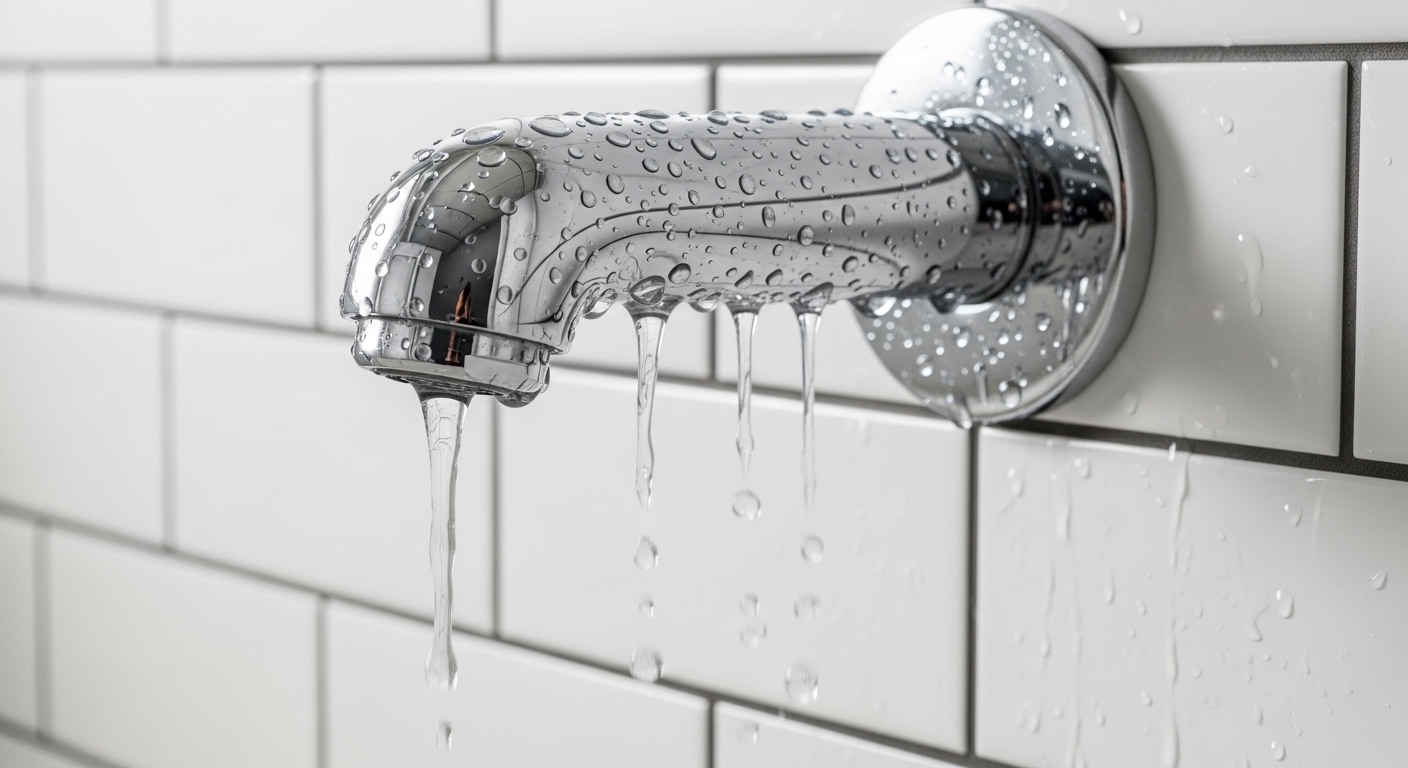
If your bathroom tub faucet is leaking from the handle — water seeping out around the base of the handle when it’s on, or worse, a slow drip even when it’s “off” — the good news is that it’s one of the most fixable plumbing problems in the house. Nine times out of ten it’s a rubber or plastic seal inside the handle that has hardened or torn with age, not a broken valve or a cracked pipe. Below I’ll walk you through exactly why it happens, how to figure out which part failed, and how to fix each version of the leak, with the specific parts and tools you’ll actually need.
Why is water leaking specifically from the handle, not the spout?
Water leaking from the handle (rather than dripping from the tub spout) means the seal between the moving valve stem and the faucet body has failed — so pressurized water is escaping backward past the handle instead of only forward out the spout. The three usual culprits are a worn cartridge, degraded O-rings on the stem, or old-style packing/stem washers that have gone hard.
Think of it this way: every tub faucet has a moving part (a cartridge or a stem) that you rotate or pull to mix hot and cold. Where that moving part passes through the faucet body, rubber seals keep water from squeezing out around it. Over years of hot water, mineral scale, and constant pressure, those seals shrink, crack, or wear a groove. Once they do, water finds the path of least resistance — up and out around the handle. That’s why the leak shows up at the handle even though the water pressure problem is really down inside the valve.
A leak from the spout, by contrast, points to a seat seal or the cartridge failing to shut off flow — a related but different fix. If you’re not sure which side is dripping or failing, our guide on why faucets drip hot or cold water and how to tell which side is failing helps you diagnose the exact source before you buy any parts.
What are the most common causes of a tub faucet handle leak?
The most common causes, in rough order of frequency, are: a worn-out cartridge, cracked or flattened O-rings, hardened stem packing on older two-handle faucets, and loose or corroded handle hardware. Here’s how each one behaves so you can match it to your symptoms.
- Worn cartridge — Common on single-handle tub/shower valves (Moen, Delta, Kohler, Pfister, and most modern brands). Symptoms: water weeps from the handle base while running, the handle feels loose or gritty, and temperature control gets erratic. This is the #1 cause on faucets 7–15 years old.
- Cracked O-rings — Small rubber rings that seal the stem or cartridge. Symptoms: a fine spray or steady seep right at the handle when the water is on, but the faucet still mixes temperature normally. Cheapest fix of all.
- Failed stem packing / bonnet washer — On older two-handle tub faucets with separate hot and cold handles. Symptoms: water dribbles from under one handle only, usually the hot side (heat kills seals faster). This is the same principle as outdoor faucet packing that leaks around the handle — a graphite or fiber packing that dries out and stops sealing the stem.
- Loose handle or corroded set screw — Sometimes there’s no seal failure at all; the handle has just worked loose, so it wobbles and lets water past. Tightening the set screw or adapter fixes it in two minutes.
- Cracked faucet body / escutcheon leak — Rare, but freeze damage or a hairline crack in the valve body can mimic a handle leak. This one usually means replacing the valve.
How do I tell which part is actually failing?
Do a quick two-part test: run the water and watch where it exits, then shut it off and watch again. If water leaks from the handle only while running, it’s an O-ring or packing seal. If it keeps dripping from the spout after you shut it off, the cartridge or seat is failing. If the handle itself wobbles, tighten it first before buying anything.
| Symptom | Most likely cause | Typical fix | Part cost |
|---|---|---|---|
| Seep around handle base while running | Worn O-rings | Replace O-rings | $8–$15 |
| Handle leaks + erratic temperature | Worn cartridge | Replace cartridge | $15–$45 |
| Dribble under one handle (2-handle faucet) | Hardened stem packing/washer | Repack or replace stem | $5–$20 |
| Loose, wobbly handle | Loose set screw/adapter | Tighten hardware | $0 |
| Drip from spout when off | Cartridge/seat failure | Replace cartridge + seats | $15–$45 |
How do you fix a tub faucet leaking from the handle yourself?
You fix it by shutting off the water, removing the handle and trim, pulling out the cartridge or stem, and swapping the worn seal for a matching new one. For a single-handle valve the whole job is usually 30–60 minutes; for a two-handle faucet, plan on repacking or replacing each stem. Here’s the step-by-step.
- Shut off the water. Look for a valve at the tub, an access panel behind the wall, or shut off the whole house at the main. Then open the faucet to bleed off pressure and confirm the water is truly off.
- Plug the drain. Drop the stopper or lay a rag over the drain so you don’t lose the tiny set screw down the pipe.
- Remove the handle. Pop off the decorative cap, loosen the set screw (usually a small hex/Allen screw underneath or a Phillips screw under the cap), and pull the handle straight off.
- Remove the trim/escutcheon. Unthread or unscrew the wall plate to expose the cartridge or stem and its retaining clip or bonnet nut.
- Pull the cartridge or stem. Remove the retaining clip with needle-nose pliers, then pull the cartridge straight out. On two-handle faucets, unscrew the bonnet nut and back out the stem with a wrench or a tub socket wrench.
- Inspect and replace the seal. Look for a torn O-ring, a grooved cartridge, or crumbling packing. Bring the old part to the store, or match the brand and model, so the replacement is exact.
- Grease and reassemble. Coat new O-rings and the cartridge with silicone plumber’s grease (never petroleum jelly — it degrades rubber), reinstall in reverse order, and snug — but don’t overtighten — every fitting.
- Test. Turn the water back on slowly, run hot and cold, and watch the handle for any weep before you put the wall plate and handle back on.
If your faucet is a single-handle model, the cartridge swap is the heart of the whole repair. Our detailed walkthrough on how to replace a bathroom faucet cartridge on a single-handle faucet yourself covers the tricky part — freeing a stuck cartridge and orienting the new one correctly. And if you’re dealing with a Delta specifically, the fix for a leaking Delta faucet handle shows the brand’s spring-and-seat setup, which differs from Moen and Kohler.
What tools and parts do I actually need to buy?
For most handle-leak repairs you need very little: a hex/Allen key set, screwdrivers, an adjustable wrench, needle-nose pliers, silicone plumber’s grease, and the correct replacement seal. Matching the part is the step people get wrong — a Moen 1222 cartridge won’t fit a Delta valve, and a widespread two-handle faucet uses hot and cold stems that are mirror images, not identical. Photograph the old part, note the brand stamped on the trim, and buy the exact repair kit whenever possible.
Can I just tighten the handle instead of replacing anything?
Sometimes, yes — but only if the leak is caused by a loose handle, not a failed seal. Try tightening the set screw or handle adapter first; it’s free and takes two minutes. If water still weeps from the handle after it’s snug, the seal inside has failed and tightening more won’t help — you’ll just strip the screw or crack the trim. Over-tightening a cartridge retaining nut is a common way to turn a $10 fix into a cracked valve body.
A quick reality check: if the handle is loose and water only appears when running, tighten first and retest. If it’s still leaking, move on to the O-ring or cartridge. Don’t skip the seal replacement hoping brute force will seal it — rubber that’s hardened won’t compress back into shape no matter how tight you crank the handle.
How much does it cost to fix vs. calling a plumber?
A DIY handle-leak repair costs $8–$45 in parts. A plumber typically charges $150–$350 for the same job once you add a service call, labor, and marked-up parts — and much more if wall access requires opening tile. For a straightforward cartridge or O-ring swap, DIY saves you the majority of that cost, and the skills transfer to every faucet in your home.
| Approach | Typical cost | Time | Best for |
|---|---|---|---|
| DIY O-ring replacement | $8–$15 | 30 min | Simple seep at handle |
| DIY cartridge replacement | $15–$45 | 45–60 min | Worn single-handle valve |
| Plumber — cartridge/stem | $150–$350 | 1–2 hr visit | No tools, no access panel |
| Full valve replacement (behind tile) | $400–$900+ | Half day | Cracked valve body |
The one time it’s worth calling a pro: if the faucet body itself is cracked (often from a hard freeze) or the valve is soldered into the wall behind tile, replacing it is a bigger job that may involve opening the wall. If you’re replacing an entire tub faucet anyway, our guide on installing a Glacier Bay bathtub faucet yourself walks through a full install so you can weigh repair against replacement.
How do I keep the leak from coming back?
To prevent repeat leaks, always use silicone (not petroleum) grease on new seals, don’t over-tighten the handle, and if you have hard water, descale the valve every couple of years. Mineral scale is the silent killer of cartridges — it builds a rough crust that saws through rubber O-rings and grinds cartridge seals down fast.
- Use the right grease. Silicone plumber’s grease keeps rubber pliable; petroleum jelly swells and rots it within months.
- Don’t over-tighten. Snug is enough. Excess torque crushes O-rings and cracks plastic cartridges — the very seals you’re trying to protect.
- Fight hard water. If you have scale-heavy water, soak removable parts in white vinegar during service and consider a whole-house softener. Scale shortens cartridge life dramatically.
- Buy quality replacement parts. A genuine OEM or spec-matched cartridge outlasts a bargain knockoff many times over. Cheap seals are false economy.
- Turn handles gently. Slamming the handle to the stop wears the seat and seal faster than normal use.
FAQ
Is a tub faucet leaking from the handle an emergency?
No, a handle leak is rarely an emergency — it’s a slow seep, not a burst pipe, and the water flows into the tub and down the drain. Still, fix it within a few weeks: constant moisture can rot drywall behind the valve and waste hundreds of gallons a month. If water is pooling inside the wall or you smell mildew, treat it more urgently.
Why does my tub faucet leak from the handle only when the water is on?
Because the leak is a dynamic (pressurized) seal failure — an O-ring or stem packing that only leaks when water is flowing under pressure past it. When the faucet is off, there’s no pressure at that point, so the seep stops. This almost always means worn O-rings or packing rather than a bad cartridge seat, which would leak from the spout instead.
Can hard water cause a tub faucet handle to leak?
Yes. Hard-water mineral scale builds up on the cartridge and stem, creating an abrasive crust that wears through rubber seals and prevents them from sealing cleanly. If you’re on hard water and replacing seals every year or two, that’s the cause — descaling the valve and softening your water will extend seal life significantly.
Do I need to turn off the water to the whole house to fix this?
Not always. Many tubs have local shutoffs behind an access panel or integral stops on the valve. If yours doesn’t, you’ll need to shut the main. Either way, always open the faucet afterward to release residual pressure and confirm the water is fully off before you take anything apart.
How long does a tub faucet cartridge last before it leaks?
A quality cartridge typically lasts 10–20 years, but hard water, heavy use, and cheap parts can cut that to 5–7 years. O-rings and packing tend to fail sooner than the cartridge body itself, which is why a simple O-ring swap often solves the leak without replacing the whole cartridge.
What’s the difference between a cartridge leak and a packing leak?
A cartridge is the all-in-one valve found in most modern single-handle tub faucets; when it wears, you replace the whole unit. Packing is the older sealing material wound around a stem in two-handle faucets; you can often just replace the packing or the stem washer. Identify which your faucet uses by the number of handles — one handle usually means a cartridge, two separate handles usually mean stems with packing.
Author note: This guide was written by the evefaucet product and service team, who spend their days spec’ing tub and shower valves and fielding real repair questions from customers. We’ve disassembled hundreds of single- and two-handle tub faucets across Moen, Delta, Kohler, Pfister, and our own lines, so the steps here reflect what actually works on the wall, not just the manual.
About evefaucet: evefaucet designs and sells bathroom and kitchen fixtures built to real durability standards — our cartridges and valve bodies are pressure- and cycle-tested to meet ASME A112.18.1/CSA B125.1 faucet standards, and our tub faucets carry a limited lifetime warranty on the finish and function. If your leak turns out to be a cracked valve body rather than a seal, our support team can help you match a replacement and honor warranty coverage where it applies.