 EVE卫浴
EVE卫浴
Is a Black and Gold Kitchen Faucet Worth It — and Which Kitchen Faucet Black and Gold Should You Actually Buy in 2026?
浏览次数:23 分类:公司产品
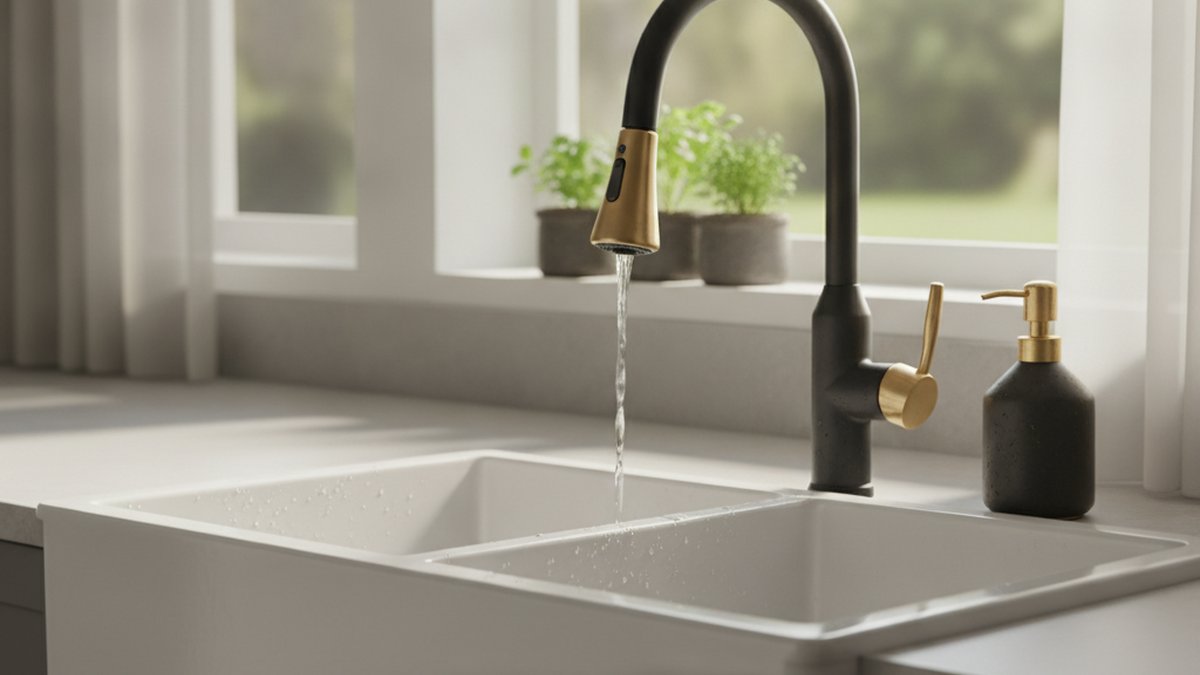
A kitchen faucet black and gold combination is one of the fastest-growing finish requests we see, and for good reason: the two-tone look reads as intentional and expensive, it coordinates with both warm and cool cabinet colors, and — done right — it’s surprisingly low-maintenance. But “black and gold” covers everything from a $49 spray-painted big-box special to a $400 solid-brass showpiece, so the finish alone tells you almost nothing about whether the faucet will still look good in three years. This guide breaks down exactly what to look for, what the two-tone finish actually costs to own, and how to pick the right one for your sink and your budget.
What exactly is a “black and gold” kitchen faucet — and is the gold real?
A black and gold kitchen faucet is a two-tone fixture with a matte or glossy black main body and gold-toned accents — usually the lever handle, the spray head, and sometimes the base ring or spout collar. The “gold” is almost never solid gold; it’s a warm metallic finish, most often brushed gold, champagne bronze, or polished brass, applied over brass or zinc.
Here’s the part most product pages won’t tell you plainly: how that color gets onto the metal matters far more than the color itself. There are three common methods, and they wear very differently.
- PVD (Physical Vapor Deposition): The gold and black are bonded to the metal at a molecular level in a vacuum chamber. This is the gold standard — scratch-, tarnish-, and corrosion-resistant, and rated to survive years of daily scrubbing. If a faucet says “PVD” on the spec sheet, that’s a very good sign.
- Electroplating: A thin metallic layer is deposited electrically. Decent quality and common in the mid-range, but the coating is thinner than PVD and can wear at high-touch points over several years.
- Powder coat / painted: Cheapest, and the reason bargain two-tone faucets chip. A painted gold handle will show silver metal at the edges within a year of daily use.
For a two-tone faucet specifically, finish quality is doubly important because you have two finishes that both have to age at the same rate. If the black is durable PVD and the gold is cheap paint, the faucet will look mismatched long before it fails mechanically. Buy both finishes at the same quality tier.
Does a black and gold kitchen faucet show water spots and fingerprints?
Less than chrome, but it depends on the finish texture. Matte black and brushed gold both scatter light, so they hide fingerprints, hard-water spotting, and toothpaste-style smears far better than a polished mirror finish. Glossy black, on the other hand, shows every droplet and smudge — it looks stunning in a showroom and needs daily wiping in a real kitchen.
If you have hard water (and most of the U.S. does), a matte black body with a brushed — not polished — gold accent is the practical winner. The brushed texture disguises the white mineral haze that hard water leaves behind. You’ll still want to wipe the spout dry occasionally, but you won’t be chasing spots after every dish.
One caveat worth knowing: matte black can develop a faint white film if you use acidic or abrasive cleaners. Stick to mild soap, warm water, and a soft cloth. That single habit is the difference between a faucet that looks new for a decade and one that looks tired in two years — the same maintenance logic applies whether you choose black, gold, or the more traditional finishes we cover in our guide on whether brushed nickel faucets and handles are still the safest choice.
Matte black + brushed gold vs. other finish pairings: which looks best in my kitchen?
The short answer: matte black with brushed (champagne) gold is the most forgiving and most on-trend pairing for 2026, because the warm gold softens the black and both finishes hide wear. Glossy black with polished brass is more dramatic and more formal, but higher maintenance. Here’s how the common combinations stack up.
| Finish pairing | Best kitchen style | Spot/fingerprint resistance | Maintenance | Typical price range |
|---|---|---|---|---|
| Matte black + brushed gold | Modern, transitional, farmhouse | Excellent | Low | $150–$300 |
| Glossy black + polished brass | Art deco, glam, formal | Poor | High | $220–$400 |
| Matte black + polished gold | Contemporary, bold contrast | Good | Medium | $180–$350 |
| Black + champagne bronze (muted) | Warm minimalist, Scandinavian | Excellent | Low | $160–$320 |
A quick design tip: match the gold tone to your cabinet hardware and lighting, not to the perfect ideal in your head. If your pendant lights and drawer pulls are warm brass, choose a warmer polished gold. If they’re a cooler, muted champagne, go brushed. The faucet does not have to match exactly — being one or two shades off actually looks more collected than a forced perfect match — but the temperature (warm vs. cool gold) should agree. If you love the warm-metal look beyond the kitchen, the same champagne/brass family works beautifully in the bath, which we cover in our piece on whether a Roman tub faucet in brushed brass is worth it.
What should I actually look for when buying — beyond the color?
Look past the finish and judge the faucet the way a plumber would: the valve, the material, the spray function, and the flow rate. A gorgeous two-tone faucet with a cheap plastic cartridge will drip within a year, and no amount of gold accent fixes a drip.
Here’s the checklist we walk every customer through:
- Cartridge: Ceramic disc is what you want — it’s the part that turns water on and off, and ceramic outlasts rubber/plastic by years. Many premium faucets use a Sedal or comparable ceramic cartridge rated for 500,000+ cycles.
- Body material: Solid brass is the durability benchmark; it resists corrosion and gives the faucet a reassuring weight. Zinc alloy is lighter and cheaper and fine for lower-use kitchens. Avoid all-plastic internals on anything you plan to keep.
- Spray head: A pull-down or pull-out sprayer with a magnetic dock (not a friction clip) keeps the head snapping cleanly back into place for years. Look for dual spray/stream modes and, ideally, a spot-resist coating on the head itself.
- Flow rate: Most U.S. kitchen faucets are capped at 1.8 GPM (gallons per minute); some states like California require 1.8 or lower. A good aerator gives you strong-feeling flow at that rate.
- Reach and height: Measure your sink. A tall gooseneck looks great but can splash in a shallow bowl; check spout height and reach against your basin depth before you buy.
- Hole configuration: Single-hole vs. three-hole. Most modern two-tone faucets are single-hole; many include an optional deck plate (escutcheon) to cover extra holes from an older faucet.
If you’re leaning toward the sprayer-forward look specifically, our deep dive on which pull-out kitchen faucet in black to buy in 2026 covers spray-head mechanics in more detail — everything there applies to the two-tone versions, just with a gold accent added.
How much should I spend on a black and gold kitchen faucet?
For a two-tone faucet that will actually last, budget $150–$350. Below about $120, you’re almost always getting painted or thin-plated gold that will chip; above $400, you’re paying for designer branding, not meaningfully better function. The $180–$280 window is the value sweet spot: solid or mostly-brass body, ceramic cartridge, PVD or quality-plated finish, magnetic dock, and a real warranty.
Think about cost of ownership, not just sticker price. A $90 faucet that needs replacing in two years costs you more — in money, water damage risk, and a Saturday of your time — than a $220 faucet that runs for twelve. Two-tone finishes especially punish the low end, because the cheapest way to make “gold” is paint, and paint is exactly what fails first at the handle you touch twenty times a day.
Here’s roughly what each tier buys you:
- $50–$120 (budget): Zinc or plastic body, painted/thin-plated gold, plastic cartridge. Fine for a rental or short-term flip; expect chipping and possible drips within 1–2 years.
- $150–$300 (mid / value): Brass or heavy zinc body, ceramic cartridge, PVD or quality electroplated finish, magnetic dock, 5-year to lifetime warranty. This is where most homeowners should shop.
- $300–$500 (premium/designer): Solid brass, top-tier PVD, smart/touchless options, designer name. Worth it if you want touch activation or a specific brand look.
Is a black and gold faucet a fad that’ll look dated in five years?
Two-tone black and gold is more durable as a trend than it looks, because it’s rooted in high-contrast metal pairings that have cycled through kitchens for a century, not a one-season color. That said, you can hedge against dating your kitchen with two smart moves.
First, keep the other big surfaces (counters, cabinets, backsplash) relatively neutral, so the faucet is the accent rather than one of five competing statements. A neutral kitchen with a bold faucet reads as timeless; a bold kitchen with a bold faucet reads as of-its-moment. Second, choose muted champagne gold over bright, brassy yellow-gold if longevity is your priority — the softer tone ages more gracefully and coordinates with more future updates. The faucet is also one of the easiest things in the whole kitchen to swap later: a competent DIYer can change a single-hole faucet in under an hour, so even if tastes shift, you’re not locked in the way you are with tile or cabinets.
How do I install and care for one so the finish lasts?
Installation is a straightforward DIY job for a single-hole faucet — shut off the water, disconnect the old supply lines, drop the new faucet through the mounting hole, secure the mounting nut underneath, connect the braided supply hoses, and turn the water back on to check for leaks. Most two-tone pull-downs take 45–60 minutes with basic tools. Care is even simpler, and it’s the single biggest factor in how long the gold accent stays looking new.
- Wipe with mild dish soap and warm water on a soft cloth; dry with a microfiber cloth to prevent hard-water haze.
- Never use abrasive pads, scouring powders, bleach, or acidic descalers on matte black or brushed gold — they strip and dull both finishes.
- For stubborn mineral buildup on the aerator, unscrew it and soak it in white vinegar separately, away from the finished surfaces.
- Check the braided supply lines once a year for bulging or corrosion; they’re cheap insurance against a burst-line flood.
If your faucet ever loses pressure or stops running entirely after installation, don’t assume the faucet failed — the culprit is usually a clogged aerator, a half-open shutoff valve, or a kinked supply line. Our walkthrough on why a kitchen faucet suddenly stops working covers the five-minute fixes before you call anyone.
Who should — and shouldn’t — buy a black and gold kitchen faucet?
Buy one if: you want a statement focal point, you have warm-metal accents elsewhere to tie it to, you have hard water and want something that hides spots, or you’re refreshing a neutral kitchen and want maximum visual impact for one fixture’s cost.
Skip it if: your kitchen already has three or more finish metals competing (adding a fourth reads as chaotic), you’re staging a home for a fast sale to the widest buyer pool (safe finishes like stainless or brushed nickel appeal more broadly), or you genuinely won’t commit to soft-cloth cleaning — a glossy version in a hard-water home will frustrate you.
FAQ
Is the gold on a black and gold kitchen faucet real gold?
No. The gold is a metallic finish — brushed gold, champagne bronze, or polished brass — applied over a brass or zinc body, usually by PVD or electroplating. It gives you the warm gold look without the price or softness of actual gold, and a quality PVD gold finish resists tarnishing and scratching for years.
Do black and gold kitchen faucets scratch or chip easily?
Quality ones don’t. A PVD-finished faucet bonds the color to the metal and resists scratching, corrosion, and daily scrubbing. Cheap painted or thin-plated faucets — typically under $120 — are the ones that chip, especially at the handle. The finish method matters far more than the color; always check the spec sheet for “PVD.”
Will a black and gold faucet match my stainless steel sink and appliances?
Yes, and the contrast usually looks intentional and upscale. Black and gold reads as a deliberate accent against stainless rather than a clash, the way a matched finish might. Stainless is a neutral in the finish world, so it plays well with two-tone fixtures. Pull the gold tone toward your cabinet hardware for the most cohesive result.
What’s the best gold tone to pair with black — polished or brushed?
For a low-maintenance, current look, choose brushed (champagne) gold — its matte texture hides fingerprints and hard-water spots and coordinates with more styles. Choose polished gold or brass only if you want a bold, formal, high-contrast statement and don’t mind wiping it more often to keep it gleaming.
How long should a good black and gold kitchen faucet last?
A mid-range model ($150–$300) with a solid brass body, ceramic disc cartridge, and PVD finish should last 10–15 years or more with basic care. The mechanical parts (cartridge) and the finish are the two failure points; buying quality on both is what gets you to the long end of that range. Look for a warranty of at least 5 years, ideally lifetime on the finish and function.
Can I install a black and gold kitchen faucet myself?
Yes — a single-hole faucet is a beginner-friendly DIY job that takes about 45–60 minutes with an adjustable wrench, a basin wrench, and plumber’s tape. Shut off the water first, and check for leaks before you finish. If your sink has three holes and the faucet is single-hole, use the included deck plate to cover the extras.
About the author: This guide was written by the evefaucet product team, drawing on hands-on testing of two-tone kitchen faucets across finish types, cartridges, and spray mechanisms. We’ve evaluated finish durability using abrasion and hard-water exposure checks and compared how PVD, electroplated, and painted finishes actually hold up over time.
About evefaucet: evefaucet designs and sells kitchen and bathroom fixtures direct to homeowners at www.evefaucet.com. Our faucets are built with solid-brass bodies and ceramic disc cartridges, finished with PVD coatings, tested to meet North American plumbing standards (including cUPC/NSF certifications and lead-free compliance), and backed by our finish-and-function warranty. We believe the right fixture should look great on day one and still work — and still look good — a decade later.