 EVE卫浴
EVE卫浴
How Do You Clean a Faucet Head With Vinegar and Baking Soda on a Shower That’s Barely Spraying?
浏览次数:225 分类:Repair
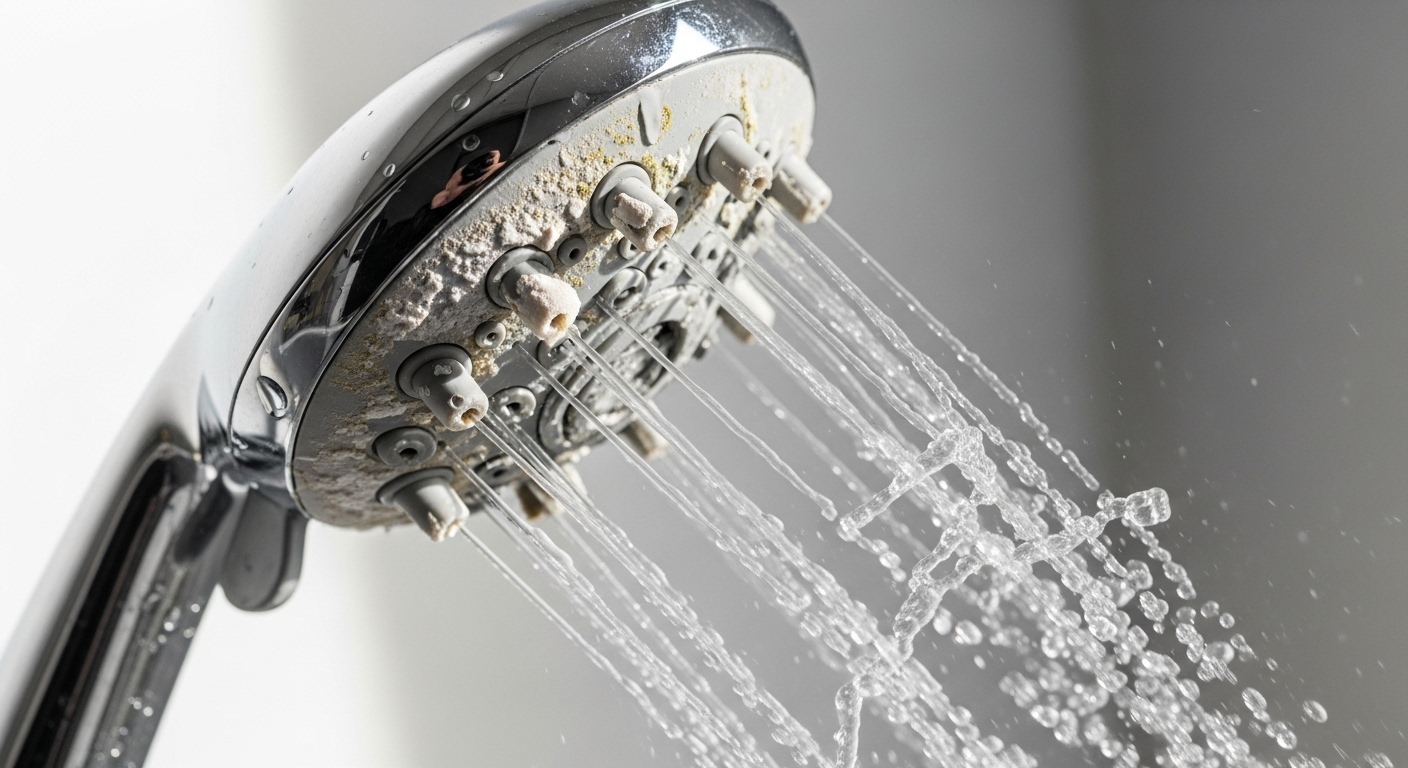
If you’ve been wondering how to clean a faucet head with vinegar and baking soda shower flow that’s turned into a sad, uneven drizzle, the short version is: vinegar dissolves the hard-water lime, baking soda scrubs and neutralizes it, and together they clear the tiny nozzle holes that clog first. It’s a 60-minute kitchen-cabinet fix, no plumber and no new parts needed in most cases. Below I’ll walk you through exactly how to do it, when to soak in place versus remove the head, how to protect your finish, and how to keep the buildup from coming back.
This is the single most common “my shower lost pressure” problem we see, and it’s almost never the pipes — it’s mineral scale on the face of the shower head. Let’s fix it.
Why does my shower head spray sideways or barely trickle in the first place?
Nine times out of ten it’s hard-water mineral buildup — calcium and magnesium (limescale) — clogging the spray nozzles, not a plumbing problem. As water evaporates off the face of the head between showers, it leaves behind a chalky white or greenish crust that narrows or plugs the little holes. Block enough of them and the water that used to spread evenly now shoots sideways, splits into weird streams, or drops to a weak trickle.
You can usually confirm this in five seconds: look at the face of the head. If you see white/green crust around the nozzles, or if some nozzles spray and others are dead, that’s scale. Many modern shower heads use soft silicone/rubber nozzles precisely so you can rub the scale off with your thumb — if rubbing them clears a few, you’ve diagnosed it.
Two things make it worse: hard water (most of the U.S. has moderately-to-very hard water) and heat. A shower head runs hot water constantly, and heat speeds up mineral deposition, which is why shower heads scale up faster than a cold bathroom faucet. If your whole house has this problem, you’ll see the same crust on the aerator screen of every faucet — the fix there is the same idea, and we cover the sink-side version in our guide on how to clean a faucet head from hard water buildup without wrecking the finish.
Do I actually need to remove the shower head, or can I clean it in place?
You can clean it in place with the bag-and-soak method, and for a lightly clogged head that’s the easiest route. Removing the head is only worth it when the buildup is heavy, when you want to soak the internal parts, or when the bag method didn’t fully restore the flow.
Here’s how to decide:
- Bag it in place if the head is awkward to unscrew, if it’s a fixed wall-mount, or if the clog is mild. Zero risk of dropping it, cross-threading it, or scratching the finish with a wrench.
- Remove it if the flow is severely reduced, if you want to also clear the internal flow restrictor/washer, or if it’s a handheld head with a screen you can pull out. Removed, you can fully submerge it and get a deeper clean.
If you do remove it, wrap the connecting nut in a cloth or use a strap wrench so you don’t chew up the finish, and note that most heads unscrew by hand once you break them loose. When it’s a handheld unit you may be surprised how much scale hides inside the hose fitting — if yours is a handheld on a hose, our walkthrough on installing a shower head with a hose without leaks shows how the connections come apart and go back together cleanly.
How to clean a faucet head with vinegar and baking soda on a shower — the step-by-step
Here’s the full method that clears a clogged shower head with vinegar and baking soda. Total hands-on time is about 15 minutes, plus a 30–60 minute soak while you do something else.
- Gather supplies: plain white distilled vinegar, baking soda, a quart zip-top bag or a bowl, a rubber band or zip tie, an old soft toothbrush, a toothpick or safety pin, and a microfiber cloth.
- Bag or remove. To clean in place, fill a bag with enough warm vinegar to submerge the nozzle face, slip it over the head, and secure it around the neck with a rubber band. To deep-clean, unscrew the head (cloth-wrapped nut or strap wrench) and drop it in a bowl of warm vinegar.
- Soak 30–60 minutes. Warm — not boiling — vinegar works faster than cold. For light scale, 30 minutes; for a thick crust, go the full hour. Don’t leave certain finishes soaking overnight (see the warning below).
- Scrub the nozzles. Remove the bag, then work the toothbrush over the face. Rub the rubber nozzles with your thumb — softened scale rolls right off. Poke any dead holes with a toothpick or the tip of a safety pin.
- Hit the stubborn spots with baking soda paste. Mix a couple teaspoons of baking soda with just enough vinegar to make a paste (it’ll fizz — that’s normal). Dab it onto crusty nozzles and around the edge, let it sit 5 minutes, and scrub again. The mild abrasive lifts what the soak loosened.
- Rinse thoroughly. Rinse under hot water, front and back, until no gritty paste or vinegar smell remains. If you removed the head, flush water backward through it to push loosened bits out.
- Reinstall and flush. Hand-tighten the head back on (add fresh plumber’s tape to the threads if it dripped before), then run the shower on hot for 30 seconds to blow out any last debris.
That’s it. In most cases the spray pattern snaps back to full, even coverage. If a handful of nozzles are still dead, repeat the soak — thick scale sometimes needs a second round.
Why not just use vinegar OR baking soda — do I really need both?
You don’t always need both, but they do different jobs, and together they beat either one alone. Vinegar is a mild acid that dissolves the mineral scale chemically; baking soda is a gentle abrasive that scrubs off what the vinegar loosened and neutralizes the acid on the way out. For a light clog, vinegar alone is plenty. For a thick, chalky crust, the baking soda paste is what finally lifts it.
One thing to know: mixing vinegar and baking soda together in a bowl mostly just fizzes into water, carbon dioxide, and a weak salt — it neutralizes itself, so it’s not some super-solvent. That’s why the method uses them in sequence: soak in vinegar first (let the acid work), then apply baking soda paste as an abrasive scrub. Don’t dump baking soda into your vinegar soak and expect magic.
| Method | Best for | Soak time | Finish safety |
|---|---|---|---|
| White vinegar soak | Light–moderate scale, routine cleaning | 30–60 min | Safe on chrome/stainless; limit on brushed & coated finishes |
| Baking soda paste | Stubborn crust on individual nozzles | 5 min dwell | Very safe; mild abrasive, rub gently |
| Vinegar soak + baking soda scrub | Heavy buildup, uneven spray | 60 min + scrub | Best all-round; still watch soft finishes |
| Commercial descaler (e.g. CLR) | Extreme scale vinegar won’t touch | Follow label (often 2–5 min only) | Read label — can harm some finishes/plated brass |
Will vinegar ruin my shower head’s finish — brushed nickel, matte black, or gold?
Vinegar is safe on chrome and stainless steel, but you should limit contact time on brushed nickel, matte black, oil-rubbed bronze, and gold/brass PVD finishes, and never leave those soaking overnight. On coated and living finishes, prolonged acid exposure can dull the coating or leave etching or spotting.
Safe practice for delicate finishes:
- Chrome / polished stainless: hardiest — a 60-minute soak is fine.
- Brushed nickel / stainless: keep it under 30 minutes and rinse well.
- Matte black, oil-rubbed bronze, brushed gold/champagne bronze: shorter soaks (15–20 min), or better, dilute the vinegar 50/50 with water, and skip abrasive scrubbing on the outer body — use a soft cloth, not the rough side of a sponge.
- Any finish: only distilled white vinegar, never bleach; and dry with a microfiber cloth afterward to prevent new water spots.
Baking soda is gentle, but it’s still a mild abrasive — rub it on the nozzle face and inside holes, not aggressively across a matte body finish where you could burnish it. When in doubt, test on the underside first. The same finish-safety logic applies to sink faucets and aerators, which is why we walk through finish protection in detail in our hard-water faucet cleaning guide.
What if the nozzles are still clogged after soaking — how do I clear them?
If some nozzles stay dead after a full soak and scrub, clear them mechanically: push a toothpick, safety pin, or an unfolded paperclip straight into each blocked hole to break the plug, then re-soak for another 30 minutes. On rubber-tipped heads, firmly rubbing each nozzle with your thumb pops most remaining scale loose.
If a whole zone of the head is dead — not individual holes — the problem may be deeper: the internal flow restrictor, the inlet screen, or a clogged filter washer at the connection. Unscrew the head and check the little screen or plastic restrictor disc inside the inlet; it collects grit and scale and cleans up with the same vinegar soak. Note that on many handhelds and pull-down units, the clog actually sits in the hose or the diverter, not the head itself. If your issue is really a sink sprayer rather than a shower, the diagnostic path is nearly identical and we cover it in why a faucet sprayer is clogged and barely trickling.
And if the aerator or screen inside your fixture is so calcified it won’t even unscrew, don’t force it and crack the housing — the freeing-it-up techniques in our faucet aerator disassembly guide (heat, penetrating soak, strap wrench) work the same on a stuck shower head fitting.
How often should I clean my shower head to keep the pressure up?
In hard-water areas, do a quick vinegar soak every 1–3 months; in soft-water areas, twice a year is plenty. The best signal is your spray pattern — the moment you notice a nozzle or two spraying crooked, that’s early scale, and a 20-minute soak then is far easier than a full descale later.
Prevention habits that genuinely help:
- Wipe the face dry after showers when you remember — less standing water means less evaporated mineral.
- Do a monthly “mini soak” — even 15 minutes of vinegar in a bag keeps scale from ever building into a hard crust.
- Consider a water softener or a shower filter if you’re descaling every month; it treats the cause, not the symptom.
- Choose silicone-nozzle heads when you replace — the rubber tips let you rub scale off in seconds without any soak.
If your head is old, corroded internally, or the spray never fully recovers no matter how many times you clean it, it may simply be time to replace it — a decent shower head is inexpensive and a clean new one with self-cleaning nozzles will save you the recurring chore.
FAQ
Can I use apple cider vinegar instead of white vinegar to clean my shower head?
You can in a pinch, but plain distilled white vinegar is better. White vinegar is clear, cheap, and has a consistent ~5% acidity with no sugars or pigments, so it won’t leave residue or tint on the finish. Apple cider vinegar works chemically but is messier and pricier for no benefit.
How long should I soak the shower head in vinegar?
Thirty to sixty minutes for most clogs. Light scale clears in 30 minutes; a thick crust needs the full hour, sometimes a second round. Warm vinegar works faster than cold. Avoid overnight soaks on brushed, matte, black, or gold finishes to protect the coating — chrome and stainless can handle longer.
Will vinegar and baking soda damage the rubber nozzles or internal seals?
No — vinegar and baking soda are safe on the silicone/rubber nozzles and standard seals for the soak times described. In fact, rubbing the rubber nozzles is the recommended way to pop scale off. Just don’t leave any fixture soaking in vinegar for days, and rinse thoroughly so no acid sits on the seals long-term.
What if I can’t unscrew the shower head to clean it?
Don’t force it — use the bag method instead. Fill a zip-top bag with warm vinegar, slip it over the head so the face is submerged, and secure it with a rubber band for 30–60 minutes. It cleans just as well in place. If you must remove a stuck head later, wrap the nut in cloth and use a strap wrench so you don’t scratch the finish or crack the fitting.
Is CLR or a commercial descaler better than vinegar for a shower head?
Only for extreme buildup vinegar can’t touch. Vinegar and baking soda handle the vast majority of household scale safely and cheaply. Commercial descalers like CLR are stronger and faster but harsher — follow the label’s short contact time (often just a few minutes), keep them off delicate or plated finishes, and rinse extremely well. Try vinegar first.
Why did my water pressure not improve after cleaning the shower head?
If cleaning didn’t help, the restriction is likely upstream of the head — a clogged inlet screen or flow restrictor inside the fitting, a partially closed shut-off valve, or low household pressure. Check the little screen/restrictor inside the head’s inlet and soak that too. If the whole house is weak, the issue is your supply, not the head — start diagnosing at the valve, not the nozzle.
About the author: This guide was written by the evefaucet fixtures team — plumbing-hardware specialists who design, pressure-test, and service kitchen and bathroom faucets, shower heads, and sprayers every day. We’ve descaled, disassembled, and rebuilt thousands of shower heads across every finish on the market, so the times and cautions here come from hands-on repair, not theory.
Why trust evefaucet: Our shower heads and faucets are built to industry flow and durability standards (including WaterSense-aligned flow rates and ASME/ANSI-referenced testing), and our fixtures carry a manufacturer warranty. Cleaning your head with vinegar and baking soda as described here will not void that warranty — mineral maintenance is expected homeowner upkeep. If a nozzle plate or internal seal fails during normal use, that’s what the warranty covers; reach out to our support team with your model number.