 EVE卫浴
EVE卫浴
Why Won’t My Outside Faucet Turn Off — And How Do I Stop the Water Fast?
浏览次数:937 分类:Repair
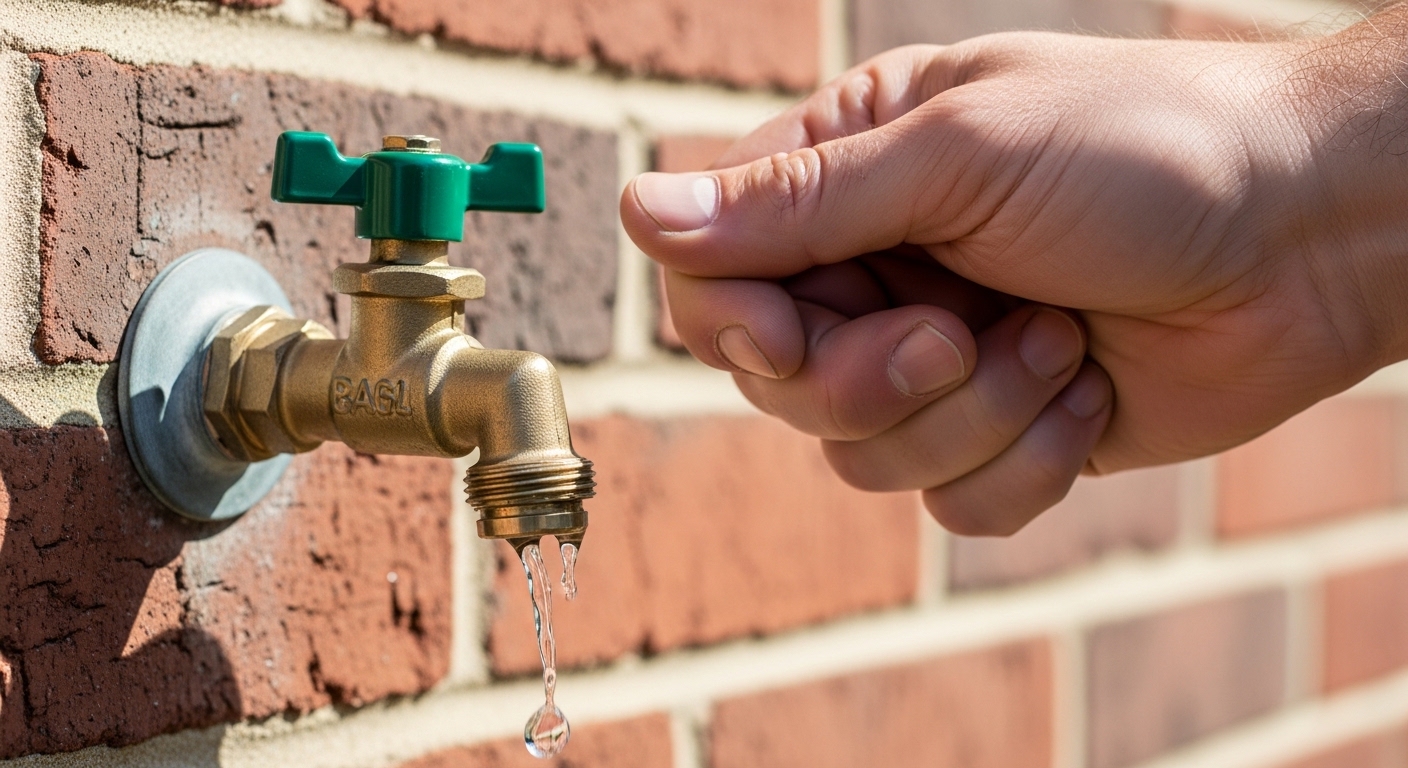
If you’re standing in your yard wondering why won’t my outside faucet turn off, here’s the short version: the handle still spins, but the rubber part inside that’s supposed to press against the water seat has worn out, torn, or come loose — so water keeps flowing no matter how hard you crank. The good news is this is one of the most fixable problems in your whole house, and you rarely need a plumber. Let’s get the water stopped first, then walk through exactly what failed and how to fix it for good.
How do I stop the water RIGHT NOW if the outside faucet won’t shut off?
Find the indoor shut-off valve on the pipe feeding that faucet and close it — if there isn’t one, shut off your home’s main water valve. Every outdoor faucet (called a hose bibb or sillcock) is fed by a pipe that runs through your exterior wall. On the inside of that wall — in a basement, crawlspace, garage, or utility closet — there’s usually a small gate or ball valve on that line.
- Ball valve: turn the lever a quarter-turn so it sits perpendicular (crosswise) to the pipe. That’s fully closed.
- Gate valve (round wheel): turn it clockwise until it stops. Don’t force it past snug.
- No dedicated valve? Go to your main shut-off — usually where the water line enters the house or near the water meter — and close it. You’ll lose water to the whole house temporarily, which is fine for a 30-minute repair.
Once the water’s off, open the outdoor faucet fully to drain the line and relieve pressure. Now nothing’s spraying while you work, and you can take the faucet apart safely. This single step is what turns a panic into a quick afternoon fix.
Why won’t my outside faucet turn off even when I crank the handle hard?
Because the handle and the actual water seal are two different things — the handle is turning fine, but the worn washer or stem underneath isn’t sealing. When you turn the handle, you’re driving a threaded stem down so a rubber washer at its tip presses against a brass “seat.” Water stops when that washer seals the seat. If the washer is flattened, cracked, or gone, you can crank all day and water still sneaks past.
Here are the usual culprits, roughly in order of how often we see them in the EveFaucet workshop:
- Worn or torn washer (60% of cases): the cheap rubber washer at the stem tip hardens and crumbles over a few years, especially with hard water or freeze cycles.
- Stripped stem threads: the handle spins freely and never “bottoms out” — the threads that pull the washer down are gone.
- Damaged or scaled valve seat: the brass seat the washer presses into is pitted or crusted with mineral scale, so even a new washer won’t seal.
- Frost-free sillcock failure: on long anti-freeze faucets, the seal is way back at the indoor end of a 6–12 inch stem; a cracked stem or bad seat washer keeps it from closing.
- Stripped or broken handle: the handle’s square broach is rounded out, so it spins without actually turning the stem.
The reassuring part: items 1, 2, and 5 are all under $10 in parts. Even a damaged seat can usually be re-ground or fitted with a seat insert.
What’s the difference between a standard hose bibb and a frost-free faucet — and why does it matter for this fix?
A standard hose bibb seals right behind the handle; a frost-free faucet seals 6–12 inches back inside the warm wall, so the failed part lives in a totally different spot. Knowing which one you have tells you where to look and what kit to buy.
| Feature | Standard Hose Bibb | Frost-Free Sillcock |
|---|---|---|
| Stem length | Short (1–2 in) | Long (6–12+ in) |
| Where it seals | Right at the spout/body | Deep inside the heated wall |
| Common “won’t turn off” cause | Worn tip washer | Cracked stem or seat washer at far end |
| Repair part needed | Bibb washer + screw | Full stem assembly / repair kit |
| Freeze risk if left dripping | High | Lower, but burst risk if hose left on |
| Typical part cost | $2–$6 | $8–$20 |
Quick test: if your faucet body is short and chunky and sits flush to the wall, it’s likely a standard bibb. If there’s a long barrel angling slightly downward and the brand is stamped on the handle, it’s almost certainly frost-free. Frost-free units are common in cold climates and need the matching manufacturer stem — measure the length before buying. If your whole outdoor setup is aging, it may be worth reading our guide to the best external shower faucet for an outdoor or exposed wall install while you’re already out there with tools.
How do I actually fix an outside faucet that won’t turn off? (Step by step)
Shut off the water, remove the handle and packing nut, pull the stem, replace the washer or stem, and reassemble — about 20–40 minutes for a standard bibb. Here’s the full sequence for the most common case, a worn washer on a standard hose bibb.
- Kill the water at the indoor valve or main (see the first section) and open the faucet to drain it.
- Remove the handle screw on top of the handle with a Phillips screwdriver, then pull the handle off. If it’s stuck, a few drops of penetrating oil and gentle wiggling helps.
- Loosen the packing nut (the large hex nut behind the handle) with an adjustable wrench, turning counterclockwise.
- Unscrew and pull out the stem. You may need to turn the stem with the handle temporarily reattached to back it out of the threads.
- Inspect the washer at the very tip. If it’s flat, cracked, grooved, or missing — that’s your problem. Remove the brass retaining screw and swap in an identical washer.
- Check the seat inside the faucet body with a flashlight. If it’s pitted or scaled, dress it with a valve seat grinder or replace a removable seat with a seat wrench.
- Replace worn packing (the string or washer under the packing nut) if water seeped from the handle area before.
- Reassemble in reverse, snug but not gorilla-tight, restore water, and test. The faucet should now shut off with a light turn.
For a frost-free sillcock, the steps are similar but you pull out the entire long stem and replace the seat washer at the far end — or swap the whole stem assembly with the manufacturer’s matching kit. The same diagnostic logic applies to handle and stem failures generally; if you want a parts-focused deep dive, our outdoor faucet handle replacement types guide breaks down every handle and stem style you’ll run into.
My faucet handle spins freely and water still runs — what does that mean?
A handle that spins endlessly without resistance means either the handle’s square hole is stripped or the stem threads are gone — the turning motion isn’t reaching the washer anymore. Two quick checks tell them apart.
- Pull the handle and look at the stem top. If the square or splined post is rounded smooth, the handle stripped — replace just the handle ($3–$8).
- If the post is fine but the stem rises and falls with no resistance, the internal threads stripped — replace the stem assembly.
This is also where mineral buildup hides. Hard water leaves scale that chews up threads and seats faster, which is the same villain behind a faucet aerator that keeps getting clogged. If you’re fighting one mineral problem, you’re often fighting both — a whole-house or hose-end filter pays off across every fixture you own.
When should I replace the whole outside faucet instead of repairing it?
Replace the entire faucet if the body is cracked, the threads in the faucet body itself are stripped, it’s leaking from a frozen burst, or it’s a 20+ year-old bibb you can’t find parts for. Repair is the right call for washers, stems, handles, and seats. Replacement is the right call when the casting itself is compromised.
| Situation | Repair | Replace |
|---|---|---|
| Worn washer / dripping | ✅ Yes | — |
| Stripped handle only | ✅ Yes | — |
| Stripped stem threads | ✅ Stem kit | If no parts available |
| Cracked faucet body | — | ✅ Yes |
| Freeze-burst sillcock | — | ✅ Yes |
| Pitted but removable seat | ✅ Seat insert | — |
| Faucet 20+ yrs, no parts | — | ✅ Upgrade to frost-free |
If you do replace, upgrading a standard bibb to a quarter-turn ball-valve frost-free sillcock is the single best improvement you can make in a cold climate — it eliminates the washer-wears-out cycle and dramatically cuts freeze-burst risk. Look for a model with a built-in vacuum breaker (anti-siphon) to meet modern plumbing code.
How do I keep my outside faucet from failing again?
Drain and disconnect hoses before winter, don’t over-tighten the handle, and replace washers proactively every few years. Most “won’t turn off” failures are preventable with three habits:
- Disconnect the hose every fall. A connected hose traps water that freezes, expands, and cracks the stem or body — the number-one cause of catastrophic spring leaks.
- Turn off gently. Cranking hard doesn’t seal better; it just shreds the washer and pits the seat faster. Snug is enough.
- Swap the washer on a schedule. A 50-cent washer every 3–4 years prevents the exact failure you’re reading about.
- Insulate exposed bibbs with a foam faucet cover in winter if you don’t have frost-free units.
Author note & why you can trust this guide
This guide was written by the EveFaucet workshop team, who design, pressure-test, and field-service residential faucets and fixtures every day. EveFaucet manufactures kitchen, bathroom, and outdoor faucets in 304 stainless steel and lead-free brass, and every valve cartridge and stem we ship is cycle-tested — our outdoor sillcock stems are rated to 200,000+ open/close cycles and pressure-tested before leaving the line. Our fixtures meet standard low-lead requirements, and we back our hardware with a limited lifetime warranty on the body and finish. We’ve repaired and dissected thousands of failed hose bibbs, and the diagnostic order in this article reflects what actually walks through our service door — not theory. When in doubt, replacing a $4 washer first is always the smart, low-risk move before you spend on a new faucet.
FAQ
Can I leave my outside faucet running until I get parts?
No — shut the water off at the indoor valve or main first. A faucet that won’t turn off can waste hundreds of gallons a day and, if temperatures drop, the constant flow plus an open faucet raises freeze and burst risk. Stopping the supply costs nothing and buys you time.
Why does my outside faucet only leak when the hose is connected?
That’s usually a failed vacuum breaker (anti-siphon device) on top of the faucet, not the main shut-off seal. The vacuum breaker’s internal washer wears out and sprays when pressurized by a hose. You can buy a vacuum breaker repair kit for a few dollars instead of replacing the whole faucet.
How much does it cost to fix an outdoor faucet that won’t turn off?
DIY, almost nothing — a washer is about $2–$6, a stem kit $8–$20, and a new handle $3–$8. A full frost-free sillcock replacement runs $15–$45 in parts. If you hire a plumber, expect $100–$250 depending on whether soldering or wall access is involved.
My faucet turns off but keeps dripping for a minute — is that a problem?
A short drip right after shut-off is just the line draining and is normal. If it drips continuously after a minute, the washer or seat isn’t sealing and should be replaced — a steady drip wastes water and will only get worse as the washer degrades further.
Is a frost-free faucet worth the upgrade if I live somewhere cold?
Yes. A frost-free sillcock seals inside the heated wall and drains automatically, which nearly eliminates both freeze-burst damage and the washer-wear cycle that causes “won’t turn off” failures. It’s the most reliable long-term fix for anyone in a freezing climate, and modern quarter-turn versions are far smoother to operate.