 EVE卫浴
EVE卫浴
What’s the Best Bar Tap Handle Display Setup for a Commercial Wet Bar in 2026?
浏览次数:529 分类:公司产品
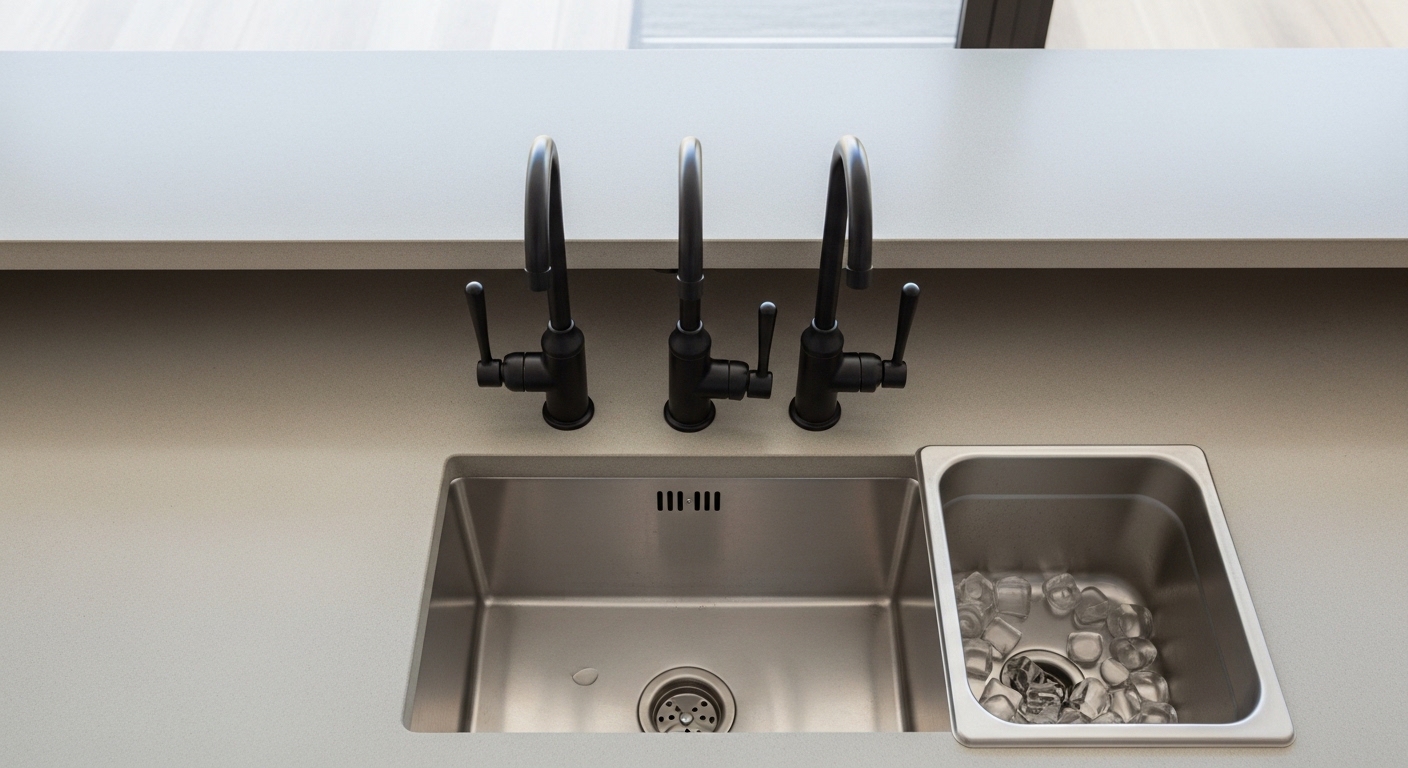
A well-planned bar tap handle display is the single most-visible piece of metal a guest sees when they sit down at your counter — it does as much branding work as your back-bar signage. In commercial hospitality, “tap handle display” refers to how your bar prep faucet, glass-rinser, and pot-filler handles are arranged, finished, and oriented so they look intentional from the guest side while staying ergonomic for the bartender. Get it right and your bar reads like a chef’s kitchen; get it wrong and it looks like a residential kitchen someone forgot to finish.
What does “bar tap handle display” actually mean in a commercial fit-out?
In a commercial context, a bar tap handle display is the visible arrangement of faucet handles serving the underbar sink, glass washer, and any dedicated prep stations — chosen and laid out as a deliberate visual element rather than picked from a residential catalog. It is not the beer-tap tower (those are draft handles); it’s the water-tap hardware that the bartender actually uses 400 times a shift.
Three pieces of hardware usually make up the display: the main two-handle bar prep faucet (hot and cold over the three-compartment sink), the gooseneck or pre-rinse faucet over the dump sink, and — if the bar offers cocktails on rocks — a dedicated cold-water lever for the ice rinse. Each handle is sized, finished, and oriented to match.
How many tap handles do I need behind a 6 to 10-seat hospitality bar?
Plan on a minimum of four functional tap handles for a bar serving 6–10 seats: hot and cold on the prep sink (two handles), a single-lever cold over the dump/ice well, and one pre-rinse spray handle for glassware. Beyond 10 seats or any bar doing more than 80 covers an hour, add a second prep station with its own pair — health departments in most US jurisdictions also require a separate hand-wash sink with its own single-lever or sensor handle, which counts toward the visible display whether you want it to or not.
- 2 handles — bar prep sink (hot/cold), 4″ center-set
- 1 handle — single-lever cold over ice well or dump sink
- 1 handle — pre-rinse / glass-rinse spray with squeeze trigger
- 1 handle — mandatory hand-wash sink (sensor or single-lever)
- Optional: pot-filler swing arm at the espresso/syrup station
What handle style reads best from the guest side of the bar?
Lever and blade handles read best from the customer side because their silhouette is recognizable from 6–8 feet away — the distance from a bar stool to the working side of the counter. Cross handles read as “residential kitchen” and tend to disappear visually; round knob handles look fine in vintage cocktail bars but slow down bartenders during a Friday rush. Most modern hospitality bars choose blade handles (flat metal paddles) for the prep sink and a single tall lever for the ice rinse.
Lever, cross, knob, and blade — what’s the actual functional difference?
The difference is leverage and speed. A lever requires roughly 1/4 turn from off to full open, a blade about 1/8 turn — both can be operated with a wrist or even a forearm when the bartender’s hands are full or wet. Cross handles need a finger-and-thumb pinch and a 3/4 turn, which is slower and a known repetitive-strain issue for bartenders pulling 8-hour shifts. Knobs sit between the two but are the worst when hands are slippery.
Which finish actually holds up behind a busy commercial bar?
PVD (Physical Vapor Deposition) brushed stainless and PVD matte black are the only finishes that reliably survive 5+ years behind a high-volume bar without spotting, pitting, or color shift. Standard electroplated chrome looks fine for the first six months but pits where citrus and lime juice splash; lacquered brass finishes wear through at the handle pivot within a year. If you are specifying for a bar that will see citrus, soda lines, and bleach sanitizer daily, the finish has to be certified to ASTM B456 Service Condition SC2 or better.
| Finish | Resistance to Citrus / Bleach | Expected Service Life (commercial) | Typical Cost vs. Chrome | Best Bar Style |
|---|---|---|---|---|
| PVD Brushed Stainless | Excellent | 8–12 years | +25–35% | Modern, industrial, hotel |
| PVD Matte Black | Excellent | 7–10 years | +30–40% | Speakeasy, dark cocktail bar |
| Polished Chrome (electroplated) | Fair | 3–5 years | Baseline | Budget, neighborhood bar |
| Living Brass / Unlacquered | Patinas (intended) | 10+ years (patina deepens) | +40–55% | Heritage, classic hotel bar |
| Lacquered Brass / Gold | Poor at pivot | 1–2 years | +20% | Avoid for commercial use |
| Copper (raw) | Patinas quickly | 6–8 years | +45–60% | Distillery taprooms, brewpubs |
If you’re drawn to a copper or aged-metal look for a brewpub or distillery taproom, we have a deep-dive on industrial copper finishes and how they age behind a wet counter in our complete buyer’s guide to industrial copper taps — copper develops a patina that many operators actually want, but it’s not a finish you can scrub with citric sanitizer without losing the look.
How much should I budget for a full bar tap handle display?
For a 6–10 seat commercial bar, expect to spend $850 to $2,400 on the visible faucet hardware: roughly $400–900 for the main two-handle prep faucet, $250–600 for the pre-rinse spray, $120–300 for the single ice-rinse lever, and $80–200 for the hand-wash sink hardware. Sensor-operated hand-wash adds $150–250. Larger bars or those wanting matched solid-brass bodies with PVD finishes can easily run $3,500–5,000.
The number people forget to budget is the rough-in valves and braided supply lines — figure another $90–180 per station for code-compliant stops and 1/2″ hot/cold supplies rated for continuous duty.
Where do operators usually overspend, and where should they not cut?
Operators overspend on decorative finishes for hardware that lives behind the bar die (where no guest will ever see it) and underspend on the cartridge inside the handle they touch 400 times a shift. The handle silhouette is what guests see; the ceramic disc cartridge is what determines whether you’re calling a plumber in 14 months. Never cut on the cartridge — insist on a one-piece ceramic disc rated for 500,000 cycles minimum.
How do I lay out the handles so the display looks intentional?
Three layout rules cover 90% of commercial bar installations: keep handle pivots on a single horizontal line, space handle centers in a rational rhythm (4″, 8″, or 12″ centers — never random), and orient all handle paddles or levers to the same off-position (typically pointing toward the customer). The eye reads alignment before it reads finish, so two handles 1/4″ out of level will undo a $2,000 finish upgrade.
Behind a deeper bar die with a high backsplash, raise the faucet bodies so the spout outlet sits 7–9 inches above the sink rim — this gives the bartender clearance to wash a cocktail tin and shows more of the handle from the guest side. For shorter bar dies common in cocktail lounges, a low-profile 5-inch spout reach faucet keeps the silhouette tight; we cover the geometry of those compact taps in our guide to choosing a 5 inch spout reach faucet.
Are bar tap handles cross-compatible with regular kitchen faucet handles?
Most commercial bar faucets use a standard 1/2″ NPS or 1/2″-20 broach stem that is interchangeable with residential kitchen-faucet handles from the same manufacturer, but cross-brand swaps almost never work because broach counts (the number of splines on the stem) differ between brands. If you want to swap a handle style later — say, going from blade to lever — buy the body and handle from the same product family, or specify a universal-broach valve at the rough-in stage.
Handle replacement, especially for older bars whose original brand has discontinued the line, is its own discipline — for the deeper version of that conversation, including how to identify a broach pattern from a worn handle, see our 2026 outdoor faucet handle replacement guide; the broach identification principles carry over to bar and kitchen handles directly.
What about pull-down sprayers at the bar prep station?
Pull-down sprayers are increasingly common at bar prep stations because they let the bartender rinse a shaker tin, dump ice, and spray a cutting board with one hand. The display consideration is that the docking magnet and the wand silhouette become part of the visible hardware — they need to match the rest of the display in finish and proportion. For high-cycle bar service, look for a wand with a metal-braided hose (not nylon) and a docking magnet rated for 100,000+ cycles. Our breakdown of the best pull-down kitchen faucet brands walks through the cartridge and hose specs that matter equally for bar prep stations.
How do I keep the display looking new under heavy daily use?
- Wipe down every shift close with warm water and a microfiber cloth — never citrus cleaner, never bleach spray directly on the finish.
- Once weekly, remove aerators and soak in 50/50 white vinegar to clear mineral scale; a clogged aerator will splash water onto the handle pivot and accelerate finish wear.
- Monthly, check the handle set-screw torque — bar handles loosen faster than residential because of the harder wrist action.
- Quarterly, exercise the under-sink shut-off valves; sticky valves are how a small drip becomes a flooded back-bar at 2 a.m.
- Annually, swap the ceramic cartridge as preventive maintenance even if it isn’t leaking — the cost of a $35 cartridge is nothing compared to closing the bar for a service call on a Saturday.
Aerator clogging is the single most common cause of pressure complaints behind a bar — if a bar prep faucet suddenly sprays sideways or loses pressure, the aerator is almost always the culprit. Our shop-floor guide on why faucet aerators keep getting clogged covers the five usual causes and the fixes.
Are there codes or standards I have to specify against?
Yes — commercial bar faucets in the US must meet NSF/ANSI 61 for drinking water system components and NSF/ANSI 372 for lead content (the federal “lead-free” rule, max 0.25% weighted average). Finishes should be ASTM B456 SC2 or better for durability. If your bar is in California, additional AB 1953 compliance applies. Health-department-required hand-wash sinks usually need to meet local plumbing code for spout reach (typically 5″ minimum past the sink edge) and temperature limiting (110°F max in many jurisdictions).
EveFaucet builds its commercial bar lines to NSF 61/372 and ships with a 5-year finish warranty and a 10-year cartridge warranty as standard — both backed by in-house cycle testing to 500,000 cycles at our Ningbo facility, which is roughly double the residential standard.
FAQ
What’s the difference between a bar tap handle display and a beer tap handle display?
A bar tap handle display refers to the water-faucet hardware behind the bar — handles on the prep sink, ice rinse, glass-rinse, and hand-wash. A beer tap handle display is a separate piece of equipment: the draft tower with branded beer-tap pulls. The two are often confused because both sit on a bar counter, but they’re completely different products (water plumbing vs. draft beer dispensing) and are usually purchased from different suppliers.
Can I use a residential kitchen faucet for my bar prep sink?
You can, but you shouldn’t if the bar runs more than 40–50 covers per shift. Residential cartridges are rated for roughly 250,000 cycles; commercial bar cartridges are rated for 500,000+. A residential faucet behind a busy bar will typically start leaking inside 18 months, which means closing the station or the whole bar for a plumber visit. The upfront savings disappear after the first service call.
What’s the most ergonomic bar tap handle height for bartenders?
The handle pivot should sit 4–6 inches above the sink rim, which puts it at roughly 38–40 inches off the floor on a standard 36-inch bar die. Higher than that and the bartender has to lift the elbow; lower and they have to bend the wrist downward, which causes fatigue over an 8-hour shift. Blade and lever handles work best in this range; tall lever handles need an extra 2 inches of clearance.
Will matte black finishes show water spots more than brushed stainless?
Yes, slightly. Matte black PVD shows hard-water spots and lime-scale residue more visibly than brushed stainless because the dark surface contrasts with the white mineral deposit. In bars with hard water (above 7 grains per gallon), brushed stainless will look cleaner with the same wipe-down routine. If you love the matte black look, install an inline scale filter on the bar’s hot water supply.
How often should commercial bar faucets be replaced entirely?
A well-built commercial bar faucet with PVD finish and a ceramic-disc cartridge should last 8–12 years before the body itself needs replacement. The handles, cartridges, and aerators are wear items replaced every 1–5 years, but the faucet body, spout, and finish should serve the bar through at least two full equipment-refresh cycles if it’s specified correctly at install.
Do I need a separate dedicated hand-wash faucet, or does the prep sink count?
You need a separate, dedicated hand-wash sink with its own faucet — the bar prep sink does not count under US health code. The hand-wash faucet must be located within reach of the bartender working area, typically deliver water at a minimum 100°F, and increasingly must be sensor-activated or knee/foot-pedal operated in jurisdictions that have adopted the 2022 FDA Food Code. Plan it into the display from day one rather than retrofitting later.
Author Note & About EveFaucet
This guide was written by the EveFaucet commercial-fit-out team, drawing on installations across more than 1,200 hospitality projects since 2008 — from neighborhood cocktail bars to four-star hotel lobby bars. EveFaucet manufactures NSF 61/372-certified commercial bar, kitchen, and bath faucets, ships from US warehouses with a 5-year finish warranty and 10-year cartridge warranty, and tests every commercial cartridge to 500,000 cycles in-house before shipment. For project quotes, finish samples, or rough-in specs, contact our commercial team through www.evefaucet.com.