 EVE卫浴
EVE卫浴
How Do Low Pressure Shower Heads Work — and How Do You Fix Weak Flow?
浏览次数:5 分类:Repair
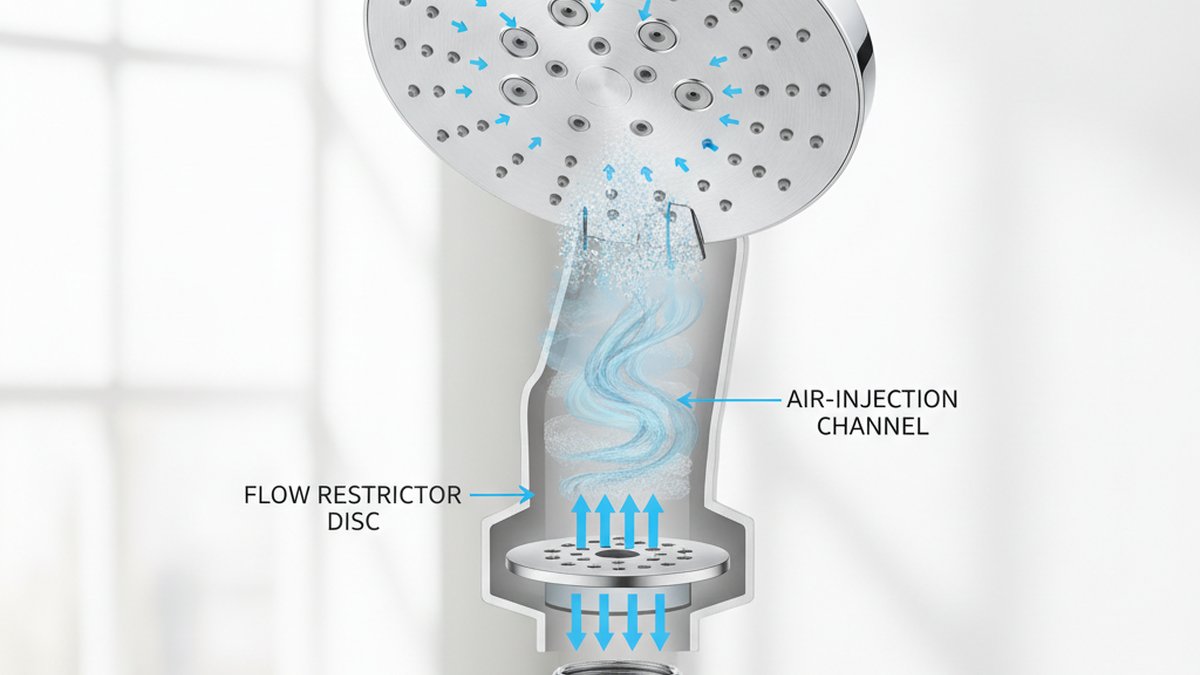
If you’ve ever stood under a dribbling shower and wondered how do low pressure shower heads work — and why yours went from decent to depressing — here’s the short version: a shower head doesn’t create pressure, it manages it. The water pressure comes from your home’s plumbing (usually 40–80 PSI at the street, often less by the time it reaches an upstairs bathroom). The shower head’s job is to take that flow and spray it in a way that feels good. “Low pressure” shower heads are engineered to make a weak supply feel strong. When they stop doing that, it’s usually a repair problem — clogging, scale, or a stuck restrictor — and you can fix it in 15 minutes with vinegar and a wrench.
This guide walks through exactly how these fixtures move water, why flow drops off over time, and the step-by-step repairs that bring the spray back. We’ll stay concrete: real parts, real numbers, real fixes.
How does a low pressure shower head actually move water?
A low pressure shower head works by controlling three things: the size of the opening water passes through, the number and diameter of the spray nozzles, and whether air gets mixed into the stream. Get those right and a 1.8 GPM (gallons per minute) flow can feel as satisfying as an old 2.5 GPM head.
Here’s the water’s actual journey through the fixture, in order:
- The inlet and flow restrictor. Water enters through the swivel ball connector. Right behind it sits a small plastic or rubber disc — the flow restrictor — with a precise hole (often 2–4 mm). This is what caps the head at a legal flow rate (2.5 GPM max in the US, 1.8 GPM in California and several other states).
- The plenum (mixing chamber). Water fans out into a wide internal cavity behind the face. On air-injecting models, tiny side ports pull room air into this chamber and whip it into the water, creating fatter, lighter droplets.
- The nozzles. The face plate has dozens of small rubber or silicone jets. Smaller, more numerous nozzles raise the exit velocity — so even a low volume of water leaves fast and hits your skin with force.
That last point is the trick behind “high-pressure low-flow” shower heads. Velocity, not volume, is what your skin reads as “strong.” By squeezing the same water through smaller exits, the head trades a little coverage for a lot of perceived punch. This is the same physics as putting your thumb over a garden hose.
What’s the difference between pressure, flow rate, and velocity?
People mix these up constantly, and it matters for diagnosing a weak shower. Pressure (PSI) is the push behind the water in your pipes. Flow rate (GPM) is how much water comes out per minute. Velocity is how fast it exits the nozzle. A good low pressure shower head keeps GPM legal and low while pushing velocity up — so it feels strong without wasting water. If your whole-house pressure is genuinely low (below ~40 PSI), no shower head can fully compensate; that’s a plumbing or pressure-regulator issue, not a fixture issue.
Why did my shower head suddenly lose pressure?
A shower head that suddenly loses pressure is almost always clogged with mineral scale or sediment — not broken. Hard water leaves calcium and magnesium deposits that shrink the nozzle openings and the restrictor hole over weeks and months. The fix is cleaning, and it works about 90% of the time.
Here are the usual culprits, roughly in order of how common they are:
- Limescale on the nozzles. The white crust on the face plate. Rubber nozzles are easy — rub them with your thumb and many deposits pop right off.
- A clogged flow restrictor. The small disc behind the inlet catches grit and scale. When its already-tiny hole narrows further, flow craters.
- A dirty inlet screen/filter. Many heads have a fine mesh screen at the connector that traps pipe debris — common after any plumbing work or a water main repair.
- A pinched or kinked hose on handheld models.
- A half-closed shut-off valve or a failing pressure-balancing cartridge in the shower valve itself (a whole-shower problem, not just the head).
If the weak flow appeared right after nearby plumbing work, suspect dislodged sediment in the inlet screen first. If it crept up slowly over months, it’s scale. If both hot and cold are weak everywhere in the house, it’s a supply/pressure issue — check your pressure regulator or main shut-off. For a broader walkthrough of no-flow diagnosis on the sink side, our guide on why a kitchen faucet suddenly stops working uses the same logic chain and is worth a skim.
How do I fix a low pressure shower head myself?
To fix a low pressure shower head, unscrew it, soak it in white vinegar for a few hours to dissolve scale, clean the nozzles and inlet screen, and check the flow restrictor. It takes about 15 minutes of hands-on work plus soak time, and needs no plumber.
Here’s the repair, step by step:
- Turn off the shower and lay a towel over the drain so you don’t lose small parts.
- Unscrew the head from the arm (or the hose from a handheld). Grip the connector nut with an adjustable wrench; wrap the jaws in a cloth or use tape to protect the finish. Turn counterclockwise.
- Remove and inspect the inlet screen and flow restrictor. Behind the connector you’ll usually find a mesh screen, a rubber washer, and the restrictor disc (often a colored star- or gear-shaped plastic piece). Pop them out gently with a flat screwdriver or needle-nose pliers. Note the order and orientation — take a phone photo before removing anything.
- Rinse the screen and restrictor under a strong tap to flush grit. Poke the restrictor hole clear with a toothpick, not metal.
- Soak the whole head in white vinegar for 2–4 hours (overnight for heavy scale). Submerge the face fully. Avoid vinegar on some specialty finishes for long periods — for oil-rubbed bronze or certain matte coatings, limit soaking to 30–60 minutes and rinse well.
- Scrub the nozzles. Use an old toothbrush, and rub the rubber jets with your thumb to dislodge softened scale. A pin can clear individual holes.
- Reassemble in the same order, wrap the shower arm threads with 3–4 turns of PTFE (plumber’s) tape, and hand-tighten plus a quarter turn with the wrapped wrench.
- Test. Run it for 30 seconds and check for leaks at the connection and a restored, even spray.
Should I remove the flow restrictor to boost pressure?
You can remove the flow restrictor to increase flow, but think twice before you do. Pulling the restrictor will raise GPM and often makes a genuinely low-pressure shower feel stronger — but it also increases water use, raises your water and heating bills, and in many US states installing a head above 2.5 GPM (or 1.8 GPM in California, Colorado, Washington, and others) violates plumbing code. It can also void the warranty.
A smarter move: clean the restrictor first. A clogged restrictor is the actual problem far more often than the restrictor’s rated flow. Only consider removal if your measured whole-house pressure is fine, the head is spotless, and it still underdelivers — and even then, know your local code. If you rent, don’t remove it at all; keep the original part in a bag for move-out.
| Symptom | Most likely cause | Fix | Time |
|---|---|---|---|
| Slow decline over months, white crust | Limescale on nozzles | Vinegar soak + scrub | 15 min + soak |
| Sudden drop after plumbing work | Debris in inlet screen | Rinse the screen | 10 min |
| Weak from day one, new head | Restrictor too aggressive / clog | Clean or verify restrictor | 10 min |
| Weak hot AND cold, whole house | Low supply pressure / regulator | Check pressure regulator/main | Call plumber if unsure |
| Weak only when other taps run | Undersized supply / demand | Stagger use; check pipe size | Varies |
What type of shower head is best for genuinely low water pressure?
For genuinely low household pressure, a high-pressure air-injecting shower head or a compact single-spray head with small nozzles works best — avoid large rainfall heads, which rely on gravity and volume and feel weak below about 45 PSI. The goal is to concentrate what little flow you have, not spread it thin.
Here’s how the common types behave when supply pressure is limited:
| Shower head type | Feel at low pressure | Best for |
|---|---|---|
| High-pressure / turbo single-spray | Strong, concentrated | Low-PSI apartments, upstairs baths |
| Air-injection (aerating) | Full, soft but forceful | Balancing comfort and low flow |
| Handheld with narrow jets | Strong, adjustable, gets close | Targeting rinse, cleaning, low PSI |
| Large rainfall head | Weak, drizzly if PSI is low | Homes with 50+ PSI only |
If you’re leaning toward a handheld — a smart pick for low pressure because you can bring the spray to you — our guide on the right way to use a handheld shower head covers technique and mounting height. And if you have your heart set on a rainfall look, read our honest take on whether a Victorian rainfall shower head is worth it before you buy, because rainfall and low pressure are a tough pairing.
Does the shower valve or cartridge affect pressure too?
Yes — a failing pressure-balancing cartridge inside the shower valve is a common hidden cause of weak flow, especially if the water also runs lukewarm or the temperature wanders. The cartridge lives in the wall behind the trim, and a worn or scaled one restricts flow before water ever reaches the head. If cleaning the head changes nothing and the problem affects only this shower, the valve is the next suspect. Our walkthroughs on installing a Delta shower valve trim kit and understanding a Glacier Bay shower valve rough-in show how these parts fit together, which helps when you’re deciding whether to service the valve or the head.
How do I keep my shower head from clogging again?
To prevent a shower head from clogging again, do a quick vinegar soak every 3–6 months in hard-water areas, wipe the nozzles weekly, and consider a whole-house water softener or an inline shower filter if your water is very hard. Prevention is far easier than repeated repairs.
- Wipe the rubber nozzles with your thumb or a cloth after showers — softened scale rubs off before it hardens.
- Quarterly vinegar soak for hard water (above ~120 mg/L / 7 grains per gallon). A bag of vinegar rubber-banded over the head overnight works without removing it.
- Install an inline shower filter or softener to cut the mineral load at the source — this also protects your kitchen faucet aerator, which clogs from the exact same scale.
- Flush after plumbing work: remove the head and run the arm for 10 seconds to clear loosened pipe debris before it reaches the screen.
Do these and most shower heads will hold strong flow for years. When one finally won’t recover — cracked nozzles, a corroded body, permanently fused scale — it’s time to replace rather than repair.
FAQ
Do low pressure shower heads really increase water pressure?
Not literally — no shower head can add pressure to your plumbing. What “high-pressure” low-flow heads do is raise the velocity of the water by forcing it through smaller, more numerous nozzles, so a low-PSI supply feels stronger against your skin. They optimize the pressure you already have.
Is it legal to remove the flow restrictor from my shower head?
In the US, shower heads are federally capped at 2.5 GPM, and several states (California, Colorado, Washington, New York, and others) require 1.8–2.0 GPM. Removing the restrictor to exceed those rates violates local plumbing code in those areas and can void the manufacturer’s warranty. Cleaning the restrictor is legal and usually solves the problem anyway.
How often should I clean my shower head?
In hard-water areas, do a vinegar soak every 3–6 months and wipe the nozzles weekly. In soft-water areas, once or twice a year is plenty. If you notice the spray weakening or splitting into odd directions, that’s your cue to clean it early.
Why is my new low pressure shower head weak from day one?
Usually one of three things: the restrictor is doing its job but your household pressure is genuinely low (measure it — you want ~45–80 PSI), a shut-off valve behind the wall isn’t fully open, or there’s shipping debris in the inlet screen. Check the screen first, confirm the valve is fully open, then test your pressure with a $10 gauge on an outdoor spigot.
Can hard water permanently ruin a shower head?
It can, if scale is left to fuse and corrode for years, especially on cheaper heads with metal internal nozzles. Rubber-nozzle heads resist this because deposits flex off. Regular cleaning prevents nearly all permanent damage; once nozzles crack or the body corrodes through, replacement is the right call.
Should I fix the shower head or the valve if flow is weak?
Start with the head — it’s cheaper, faster, and the more common culprit. Clean it fully first. If flow is still weak and the problem is isolated to that one shower (and often paired with temperature swings), suspect the pressure-balancing cartridge in the valve next. If every fixture in the house is weak, it’s a supply or pressure-regulator issue for a plumber.
About the author: This guide was written by the evefaucet product and support team, drawing on years of hands-on testing and thousands of customer repair questions about shower heads, valves, and flow issues. We build and stress-test shower fixtures against ASME A112.18.1/CSA B125.1 flow and durability standards, and every evefaucet shower head ships with a limited lifetime warranty on the finish and function. When we say a fix works, it’s because we’ve run it on the bench and in real bathrooms — not because it sounds good.
evefaucet designs faucets, shower heads, and bath fixtures sold directly to homeowners at www.evefaucet.com, where you can also browse finishes like our matte black shower faucets if a repair turns into an upgrade.