 EVE卫浴
EVE卫浴
How Do You Replace the Aerator on a Moen Kitchen Faucet — the Right Way, in Under 10 Minutes?
浏览次数:6 分类:Install
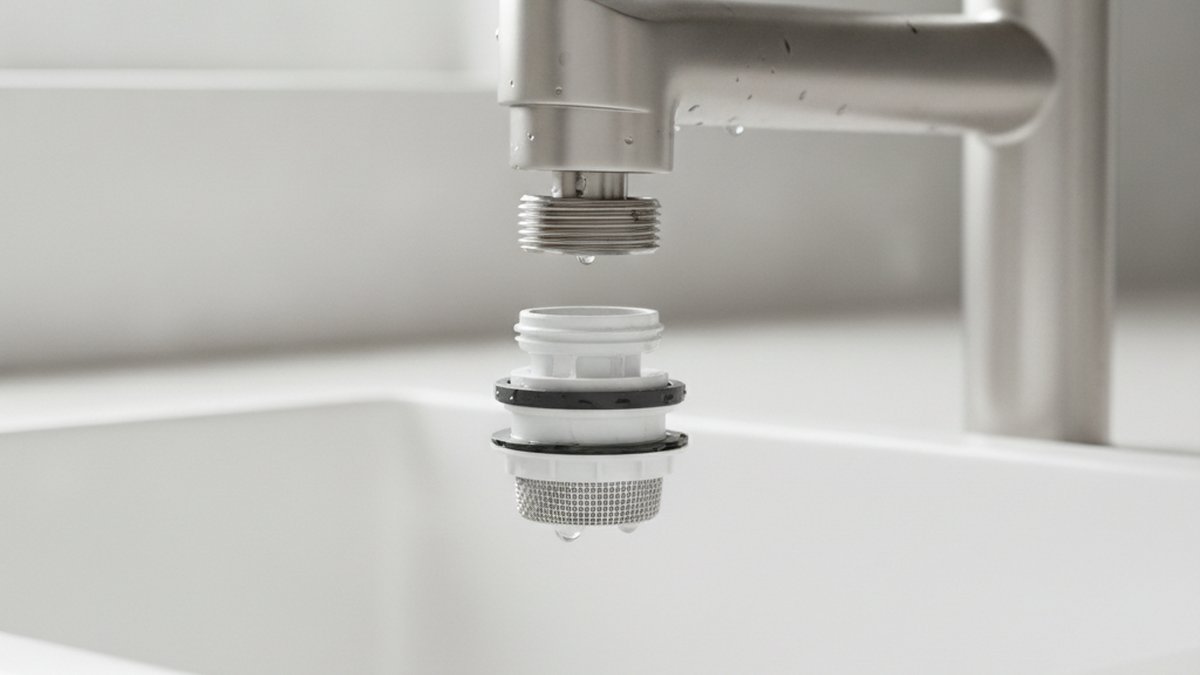
If you’ve been searching how to replace aerator on kitchen faucet moen because your once-strong stream has turned into a weak dribble, a crooked spray, or a sputtering splash, you’re in exactly the right place. The aerator is the small screen-and-housing piece at the very end of your faucet spout, and it’s the single most common reason a Moen faucet’s flow goes bad. The good news: it’s also the easiest faucet part on earth to swap. Below is the exact process, the sizing you need to buy the right replacement, and the little Moen-specific quirks (like the hidden aerator and the special key) that trip most people up.
What exactly is a faucet aerator, and why does replacing it fix low water pressure?
A faucet aerator is the mesh screen and housing that screws into the tip of your spout. It mixes air into the water to give you a soft, splash-free stream while actually saving water. When it clogs with mineral scale, sediment, or bits of pipe debris, your flow drops, sprays sideways, or sputters — so replacing (or cleaning) it usually restores full pressure instantly.
Here’s why it matters so much on a Moen: the aerator sits at the narrowest point in the whole water path, so even a little hard-water buildup chokes the flow noticeably. Before you assume you have a bigger problem — a dying cartridge, a kinked supply line, or a failed pull-down hose — the aerator is the first, cheapest thing to rule out. If your faucet went from strong to weak gradually over months, it’s almost certainly scale in the aerator. If it stopped suddenly and completely, the culprit may be elsewhere; our guide on why a kitchen faucet suddenly stops working walks through those other causes.
How do I know which Moen aerator size and thread type to buy?
Most residential Moen kitchen faucets use one of two aerator styles: a 15/16″–27 male thread (the threads are on the outside of the aerator, roughly the diameter of a U.S. nickel) or a hidden/recessed aerator that sits up inside the spout tip and requires a plastic Moen key to remove. Pull-down and pull-out spray heads almost always use the hidden cache-style aerator built into the spray head.
The fastest way to get the size right is to remove the old one and take it to the store, or match the part number printed on Moen packaging. If you can’t remove it yet, measure the spout-tip opening: about 15/16″ (24 mm) across the threads is the standard “regular male” size. Female-thread aerators (threads inside, screwing onto external spout threads) are less common on Moen but do exist on some older models. Seeing a clear reference photo helps a lot here — our breakdown of what faucet aerator images actually tell you before you buy shows the visual differences between male, female, and cache aerators side by side.
Which aerator flow rate should you choose — 1.5, 1.8, or 2.2 GPM?
Match the flow rate to how you use the sink. Aerators are stamped with a GPM (gallons per minute) rating, and swapping to a different rating is a legitimate way to tune your faucet’s feel:
- 2.2 GPM — the traditional “full flow” rate; fills pots fastest, best if you cook a lot.
- 1.8 GPM — the current common default on new Moen faucets; a good all-around balance.
- 1.5 GPM — WaterSense-labeled; noticeably softer stream, saves water, ideal for light-use or eco-conscious homes.
- 0.5 GPM (needle/spray) — for bar or prep sinks where you rinse rather than fill.
One caveat that surprises people: California, Colorado, and several other states cap new kitchen faucets at 1.8 GPM, so replacement aerators sold there may top out at that rate. If your pressure feels weak even with a brand-new aerator, you likely just have a lower-GPM unit than before — not a defect.
What tools do you actually need to replace a Moen aerator?
For a standard Moen aerator, you often need no tools at all — just your hand. If it’s stuck or it’s the hidden type, you’ll want the specific Moen aerator key that shipped with the faucet (or a cheap universal replacement). Here’s the short list:
- Moen aerator key (plastic, notched) — required for hidden/recessed aerators; often labeled M-DOL or Tosca.
- Adjustable wrench or slip-joint pliers — only if hand-loosening fails; wrap the jaws in a rag or painter’s tape to avoid scratching the finish.
- White vinegar and an old toothbrush — for cleaning if you’re reusing the housing.
- A rag or a folded towel in the sink basin — so no small part disappears down the drain.
How do you actually remove and replace a Moen kitchen faucet aerator, step by step?
Replacing a Moen aerator is a 5-step, sub-10-minute job: block the drain, unscrew the old aerator (clockwise as viewed from below), clean or discard it, seat the new one with its washer, and hand-tighten. Here’s the detailed walkthrough so you don’t miss the Moen-specific steps.
- Block the drain and note the flow. Drop a rag or close the stopper so a dropped part can’t vanish. Turn the faucet on briefly to see how bad the stream is — you’ll want to compare afterward.
- Determine your aerator type. Look up at the spout tip. If you see a ring with flat spots or knurling, it’s a standard threaded aerator you can grip. If the tip is smooth with no visible ring, it’s a hidden aerator that needs the Moen key.
- Unscrew the old aerator. Turn it clockwise when you’re looking up at it from below (which is counterclockwise from the normal top-down view — this is where people get confused). Hand-loosen first. If it won’t budge from scale, wrap pliers in a rag and apply gentle, steady pressure. For hidden aerators, insert the Moen key’s teeth into the notches and turn.
- Clean the seat and check the washer. Wipe the spout threads. Every aerator includes a small rubber or plastic washer/gasket — make sure the new one is present and seated flat, because a missing or pinched washer causes drips around the spout tip.
- Install the new aerator and test. Thread it in by hand until snug, then a quarter-turn more with the key or fingers — do not overtighten, as you can crack the plastic or strip the threads. Run the water. A strong, straight, quiet stream means you nailed it. A small leak at the tip means the washer isn’t seated or you cross-threaded it.
What if the Moen aerator is stuck and won’t unscrew?
If your aerator is cemented in place by years of hard-water scale, don’t force it hard enough to crush it — soak it first. Wrap a plastic bag of white vinegar around the spout tip with a rubber band and leave it 30–60 minutes to dissolve the mineral crust, then try again with rag-wrapped pliers. The vinegar softens the calcium and magnesium deposits that are literally gluing the threads together.
If it still won’t move, apply penetrating oil to the threads, wait 15 minutes, and grip closer to the base. As a last resort you can carefully cut or crush a fully clogged aerator with pliers to get it off, since you’re replacing it anyway — just protect the spout’s own threads. Whatever you do, keep torque gentle and controlled; the spout tip on many Moen faucets is a threaded brass or plastic insert you don’t want to twist loose.
Should you clean the old aerator or just replace it — and which is better long-term?
Clean it if the housing is intact and you just have mild buildup; replace it if the screen is torn, corroded, cracked, or if cleaning doesn’t restore flow. A new aerator costs only a few dollars, so when in doubt, replace — it’s cheaper than your time. Here’s how the two options compare:
| Factor | Cleaning the old aerator | Replacing with a new one |
|---|---|---|
| Cost | Free (vinegar + toothbrush) | ~$4–$12 for genuine Moen part |
| Time | 30–60 min (mostly soaking) | 5–10 min |
| Best when | Light scale, screen intact | Torn/corroded screen, recurring clogs |
| Flow restored? | Usually, temporarily | Fully, like-new |
| Change GPM/spray? | No — same rate | Yes — pick 1.5/1.8/2.2 GPM or spray |
| Downside | Buildup returns in hard water | Must match size/thread correctly |
If your home has hard water, replacing gives you the chance to switch to a fresh screen that will clog more slowly, and it lets you re-tune the flow rate at the same time. Cleaning is a fine stopgap, but in a hard-water house you’ll be back at the sink in a few months.
Do all Moen kitchen faucets use the same aerator — including pull-down sprayers?
No. Standard fixed-spout Moen faucets typically use the 15/16″–27 threaded or hidden cache aerator, but pull-down and pull-out spray heads have the aerator built into the sprayer head itself, and it’s usually a proprietary Moen insert you buy as a spray-head part, not a generic aerator. Always identify your faucet style before buying.
For pull-down models, unscrew the aerator insert from the front of the spray head — many use a small coin-slot or key. If the whole spray head is worn, Moen often sells a full replacement head. If your issue is the sprayer hose or a quick-connect fitting rather than the aerator, the mechanics are different; our guide to the best faucet sprayer with quick connect for an easy DIY upgrade covers those swaps. And while you’re under the sink, it’s worth knowing your faucet handle replacement screw size in case you ever need to service the handle too — the same “measure before you buy” logic applies.
Where can I find the exact replacement part number for my Moen faucet?
The fastest route is Moen’s own model lookup: the model number is usually printed on the box, the installation sheet, or a sticker under the sink or on the supply lines. Enter it on Moen’s site and it lists the correct aerator part. If you have no paperwork, remove the aerator, take it to a hardware store, and match it physically, or buy a universal aerator kit that includes multiple sizes and washers so you’re covered regardless of thread.
How do you keep a new Moen aerator from clogging again so fast?
Clog prevention comes down to controlling minerals and debris: soak the aerator in vinegar every few months in hard-water areas, flush the line after any plumbing work, and consider a whole-home or under-sink filter if buildup is chronic. A little routine maintenance keeps a fresh aerator flowing strong for years instead of months.
A quick maintenance rhythm that works: unscrew and vinegar-soak the aerator every 3–4 months if your water is hard, and always run the faucet with the aerator removed for 15 seconds after the water utility does street work or after you shut off and restore your home’s water — that flushes loosened pipe sediment out before it lodges in the screen. It’s a two-minute habit that prevents most repeat clogs.
Author note & why you can trust this guide
This guide was written by the evefaucet product team — we design, spec, and stress-test kitchen and bathroom faucets, aerators, and spray heads, and we field real customer questions about flow rates and replacement parts every day. Our aerators are tested against standard U.S. plumbing thread specs (the common 15/16″–27 and 55/64″–27 sizes) and WaterSense flow-rate criteria, and quality faucet hardware from reputable brands is typically backed by a limited lifetime warranty covering finish and function — so before you buy any replacement part, check whether your existing faucet’s warranty already covers it. At evefaucet, our goal is to help you fix the small stuff yourself and buy the right part the first time, so you spend less time under the sink.
FAQ
Which way do you turn a Moen aerator to remove it?
Turn it clockwise when you’re looking up at it from underneath the spout. This feels backwards because that’s counterclockwise from a normal top-down view. If it won’t loosen by hand, soak it in vinegar to dissolve scale, then use rag-wrapped pliers.
Do I need a special Moen aerator key?
Only for hidden or recessed aerators, which sit up inside the spout tip with no exposed grip ring. The plastic key (often marked M-DOL or Tosca) ships with the faucet; inexpensive universal replacements are widely available if you’ve lost yours. Standard exposed aerators need no key at all.
What size aerator does a Moen kitchen faucet use?
Most Moen kitchen faucets use a 15/16″–27 male-thread aerator (about the diameter of a U.S. nickel) or a hidden cache-style aerator. Pull-down sprayers use a proprietary insert built into the spray head. The safest move is to remove your old one and match it, or look up your model number on Moen’s site.
Why is my Moen faucet still weak after replacing the aerator?
If a new aerator doesn’t fix the flow, the problem is likely downstream: a partially closed shut-off valve, a kinked or clogged supply line, sediment in the cartridge, or a lower-GPM aerator than your old one. Check the shut-off valves under the sink first, then the supply lines and cartridge.
Can I replace a Moen aerator with a generic one?
Yes, for standard threaded spouts — a universal aerator that matches the thread size and includes the right washer works fine. For hidden cache aerators and pull-down spray heads, use the Moen-specific insert, because the housing and threads are proprietary and a generic part often won’t seal or seat correctly.