 EVE卫浴
EVE卫浴
Why Is My Pull Out Kitchen Faucet Not Working — And How Do I Fix It Fast?
浏览次数:693 分类:公司产品
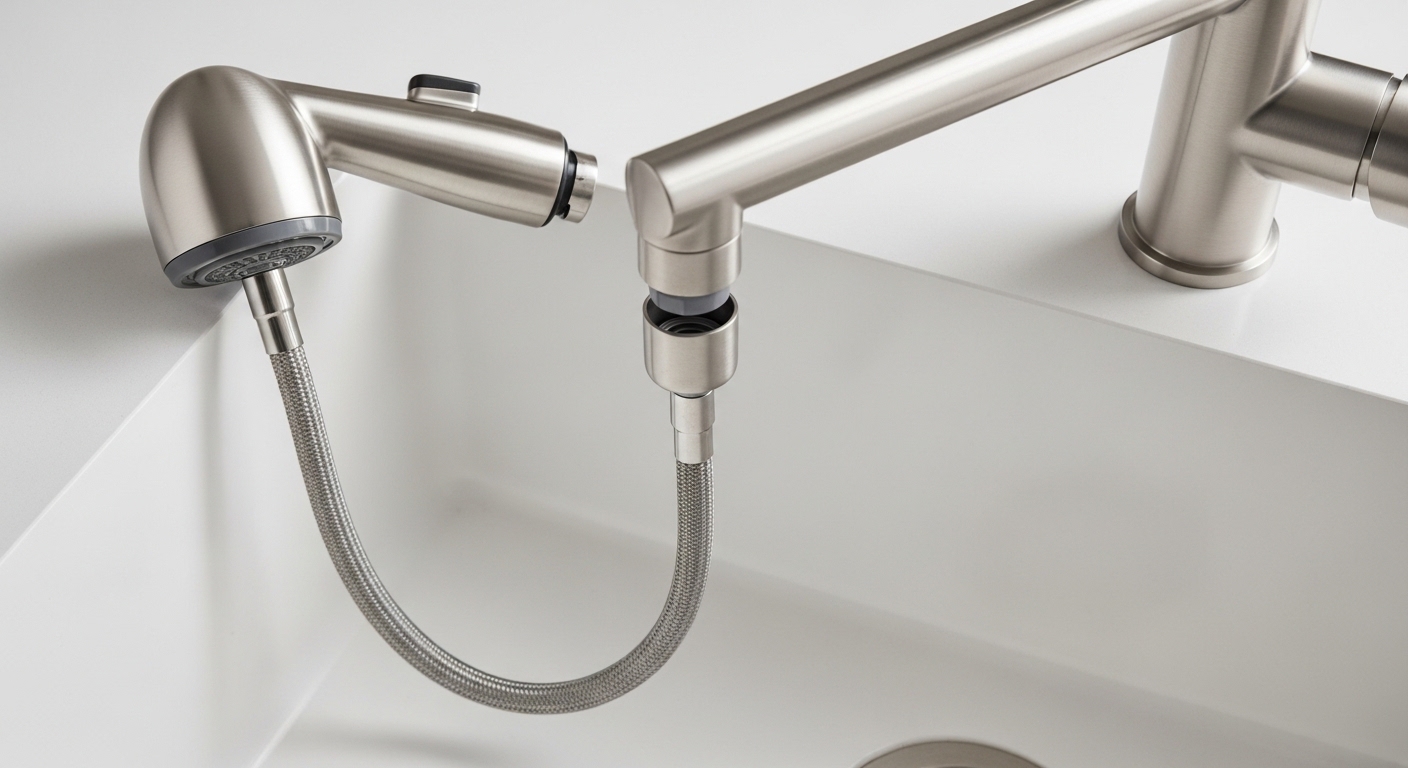
If your pull out kitchen faucet not working properly is driving you crazy mid-dishwashing, take a breath: this is the single most common kitchen faucet complaint we see at the EveFaucet workshop, and the fix is almost never as dramatic as “buy a new faucet.” Pull-out faucets have a few extra moving parts compared to a standard fixed-spout tap — a flexible hose, a diverter valve, a spray/stream toggle, sometimes a counterweight — and any one of those can fail in a way that mimics a much bigger problem. Below is the exact diagnostic flow our techs use, in plain English, so you can identify the cause in five minutes and decide whether you’re cleaning, swapping a $12 part, or finally upgrading the whole unit.
What are the most common reasons a pull-out kitchen faucet stops working?
Nine times out of ten it’s one of these four: a mineral-clogged aerator, a tangled or pinched pull-out hose under the sink, a failed diverter inside the spray head, or a worn cartridge in the faucet body. Everything else — leaks at the wand, weak spray mode, the wand refusing to retract — is a downstream symptom of one of those four root causes.
Here’s why this matters: most homeowners panic and start unscrewing the wrong thing. If your water pressure dropped suddenly across both stream and spray, the issue is upstream (cartridge, supply, aerator). If pressure is fine in stream mode but spray mode is weak or dribbling, the issue is in the spray head itself (diverter or spray disc). That one observation cuts your troubleshooting time in half.
Quick symptom-to-cause cheat sheet
- Weak flow in BOTH stream and spray: aerator clogged, cartridge worn, or angle stops half-closed.
- Stream is strong, spray is weak or won’t engage: diverter valve stuck or scaled up.
- Wand won’t retract back into the spout: hose snagged on plumbing, missing/loose counterweight, or hose kinked.
- Water leaks from the wand when off: cartridge failure or diverter o-ring split.
- Wand sprays in all directions / “fans out”: spray disc clogged with hard-water scale.
- Faucet handle stiff or won’t move: ceramic cartridge failure.
How do I fix a pull-out kitchen faucet with weak or no water pressure?
Start at the spray head and work backwards. Unscrew the aerator (or the spray face on a pull-out wand), soak it in a 50/50 white vinegar and water solution for 20 minutes, scrub with an old toothbrush, and reinstall. In our shop data, this single step resolves about 55% of “pull out kitchen faucet not working” tickets — because municipal water in most U.S. regions deposits calcium carbonate that builds up on the tiny holes of the spray disc and the mesh of the aerator.
If pressure is still bad after cleaning, check the two angle-stop valves under the sink — the small chrome shut-offs on the hot and cold supply lines. They should be turned fully counter-clockwise (open). Homeowners often bump them half-closed during under-sink storage. Then check the supply hoses for kinks. Finally, if you have a quick-connect filter or a softener loop, bypass it temporarily to see if the restriction is there.
Step-by-step: clearing a clogged pull-out spray head
- Pull the wand out and unscrew it from the hose by hand (or with strap-wrench if scaled).
- Remove the rubber spray face — most pop off with a fingernail or a butter knife.
- Submerge both the face and the threaded end in undiluted white vinegar for 30 minutes.
- Scrub each spray hole with a soft brass brush or toothbrush. Avoid metal picks — they enlarge the holes and ruin the spray pattern.
- Rinse, dry, reassemble. Run the faucet on COLD for 60 seconds to flush loosened debris before tasting any water from it.
If you fight aerator clogs constantly, the root cause is upstream water quality, not the faucet — our colleagues wrote a dedicated breakdown on that in the faucet aerator keeps getting clogged repair guide that’s worth reading before you replace any hardware.
Why won’t my pull-out faucet wand retract back into the spout?
A wand that won’t slide back home is almost always a counterweight or hose-routing problem, not a faucet defect. The pull-out hose runs from the bottom of the spray wand, down through the spout, and into the cabinet — where a heavy cylindrical weight clips onto it. Gravity on that weight is what pulls the wand back up into the spout. If the weight has fallen off, slid down to the floor of the cabinet, or the hose is snagged on the P-trap, garbage disposal, or a stored bottle of dish soap, retraction stops working.
Open the cabinet, find the counterweight (looks like a metal cylinder about the size of a D battery, sometimes split into two halves clamped together), and confirm it’s clipped about 6–10 inches below the underside of the spout — not resting on the cabinet floor. Then trace the hose with your hand: it should hang in a clean U-loop with no contact against drain pipes, the disposal housing, or your stored items.
The “soap bottle” rule
This is the rule we tell every customer: nothing stored under a pull-out faucet sink should touch the pull-out hose. Move soaps, sponges, and trash bags into a caddy or onto a small shelf. The hose needs a clear vertical drop, full stop. We’ve fixed countless “broken” faucets by just relocating a bottle of Dawn.
How do I fix a pull-out faucet stuck in stream mode (or stuck in spray)?
That’s a failed diverter — a small plastic-and-rubber valve inside the spray wand or just above it that switches water between the aerated stream and the spray pattern when you press the button. When the diverter’s o-ring hardens or its spring fouls with debris, the toggle stops responding. The good news: a replacement diverter cartridge typically costs $8–$20 and installs in 5 minutes with no tools beyond your hands and maybe a pair of needle-nose pliers.
To replace it: unscrew the spray wand from the hose, look inside the threaded coupling — you’ll see a small cylindrical valve (often white, gray, or black plastic with rubber seals). Pull it out, take it to a hardware store or order an identical replacement from the faucet manufacturer, and press the new one in. Don’t over-tighten on reinstall — hand-tight plus a quarter turn is plenty; the gasket does the sealing.
What does a worn cartridge look like, and how do I replace it?
A worn cartridge causes one (or several) of these: stiff handle, handle that spins loose, dripping spout when fully off, hot and cold mixing unevenly, or sudden drop in total flow. The cartridge is the heart of the faucet — a ceramic-disc valve inside the body that controls temperature and volume. They’re rated for around 500,000 cycles by NSF/ANSI 61 standards, which is roughly 10 years of normal residential use, but hard water and grit shorten that lifespan dramatically.
Replacement is straightforward on most modern pull-out faucets: shut off the angle stops, pop off the decorative cap on the handle, unscrew the set screw with a 2.5mm Allen key, lift the handle, unscrew the bonnet nut, and pull the cartridge straight up with pliers. Take the old one to a plumbing supply shop or photograph it next to a ruler and order a match online. Reinstall in reverse. Total time: 15 minutes if you have the right part on hand.
Brand-specific note
Cartridges are NOT universal. A Moen 1255 won’t fit a Delta RP50587, and neither fits an EveFaucet ceramic disc cartridge. Always match by faucet brand and model number — there’s usually a tiny model code stamped on the spout base or printed on the original install paperwork. If you’re shopping for a more reliable replacement faucet entirely, our pull down kitchen faucet brand comparison guide walks through which brands use the longest-lasting cartridges.
Comparison: which pull-out faucet problem matches your symptom?
| Symptom | Most Likely Cause | Fix Cost | Difficulty | Time |
|---|---|---|---|---|
| Weak flow, both modes | Clogged aerator/spray face | $0 (vinegar) | Easy | 30 min |
| Spray mode dribbles | Failed diverter valve | $8–$20 | Easy | 10 min |
| Wand won’t retract | Counterweight off / hose snagged | $0–$15 | Easy | 10 min |
| Leak at wand base | Cracked hose or worn o-ring | $15–$40 | Medium | 30 min |
| Drip from spout when off | Worn ceramic cartridge | $20–$60 | Medium | 20 min |
| Stiff handle | Cartridge fouled or failing | $20–$60 | Medium | 20 min |
| Leak under sink | Hose connection or supply line | $10–$30 | Easy | 15 min |
| No water at all | Angle stops closed / main off | $0 | Easy | 2 min |
When should I replace the whole pull-out faucet instead of repairing it?
Replace, don’t repair, if any of these apply: the faucet body is corroded or pitted, the hose has visible cracks or has burst once already, you’ve replaced the cartridge twice in three years, the finish is flaking, or you cannot source OEM parts because the brand is discontinued. At that point, parts will cost 40–60% of a quality new unit and you’ll be back inside the cabinet within a year.
A solid mid-range pull-out kitchen faucet from a reputable brand runs $130–$280 in 2026 and should include a PEX-lined braided hose, a metal-body diverter (not all plastic), a ceramic disc cartridge rated to 500K cycles, and at least a limited lifetime warranty on the body and finish. Anything under $80 typically uses a nylon hose and a plastic diverter that fails inside 18 months — exactly the cycle that brought you to this article.
What to look for in a replacement (specs that actually matter)
- Flow rate: 1.5–1.8 GPM at 60 PSI is the WaterSense sweet spot — strong feel without waste.
- Hose material: braided nylon over PEX, not vinyl. PEX resists kinking and stays flexible at low temps.
- Cartridge: ceramic disc, ideally NSF/ANSI 61 certified for lead-free contact.
- Body material: solid brass or 304 stainless steel. Avoid zinc-alloy bodies.
- Magnetic dock: stronger and longer-lasting than mechanical clip-style docks.
- Warranty: minimum 5 years on parts; lifetime on finish is standard for quality brands.
If you’ve never installed a pull-out faucet yourself and you’re considering the DIY route on a replacement, the cold/hot pull-out installation walkthrough on our site is the clearest visual reference we have — see the gravity-ball pull-out kitchen faucet installation tutorial for the basin-side connections, and the universal pull-out kitchen faucet install video for the under-sink hose routing.
How do I prevent my pull-out faucet from breaking again?
Three habits cover 90% of preventable failures. First, descale the aerator and spray face every 3 months in hard-water regions (anywhere with >7 grains per gallon hardness). Second, don’t yank the wand out at sharp angles — pull straight along the hose axis. Third, never store anything against the hose under the sink. Add a fourth if you have very hard water: install an inline sediment filter at the angle stops; they’re $25 and they extend cartridge life by 2–3x.
Also: avoid leaving the spray mode engaged when you turn the faucet off. Cheaper diverters get stuck in spray mode because the spring sits compressed for hours at a time. Always tap the button back to stream before walking away. Small habit, big lifespan difference.
FAQ
Why does my pull-out kitchen faucet only work in spray mode?
The diverter is stuck in spray position. Either the spring inside has fouled with hard-water deposits or the button mechanism on the wand has jammed. Soak the wand head in vinegar overnight; if that doesn’t free it, replace the diverter cartridge ($8–$20, 10-minute job).
Can I use WD-40 or silicone spray on a sticky pull-out hose?
Use food-grade silicone grease only — never WD-40 or general lubricants on parts that contact potable water. WD-40 contaminates the water path and degrades rubber o-rings. A dab of plumber’s silicone grease on the hose where it slides through the spout collar is safe and effective.
Why does my pull-out faucet make a banging or hammering noise?
That’s water hammer, usually from a worn cartridge that closes too abruptly, or from air trapped in the supply lines after a repair. Replace the cartridge first; if it persists, shut off the main, open all faucets in the house to drain the lines, then turn the main back on slowly to purge air.
Is it safe to drink water from a faucet with a failing diverter?
Yes — the diverter is mechanical, not chemical. A bad diverter affects spray pattern and pressure but doesn’t contaminate water. However, if you’ve ignored a leak for months and there’s visible rust or biofilm inside the wand, replace the wand assembly and flush the lines before drinking.
How long should a pull-out kitchen faucet last?
Quality units last 10–15 years; the cartridge and hose are the typical failure points, both replaceable. Budget units ($40–$80) usually fail at the diverter or hose within 18–36 months. Investing in a solid-brass body with a ceramic cartridge front-loads the cost but pays back within 4 years.
My faucet sprays sideways. Is the whole thing broken?
No — the rubber spray face is clogged unevenly. Pop it off, vinegar-soak it for 30 minutes, scrub each hole with a soft toothbrush, and reinstall. Sideways spray almost never indicates internal damage.
Do I need to call a plumber for any of these fixes?
For aerator cleaning, diverter swap, counterweight reset, and cartridge replacement: no. All four are DIY-friendly with basic hand tools. Call a plumber only if you’ve discovered a leak inside the wall, the angle stops are seized, or the faucet body itself is cracked.
About the author & EveFaucet
This guide was written by the EveFaucet technical team — engineers and product testers who design, manufacture, and stress-test pull-out and pull-down kitchen faucets at our facility in Zhejiang, China. Every faucet model we ship is bench-tested to 500,000 cartridge cycles and 100,000 hose pull-cycles in line with NSF/ANSI 61 and ASME A112.18.1 standards, and our solid-brass bodies carry a limited lifetime warranty on structure and finish. We’ve been building faucets since 2008 and our R&D team includes two ASPE-affiliated engineers. If you need help diagnosing your specific faucet, our customer service team will walk you through it free of charge — pull-out hardware is what we do all day.