 EVE卫浴
EVE卫浴
How Do You Clean a Faucet Head From Hard Water Buildup (Without Wrecking the Finish)?
浏览次数:156 分类:Repair
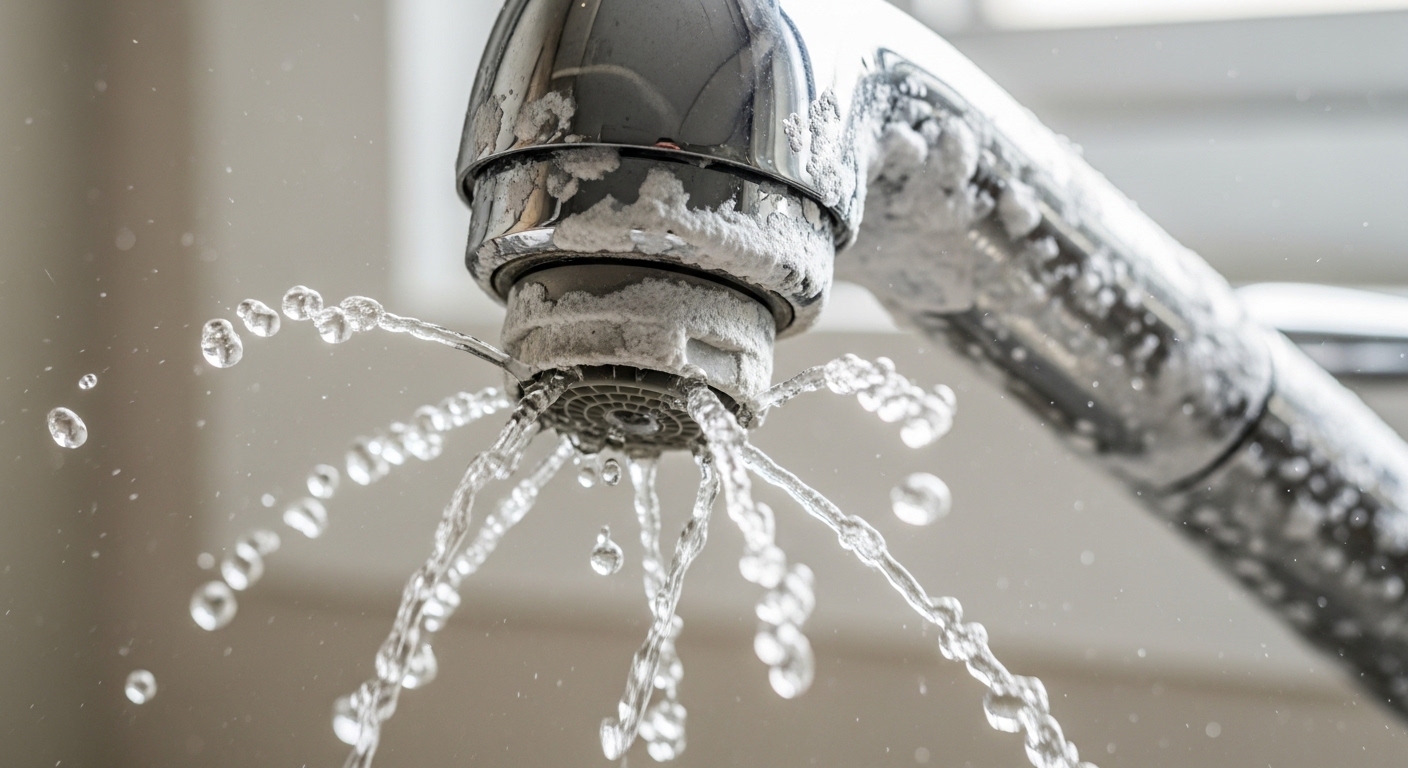
If you’ve landed here, your faucet probably looks crusty, sprays sideways, or trickles where it used to flow — and you want to know exactly how to clean a faucet head from hard water buildup without scratching the finish or buying a special product. Good news: the fix is cheap, takes about an hour of mostly waiting, and uses stuff already in your kitchen. The white chalky crust is calcium and magnesium carbonate (limescale) left behind when hard water evaporates, and mild acid dissolves it. Below is the exact method the EveFaucet workshop uses, plus how to avoid the three mistakes that ruin finishes.
What’s the fastest way to dissolve hard water buildup on a faucet head?
The fastest reliable method is a white vinegar soak. Vinegar is roughly 5% acetic acid, which reacts with the calcium carbonate scale and breaks it down so you can wipe or brush it away. You don’t need to scrub hard — let the acid do the work, then the scrubbing just clears the residue.
Here’s the bag-soak method step by step:
- Grab a small plastic bag (a sandwich or freezer bag) and fill it about one-third with undiluted white distilled vinegar.
- Slip the bag over the faucet head so the entire spout tip and aerator sit submerged in the vinegar.
- Secure it with a rubber band, hair tie, or twist tie around the neck of the spout.
- Wait 30–60 minutes. Light buildup clears in 30; heavy crust may want the full hour. Don’t exceed a couple of hours on plated or coated finishes.
- Remove the bag and scrub gently with an old soft toothbrush, working into the aerator screen and any grooves.
- Run hot water for 30–60 seconds to flush every loosened flake out of the aerator and spray holes.
That single soak handles the large majority of hard water faucet problems. If your water flow is still weak afterward, the buildup is inside the aerator itself and you’ll want to remove it — covered in the next section.
What if I don’t have vinegar — does lemon juice or CLR work?
Yes to both, with caveats. Bottled lemon juice (citric acid) works almost as well as vinegar and smells better; soak the same way. Powdered citric acid dissolved in warm water is even stronger and is what many pros prefer for severe scale — about a tablespoon per cup of hot water. Commercial descalers like CLR or Lime-A-Way work fast but are aggressive: limit contact to the times on the label (usually 2 minutes for some finishes), keep them off natural stone countertops, and never use them on brushed nickel, oil-rubbed bronze, or other living/coated finishes without testing first. When in doubt, vinegar is the safe default.
How do I clean a faucet aerator that’s still clogged after soaking?
If flow is still weak after a surface soak, unscrew the aerator and clean it directly — that’s where the grit collects. The aerator is the small screened nozzle at the very tip of the spout. Most thread off by hand (turn clockwise as you look up at it, since you’re working from underneath). If it’s stuck, wrap the jaws of pliers in a cloth or electrical tape to protect the finish, then grip and turn gently.
Once it’s out:
- Note the order of the parts as you disassemble — there’s usually a screen, a rubber washer, and a plastic flow restrictor. Lay them out left to right so reassembly is foolproof.
- Soak the pieces in a cup of vinegar for 20–30 minutes.
- Brush the screen with a toothbrush and poke stubborn holes clear with a toothpick — never a metal pin, which enlarges the holes and ruins the spray pattern.
- Rinse and reassemble in the exact reverse order, hand-tighten, then snug a quarter-turn with the cloth-wrapped pliers. Don’t overtighten or you’ll crack the washer.
If your aerator clogs again within weeks, the problem is upstream — sediment from your water heater or pipes, not just surface scale. We walk through that whole diagnosis in our guide on what to do when a faucet aerator keeps getting clogged, which covers flushing the lines and when the aerator itself needs replacing. And if the weak flow is actually coming from a pull-out sprayer head rather than the aerator, see why a pull-out kitchen faucet stops working and how to fix it fast.
How do I clean a clogged shower head or pull-down sprayer from limescale?
Same chemistry, slightly different rig. For a shower head you can usually leave it attached: fill a bag with vinegar, tie it over the head so the face plate is submerged, and soak 30–60 minutes. For a removable head or a pull-down kitchen sprayer, just detach it and drop the whole face into a bowl of vinegar. Afterward, run the water and rub the rubber spray nozzles with your thumb — the flexible nipples on modern heads pop scale off easily once it’s softened. If you’re handling a hose-style shower head and want to make sure it goes back leak-free, our walkthrough on installing a shower head with a hose without leaks covers the tape-and-torque details.
Which cleaning method is right for my faucet finish?
Finish matters more than people think — the right acid on the wrong finish leaves permanent dull spots. Here’s a quick reference for matching method to material.
| Finish | Best method | Max soak time | Avoid |
|---|---|---|---|
| Chrome (polished) | White vinegar soak | 1–2 hours | Abrasive pads, steel wool |
| Stainless steel | Vinegar or citric acid | 1 hour | Bleach, chlorine cleaners |
| Brushed/satin nickel | Vinegar, short soak; wipe with grain | 30 min | CLR, acidic descalers, scouring |
| Oil-rubbed bronze | Damp cloth + mild soap only | Spot-treat, no long soak | Vinegar, any acid (strips patina) |
| Matte black | Mild soap, soft cloth; quick vinegar on aerator only | 15 min on metal parts only | Acids on the coated body, abrasives |
| Champagne bronze / gold (PVD) | Soap and water; short vinegar on aerator | 20 min | Prolonged acid contact |
The pattern: polished chrome and stainless are tough and acid-friendly; living and coated finishes (oil-rubbed bronze, matte black, gold) are not. For those, do a long vinegar soak only on the removable metal aerator, and treat the visible faucet body with nothing harsher than dish soap and a microfiber cloth. PVD coatings (the modern brushed gold and champagne bronze finishes) are extremely durable against wear but still don’t love sitting in acid — keep the soak short.
How do I keep hard water from building up on my faucet again?
You can’t change your water’s mineral content without a softener, but you can stop scale from cementing on. The trick is removing water before it evaporates and leaves minerals behind. A few habits cut buildup dramatically:
- Wipe the faucet dry after heavy use, especially around the aerator and the base where water pools. A quick swipe with a dish towel is enough.
- Do a 10-minute vinegar soak monthly in hard-water homes — it’s far easier to prevent scale than to chisel it off later.
- Replace the aerator yearly if you have very hard water. They cost a few dollars and a fresh one restores the original flow instantly.
- Consider a whole-home or under-sink softener if you’re also seeing scale on glassware, the kettle, and the shower door — that’s a sign the mineral load is high enough to justify it.
- Skip the abrasive cleaners. Scratched finish holds scale worse, so the rougher you scrub, the faster it comes back.
One bonus: keeping the aerator clean also keeps your faucet quiet and splash-free. A lot of “my faucet suddenly sputters” complaints are just partial scale clogging, not a failing valve.
When is hard water buildup a sign of a bigger plumbing problem?
Most of the time, buildup is purely cosmetic and a soak fixes it. But occasionally the symptoms point deeper. If you clean the aerator and flow is still poor across the whole house, the issue may be scaled-up supply lines or a failing pressure regulator, not the faucet. If only hot water is weak, sediment in the water heater is the usual culprit — flushing the tank helps. And if a valve or handle is involved rather than the spout, that’s a different repair entirely; for outdoor and exposed taps, for example, see our guide on why an outside faucet won’t turn off and how to stop the water fast. Knowing whether you’re chasing scale or a mechanical fault saves you from soaking a part that was never the problem.
FAQ
How long should I soak a faucet head in vinegar?
Thirty minutes for light buildup, up to an hour for heavy crust. On polished chrome or stainless you can safely go to two hours, but on brushed nickel, matte black, oil-rubbed bronze, or gold finishes keep acid contact to 15–30 minutes and only on removable metal parts. Longer isn’t better past the point the scale dissolves — it just risks the finish.
Will vinegar damage my faucet’s finish?
Not on chrome or stainless steel — those handle vinegar fine. It can dull or strip living and coated finishes, though: oil-rubbed bronze especially, because the dark patina is essentially a controlled surface treatment that acid eats. For those finishes, soak only the aerator and clean the visible body with mild soap and water. When unsure, test on a hidden spot for a minute and check for discoloration.
Can I use a Magic Eraser or steel wool on hard water spots?
Avoid both on the faucet finish. Steel wool and most “magic” melamine sponges are abrasive enough to micro-scratch chrome and coated finishes, which actually makes scale return faster because the rough surface grips minerals. Dissolve the scale chemically with vinegar or citric acid instead, then use only a soft toothbrush or microfiber cloth.
Why does my faucet spray sideways or in random directions?
That’s a partially clogged aerator. Mineral flakes block some of the screen holes, so the water that does get through shoots off at angles. Unscrew the aerator, soak it in vinegar, brush the screen clean, and clear stubborn holes with a toothpick. The spray pattern usually returns to normal immediately. If it doesn’t, the aerator is worn or the wrong type and is cheap to replace.
How often should I descale my faucet if I have hard water?
In hard-water areas (above roughly 7 grains per gallon), a quick 10-minute vinegar soak once a month keeps scale from cementing, and a deeper aerator cleaning every 3–6 months is plenty. If you wipe the faucet dry after use, you can stretch those intervals. Replacing the inexpensive aerator once a year is the easiest way to keep full flow without any scrubbing at all.
Is it safe to drink water from a faucet right after vinegar cleaning?
Yes, once you’ve flushed it. After cleaning, run hot water through the faucet for 30–60 seconds to clear any vinegar residue and loosened mineral flakes. The small amount of food-grade vinegar involved is harmless, but the flush also ensures no grit ends up in your glass. Reattach the aerator before drinking so it can filter any remaining particles.
A note from the EveFaucet workshop
This guide is written by the EveFaucet product team, who design, bench-test, and service kitchen and bathroom faucets every day. We test our spouts and aerators against standard flow and durability specs (faucet aerators in North America are built to a 2.2 GPM reference flow, and our valves are cycle-tested well beyond typical household use), and our fixtures carry a manufacturer warranty that covers finish and cartridge defects — though note that mineral buildup from hard water is a maintenance item, not a defect, so the cleaning steps above are the right fix rather than a warranty claim. If you’ve descaled the aerator and still have flow trouble, reach out before assuming the faucet has failed; nine times out of ten it’s something simple upstream. For more hands-on repair walkthroughs, browse the EveFaucet repair library at www.evefaucet.com.