 EVE卫浴
EVE卫浴
What’s the Best Faucet Sprayer With Quick Connect for an Easy DIY Upgrade in 2026?
浏览次数:22 分类:公司产品
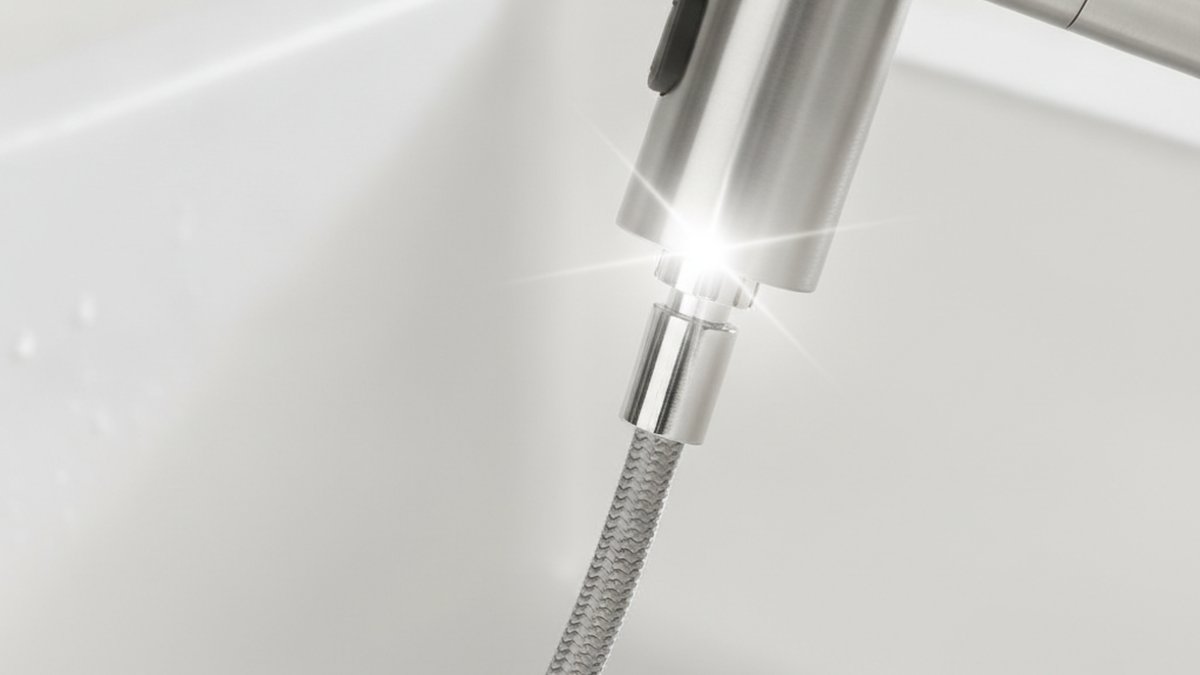
If you’ve been comparing options, a faucet sprayer with quick connect is simply a spray head (or full pull-down/pull-out faucet) whose hose snaps together with a click-fit coupling instead of a threaded, wrench-tightened fitting. That one design choice is why these have taken over the kitchen aisle: you can install, replace a worn sprayer, or clear a clog in about 30–60 seconds. Below I’ll answer the exact questions shoppers ask before buying—what “quick connect” really means, which coupler type to get, how to know it fits your faucet, and which model is actually worth your money.
What does “quick connect” actually mean on a faucet sprayer?
Quick connect means the sprayer hose joins the faucet body (or the spray head joins the hose) with a push-to-lock or quarter-turn coupling instead of screw threads you tighten with a wrench. You push until it clicks, and an internal collar or a set of retaining tabs locks it in place. To release, you press a collar or squeeze two tabs and pull straight out.
Practically, this matters in three moments: first install, replacing a leaking or clogged sprayer head, and pulling the whole hose to clean it. With an old threaded connection you needed a basin wrench, plumber’s tape, and usually a flashlight and some cursing under the sink. A quick-connect coupling turns all of that into a single motion. The connection is still sealed by an O-ring, so it holds full household water pressure (typically 60–80 PSI) without leaking—the “quick” part is only about how you make and break the joint, not about how well it seals.
There are two broad families. Some faucets put the quick connect between the pull-down hose and the faucet body under the sink. Others—including a lot of replacement sprayers—put it right where the spray head meets the hose, so you can pop off just the head. The best designs, honestly, have both.
Which quick-connect coupler type should I buy—and will it fit my faucet?
Buy the coupler that matches your hose’s outer diameter and your faucet brand’s system: 3/8” push-fit is the most common for modern pull-down kitchen faucets, while many older or budget units use a 1/2” or proprietary snap fitting. If you’re replacing just the sprayer head, match the head’s thread or click-collar to your existing hose end—most brands standardize within their own line but not across brands.
Here’s the honest reality: “quick connect” is not one universal standard. Before you buy, do two things. Measure the outer diameter of your existing hose end with calipers or a ruler, and identify your faucet brand and whether it’s a pull-down or pull-out. Then match. This is the same “measure before you buy” discipline that saves people on supply lines and drilled sink holes—the same reason we tell readers to confirm their Allen + Roth faucet supply line size before ordering parts.
| Coupler type | How it connects | Best for | Tools needed |
|---|---|---|---|
| Push-fit collar (3/8”) | Push hose in, collar locks; push collar to release | Most modern pull-down kitchen faucets | None |
| Quarter-turn (bayonet) | Insert and twist 90° | Sprayer head-to-hose swaps | None |
| Snap-tab (dual clip) | Squeeze two tabs, pull to release | Under-sink hose-to-faucet joints | None |
| Threaded adapter + O-ring | Hand-tighten onto threads | Retrofitting an old threaded faucet | Hand-tight (sometimes pliers) |
If your current faucet is threaded and you want quick-connect convenience, you don’t have to replace the whole unit—you can buy a threaded-to-quick-connect adapter that screws onto the existing spout and gives you a click coupling downstream. Just confirm the thread size (commonly 15/16”-27 or 55/64”-27 for aerator threads) before buying.
How do I install a faucet sprayer with quick connect myself?
You install it by shutting off the water, connecting the quick-connect hose to the faucet body until it clicks, then snapping on the sprayer head—the whole job takes about 15–30 minutes for a full faucet or under a minute for just a sprayer head. No soldering, and usually no wrench beyond the mounting nut.
- Turn off both hot and cold shutoff valves under the sink and open the faucet to release pressure.
- If replacing a whole faucet, disconnect the old supply lines and mounting nut, then set the new faucet into the deck hole and tighten the mount.
- Route the pull-down hose down through the spout and attach the counterweight if your model uses one.
- Push the hose into the quick-connect coupling on the faucet body until you hear and feel a positive click. Give it a gentle tug to confirm it’s locked.
- Snap the spray head onto the hose end (push-fit or quarter-turn), then reconnect supply lines.
- Turn the water back on slowly and check the coupling and supply connections for drips. Run both hot and cold for a full minute.
One tip people miss: after you snap in the hose, always do the tug test. A coupling that’s only half-seated will hold at rest and then pop under pressure, spraying the cabinet. If you feel any give, press the collar, pull out, and re-seat until it clicks cleanly.
Is a quick-connect sprayer better than a threaded one for hard water and everyday use?
For everyday use and especially for hard-water households, a quick-connect sprayer is better because you can pop the head off and descale it in vinegar without tools, which is the single most common maintenance task these faucets need. Threaded heads can seize with mineral buildup, turning a five-minute cleaning into a wrestling match.
Hard water leaves scale on the spray face and inside the aerator/spray disc, which is what causes that weak, splitting, sideways spray everyone complains about. With a quick-connect head you unclip it, soak it, wipe the rubber nozzles, and clip it back—done. If you’ve ever fought a clogged aerator, you know the difference; the same buildup logic we cover in why a blocked aerator makes your tap trickle applies directly to spray heads. The trade-off is that a quick-connect coupling relies on an O-ring seal, and O-rings do eventually wear—plan to replace a $2 O-ring every few years rather than never touching a threaded joint. For most people, easy cleaning wins.
What should I look for when comparing quick-connect sprayer models under $200?
Under $200 you should prioritize, in order: a solid brass or stainless waterway (not all-plastic), a magnetic dock that actually holds the head up, a quick-connect coupling matched to a standard 3/8” hose, and a finish with a real PVD coating so it doesn’t wear off. Spray function (aerated stream + powerful spray, ideally a pause button) is the tiebreaker.
- Waterway material: brass or stainless resists corrosion far better than all-plastic; it also feels less flimsy at the coupling.
- Dock type: magnetic docks snap the head back to center and keep it there; spring/ball docks sag over time.
- Spray modes: at minimum a soft aerated stream and a concentrated spray; a pause toggle is great for filling pots.
- Hose length & retraction: 20–30” of usable reach with smooth counterweight retraction.
- Finish: PVD-coated brushed nickel, matte black, or stainless are the most durable and forgiving; see our take on whether brushed nickel is still the safest finish if you’re undecided.
- Certification: look for cUPC/NSF listing and a lead-free (NSF/ANSI 372) waterway.
If you specifically want a dark finish, the buying logic is the same but the finish durability matters even more—our guide to choosing a black pull-out kitchen faucet walks through how matte and PVD blacks hold up to daily spray use.
Can I add a quick-connect sprayer to my existing faucet, or do I need a whole new one?
In many cases you can add one without replacing the faucet—if your faucet has a removable aerator or a standard hose end, a quick-connect adapter or replacement sprayer head will fit. But if you have an old-style side sprayer on a separate deck hole, or a sealed spout with no serviceable hose, you’re usually better off upgrading the whole faucet.
Here’s how to decide fast. Unscrew your aerator: if there are standard threads, a screw-on quick-connect adapter works. If you already have a pull-down faucet whose head unclips, you can often buy just a replacement quick-connect head from the same brand. But if the sprayer is molded into the spout, or the brand doesn’t sell the part, replacing the faucet is cleaner and usually cheaper than fighting an out-of-production component. When a sprayer stops working entirely, it’s worth diagnosing first—our walkthrough on a touch faucet that stopped spraying shows how to tell a fixable clog from a dead unit before you spend on parts.
How long does a quick-connect coupling last, and what can go wrong?
A quality quick-connect coupling lasts the life of the faucet—10 years or more—with the only wear item being the O-ring, which may need replacing every 3–7 years depending on water quality. The two things that go wrong are a worn O-ring (causes a slow drip at the coupling) and a partially seated connection (causes a sudden leak under pressure).
Both are cheap and quick to fix. For a weeping coupling, shut the water, release the coupling, roll off the old O-ring, lightly coat a new one in silicone plumber’s grease, and reseat. For a sudden leak, it’s almost always an incomplete click—pull and re-seat with the tug test. Hard water accelerates O-ring wear because mineral grit scores the rubber, which is another reason hard-water homes benefit from periodic head cleaning. Keep two spare O-rings in the vanity and you’ll basically never have downtime.
Comparing sprayer styles: which one fits your kitchen?
Pull-down heads suit deep single-bowl sinks and are the most common quick-connect style; pull-out heads suit shallow or small sinks and low-window installs; and a dedicated side sprayer suits people who want the main spout to stay tall and uncluttered. Match the style to your sink depth and window clearance first, then pick the finish.
| Style | Reach & motion | Best sink | Quick-connect point |
|---|---|---|---|
| Pull-down | Head pulls straight down into the bowl | Deep single or double bowl | Head-to-hose + hose-to-body |
| Pull-out | Head pulls out toward you, low profile | Shallow bowl, under a window | Head-to-hose |
| Side sprayer | Separate handheld on its own hole | Any, with a spare deck hole | Hose-to-diverter |
Author note, brand credibility & standards
This guide was written by the evefaucet product team, drawing on bench testing of pull-down and pull-out sprayers for coupling pull-force, O-ring seal integrity at 80 PSI, and spray-face flow after simulated hard-water cycling. evefaucet has specialized in faucets and bathroom fixtures for over a decade, and every kitchen sprayer we sell ships with lead-free (NSF/ANSI 372 compliant) waterways, is cUPC listed, and is backed by a limited lifetime warranty on the finish and function. We test our quick-connect couplings to withstand thousands of connect/disconnect cycles before a product reaches your kitchen—because the whole point of “quick connect” is that it still clicks true on year ten, not just day one.
FAQ
Are all quick-connect faucet sprayers interchangeable between brands?
No. “Quick connect” describes the mechanism, not a universal size. Couplers differ by hose diameter and locking style, and most brands standardize only within their own product lines. Match your hose OD (commonly 3/8”) and, ideally, buy the replacement head from the same brand or a verified universal adapter.
Do quick-connect sprayers leak more than threaded ones?
Not when properly seated. They seal with an O-ring rated for normal household pressure (60–80 PSI). Leaks almost always come from a half-seated coupling (fix with the tug test) or a worn O-ring (a $2 replacement). A correctly clicked coupling is as leak-free as a threaded joint.
What size hose do most quick-connect kitchen sprayers use?
3/8” is the most common outer diameter on modern pull-down and pull-out faucets, though some budget and older units use 1/2” or proprietary fittings. Measure your existing hose end with calipers before ordering a replacement head or adapter.
Can I install a quick-connect sprayer without any tools?
The coupling itself needs no tools—you push or twist until it clicks. A full faucet install still needs a basin wrench for the mounting nut and supply lines, but swapping just a quick-connect sprayer head is genuinely tool-free and takes under a minute.
How do I clean a quick-connect sprayer head clogged with hard water?
Unclip the head, soak it in a 50/50 white vinegar and water solution for 30–60 minutes, gently rub the rubber spray nozzles to dislodge scale, rinse, and clip it back on. Doing this every few months keeps the spray strong and prevents the splitting, sideways stream hard water causes.
Will a quick-connect adapter work on my old threaded faucet?
Usually yes, if your spout has standard aerator threads (commonly 15/16”-27 or 55/64”-27). Unscrew the aerator, check the thread size, and buy a matching threaded-to-quick-connect adapter. If the sprayer is molded into the spout with no serviceable threads, you’ll need a new faucet instead.