 EVE卫浴
EVE卫浴
What Is a Brass Drum Faucet — and Is It the Right Vessel Sink Faucet to Buy in 2026?
浏览次数:6 分类:公司产品
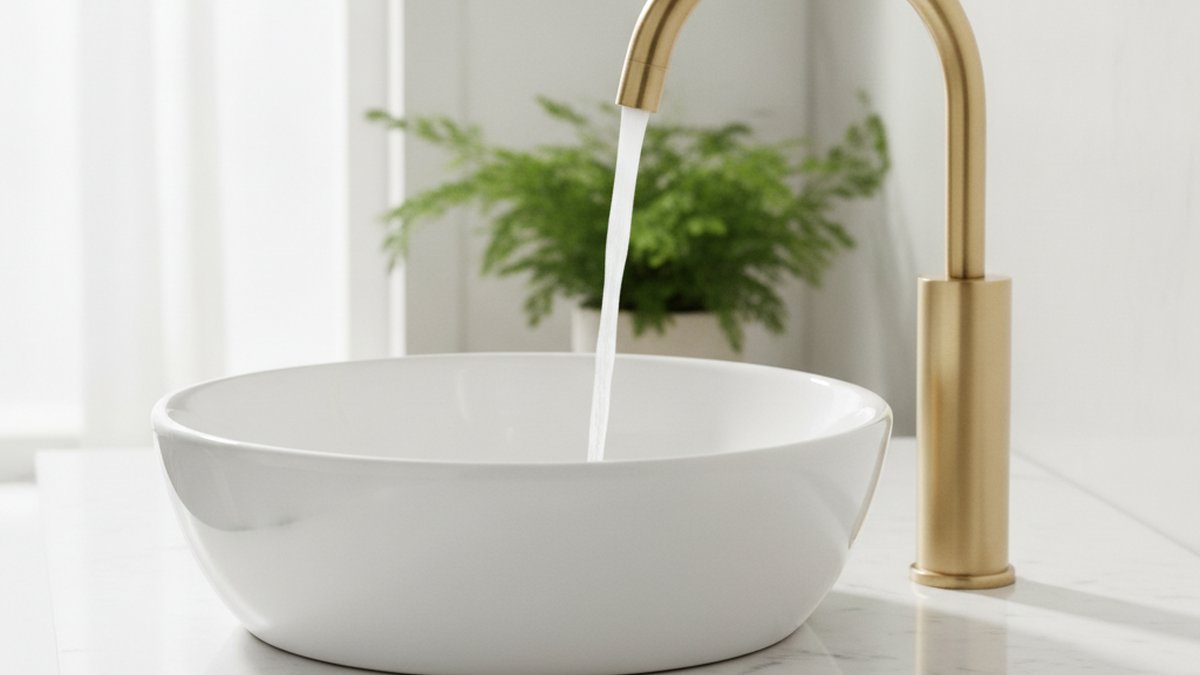
If you’ve been shopping for a countertop basin and keep running into the term brass drum faucet, you’re looking at one of the most specific and often misunderstood categories in bathroom hardware. It’s not a random style name — the “drum” describes the shape of the body (a straight cylinder, like a section of pipe or a drum), and “brass” tells you what it’s actually made of underneath the finish. That combination matters more than most product pages admit, because the shape decides whether it fits your sink, and the metal decides how long it lasts. Below, I’ll walk you through exactly what this faucet is, who should buy one, how to size it, and how the finishes and price tiers actually differ — the way I’d explain it to a friend standing in the plumbing aisle.
What exactly makes a faucet a “brass drum faucet”?
A brass drum faucet is defined by two things at once: a cylindrical drum-shaped body and solid brass construction. The body is a tall, straight tube — no curves at the base, no flared trumpet shape — that rises off the counter and bends into a spout near the top. Because it’s built from brass rather than zinc alloy or plastic, it resists corrosion, handles hot water without warping, and threads onto supply lines without cracking over time.
Almost every brass drum faucet is a single-hole, single-handle vessel faucet. That means one deck hole, one lever (usually a joystick-style or side lever), and enough height to clear the rim of an above-counter bowl. The tall profile isn’t a styling choice — it’s a functional requirement. A standard 5-inch bathroom faucet would leave the spout below the rim of most vessel sinks, so drum faucets typically stand 10 to 13 inches tall to reach over the bowl.
- Body shape: straight cylinder (the “drum”), often with a slight taper or a squared-off spout for an industrial look.
- Material: solid brass core — heavier in the hand than a comparable zinc faucet, which is a quick way to sanity-check quality in a showroom.
- Configuration: single hole, single handle, tall spout for vessel/above-counter basins.
- Valve: ceramic disc cartridge in any decent unit, rated for tens of thousands of on/off cycles.
Is a brass drum faucet the right choice for a vessel sink?
Yes — for a true above-counter vessel sink, a tall brass drum faucet is usually the correct and safest choice, because it’s purpose-built for that setup. Vessel sinks sit on top of the counter instead of dropping into it, so the water surface is 4 to 6 inches higher than a normal sink. You need a faucet tall enough to arc water into the center of the bowl without splashing, and the drum silhouette is one of the cleanest ways to get that height without looking bulky.
Where it’s not the right choice: drop-in or undermount sinks. If your basin sits flush with or below the counter, a 12-inch drum faucet will tower awkwardly over it and splash. For those, a standard-height single-hole faucet is a better match — and if you like the warm-metal look, a copper faucet spout or a brushed-brass fixture in a normal height will serve you better than forcing a tall drum onto a low sink.
How tall should a drum vessel faucet be for my sink?
Measure your bowl height, then make sure the faucet’s spout outlet sits 4 to 6 inches above the rim of the sink. That clearance gives you enough drop to fill a cup and rinse your hands without water sheeting over the edge, and enough room to actually get your hands under the stream.
Here’s the quick math: measure the height of your vessel bowl from where it meets the counter to its top rim. Add roughly 4–6 inches for comfortable clearance. That total is the minimum spout-outlet height you want. So a 5.5-inch-tall bowl wants a faucet whose spout reaches at least 9.5–11.5 inches. Most drum faucets list both an overall height and a spout height — always buy off the spout number, not the overall number, because the handle or top of the body can add a couple inches that don’t help you.
- Measure your vessel bowl’s outside height (counter to rim).
- Add 4–6 inches for splash-free clearance.
- Match that to the faucet’s listed spout height, not overall height.
- Check the spout reach too — you want the water landing near the center drain, roughly 4–5 inches of horizontal reach for a typical round bowl.
What finishes does a brass drum faucet come in — and which lasts longest?
Brass drum faucets come in brushed gold, brushed nickel, matte black, chrome, and raw/living brass — and for durability, brushed and matte finishes hide water spots and wear far better than polished ones. The finish is a coating over the brass body, so the question isn’t really “which color” — it’s “which finish will still look good after two years of toothpaste, hard water, and daily wiping.”
| Finish | Look | Hides water spots / fingerprints? | Best for |
|---|---|---|---|
| Brushed Gold / Brushed Brass | Warm, satin, on-trend | Very well | Modern and industrial vessel setups |
| Matte Black | Bold, graphic, contemporary | Well (shows dust/lime scale in hard water) | High-contrast white or stone counters |
| Brushed Nickel | Neutral, silvery, safe | Very well | Transitional bathrooms that need to age gracefully |
| Polished Chrome | Bright, reflective, classic | Poorly — shows every spot | Budget builds, easy to clean but demands wiping |
| Raw / Living Brass | Unlacquered, patinas over time | N/A — meant to age | Buyers who want an evolving, vintage look |
If you want the safest all-rounder that won’t date quickly, brushed nickel and brushed gold are the two I steer most people toward. Brushed nickel in particular is a low-regret finish across the whole bathroom — I dig into why in our guide to whether brushed nickel faucets and handles are still the safest choice. If you love the warmth of real metal and don’t mind a living finish that develops character, an unlacquered brass drum ages beautifully — the same appeal that draws people to a copper faucet for bathroom sinks.
Why choose solid brass over zinc alloy or stainless?
Choose solid brass because it’s the best balance of corrosion resistance, machinability, and lifespan for a wet, daily-use fixture — it won’t rust, it threads cleanly, and it survives hard water and hot water far longer than zinc. Zinc-alloy faucets are cheaper and heavier-marketed, but zinc is prone to internal corrosion and cracking at the threads after a few years, especially with hard or softened water.
Here’s the honest breakdown of what you’re actually choosing between:
- Solid brass: corrosion-resistant, easy to machine into precise threads, holds finishes well, lasts 15–20+ years. Slightly pricier and heavier. This is the material you want.
- Zinc alloy (often labeled “metal” or “alloy”): cheap, common on sub-$40 faucets, prone to pitting and thread failure. Fine for a rental you’ll replace, risky for a forever bathroom.
- Stainless steel: excellent corrosion resistance and lead-free, but harder to cast into a drum shape and usually more expensive; less common in this category.
One practical note on health and code: look for a faucet that’s certified lead-free to NSF/ANSI 61 and 372 (the U.S. standard capping wetted-surface lead at 0.25%). Reputable brass drum faucets meet this, and it’s worth confirming on the spec sheet before you buy — especially in a bathroom where people may drink from the tap.
How much should I spend on a brass drum faucet in 2026?
Expect to spend $60–$120 for a solid-brass drum vessel faucet with a ceramic cartridge — that’s the sweet spot where you get real brass, a reliable valve, and a durable finish without paying designer markup. Below about $45, you’re almost certainly getting zinc alloy with a thin coating; above $200, you’re mostly paying for a luxury brand name rather than better function.
| Price tier | Typical material | What you get | Watch out for |
|---|---|---|---|
| Under $45 | Zinc alloy | Looks the part, light weight | Thread corrosion, finish flaking in 1–3 years |
| $60–$120 | Solid brass | Ceramic cartridge, real brass, good finish, warranty | Confirm spout height fits your bowl |
| $150–$250+ | Solid brass, premium finish | Designer styling, longer warranty | Diminishing returns on function |
The single best value tell is weight. Pick the faucet up (or check the shipping weight): a genuine solid-brass drum faucet feels noticeably heavier than a zinc one of the same size. Pair that with a listed ceramic disc cartridge and an NSF/lead-free certification, and you’ve got a faucet that will outlast the trend cycle.
How hard is a brass drum faucet to install yourself?
Installing a brass drum faucet is a genuinely doable DIY job — most people finish in about 30–45 minutes with basic tools, because it’s a single-hole faucet with just two supply connections. If you can turn a wrench and you’ve got shutoff valves under the sink, you don’t need a plumber for this.
- Turn off the hot and cold shutoff valves under the sink and open the old faucet to release pressure.
- Disconnect and remove the old faucet (if replacing one).
- Drop the drum faucet’s threaded shank through the single deck hole in your vessel sink or counter.
- Secure it from below with the mounting nut/washer and hand-tighten, then snug with a wrench.
- Connect the braided supply lines to the hot and cold valves — hand-tight plus a quarter turn.
- Turn the water back on slowly, run it, and check the connections for drips.
The most common install snag isn’t the faucet — it’s the drain and the supply lines. Vessel setups often need a longer drain tailpiece and sometimes longer supply hoses because the faucet sits higher. If your existing lines don’t reach, grab longer braided stainless connectors; and if you’re matching a specific brand’s plumbing, our note on getting the right supply line size for an Allen + Roth faucet walks through the fittings logic that applies to almost any single-hole install.
Brass drum faucet vs. curved gooseneck vessel faucet — which should you get?
Get the brass drum faucet if you want a modern, industrial, architectural look and a spout that pours straight down; get a curved gooseneck vessel faucet if you want a softer, more traditional silhouette and a longer horizontal reach. Functionally they both serve vessel sinks, so this comes down to your bathroom’s style and your bowl’s shape.
- Choose the drum if your space leans contemporary, minimalist, or industrial; if you have a cylindrical or square vessel; and if you like a compact footprint that reads as a clean vertical line.
- Choose a gooseneck if your space is transitional or classic; if you have a wide, shallow bowl that needs the water to land farther from the back; or if you want that recognizable arc. If you’re leaning warm and traditional, a Roman tub faucet in brushed brass shows the kind of curved, warm-metal styling that pairs with a gooseneck vessel look.
Author’s note & why trust this guide
About the author: This guide was written by the evefaucet product team — the same people who spec, test, and warranty the faucets we sell. I’ve personally sized and installed dozens of vessel faucets across residential remodels and know exactly where drum faucets shine and where they frustrate people (usually a height mismatch).
Why trust evefaucet: We’re a dedicated faucet and bathroom-fixture brand, not a general marketplace. Every solid-brass faucet we carry is pressure-tested and its cartridge cycle-tested before it ships, and our drum vessel faucets are built to NSF/ANSI 61 & 372 lead-free standards with ceramic disc cartridges backed by a limited lifetime warranty on the finish and valve against manufacturing defects. If a finish flakes or a cartridge drips within the warranty period, we replace it — that’s the practical difference between a real brass faucet and a disposable zinc one.
FAQ
Is a brass drum faucet good for hard water?
Yes — solid brass resists the corrosion that hard water causes in zinc faucets, and a brushed or matte finish hides the white lime spotting hard water leaves behind. To keep it looking new, wipe it dry after use and unscrew the aerator every few months to rinse out mineral buildup, which is the most common cause of a weak stream.
Will a brass drum faucet fit a standard single-hole sink?
Yes, as long as the sink has a single 1.35–1.5 inch faucet hole, which is the U.S. standard. Brass drum faucets are single-hole fixtures, so they drop straight into a standard vessel or countertop hole. The thing to double-check is height, not hole size — make sure the spout clears your bowl rim by 4–6 inches.
How do I clean and maintain a brass drum faucet finish?
Wipe it with a soft, damp cloth and dry it — that’s it for daily care. Skip abrasive pads, bleach, and acidic cleaners, which strip finishes. For lime scale, use a cloth dampened with diluted white vinegar on the aerator and spout, then rinse and dry. Never let vinegar sit on a lacquered brass finish for long.
Does a brass drum faucet need a special drain?
You’ll typically want a matching pop-up or grid drain sized for your vessel sink, and it should match the faucet finish so the look stays cohesive. Most vessel drains don’t include an overflow because vessel bowls usually have none — confirm your bowl’s overflow situation and buy the matching drain type (with or without overflow).
How long does a solid brass drum faucet last?
A quality solid-brass drum faucet with a ceramic disc cartridge lasts 15–20 years or more with normal use. The cartridge is the wear part, and it’s inexpensive and replaceable, so even if the valve eventually drips, you rebuild it rather than replace the whole faucet. A dripping faucet almost always means a worn cartridge or O-ring, not a failed body.
Can I use a brass drum faucet in a kitchen or bar sink?
It can work on a small vessel-style bar or prep sink, but it’s really designed for bathroom vessel basins. Kitchen tasks usually need a taller, higher-flow faucet with a pull-down sprayer, so a drum faucet is best kept to bathrooms, powder rooms, and above-counter bar basins where its height and pour are ideal.