 EVE卫浴
EVE卫浴
Is a Stainless Steel Vessel Faucet the Right Choice for Your Above-Counter Sink?
浏览次数:507 分类:公司产品
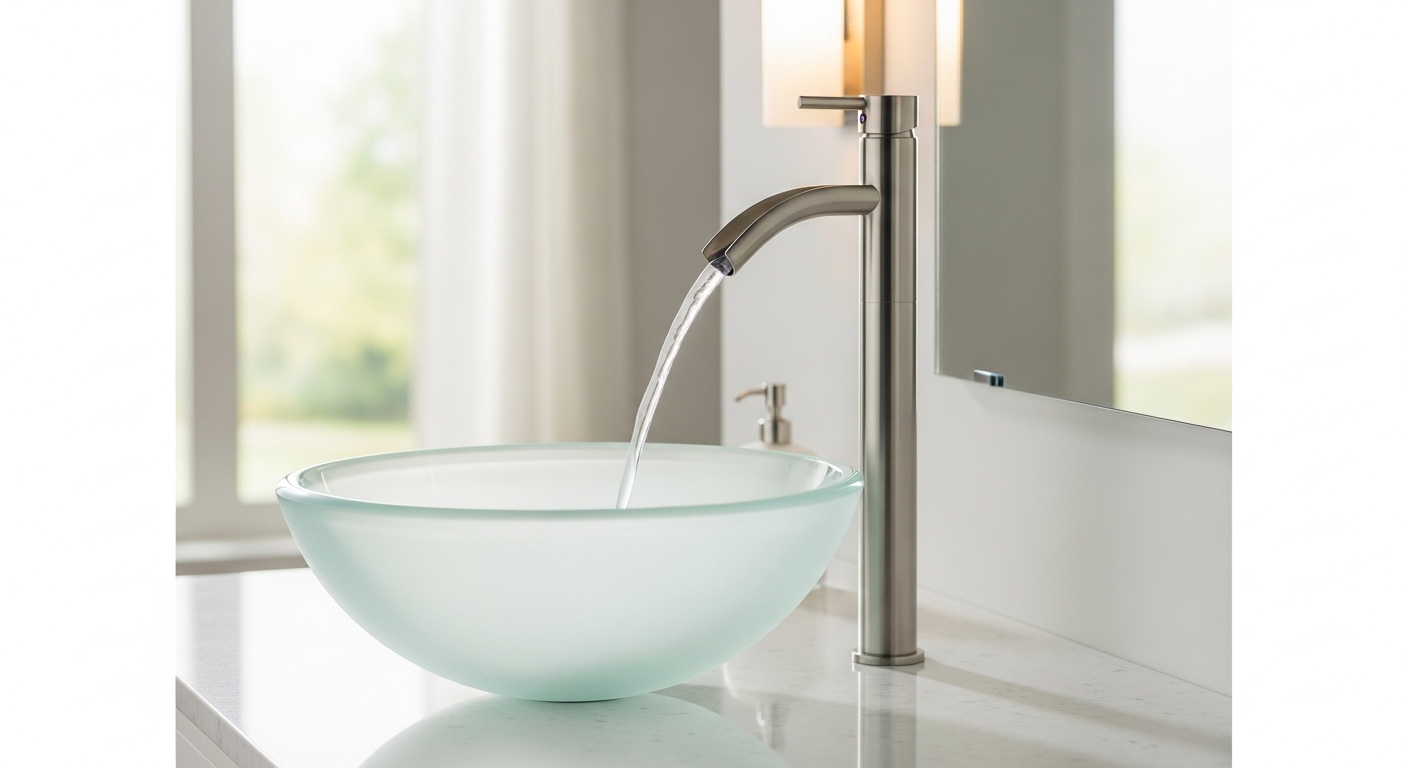
If you’ve just bought a beautiful glass, stone, or ceramic bowl and set it on top of your vanity, you need a tap tall enough to reach over the rim — and that’s exactly what a stainless steel vessel faucet is engineered to do. A standard bathroom faucet stands about 4–6 inches tall and will splash water off the front lip of a raised bowl or dribble straight down the outside. A vessel faucet is a single-hole, extra-tall tap designed to clear the height of a vessel sink and pour cleanly into the center of the basin. Choosing stainless steel for that job means you get a body that won’t rust from the constant splash zone a vessel sink lives in.
Below I’ll walk through when a stainless vessel faucet actually makes sense, how tall yours needs to be, why the grade of steel matters more than the brand name, and how it compares to brass, zinc, and matte-black-coated alternatives — so you can buy once and not replace it in two years.
What exactly is a stainless steel vessel faucet — and how is it different from a regular bathroom tap?
A vessel faucet is a single-hole bathroom faucet built taller than normal so it can reach up and over the wall of an above-counter (vessel) sink. The “stainless steel” part refers to the metal the faucet body is made from — a corrosion-resistant iron-chromium alloy — instead of the cheaper brass or zinc found in most budget taps.
The key differences from a standard deck-mount bathroom faucet come down to three things:
- Height: Vessel faucets typically stand 10–13 inches tall from the deck to the spout, versus 4–6 inches for a standard tap. That height is non-negotiable — it’s what lets the water clear the bowl rim.
- Single-hole mounting: Because a vessel sink sits on the counter, you drill one hole for the faucet behind the bowl. There’s no 4-inch centerset or 8-inch widespread layout involved.
- Spout reach vs. bowl diameter: The spout has to reach far enough forward to land water in the middle of the basin, not on the near edge.
Stainless steel earns its place here because a vessel sink concentrates splashing at the base of the faucet, keeping that area wet longer than a drop-in sink does. Cheaper metals corrode in that constant moisture; a good stainless vessel faucet shrugs it off.
How tall should a vessel faucet be for a bowl that’s 6 inches high?
For a 6-inch-tall vessel bowl, you want a faucet with a spout height of at least 11–13 inches so the water outlet sits comfortably above the rim. The rule of thumb: your spout outlet should clear the top edge of the bowl by 2–4 inches, and the spout should reach forward far enough to pour near the center.
Here’s the quick math people always miss: measure your bowl’s height, add the thickness of anything the bowl sits on, then add 2–4 inches of clearance. A 6-inch bowl needs roughly a 10–12 inch outlet height minimum. Too short and water splashes off the rim onto your counter; too tall and water hits the basin hard enough to splash back at you. If your bowl is unusually deep or wide, look for a faucet where the spout reach (horizontal distance) is at least half the bowl’s inner diameter.
| Vessel bowl height | Recommended faucet spout height | Minimum spout reach |
|---|---|---|
| 4 inches | 9–11 inches | 4.5 inches |
| 5–6 inches | 11–13 inches | 5 inches |
| 7+ inches (deep bowl) | 13–16 inches (or wall-mount) | 5.5–6 inches |
If your bowl is genuinely tall, you may be better off with a wall-mounted faucet so you’re not hunting for a 16-inch deck tap. We break that trade-off down in our guide on whether a wall mount faucet in black is worth it for your bathroom or kitchen. And if counter space is tight and you need a shorter forward reach, the sizing logic in our 5-inch spout reach faucet guide applies to vessel taps too.
Is stainless steel actually better than brass or zinc for a vessel faucet?
Yes — for a vessel sink specifically, stainless steel (especially 304 or 316 grade) is the most corrosion-resistant practical choice, and it outlasts zinc-alloy taps by years. Solid brass is also excellent and is the traditional premium material, but a lot of “brass-look” budget faucets are actually zinc underneath, and zinc is the one you want to avoid.
The reason material matters so much on a vessel sink is that constant splash. On a recessed drop-in sink, the faucet base stays fairly dry. On a vessel setup, water sheets down the outside of the bowl and pools around the faucet base and mounting nut. Cheap metals react to that.
| Material | Corrosion resistance | Typical lifespan | Notes |
|---|---|---|---|
| Stainless steel (304/316) | Excellent | 10–20+ years | Lead-free, won’t rust, holds finish well |
| Solid brass | Excellent | 15–25 years | Premium, heavier, often pricier |
| Zinc alloy (ZAMAK) | Poor | 2–5 years | Common in cheap taps; cracks and corrodes |
| Chrome-plated pot metal | Fair | 3–7 years | Finish flakes once plating fails |
How do you tell what you’re actually buying? Look for the words “304 stainless steel” or “SUS304” in the spec, check that the listing says lead-free (SUS304 is naturally lead-free, which matters for drinking-water safety), and heft it — real stainless has a solid, cool weight, while zinc feels lighter and warms up fast in your hand. A reputable seller will also state whether the faucet meets standards like NSF/ANSI 61 for drinking-water contact or cUPC certification for plumbing code compliance.
What about the finish — brushed, polished, or black stainless?
For a stainless steel vessel faucet, brushed (satin) stainless is the most forgiving finish because it hides water spots and fingerprints, while polished stainless looks brighter but shows every droplet. Black stainless is a coated look, not raw metal, so treat it like any coated finish.
- Brushed / satin stainless: Best for hard-water homes — mineral spots barely show. Easy to keep looking clean.
- Polished stainless: Mirror-bright and modern, but you’ll wipe it more often to keep it spot-free.
- Matte black / PVD-coated stainless: On-trend and durable when it’s a real PVD coating; just know the color is a surface layer over the steel.
Whatever finish you choose, hard water is the enemy of a good-looking vessel faucet because the splash zone dries into chalky white scale. If you’re on well or hard municipal water, get ahead of it — our workshop guide on how to clean a faucet head from hard water buildup without wrecking the finish works just as well on a vessel spout and will keep your stainless looking new.
Will a vessel faucet splash too much water out of the bowl?
A properly sized vessel faucet won’t splash excessively — but the wrong height or a shallow bowl will. Splashing happens when water falls too far, hits too hard, or lands too close to the front rim. You control that with spout height, spout reach, and flow rate.
Three things keep splashing under control:
- Don’t over-buy height. More clearance isn’t always better. If the water falls 6+ inches into a shallow, hard-ceramic bowl, it splashes back. Aim for that 2–4 inch clearance sweet spot.
- Use an aerator. A good vessel faucet includes an aerator that softens the stream and mixes in air, cutting splash and saving water. Most quality models run 1.2–1.5 GPM (gallons per minute), which is plenty for a bathroom.
- Match reach to bowl center. Water should land in the middle of the basin, where it’s deepest, not on the sloped near wall.
If your faucet’s stream ever starts spraying sideways or feels weak, the aerator is almost always the culprit — it clogs with sediment and mineral flakes. That’s a five-minute fix; here’s how to clear and clean it without damaging the stainless.
How hard is it to install a stainless steel vessel faucet yourself?
Installing a single-hole vessel faucet is one of the easier DIY plumbing jobs — most people finish in 30–45 minutes with basic tools, because there’s only one mounting hole and two supply lines. If your vanity already has a single hole drilled for the faucet, you likely won’t even need to touch the countertop.
The basic sequence looks like this:
- Shut off the hot and cold supply valves under the sink and open the old faucet to release pressure.
- Disconnect and remove the old faucet (if replacing one).
- Drop the new vessel faucet’s shank through the single deck hole; secure it from below with the mounting nut and washer.
- Connect the hot and cold flexible supply lines — hand-tighten, then a quarter turn with a wrench. Don’t overtighten.
- Turn the water back on slowly and check every joint for drips.
Two tips that save headaches: use plumber’s tape (PTFE) on threaded connections, and don’t crank the fittings — overtightening a compression nut causes more leaks than under-tightening. If you do get a drip at the base after installation, it’s usually a loose mounting nut or a bad supply-line washer, not a defective faucet — the same base-leak logic we cover in our guide on why a kitchen faucet leaks at the base and how to fix it yourself applies directly to bathroom vessel taps.
How much should you spend on a stainless steel vessel faucet in 2026?
Budget $60–$120 for a genuinely good 304-stainless vessel faucet, $120–$220 for a premium model with a solid ceramic-disc cartridge and PVD finish, and be suspicious of anything under $40 claiming to be stainless. Price mostly tracks two things you can’t see: the internal cartridge and the actual metal grade.
Where your money actually goes:
- The cartridge: A ceramic-disc cartridge is what makes the handle feel smooth and stops drips for years. Cheap rubber-washer valves fail fast. This is the single most important internal part.
- The metal grade: Real 304/316 stainless costs more to machine than zinc — that difference is baked into the price.
- The finish process: A true PVD or properly brushed finish resists scratching and won’t flake like cheap electroplating.
- Warranty: A brand confident in its faucet backs it with a multi-year or limited-lifetime warranty on the finish and function.
The sweet spot for most homeowners is that $70–$130 range: solid 304 stainless, ceramic-disc cartridge, brushed finish, and a real warranty. That’s where evefaucet positions its vessel faucets — enough quality to last a decade without paying luxury-brand markup.
Vessel faucet vs. widespread or wall-mount: which layout fits your sink?
Choose a single-hole vessel faucet when your bowl sits on top of the counter and you have (or want) one deck hole; choose widespread when you’re using a standard drop-in or undermount sink; choose wall-mount when your bowl is very tall or you want a clean, uncluttered counter.
Quick decision guide:
- Above-counter bowl + one hole → stainless vessel faucet (this article).
- Standard sink with three holes, 8 inches apart → a widespread set. See our best bathroom faucets 8-inch spread buyer’s guide.
- Tall bowl or minimalist counter → wall-mount, covered in our wall mount faucet guide.
Match the layout to your sink first, then pick the material and finish. Getting the layout wrong is the one mistake you can’t fix with a wipe-down or a new aerator.
Author note & why trust this guide
Written by the evefaucet product team. evefaucet has manufactured and sold bathroom and kitchen faucets for over a decade, and we bench-test every vessel faucet model for spout-height clearance, flow rate, and cartridge cycle life before it ships. Our stainless vessel faucets use 304-grade steel, ceramic-disc cartridges rated for hundreds of thousands of on/off cycles, and are backed by a limited warranty on finish and function. When we quote a spec like spout height or GPM in this guide, it comes from the same measurements we use on our own production line — not marketing copy.
FAQ
Is a stainless steel vessel faucet good for hard water?
Yes. Stainless steel — especially in a brushed finish — is one of the best materials for hard-water areas because it resists corrosion and hides mineral spotting better than polished or coated finishes. You’ll still get some scale in the splash zone over time, but a quick wipe with a vinegar-and-water solution clears it without harming the metal.
How tall does a vessel faucet need to be?
Most vessel faucets stand 10–13 inches tall. The right height for you is your bowl’s height plus 2–4 inches of clearance above the rim. A 5–6 inch bowl pairs well with an 11–13 inch faucet. For bowls taller than 7 inches, consider a wall-mounted faucet instead.
Are stainless steel vessel faucets lead-free and safe for drinking water?
Genuine SUS304/316 stainless steel is naturally lead-free, which is one of its biggest advantages over brass and zinc. Look for faucets that state compliance with NSF/ANSI 61 or cUPC certification if drinking-water safety and plumbing-code approval matter to you — reputable sellers list these standards in the specs.
Why is my vessel faucet splashing water everywhere?
Splashing usually means the faucet is too tall for the bowl, the spout reach lands water on the near rim instead of the center, or the aerator is missing or clogged. Check that water lands in the middle of the basin, and clean or replace the aerator to soften the stream — that fixes the majority of splash complaints.
Can I install a stainless steel vessel faucet without a plumber?
Almost always, yes. A single-hole vessel faucet takes about 30–45 minutes with an adjustable wrench and plumber’s tape. Shut off the supply valves, mount the faucet through the single deck hole, connect the two flexible supply lines, and check for leaks. If your counter isn’t pre-drilled, drilling the hole is the only step that may call for a pro.
How do I keep my stainless vessel faucet looking new?
Wipe it dry after heavy use, and once a week clean it with mild soap and water or a 50/50 vinegar-water mix for mineral spots. Avoid abrasive pads and harsh chemical cleaners, which can dull a brushed finish or damage a PVD coating. A microfiber cloth is all you need for daily fingerprints.