 EVE卫浴
EVE卫浴
Is a Wall Mount Faucet in Black Worth It for Your Bathroom or Kitchen?
浏览次数:445 分类:公司产品
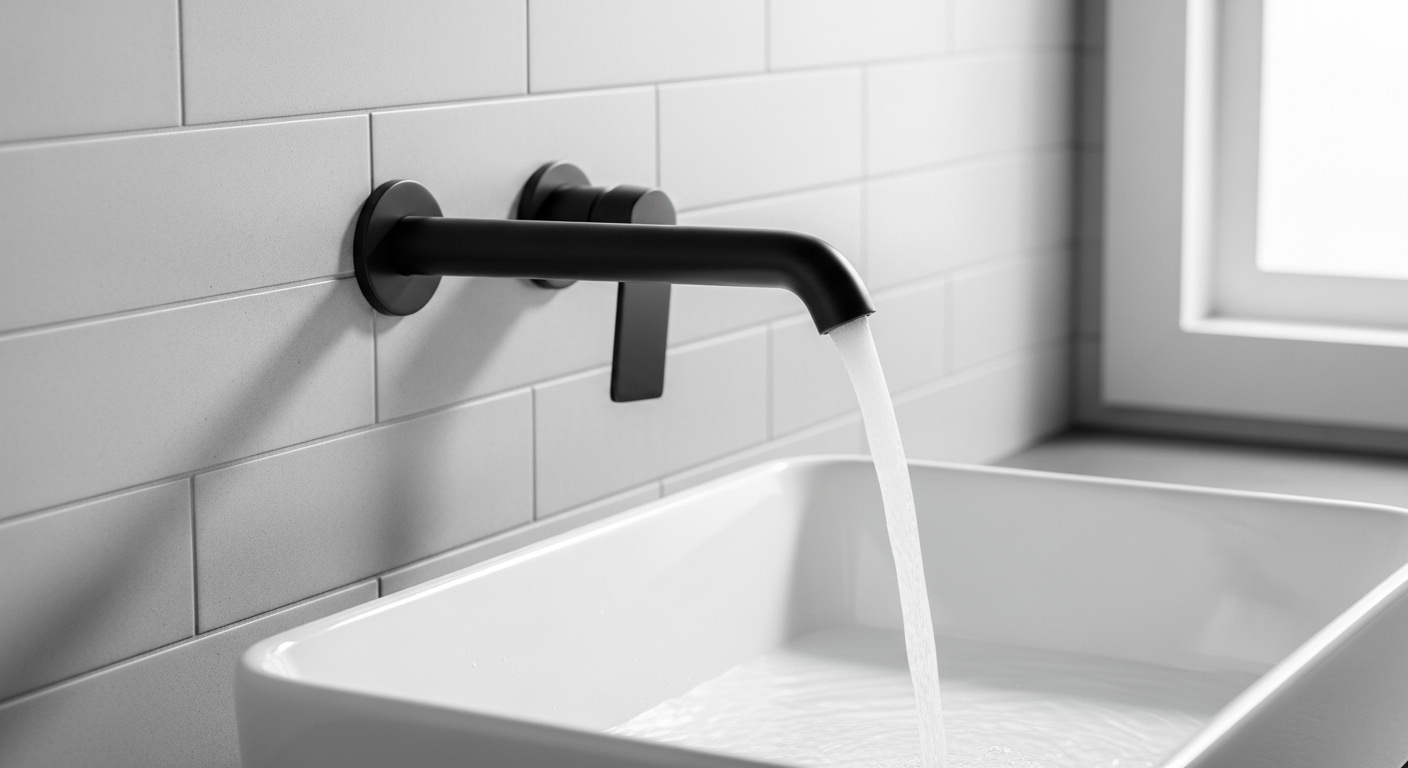
A wall mount faucet black finish is one of the easiest ways to make a basic sink look custom — the spout appears to float out of the wall or backsplash, the counter stays open and uncluttered, and the dark finish reads as intentional and high-end rather than builder-grade. But it’s also the faucet style that punishes guesswork the most. Unlike a standard deck faucet you can drop into a pre-drilled hole, a wall-mounted tap commits you to a rough-in valve buried inside the wall, at a fixed height, projecting a fixed distance over the basin. Get those numbers right and it’s a stunning, practical upgrade. Get them wrong and you’re opening drywall. This guide walks through exactly how to decide, measure, and choose.
What exactly is a wall mount faucet, and why pick a black one?
A wall mount faucet is a tap whose spout and handle(s) come out of the wall above the sink instead of mounting through holes in the sink deck or countertop. The working valve body sits inside the wall cavity; only the spout, handles, and decorative escutcheon (trim plate) are visible. A black version simply uses a dark finish — usually matte black, sometimes oil-rubbed bronze or matte black PVD — on those visible parts.
People reach for black for three concrete reasons. First, contrast: black against a white sink, white subway tile, or a light stone counter is crisp and graphic. Second, practicality — matte black hides water spots and toothpaste splatter far better than polished chrome, which shows every droplet. Third, coordination — once you’ve got black cabinet pulls, a black mirror frame, or black shower hardware, a matching faucet ties the room together. The wall-mount format adds its own payoff: nothing sits on the counter or sink rim, so wiping down is a single uninterrupted swipe with no base to scrub around.
- Vessel sinks: Wall mount is often the only tall-enough option for a raised vessel bowl, since deck faucets frequently can’t clear the rim.
- Trough and floating vanities: Keeps the clean, minimalist line that floating vanities are built for.
- Freestanding tubs: A wall-mounted tub filler in black is a signature spa-bathroom look.
- Tight or shallow counters: Moving the faucet to the wall frees up scarce deck space.
How do I know if a wall mount faucet will actually fit my sink?
You need three measurements to match, and all three are set by the rough-in valve inside the wall, not by the trim you see. Get these right and almost any wall mount faucet black trim kit will work; get them wrong and the water lands in the wrong place. The three numbers are mounting height, spout projection (reach), and handle spread.
Mounting height is how far above the basin the spout exits the wall — too low and you can’t fit your hands or a bottle under it; too high and water splashes. Spout projection is how far the spout sticks out horizontally; it must reach far enough to pour into the drain area of the bowl, roughly the center, not the back rim. Handle spread is the distance between hot and cold handles (for a widespread/two-handle model) or whether it’s a single lever.
| Measurement | Bathroom basin (typical) | Kitchen / utility | Why it matters |
|---|---|---|---|
| Spout height above basin rim | 4–6 in | 8–12 in | Clearance for hands, cups, pots |
| Spout projection (reach) | 5–7 in | 8–10 in | Water must hit the drain, not the back wall |
| Vessel sink extra height | + bowl height (4–6 in) | n/a | Spout must clear a raised bowl |
| Handle spread (widespread) | 8 in centers | 8 in centers | Must match the valve rough-in |
For a raised vessel bowl, add the bowl’s height to your spout-above-counter figure — a 5-inch-tall bowl means the spout needs to exit roughly 9–11 inches above the counter so it clears the rim and still has usable clearance. If you’re weighing how far a spout should reach in a compact space, our breakdown of the 5 inch spout reach faucet and how to choose the right compact tap walks through projection trade-offs in detail, and the same logic applies to wall-mounted spouts.
Single-handle or widespread two-handle — which black wall mount should I get?
Pick a single-handle wall mount if you want the simplest install and a sleeker look; pick a widespread two-handle (8-inch centers) if you want precise hot/cold control and a more traditional, symmetrical face. The choice mostly comes down to how many valve connections your wall is plumbed for and the style you’re after.
Single-lever models use one cartridge and one rough-in body, so there’s less behind the wall to align and fewer leak points. Two-handle widespread models give you independent hot and cold valves on standard 8-inch centers — the same spread covered in our best bathroom faucets 8 inch spread comparison guide — which is why a widespread layout is so common: a lot of bathrooms are already roughed for it. If you’re building new or fully re-plumbing, you can choose freely; if you’re retrofitting, let your existing rough-in lead the decision.
| Style | Best for | Pros | Watch out for |
|---|---|---|---|
| Single-handle wall mount | Modern, minimalist baths; small sinks | Easy one-hand temp control, fewer leak points, cleaner look | Less precise hot/cold tuning |
| Widespread 2-handle (8 in) | Traditional/transitional baths; double basins | Precise temp, symmetrical, matches common rough-ins | More parts to seal and align |
| Tub filler (wall mount) | Freestanding & alcove tubs | High flow, dramatic look | Needs high-flow valve; verify GPM |
Is matte black or glossy black better — and will the finish hold up?
Choose matte black for almost every bathroom and kitchen: it hides water spots, fingerprints, and toothpaste flecks far better than glossy black, which shows every droplet like a piano lid. Glossy (sometimes “shiny black”) looks dramatic in photos but high-maintenance in real life. The bigger durability question isn’t gloss level, though — it’s how the black is applied.
The two main methods are powder coating and PVD (physical vapor deposition). Powder coating is a sprayed-and-baked finish; it looks great but can chip if struck hard. PVD bonds the color at a molecular level under high heat and is far more scratch- and corrosion-resistant — it’s the finish you want in a hard-water home or a busy household. When you’re comparing products, look for a stated finish standard rather than just a color name.
- Matte black PVD: Most durable, fade- and corrosion-resistant, best for hard water.
- Matte black powder coat: Good looking and affordable; treat it gently and avoid abrasive pads.
- Oil-rubbed bronze (near-black): Warmer, with intentional variation — a “living finish” that changes slightly over time.
- Glossy/shiny black: High drama, high maintenance; shows everything.
Whatever you pick, never clean black with abrasive scrubbers, bleach, or acidic descalers — they’re the fastest way to dull or strip a dark finish. If you battle mineral buildup, our guide on how to clean a faucet head from hard water buildup without wrecking the finish covers finish-safe methods that apply directly to matte black.
How hard is it to install a black wall mount faucet myself?
Installing the valve (the rough-in) is moderately advanced and best done before walls are closed; installing the trim (the visible black spout and handles) onto an existing rough-in is genuinely DIY-friendly. The honest answer: if your wall is already roughed for a wall mount and you’re just attaching the finish kit, most confident DIYers can do it in an afternoon. If you’re starting from a deck faucet and have to open the wall, run new supply lines, and set a valve at the correct depth, that’s a plumbing project — and the cost of a leak inside a finished wall is high.
The single most important detail is valve depth: the rough-in body has to sit at the correct distance from the finished wall surface so the trim seats flush against the tile. Set it too deep or too proud and the escutcheon won’t sit right. For the conceptual layout of a concealed, in-wall basin faucet, EVE’s concealed wall-mounted basin faucet installation diagram shows how the buried valve relates to the visible trim. Here’s the general sequence once the valve is in place:
- Shut off the water and confirm the rough-in valve is capped and pressure-tested for leaks before tiling.
- Finish the wall surface (tile/backsplash) so you know the exact finished depth.
- Slide on the escutcheon/trim plate with its gasket and seal the perimeter where required.
- Thread on the spout and handle(s), tightening to spec — snug, not gorilla-tight, to protect the finish.
- Restore water slowly, run hot and cold, and check every joint for drips before walking away.
One realistic gotcha: a wall mount faucet drains differently. Because there’s no spout body over the sink to hold residual water, plan your basin and drain so splash lands cleanly — pair a too-short spout with a wide bowl and you’ll get water on the counter behind the sink.
What does a good black wall mount faucet cost, and where do they go wrong?
Expect roughly $90–$180 for a solid mid-range black wall mount trim kit, $180–$400+ for a premium PVD or designer tub filler, and add the cost of a quality rough-in valve (often sold separately, $40–$120). The most common regret isn’t price — it’s three avoidable mistakes: buying trim without checking the valve is compatible, underestimating spout reach, and choosing a flimsy finish that chips.
Trim and valve are frequently sold separately and aren’t universally cross-compatible across brands, so confirm the trim kit matches your rough-in (or buy them as a set). For reach, measure to the center of your drain and add a margin. For finish, prioritize PVD and a stated warranty. Below is a quick value map.
| Budget | What you typically get | Good fit for |
|---|---|---|
| $90–$140 | Single-handle powder-coat black trim, standard reach | Guest baths, light use, rentals |
| $140–$250 | Matte black PVD, better cartridge, widespread options | Primary baths, hard-water homes |
| $250–$450+ | High-flow tub fillers, designer spouts, ceramic-disc valves | Statement baths, freestanding tubs |
If your style leans warm and characterful rather than stark, a near-black industrial look is worth a glance — our buyer’s guide to industrial copper faucets covers patina finishes that pair beautifully with matte black fixtures in the same room.
Author note & why trust this guide
Written by the EveFaucet product team. EveFaucet (evefaucet.com) has manufactured and sold kitchen and bathroom fixtures for over a decade, and this guidance comes from real bench testing and customer install feedback — not spec sheets alone. Our faucet bodies are built from corrosion-resistant brass with ceramic-disc cartridges rated for 500,000+ open/close cycles, our matte black finishes are tested against standard salt-spray and abrasion checks for finish durability, and our fixtures are designed to meet common North American plumbing standards (lead-free wetted surfaces and standard pressure ratings). Mid-range and premium wall mount models carry a multi-year limited warranty on the cartridge and finish — always register and keep your receipt, since finish warranties typically require finish-safe cleaning.
FAQ
Can I replace my deck-mounted faucet with a wall mount one without opening the wall?
Usually no. A wall mount faucet needs a valve and supply lines inside the wall, which a deck faucet doesn’t have, so converting almost always means opening drywall or tile to set the rough-in. If you can access the wall from behind (a back closet or unfinished side), that can save some demolition, but plan for a plumbing job rather than a simple swap.
Does matte black wall mount hardware show water spots and fingerprints?
Matte black hides them remarkably well — far better than chrome or glossy black. You’ll occasionally see a faint film from hard water, but a wipe with a damp microfiber cloth clears it. Avoid abrasive pads and acidic or bleach-based cleaners, which can dull the finish over time.
How far should a wall mount spout stick out over the sink?
Far enough to pour into the center of the basin where the drain is — typically 5–7 inches of projection for a bathroom sink and 8–10 inches for a kitchen or utility sink. Measure from the finished wall to the drain center, then make sure the spout reaches at least to that point so water doesn’t splash off the back rim onto the counter.
Will a black finish fade or peel over time?
A quality PVD matte black finish resists fading, corrosion, and scratching for many years; a budget powder-coat finish looks great but is more prone to chipping if struck or scrubbed with abrasives. The finish method matters more than the brand name — look for PVD and a stated finish warranty if longevity is your priority.
Do wall mount faucets work for kitchens, or just bathrooms?
They work for both. Wall mount kitchen faucets (including pot fillers and bridge styles) are popular for farmhouse and industrial kitchens and keep the counter behind the sink clear. The key difference is scale: kitchen versions need taller clearance and longer reach, and high-flow models need a valve rated for the higher GPM.
Are the valve (rough-in) and the black trim sold together?
Often they’re sold separately, and they aren’t universally interchangeable between brands. Always confirm the trim kit is compatible with your rough-in valve, or buy them as a matched set. If you’re replacing only the visible black trim on an existing compatible valve, that’s a straightforward DIY job; replacing the valve itself is a bigger plumbing task.