 EVE卫浴
EVE卫浴
What Does a Dripping Tap Meaning Actually Point To — and Is It Serious?
浏览次数:148 分类:Repair
The article is complete. Here is the publish-ready HTML fragment:
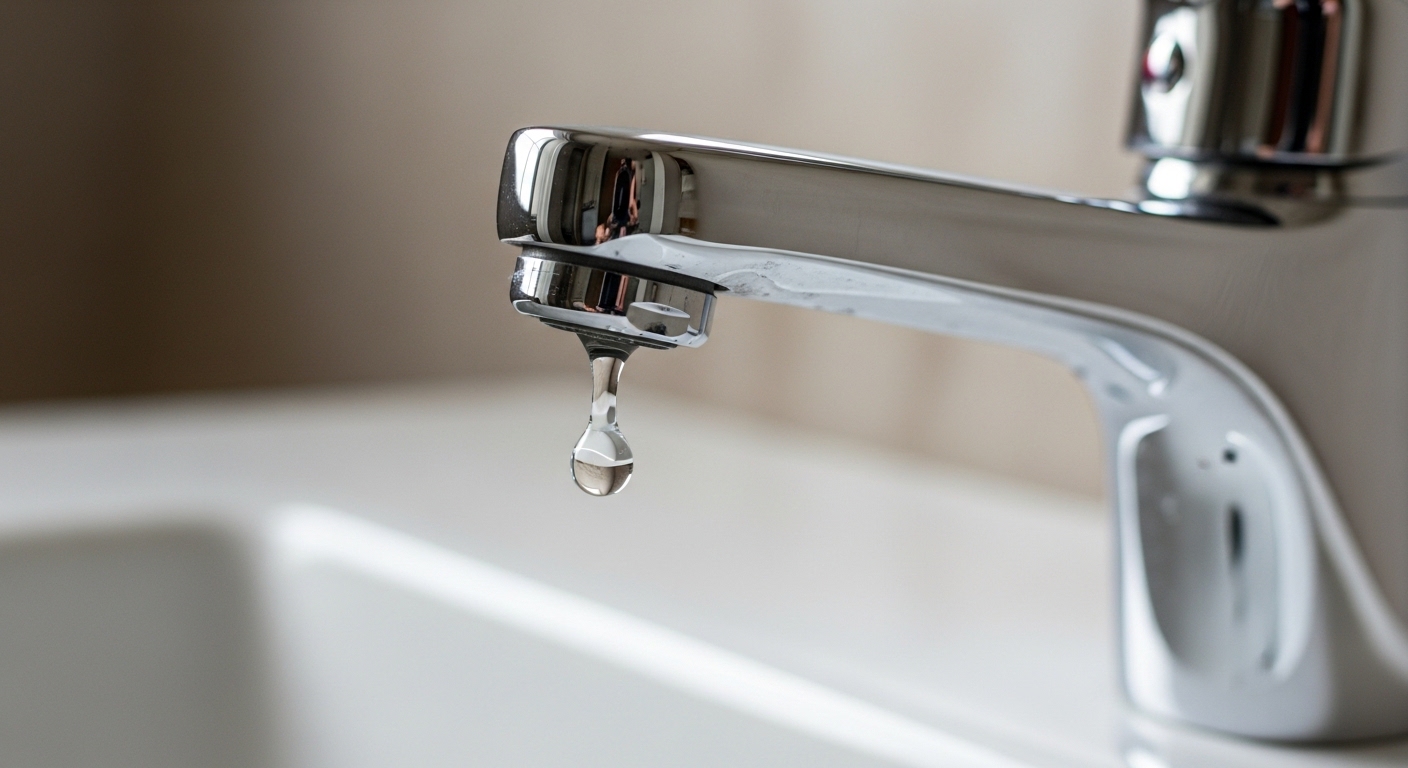
If you’ve ever lain awake listening to that steady tick… tick… tick and wondered about the real dripping tap meaning, here’s the honest answer: a dripping tap is your faucet telling you that the part inside it responsible for sealing off the water — the washer, O-ring, or cartridge — has worn down, hardened, cracked, or gotten clogged with mineral buildup. The handle turns “off,” but the seal no longer presses tight enough to stop the flow completely. So a few drops squeeze through every minute. It is one of the most common plumbing problems in any home, and in the vast majority of cases it’s minor, cheap, and fixable without a plumber.
But “minor” doesn’t mean “ignore it.” A tap that drips once per second wastes roughly 3,000 gallons a year — enough for over 180 showers — and the constant trickle slowly erodes the metal valve seat, which turns a $5 washer job into a $150 valve replacement if you leave it long enough. So the drip is both a symptom and a warning. Let’s break down exactly what it means, why it happens, and how to read your specific drip so you fix the right part the first time.
What does a dripping tap actually mean — is it the washer or something worse?
A dripping tap means water is passing a seal that’s supposed to be closed. In 8 out of 10 cases that seal is a worn rubber washer or O-ring; in modern faucets it’s usually a failing ceramic-disc or compression cartridge. It’s rarely the pipe or your water pressure — it’s almost always a small, replaceable internal part.
Think of your faucet as a very simple valve. When you turn the handle off, you’re pressing a soft sealing surface against a hard metal opening called the valve seat. Water is pushing against that seal constantly, 24 hours a day, at 40–80 PSI. Over years, the soft part gives up first — it flattens, dries out, cracks, or gets scored by grit and mineral deposits. Once it can’t press flat against the seat anymore, water finds the gap. That gap is your drip.
The reason it matters which part failed is that faucets come in a few distinct designs, and each one drips for a slightly different reason:
- Compression faucets (separate hot and cold handles, older homes): a flat rubber washer at the base of the stem wears out. The classic drip culprit.
- Cartridge faucets (single handle or two-handle, very common): a cylindrical cartridge with internal seals fails. You replace the whole cartridge.
- Ceramic-disc faucets (single lever, mid-to-high end): two polished ceramic discs slide against each other. They rarely wear out, but grit or a cracked disc causes drips.
- Ball faucets (older single-handle kitchen taps): a rotating ball with springs and rubber seats. Multiple small parts can leak.
If you want to go deeper on the single most common modern culprit, we wrote a full explainer on what the cartridge in a faucet handle is and why it matters when your faucet drips — it’s worth a read before you buy any parts, because the cartridge is the part most people end up replacing.
Why is my tap dripping only hot water (or only cold)?
If your tap drips only on the hot side or only on the cold side, the meaning is very specific: the seal on that one side has failed while the other is still fine. On a two-handle faucet each handle has its own washer, O-ring, or cartridge, so they wear out independently — and the hot side almost always fails first.
Heat is hard on rubber and plastic seals. Hot water makes them expand, contract, and dry out faster than cold water does, so the hot-side washer or cartridge typically cracks and starts weeping months or years before the cold one. That’s why “the hot tap drips but the cold is fine” is such a common complaint. The fix is simple: replace the failing side’s seal or cartridge, and while you’re in there, it’s smart to do both sides at once since the other is on the same clock.
Figuring out which side is actually leaking can be trickier than it sounds, because water travels down the spout and mixes. We put together a full diagnostic on why your faucets drip hot or cold water and how to tell which side is failing — including the trick of shutting off one supply valve at a time to isolate the culprit.
| Where the drip appears | Most likely meaning | Typical fix |
|---|---|---|
| From the spout, tap fully off | Worn washer / cartridge (the seal that stops flow) | Replace washer or cartridge — $5–$25 |
| Around the base of the handle | Worn O-ring or packing nut seal | Replace O-ring / tighten packing — $2–$10 |
| Only the hot side drips | Heat-degraded hot-side seal | Replace hot cartridge/washer — $5–$25 |
| Under the sink / at connections | Loose supply line or valve fitting | Tighten or reseal connection |
| From spout, faucet is ceramic-disc | Grit on discs or cracked disc | Clean or replace disc cartridge |
How much water (and money) does a dripping tap actually waste?
A single tap dripping once per second wastes about 3,000 gallons a year — and a faster drip or a thin steady stream can waste five to ten times that. In real money that’s usually $20–$100+ a year per faucet on your water bill, plus the hidden cost of the corrosion and staining the drip causes.
Here’s the concrete math so you can gauge your own tap. The U.S. EPA’s WaterSense program estimates household leaks waste nearly 1 trillion gallons nationwide every year, and drips are a huge chunk of that. For your one faucet:
- Slow drip (1 drop/second): ~5 gallons a day, ~1,825+ gallons a year.
- Steady drip (2–3 drops/second): ~10–15 gallons a day, 3,000–5,000+ gallons a year.
- Fine stream (won’t fully shut off): can top 30 gallons a day — over 10,000 gallons a year.
Beyond the bill, a chronic drip leaves mineral stains and rust rings in the sink or tub, can rot out the finish, and — if it’s a hot-water drip — you’re literally paying to heat water that goes straight down the drain. That’s why “it’s just a little drip” is one of the more expensive things you can tell yourself.
Why does my tap still drip right after I turn it off, then stop?
If your tap drips for a few seconds after you shut it off and then quits, that’s usually normal — it’s just residual water draining out of the spout. But if it keeps dripping steadily minutes later, that’s a true leak and the seal has failed.
The difference matters. After you turn off a faucet, the water sitting in the spout above the valve has to drain out — especially on tall gooseneck and pull-down kitchen faucets. That “after-drip” lasts a few seconds to maybe half a minute and then stops completely. It’s harmless. What you’re diagnosing is the drip that never stops: comes back every 30–60 seconds, all day, all night. That’s the worn-seal drip we’ve been talking about, and no amount of cranking the handle harder will fix it — in fact, over-tightening just grinds the washer and the valve seat down faster, making it worse.
One related but different problem worth ruling out: if you hear dripping at night but can’t find water, the sound might be traveling through the wall from another fixture, or from thermal expansion in the pipes. We covered that specific mystery in why you hear a dripping faucet sound at night and how to make it stop for good.
How do you actually fix a dripping tap yourself?
You fix a dripping tap by shutting off the water, opening up the faucet, and replacing the worn seal — the washer, O-ring, or cartridge — with an identical new part. For most people it’s a 30–60 minute job with a few basic tools and no plumber required.
Here’s the general sequence that works for the majority of faucets:
- Shut off the water at the two valves under the sink (turn clockwise). Then open the faucet to release pressure and confirm the water’s off.
- Plug the drain so you don’t lose small screws down it — this saves more DIY jobs than any other single tip.
- Pop off the handle cap (usually a small decorative button hiding a screw), remove the handle screw, and lift the handle off.
- Remove the retaining nut or clip and pull out the cartridge, stem, or ball assembly. Take a photo first so you remember the orientation.
- Inspect the seal. Look for a flattened, torn, or hardened washer; a cracked O-ring; or a cartridge scored with mineral scale. That damaged part is your drip.
- Match and replace it. Bring the old part to the hardware store or match your faucet’s model number. An exact match matters — a washer that’s 1mm off won’t seal.
- Reassemble in reverse, turn the water back on slowly, and test both full-on flow and full-off sealing.
If your faucet is a single-handle cartridge type — the most common kind in kitchens and newer bathrooms — the exact step-by-step is slightly different, and we have a dedicated walkthrough for how to replace a bathroom faucet cartridge on a single-handle faucet yourself. That’s the specific procedure most readers actually need.
A quick note on hard water: if you live somewhere with heavy mineral content, scale buildup is often what’s wrecking your seals in the first place. Cleaning the mineral deposits off the cartridge and aerator can extend the life of a repair, and the same white-vinegar approach we describe for cleaning a faucet head with vinegar and baking soda works on cartridges and valve seats too.
When does a dripping tap mean you should replace the whole faucet?
A dripping tap means “replace the whole faucet” only when repairs keep failing, the valve seat is corroded beyond resurfacing, replacement parts are discontinued, or the faucet is 15+ years old and showing other wear. Otherwise, repairing the seal is almost always the smarter, cheaper move.
Reach for a full replacement when you see these signs:
- You’ve replaced the washer or cartridge and it still drips. That usually means the valve seat itself is pitted and won’t hold any seal.
- Parts are no longer made. Off-brand or very old faucets sometimes have no available cartridges — at that point a new faucet is your only real fix.
- Multiple things are failing at once — drip plus loose handle plus corroded finish plus weak flow. The faucet has reached the end of its service life.
- You want an upgrade anyway. If you were going to swap finishes or move to a pull-down sprayer, a persistent drip is a fine excuse.
The good news is that a quality modern faucet with a ceramic-disc cartridge can go a decade or more without a single drip, because ceramic discs don’t wear like rubber washers do. When you’re shopping, that internal valve technology matters far more than the price tag or the finish. This is exactly where a well-built faucet earns its keep — and where evefaucet designs around long-life ceramic cartridges and standard, replaceable parts so a future drip stays a five-minute fix instead of a teardown.
FAQ
Is a dripping tap an emergency?
No, a single dripping tap is not an emergency — it’s a slow, steady waste rather than a flood risk. That said, it’s not something to leave for months either, because the drip erodes the valve seat and wastes thousands of gallons a year. Treat it as a “fix it this weekend” job, not a “call someone at midnight” job. A leak that’s spraying, pooling under the sink, or coming from a pipe rather than the tap is a different story and deserves faster attention.
Can hard water cause a tap to drip?
Yes. Hard water leaves mineral scale on the washer, cartridge, and valve seat, and that grit both prevents a tight seal and physically scratches the sealing surfaces over time. In hard-water areas, faucets drip noticeably sooner. Cleaning the internal parts with white vinegar during a repair — and periodically descaling the aerator — meaningfully extends how long your fix lasts.
Why does my tap drip more at night?
Your tap doesn’t actually drip faster at night — it just sounds louder because the house is quiet, and water pressure can rise slightly overnight when neighborhood demand drops, which can turn a barely-there weep into an audible drip. If you hear dripping at night but the faucet is dry, the sound may be echoing through the wall from another fixture or from pipes expanding and contracting as they cool.
Will turning the handle harder stop the drip?
No — and it makes things worse. Cranking the handle down forces the already-worn washer harder against the valve seat, grinding both surfaces and accelerating the damage. If you find yourself over-tightening to stop a drip, that’s a clear sign the internal seal has failed and needs replacing, not more force.
How long does it take to fix a dripping tap?
For a typical DIY repair, plan on 30 to 60 minutes, plus a trip to buy the matching part if you don’t already have it. Compression-washer faucets are the quickest; cartridge and ceramic-disc faucets take a little longer but are still an afternoon job. The biggest time-saver is identifying your faucet type and buying the exact replacement part before you start.
How much does it cost to fix versus replace a dripping tap?
A DIY seal or cartridge fix runs about $5–$25 in parts. A plumber’s visit for the same repair is usually $100–$250 depending on your area. A full faucet replacement ranges from about $80 for a basic unit to $300+ for a premium pull-down or widespread model, plus labor if you don’t install it yourself. For most drips, the cheap DIY repair is the clear winner.
About the author: This guide was written by the evefaucet product and testing team, who spend their days pressure-testing cartridges, washers, and valve assemblies across kitchen and bathroom faucets. evefaucet designs and sells faucets and bathroom fixtures built around long-life ceramic-disc cartridges and standard, replaceable parts, and every model is bench-tested for leak-tight shutoff and backed by our manufacturer’s warranty. Our recommendations reflect hands-on repair experience, WaterSense water-efficiency guidance, and standard plumbing practice — not guesswork.