 EVE卫浴
EVE卫浴
Is a Dripping Outdoor Faucet Frozen Solid a Real Emergency — and How Do I Fix It Fast?
浏览次数:2127 分类:Repair
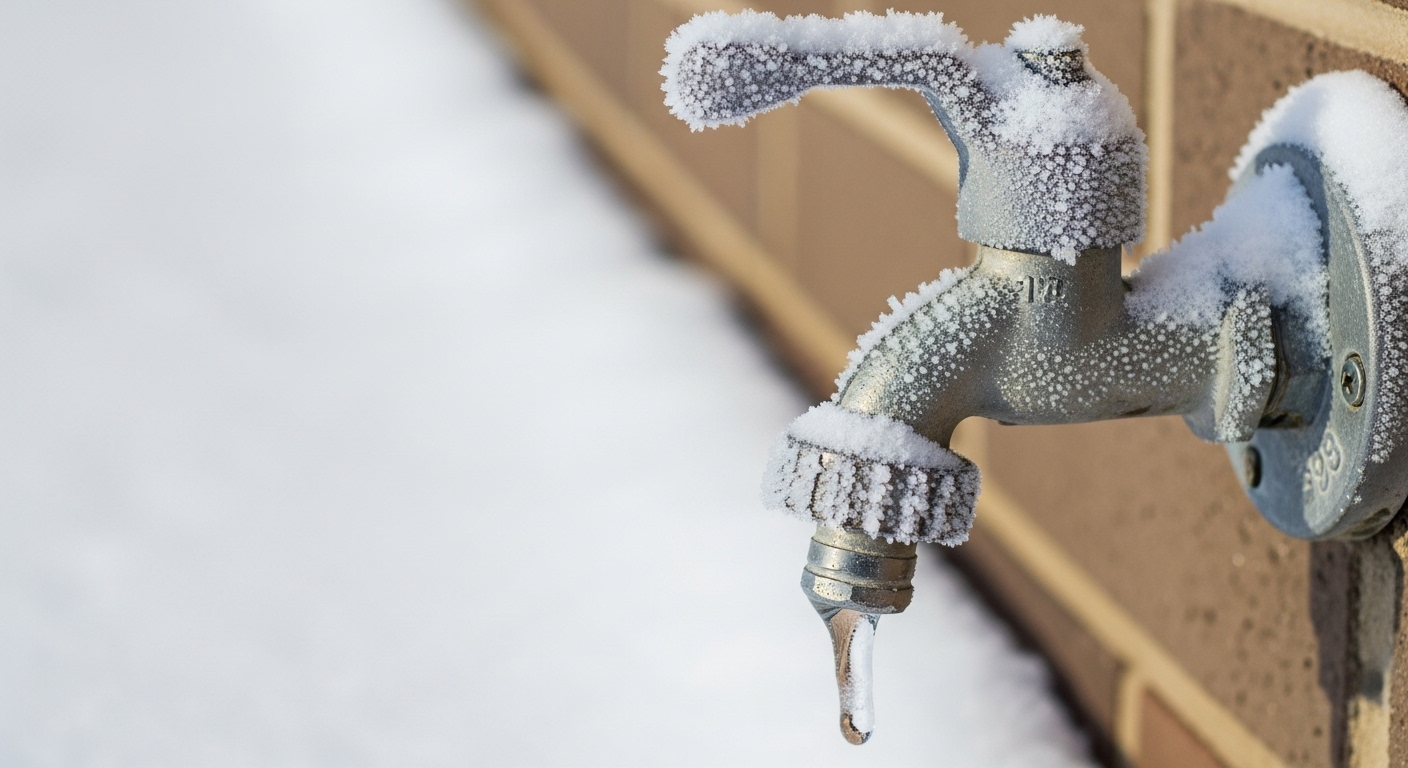
A dripping outdoor faucet frozen in winter is one of those problems that looks small and is actually a countdown timer. That slow drip — or the spigot that won’t fully shut off — is often the first visible clue that ice expanded inside the valve body or the pipe and forced a seal or a copper wall to give. Water expands roughly 9% when it freezes, and that expansion can generate thousands of pounds of pressure per square inch inside a closed pipe. The faucet doesn’t always burst in the cold. It frequently waits until everything thaws, then dumps water into your crawlspace, garage, or wall cavity. So the drip you’re staring at is worth acting on today, not “when it warms up.”
This guide walks you through exactly what’s happening, how to tell a harmless drip from a real crack, and the step-by-step fix — whether you’ve got a standard sillcock, a frost-free hose bib, or an older compression spigot.
Why is my outdoor faucet dripping after it froze?
Your outdoor faucet is dripping after freezing because ice broke something inside it — most often the rubber washer, the valve seat, or the pipe wall itself. When water in the faucet froze and expanded, it pushed against those parts. A washer that used to seal perfectly now has a permanent dent or tear, so it can’t stop the flow, and you get a steady drip even with the handle cranked closed.
There are three common culprits, in order of how often I see them in the workshop:
- A crushed or split washer/O-ring. The cheapest, most common, and most fixable cause. Ice deformed the soft seal so it no longer presses flat against the seat.
- A cracked valve body or spout casting. The brass or metal housing developed a hairline fracture. This drips, weeps from the body (not just the spout), and usually means replacement.
- A split pipe behind the wall. The scariest one. The faucet may drip a little while the real break hides inside the wall, where you can’t see it. When it thaws, that’s where the flooding starts.
Here’s the key mental model: a drip from the spout is often just a bad washer. Water weeping from the faucet body, the wall joint, or appearing inside the house is a structural crack and a much bigger deal. Figuring out which one you have is the whole game, and that’s what the next section is for.
How do I tell if my frozen faucet just needs a washer or if the pipe actually cracked?
Do a controlled thaw-and-watch test. Shut off the indoor valve feeding that spigot, fully open the outdoor faucet, let everything thaw, then slowly turn the indoor supply back on while you watch — both outside at the faucet and inside at the pipe behind the wall. Where the water shows up tells you almost everything.
Use this quick diagnostic to read the symptoms:
| What you see | Most likely cause | Fix difficulty |
|---|---|---|
| Slow drip from the spout only, body stays dry | Damaged washer or valve seat | Easy — DIY washer swap |
| Water weeping from the handle/packing nut | Worn packing or stem O-ring | Easy–medium — tighten or repack |
| Water seeping from the faucet body or where it meets the wall | Cracked valve casting | Medium — replace the spigot |
| Damp drywall, dripping ceiling, or water inside on thaw | Split pipe inside the wall | Hard — call a plumber |
| No water outside at all when opened, then leak inside | Ice blockage hiding a burst pipe | Hard — call a plumber |
One more tell: if you have a frost-free sillcock (the long-bodied kind that shuts the water off 6–12 inches back inside the warm wall), a persistent drip after thaw often means the long stem washer cracked or the internal tube split. Frost-free faucets fail this way when a hose was left attached over winter — the trapped water in the hose couldn’t drain, so it froze right at the vulnerable point.
What do I do right now to stop a dripping frozen faucet from flooding my house?
Right now, find and close the indoor shutoff valve for that outdoor faucet, then leave the outdoor spigot open. That isolates the broken faucet from your water supply and gives any thawing ice somewhere to drain instead of building pressure against a crack. This is the single most important step, and it takes about two minutes.
Follow this order:
- Locate the dedicated shutoff. Most outdoor faucets have a small valve on the supply line just inside the wall — in the basement, crawlspace, garage, or a utility closet. It’s usually within a few feet of where the pipe exits to the outside.
- Close it. Turn a gate valve clockwise until snug, or flip a ball-valve lever a quarter turn so it sits perpendicular to the pipe.
- Open the outdoor faucet fully. This relieves pressure and lets trapped water drain out as it thaws, instead of pushing on a weak spot.
- Don’t blast it with boiling water or an open flame. Sudden heat on frozen metal can crack it worse, and a torch near a wall is a fire risk. Use a hair dryer, a heat gun on low, warm towels, or just patience and a warmer day.
- If you can’t find a dedicated shutoff, kill the main. Better to lose water to the whole house for an hour than to flood a wall cavity.
If your problem is actually that the handle won’t stop the flow at all, that’s a related but distinct issue — our guide on why your outside faucet won’t turn off and how to stop the water fast walks through emergency shutoff in more detail and is worth a read alongside this one.
How do I actually fix a dripping outdoor faucet that froze — step by step?
For the most common case — a drip from the spout caused by a damaged washer — you can fix it yourself in under 30 minutes with basic tools. Here’s the repair for a standard compression-style hose bib once everything has fully thawed and the water is shut off.
- Confirm the water is off at the indoor shutoff and open the faucet to drain it.
- Unscrew the packing nut behind the handle with an adjustable wrench, turning counterclockwise.
- Back the stem all the way out. Turn the handle as if opening the faucet; the valve stem assembly will thread out of the body.
- Inspect the rubber washer at the end of the stem. If it’s flattened, cracked, or torn — and after a freeze it almost always is — that’s your leak.
- Replace the washer with an exact-size match. Remove the brass screw holding it, swap in the new washer, and re-secure. While you’re there, replace the stem O-ring too; the freeze likely damaged both.
- Check the valve seat inside the body with a fingertip. If it feels pitted or rough, that’s why a new washer alone won’t seal — dress it with a seat-grinding tool or replace the seat.
- Reassemble, hand-tighten the packing nut, then snug it a quarter turn with the wrench. Don’t overtighten.
- Turn the water back on slowly and watch for drips at the spout, the handle, and the body.
If the faucet body itself is cracked — water weeping from the casting rather than the spout — no washer will save it, and you should replace the whole spigot. When you do, this is the perfect moment to upgrade to a frost-free sillcock so this doesn’t happen again. If you’re shopping replacements, our breakdown of outdoor faucet handle replacement types helps you match the right valve and handle style to your existing setup, and the best external shower faucet for an outdoor or exposed-wall install guide is useful if your outdoor fixture does double duty for rinsing or a yard shower.
Can I just replace the whole outdoor faucet myself?
Yes, if it’s a threaded or soldered connection you can access. Threaded spigots unscrew with two wrenches and reseal with fresh PTFE thread tape. Soldered (sweated) copper connections require cutting the pipe and either soldering or using a push-to-connect fitting — doable for a confident DIYer, but if the pipe goes into a finished wall with no access, that’s plumber territory. Always match the replacement faucet’s thread size (commonly 1/2″ or 3/4″ MIP) and choose a frost-free model with a length that reaches past your wall’s insulation into heated space.
How do I keep my outdoor faucet from freezing and dripping again next winter?
The fix is mostly free and takes ten minutes each fall. The core rule: get the water out and keep cold air off the valve. A faucet with no standing water in it has nothing to freeze.
- Disconnect every hose before the first freeze. This is the number-one cause of frozen sillcocks. A connected hose traps water against the valve even on a frost-free model, defeating its whole design.
- Drain the faucet. Shut the indoor supply valve, open the outdoor faucet, and let it run dry. If there’s a small bleeder cap on the indoor shutoff, open it to drain the line section.
- Install an insulated faucet cover. These foam or hard-shell domes cost a few dollars and cut wind chill on the valve dramatically.
- Insulate the pipe on the interior run with foam sleeves, especially in unheated crawlspaces and garages.
- Upgrade to a frost-free sillcock if you still have an old-style compression spigot. It moves the actual shutoff point back into the warm wall, so the part that holds water sits where it can’t freeze.
- On extreme cold nights, let an indoor faucet on the same line trickle. Moving water resists freezing.
One nuance people miss: a frost-free faucet only stays frost-free if it’s installed with a slight downward pitch toward the outside, so the long body self-drains every time you shut it off. If yours was installed dead level or tilted inward, water pools at the inner end and freezes there — exactly where the expensive damage happens. If you’re replacing the spigot anyway, fixing that pitch is a 30-second adjustment that pays for itself.
When should I stop DIYing and call a plumber?
Call a plumber the moment you see water inside the house, hear water running in a wall, or open the thawed faucet and get little to no flow outside while pressure drops elsewhere. Those are signs of a burst pipe inside the wall, which is a sealed-up, pressurized repair — not a washer swap. Also call if the faucet is soldered into a finished wall you can’t reach, or if you’ve replaced the washer and seat and it still drips, which points to a cracked body or seat damage beyond a simple fix.
There’s no shame in this line. A $15 washer kit you can handle; a flooded wall cavity with mold risk and drywall demo is a job where a pro saves you money, not costs you. Trust the thaw-and-watch test — if the water shows up inside, stop and dial.
FAQ
Will a dripping frozen faucet thaw and fix itself?
No. The ice will thaw on its own, but the damage it caused — a crushed washer, a cracked seat, or a split pipe — does not heal. The drip will continue or get worse once water flows freely again. Thawing only reveals the damage; it never repairs it. Plan to inspect and fix once it’s thawed.
Is it bad to leave a frozen outdoor faucet dripping on purpose?
A deliberate slow drip from an indoor faucet on extreme-cold nights is a legitimate freeze-prevention trick because moving water resists freezing. But an outdoor faucet that’s already frozen and dripping is a damage signal, not a strategy — leave it open to relieve pressure, but shut off its supply and address the cause rather than letting it run.
How long does it take a frozen outdoor faucet to thaw?
Anywhere from one to several hours with gentle heat like a hair dryer or warm towels, or a full day if you’re just waiting for temperatures to rise. Never rush it with boiling water or a torch — rapid, uneven heat can crack frozen brass or copper and turn a small problem into a burst. Slow and steady protects the metal.
Why does my frost-free faucet still drip after freezing if it’s supposed to be freeze-proof?
Almost always because a hose was left attached, or the faucet wasn’t installed with a downward pitch to self-drain. Either fault traps water inside the long stem where it freezes and splits the internal washer or tube. “Frost-free” only works when the body can fully drain after each use — fix the hose habit and the pitch, and replace the damaged stem washer.
How much does it cost to fix a dripping outdoor faucet that froze?
A DIY washer-and-O-ring repair runs about $5–$15 in parts. A full frost-free sillcock replacement is roughly $15–$40 for the faucet plus your time. If a pipe burst inside the wall and you need a plumber, expect $150–$500 depending on access and drywall repair. Catching the drip early is what keeps you in the cheap tier.
Can a frozen outdoor faucet cause a pipe to burst inside my wall?
Yes — and this is the real danger. Ice often forms a few inches back from the spout, inside the wall, and the pressure it builds can split the supply pipe there rather than at the visible faucet. The crack may stay quiet until thaw, then leak inside the wall. That’s why a frozen, dripping faucet always warrants shutting off the supply and watching for interior water.
About the author & EveFaucet: This guide was written by the EveFaucet repair workshop team, who assemble, pressure-test, and cold-cycle outdoor sillcocks and hose bibs before they ship. We’ve diagnosed thousands of cold-weather faucet failures and build our frost-free models to drain cleanly and seal reliably. Every EveFaucet outdoor faucet is leak-tested to standard plumbing pressure specs and backed by our warranty — because the cheapest repair is the freeze that never happens. For more cold-weather and repair help, browse the EveFaucet workshop guides linked throughout this article.