 EVE卫浴
EVE卫浴
Outdoor Faucet Handle Replacement Types: The Complete 2026 Repair Guide
浏览次数:354 分类:Repair
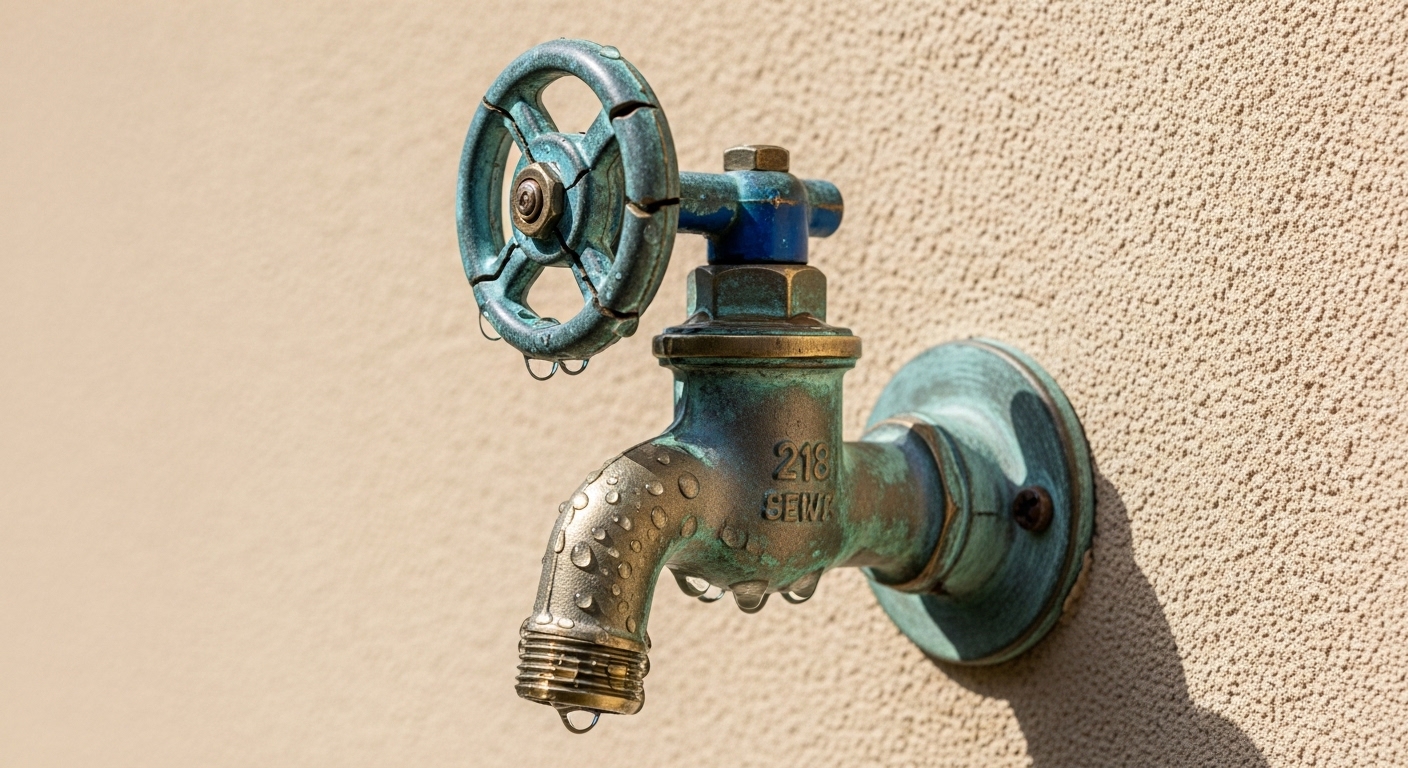
If you’ve landed here, you’re staring at a stripped, cracked, or rust-frozen spigot and trying to figure out the right outdoor faucet handle replacement types for your hose bib. The good news: 90% of the handles sold in North America fit one of a handful of standardized stem broaches, and you almost never need to replace the entire valve body to fix the problem. The bad news: pick the wrong broach count or the wrong handle profile, and you’ll round off the new handle within a week. This guide from the EveFaucet engineering team breaks down every common handle type, when to use it, and how to make sure your replacement actually seals tight, turns smoothly, and survives another decade of freeze-thaw cycles.
Why Outdoor Faucet Handle Replacement Types Matter More Than Indoor Ones
Outdoor faucets — also called hose bibs, sillcocks, or wall hydrants — live a harder life than any fixture inside your home. They sit through UV exposure, sub-freezing winters, garden-hose torque, and the occasional accidental kick from a lawnmower. The handle is the first component to fail, and because it’s the only part you physically touch, a worn handle often masks a much more serious stem issue underneath.
Choosing the correct handle replacement isn’t just cosmetic. The handle transmits torque from your hand into the valve stem; if the broach (the internal spline pattern) doesn’t match the stem precisely, you’ll either strip the handle, snap the stem, or apply uneven pressure that warps the washer seat. That’s why understanding the different outdoor faucet handle replacement types is the single most important step in any spigot repair.
The 5 Main Outdoor Faucet Handle Replacement Types
Across virtually every residential and light-commercial sillcock on the market, handles fall into five families. Each has a distinct mechanical advantage, ergonomic profile, and matching stem broach.
1. Round Wheel Handles (The Classic Hose Bib Wheel)
The round wheel — sometimes called a “wagon wheel” handle — is the most common outdoor faucet handle in North America. Typically zinc die-cast or stamped steel with a powder-coat or chrome finish, it provides moderate torque and is easy to grip even with wet hands. Most fit a standard 17-point internal broach with a 1/4″ x 20 retaining screw.
Round wheels are the default replacement for a standard Mueller, Arrowhead, or Woodford hose bib. Their main weakness is the cast spokes — drop one onto concrete and it will crack at the hub.
2. Cross (Four-Arm) Handles
Cross handles give you maximum leverage thanks to four perpendicular arms. They’re typically forged brass or solid zinc, and you’ll find them on higher-end frost-free hydrants and decorative garden spigots. Because the leverage is greater, cross handles can mask a sticky stem — meaning you may be over-torquing a valve that actually needs a new washer or packing nut.
3. Lever Handles (ADA-Compliant Single Arm)
A lever handle uses a single horizontal arm, usually 3-4 inches long. Lever handles are ADA-compliant because they can be operated with a closed fist, an elbow, or a wrist, and they’re increasingly required on new outdoor installations near accessible entrances. They typically use a quarter-turn ceramic-disc cartridge rather than a traditional compression stem, so the replacement is not interchangeable with a wheel-handle setup without changing the cartridge too.
4. T-Handles (Tee or “Bar” Handles)
A T-handle looks exactly as it sounds — a perpendicular bar across the top of the stem. Common on commercial sillcocks, irrigation valves, and many freeze-proof yard hydrants, T-handles are mechanically simple, easy to cast, and provide more torque than a lever but less than a four-arm cross. They’re a favorite for utility installations where the spigot doesn’t need to look pretty.
5. Loose-Key Handles (Removable Key Type)
The loose-key style isn’t really a handle that lives on the faucet — it’s a removable square or pentagonal key that you slip onto an exposed stem nut to operate the valve. These are standard on anti-vandal hydrants in public parks, school yards, and commercial buildings. If you’ve ever wondered why some outdoor faucets have a bare nut instead of a handle, that’s a loose-key valve, and the “replacement” is simply buying a new key.
Comparison Table: Outdoor Faucet Handle Replacement Types at a Glance
Use the table below to quickly match the right handle type to your situation. Material, torque profile, and typical price reflect mid-2026 averages from major U.S. plumbing suppliers.
| Handle Type | Best For | Typical Material | Torque / Grip | Common Broach | Average Cost (USD) |
|---|---|---|---|---|---|
| Round Wheel | Standard residential sillcocks | Zinc die-cast, stamped steel | Moderate | 17-point | $3 – $9 |
| Cross (Four-Arm) | Decorative & frost-free hydrants | Forged brass, solid zinc | High | 17 or 20-point | $8 – $25 |
| Lever | ADA / accessible installations | Brass with chrome plating | Quarter-turn (cartridge) | Square or D-shape | $12 – $40 |
| T-Handle | Commercial & yard hydrants | Cast iron, brass | Medium-high | 17-point or square | $5 – $18 |
| Loose-Key | Anti-vandal & public installations | Forged steel key | High (with leverage bar) | Square (typically 1/2″) | $4 – $12 per key |
How to Identify Your Existing Outdoor Faucet Handle Type
Before you order a replacement, you need three pieces of information: the broach (spline) count, the stem length above the packing nut, and the retaining screw thread. Misidentifying any of these is the #1 reason a “universal” replacement handle fails within the first season.
- Shut off the water supply to the outdoor faucet at the indoor isolation valve, then open the spigot to drain any pressurized water.
- Remove the retaining screw on top of the handle (usually Phillips or slotted, sometimes a 7/64″ Allen).
- Pull the handle straight up. If it won’t budge, give it a gentle tap from below with a rubber mallet — never pry sideways or you’ll bend the stem.
- Count the splines on the exposed stem. The two most common counts are 17 (residential) and 20 (some commercial valves). A few European-spec hydrants use 16 or 22.
- Measure the stem length from the top of the packing nut to the very top of the stem. This dictates how deeply the new handle will seat.
- Inspect the retaining screw threads — most are 8-32 or 10-24 machine thread. Bring the old screw to the store if you’re unsure.
If the broach is rounded or stripped, you have two choices: replace the entire stem assembly, or use a “broach-fix” handle that has a tapered, oversized internal pattern designed to bite into worn splines. We cover the broach-fix option below.
Special Case: Frost-Free (Anti-Siphon) Sillcock Handles
Frost-free sillcocks — also called freezeless or freeze-proof hydrants — have an extra-long stem (typically 6, 8, 10, or 12 inches) that places the actual washer and seat inside the heated wall of your home. The handle still goes on the outside, but the long stem means even slight handle wobble translates to a lot of seat misalignment.
For frost-free units, you almost always want a metal handle (not plastic), and you should avoid universal “fit-all” plastic handles, which tend to wear out the broach within one or two seasons. Look for OEM-matched replacements from manufacturers like Woodford, Mansfield, Prier, or Arrowhead.
Materials: What Your Replacement Handle Should Be Made Of
Material selection isn’t just about looks — it determines how long your replacement will survive outdoor exposure. Here’s how the most common options stack up.
- Forged brass: The gold standard. Corrosion-resistant, dimensionally stable across temperature swings, and accepts chrome, brushed nickel, or oil-rubbed bronze finishes beautifully. Expect 20+ years of service.
- Solid zinc die-cast: The most common mid-tier option. Affordable, decent strength, but susceptible to white powdery oxidation if the plating chips.
- Stamped steel with chrome plating: Cheap, lightweight, and what you’ll find at big-box stores. Adequate for 3-5 years before pitting begins.
- Cast iron: Used on T-handles and yard hydrants. Heavy and strong, but prone to surface rust if not kept painted.
- Stainless steel (304/316): Premium choice for coastal installations or chlorinated environments. Won’t rust, won’t pit, and won’t seize the broach over time.
- Plastic / nylon-glass composite: Avoid for outdoor use. UV degradation cracks them within 2-3 summers.
If you appreciate the aesthetic of solid metal hardware, our team has written a deep-dive into industrial-style copper taps that translates directly to outdoor selections — many of the same forging principles apply to garden spigots and exterior wall hydrants.
Step-by-Step: Replacing an Outdoor Faucet Handle in Under 15 Minutes
Once you’ve identified your handle type and sourced the correct replacement, the swap itself is one of the easiest plumbing repairs in the home. Here’s the EveFaucet workshop method.
- Shut off the supply at the indoor isolation valve. Open the outdoor faucet to bleed pressure.
- Remove the old retaining screw. If it’s seized, apply a penetrating oil (PB Blaster, Liquid Wrench) and wait 10 minutes.
- Lift the old handle straight up. Inspect the stem broach for damage.
- Clean the stem with a wire brush and a dab of plumber’s anti-seize compound — this is the step most DIYers skip, and it’s why their next replacement seizes again.
- Test-fit the new handle. It should slide on with light hand pressure. If you have to force it, the broach is wrong.
- Align the handle to your preferred “off” orientation (typically horizontal for round wheels, vertical for levers).
- Install the retaining screw with a drop of removable thread-locker (blue Loctite 242). Snug, don’t overtighten — 15-20 in-lb is plenty.
- Restore water and test the faucet through its full range of motion. Listen for chatter or vibration, which indicates a worn washer underneath.
If after replacement your faucet still drips or sputters, the handle wasn’t the real problem — your stem washer or packing is. While you’re in repair mode, it’s also worth checking that your interior fixtures are healthy. We have a dedicated guide on what to do when your faucet aerator keeps getting clogged that covers the same diagnostic approach for indoor sinks.
Broach-Fix and Universal Handles: Do They Actually Work?
If your stem broach is stripped, you have three options before resorting to a full stem replacement:
- Tapered broach-fix handles use a slightly undersized internal opening that bites into worn splines. They work reasonably well as a temporary fix, but the bite weakens with every quarter-turn.
- Universal multi-broach handles have internal splines that mesh with 12, 16, 17, 20, and 24-point stems. The compromise is that no single broach grips perfectly, leading to play and wobble.
- Set-screw clamp handles use a side-mounted set screw to clamp directly onto the stem, bypassing the broach entirely. These are the most reliable broach-fix option but can damage soft brass stems if overtightened.
Our workshop’s recommendation: use a broach-fix handle only as a temporary measure while you order the proper OEM replacement. The long-term cost of a stripped stem is usually a full sillcock replacement.
Finishes and Matching Your Existing Exterior Hardware
Most homeowners don’t think about handle finish until they’re standing in the aisle. The most common finishes — chrome, brushed nickel, matte black, oil-rubbed bronze, and unlacquered brass — each have very different outdoor durability profiles. Chrome is the most UV-stable, while matte black powder coats can chalk and fade within 2-3 years on south-facing walls.
For a unified design language across both indoor and outdoor fixtures, consider how the handle finish coordinates with your kitchen and bath. If you’re planning a broader update, this comparison of top pull-down kitchen faucet brands covers many of the finish-to-substrate matching principles that also apply to outdoor handles.
When to Replace the Whole Faucet Instead
Sometimes the handle isn’t the real problem. Replace the entire outdoor faucet (not just the handle) if you see:
- Visible cracks in the brass body or solder joints
- Water leaking from the base of the spigot at the wall (split frost-free stem inside the wall)
- Stem won’t fully close even with a new washer
- The faucet predates 2014 and lacks an integral vacuum breaker (now required by most codes)
- Persistent green corrosion at the threads or hose connection
A whole-faucet swap takes about an hour for a sweat-soldered model or 15 minutes for a push-to-connect or PEX model. If you’re shopping for a compact replacement that won’t extend awkwardly from the wall, our guide to choosing the right compact 5-inch spout reach faucet covers the dimensional considerations that apply to outdoor wall hydrants as well.
Testing, Standards, and Warranty Considerations
Reputable outdoor faucet handles and stems should carry one or more of the following compliance marks: ASME A112.18.1, NSF/ANSI 372 (lead-free for potable contact), and ASSE 1019 (for the integrated vacuum breaker on frost-free units). At EveFaucet, every brass and stainless-steel component in our outdoor line is pressure-tested to 1.5x its rated working pressure (typically 360 PSI), salt-spray tested per ASTM B117 for a minimum 200-hour cycle, and backed by a 10-year limited warranty against manufacturing defects on the valve body and a 5-year warranty on plated finishes. Always keep your receipt or order confirmation — most warranty claims require proof of purchase date.
FAQ
Are outdoor faucet handles universal?
No. While many handles share a common 17-point broach, the stem length, screw thread, and exact spline geometry vary by manufacturer. “Universal” handles exist but compromise grip quality on every fitment. Always identify your stem broach before purchasing.
How do I know if I need a new handle or a new stem?
Remove the handle and inspect the stem splines. If they’re sharp and undamaged, you only need a new handle. If they’re rounded, mushroomed, or visibly chewed up, replace the entire stem assembly. A new handle on a worn stem will fail within weeks.
Can I replace a round wheel handle with a lever handle?
Only if your valve is a quarter-turn ceramic-disc design. Traditional compression sillcocks (multiple-turn) cannot use a lever handle because the lever would have to rotate 720° or more to fully close the valve. Check by counting how many turns it takes your existing handle to go from full-off to full-on — if it’s more than one turn, you have a compression valve.
What size is the screw on top of an outdoor faucet handle?
The two most common sizes are #8-32 and #10-24 machine thread. Bring the old screw with you when buying a replacement, or order a handle that includes a new screw in the package (most do).
Why does my new outdoor faucet handle wobble?
Wobble usually means the broach count is wrong (handle too loose on the stem) or the retaining screw isn’t tight enough. Less commonly, the stem itself is slightly bent from past hose torque. Confirm the broach with a caliper or by counting splines, and replace the stem if it’s not perfectly straight.
How long should an outdoor faucet handle last?
A quality forged-brass handle should last 15-25 years outdoors. Zinc die-cast handles last 5-10 years. Stamped-steel chrome handles typically need replacement every 3-5 years, and plastic handles often crack within 2 seasons of UV exposure. Climate, sun exposure, and frequency of use all affect lifespan.
Do I need to shut off the water to change just the handle?
Technically no — the handle is upstream of the seal — but we strongly recommend it. If the retaining screw slips and you accidentally unscrew the packing nut instead, pressurized water will spray everywhere. A 30-second shutoff prevents a much bigger problem.
About the Author & EveFaucet
Author note: This guide was written by the EveFaucet technical content team in collaboration with our in-house plumbing engineers, who collectively hold over 40 years of experience designing, testing, and installing residential and commercial water fixtures. Every repair procedure described here has been validated in our Hangzhou workshop on production hardware.
About EveFaucet: EveFaucet (伊唯伊) is a manufacturer of premium 304 stainless-steel and lead-free brass water fixtures, including kitchen faucets, basin taps, shower systems, sinks, and outdoor sillcocks. All products are independently tested to ASME, NSF, and ASTM standards and backed by industry-leading warranty terms. Visit www.evefaucet.com for our full catalog or to reach our technical support team.