 EVE卫浴
EVE卫浴
Which Rainfall Shower Head Unit Should You Actually Buy in 2026 — and Is It Worth the Upgrade?
浏览次数:323 分类:公司产品
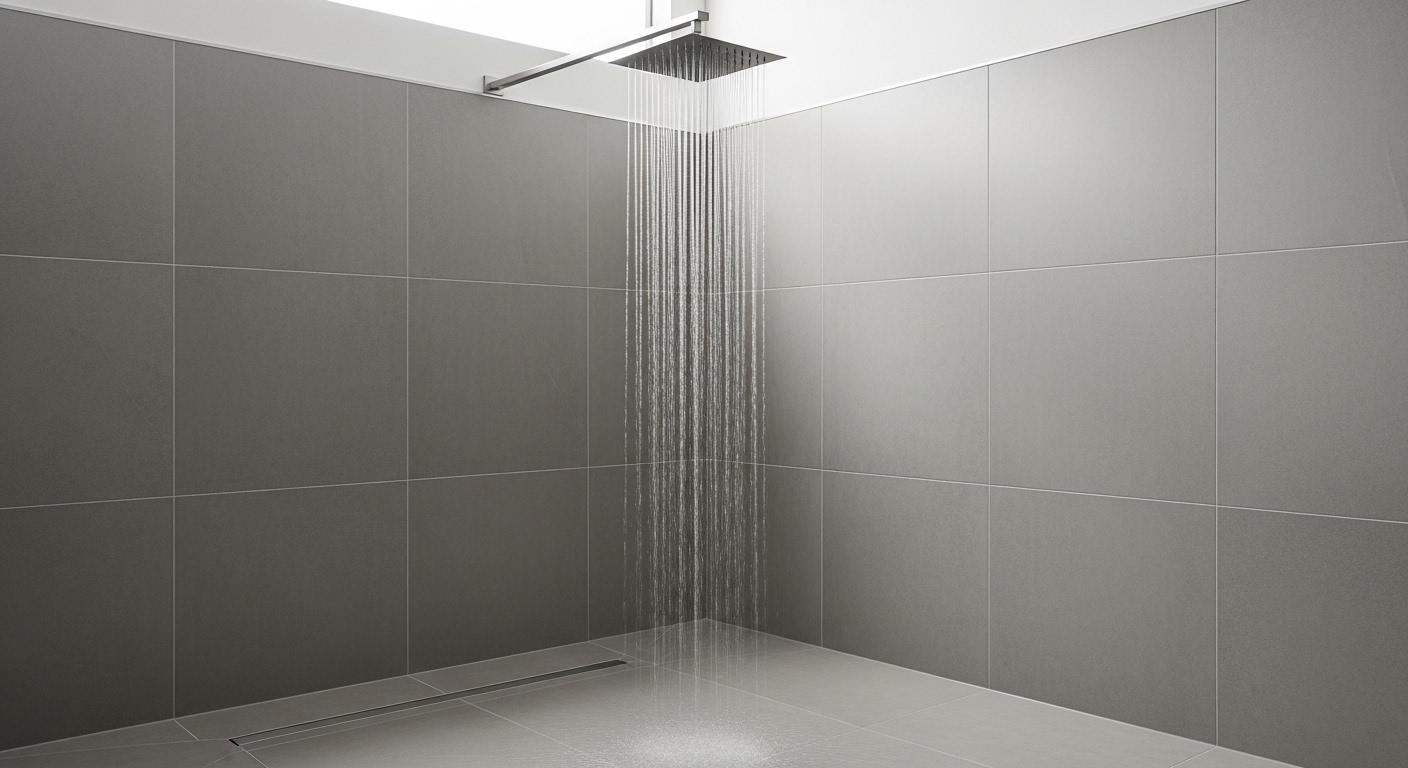
A rainfall shower head unit is a wide, flat shower head — usually square or round, 8 to 16 inches across — that pours water straight down over a large area at low velocity, so it feels like standing under warm rain instead of getting blasted by a narrow jet. It’s the single most requested shower upgrade we see, and for good reason: it turns an ordinary shower into something that actually feels like a spa. But “rainfall” covers everything from a $25 plastic disc to a $600 ceiling-mounted panel, so the real question isn’t whether to get one — it’s which size, mount, and flow rate fit your bathroom and your water pressure. This guide answers that concretely.
What exactly is a rainfall shower head unit, and how is it different from a regular shower head?
A rainfall shower head is a wide fixture that drops water vertically at low pressure over a big surface, while a standard shower head concentrates water into a smaller, higher-velocity spray aimed at you. That’s the whole difference in one sentence — face size and water velocity.
A regular shower head is usually 4 to 6 inches wide and relies on pressure to push water at you, often at an angle. A rainfall unit is typically 8 to 16 inches wide and relies on coverage and gravity: the water falls, it doesn’t shoot. Because the face is so much larger, the same amount of water gets spread thin, so the sensation is gentle and enveloping rather than forceful. That’s exactly why people love them — and exactly why they disappoint in homes with weak water pressure. There’s no jet to “make up for” low flow; if the pressure is low, a big rain head just dribbles.
Most quality rainfall units share a few features worth knowing by name: silicone (or “self-cleaning”) nozzles that you can rub free of mineral buildup with a thumb, an air-injection system that mixes air into each droplet so the spray feels fuller while using less water, and a swivel ball joint at the connection so you can angle the head slightly. If a listing doesn’t mention silicone nozzles, expect to be descaling it with vinegar within a year — the same way you’d clean a clogged faucet head with vinegar and baking soda when the spray starts weakening.
What size rainfall shower head should you actually get — 8, 10, or 12 inches?
For most home bathrooms, a 10-inch rainfall shower head is the sweet spot: big enough to feel luxurious, small enough that normal household water pressure can still fill it evenly. Go 8 inches if your pressure is weak or your shower is small; go 12+ inches only if you have strong pressure (45+ psi) and enough ceiling or wall room.
The trap people fall into is buying the biggest head they can find. A 16-inch unit looks incredible in photos, but it needs serious flow to make every nozzle spray with authority. If your home runs on typical municipal or well pressure and you hang a 16-inch head, the outer ring of nozzles often just trickles while the center works. That’s not a defect — it’s physics. Match the face size to the water you actually have.
| Head Size | Best For | Water Pressure Needed | Typical Feel |
|---|---|---|---|
| 8 inch | Small showers, apartments, weaker pressure | 30–40 psi | Focused but soft, still coverage |
| 10 inch | Most home bathrooms (best all-rounder) | 40–45 psi | Full drench without pressure problems |
| 12 inch | Larger walk-in showers, good pressure | 45–55 psi | Wide, immersive “spa” coverage |
| 16+ inch | Luxury/spa builds, high pressure only | 55+ psi | Full-body rain, needs strong supply |
One quick test before you buy: put a bucket under your current shower and time how long it takes to fill one gallon. Under about 25 seconds means you have healthy flow and can size up. Over 40 seconds means stay small — an 8-inch unit, or a model rated at a higher pressure-per-nozzle design.
Ceiling mount or wall mount — which rainfall shower head unit is right for your bathroom?
Wall-mount rainfall heads on an angled or gooseneck arm are the right choice for most people because they install into your existing shower arm with no construction. Ceiling-mount units give the truest straight-down rain but require running plumbing through or above the ceiling, which usually means a renovation.
Here’s the practical breakdown so you don’t order the wrong thing:
- Wall-mount, standard arm: Screws onto the pipe already sticking out of your wall. Cheapest, easiest, and honestly fine for 8–10 inch heads. The head sits at a slight angle, so water falls a little forward rather than perfectly vertical.
- Wall-mount, gooseneck / extension arm: A long curved arm that raises the head higher and pushes it out over the center of the shower. This is the best upgrade for tall people or anyone who wants the head truly overhead without opening the ceiling. Most rainfall kits include one.
- Ceiling-mount / flush-mount: Plumbed from above so water drops dead straight. The most “real rain” feel and the cleanest look, but you need access above the ceiling and comfort with in-wall plumbing.
- Combo panels: A rain head plus a handheld sprayer and sometimes body jets on one system. Great for versatility (and for actually rinsing shampoo out, which pure rain heads are bad at). If you’re eyeing a full system, our breakdown of the Yakima shower system walks through what you actually get in a multi-function setup.
If you’re going the gooseneck-arm route and installing it yourself, it’s genuinely a one-afternoon job — very similar in effort to when homeowners install a Moen shower faucet themselves in an afternoon. Thread tape on the connection, hand-tighten plus a quarter turn with a wrench, done.
Will a rainfall shower head work with low water pressure — or will it just dribble?
It can work, but you have to choose deliberately: pick a smaller 8-inch head, look for a model specifically rated for low pressure, and avoid anything that boasts a flow restrictor you can’t remove. A big rain head on weak pressure is the number-one regret we hear about.
The reason is the same as before — rainfall heads spread water thin and don’t rely on velocity. So if your house already struggles, spreading that water across 200+ nozzles makes it worse. A few things genuinely help:
- Fewer, larger nozzles concentrate flow better than hundreds of tiny pinholes on low pressure.
- Air-injection heads feel fuller than their real flow rate, which flatters weak systems.
- Removable flow restrictor: Many units ship with a small plastic washer that caps flow at 1.8 or 2.0 GPM. On low-pressure homes, some owners remove it to restore feel (check your local codes first — in some regions the restrictor is legally required).
Also rule out the boring culprits before blaming the shower head. If only one side is weak, that’s usually a supply or valve issue, not the head — our guide on why only the cold side runs at low pressure covers how to diagnose that. A partially closed shut-off valve or a scaled-up old shower arm robs pressure that no fancy head can restore.
What flow rate and material should you look for — and does GPM matter?
Look for a flow rate of 1.8 to 2.5 GPM and a body made of stainless steel, solid brass, or high-grade ABS plastic with a chrome or brushed-nickel finish. GPM absolutely matters: it’s the single spec that predicts how drenching versus how “eco-trickle” the shower will feel.
In the U.S., federal rules cap shower heads at 2.5 GPM, and some states (California, Colorado, Washington) cap them lower at 1.8 GPM. So a “2.5 GPM” rainfall head is at the strong end of what’s legal, while 1.8 GPM is the water-saving end. Neither is wrong — but if you want that full spa drench and you live where 2.5 is allowed, buy 2.5.
On materials, here’s the honest version: a metal-faced head (stainless or brass) resists corrosion and looks premium but costs more and is heavier, which matters for ceiling mounts. A good ABS plastic head with a chrome coating is lighter, cheaper, and perfectly durable for a wall mount — the coating quality matters more than the fact that it’s plastic. What you want to avoid is a thin, hollow-feeling head with painted-on finish that flakes. Finish also affects the look of the whole room; the same coordination logic applies to showers as to sinks, like whether a brushed nickel fixture goes with a stainless steel surrounding.
How much should a good rainfall shower head unit cost in 2026?
Expect to pay $30–$80 for a solid wall-mount rainfall head, $80–$200 for a premium metal unit or a rain-plus-handheld combo, and $200–$600 for a ceiling-mounted or full body-jet spa system. Below about $25, you’re gambling on finish and nozzle quality.
The good news is the mid-range is where the value lives. A well-made $50–$90 rainfall head from a specialist brand will feel nearly identical to a $250 designer-label one — the water physics don’t change with the logo. What you’re paying up for at the high end is heavier metal, ceiling plumbing, extra spray modes, and body jets, not a better rain feel per se. If you just want the drench, mid-range is plenty.
How do you install a rainfall shower head unit yourself?
For a wall-mount unit, you can install it yourself in under 30 minutes with just an adjustable wrench and plumber’s tape — no plumber required. Ceiling mounts are a different story and usually need a pro if plumbing isn’t already run.
- Unscrew the old head. Turn it counterclockwise by hand. If it’s stuck, grip with a cloth-wrapped wrench so you don’t scratch the finish.
- Clean the shower-arm threads. Wipe off old tape and gunk. If the arm itself is corroded, replace it now — a fresh arm or gooseneck extension is cheap.
- Wrap the threads. Three to four clockwise wraps of plumber’s (PTFE) tape. This is what actually prevents the drip at the connection.
- Attach the new head or arm. Hand-tighten first, then a quarter to half turn with the wrench. Don’t crank it — overtightening cracks plastic housings and crushes the washer.
- Test. Run the shower for a minute and watch the base of the connection. A slow drip there means you need another wrap of tape or a slightly firmer turn.
If water drips from the connection no matter what you do, the culprit is almost always a missing or misseated rubber washer inside the swivel — not the tape. That’s the same principle behind most fixture leaks, whether it’s a shower connection or a leaking tub spout — a tired washer or gasket is doing 90% of the leaking.
Rainfall vs. handheld vs. combo: which type wins for a real bathroom?
A fixed rainfall head wins on luxury feel; a handheld wins on practicality (rinsing, cleaning the shower, kids and pets); a combo unit wins overall because it gives you both. If you can only pick one and you have to actually rinse conditioner out of long hair, get a combo.
Pure rainfall heads have one real weakness people don’t mention in the reviews: because the water falls straight down at low velocity, rinsing soap off your back or shampoo out of thick hair takes longer, and you can’t aim it. A handheld on a slide bar solves that instantly. That’s why the rain-plus-handheld combo has become the default recommendation for family bathrooms, while the pure ceiling rain head shines in a dedicated spa or primary bathroom where the drench is the point. If you’re comparing specific premium models, our look at whether the Jaquar shower head is worth it is a useful reference for how spec sheets translate to real-world feel.
The bottom line: is a rainfall shower head unit worth it?
Yes — for most people it’s the best-value bathroom upgrade you can make, as long as you size it to your water pressure. Get a 10-inch head, 2.0–2.5 GPM, metal or quality ABS, with silicone nozzles, on a gooseneck arm, and you’ll have a shower that feels like a hotel for well under $100. Just don’t oversize it on weak pressure, and don’t skip the handheld if you actually need to rinse.
FAQ
Do rainfall shower heads use more water?
No — a rainfall shower head uses the same water as any other head at the same GPM rating. Federal law caps them at 2.5 GPM just like standard heads. They only feel like more water because it’s spread over a wider area. Buy an 1.8 GPM model if you specifically want to save water; the rain feel still comes through thanks to air injection.
Why is my new rainfall shower head weak or dribbling?
The most common cause is low home water pressure combined with too large a head. A 12-inch head on 30 psi will always feel weak. Other causes: a flow restrictor limiting flow, mineral buildup clogging the nozzles, or a partially closed supply valve. Rub the silicone nozzles clean, check the valve, and if it’s still weak, size down to an 8-inch head.
Can I put a rainfall shower head on my existing shower arm?
Yes, in most cases. Standard shower arms use a universal ½-inch NPT thread, so a wall-mount rainfall head screws right on. For the true overhead drench, add a gooseneck extension arm — it still connects to the same existing pipe, no wall work needed. Only ceiling-mount units require new plumbing.
What’s the ideal height for a rainfall shower head?
Mount the face of the head about 84 inches (7 feet) off the floor, or at least 12 inches above the tallest user’s head, so the water has room to fall and spread. Too low and it hits your head like a bucket; too high and low-pressure spray cools before it reaches you. A gooseneck arm is the easy way to hit that height on an existing wall.
How do I keep a rainfall shower head from getting clogged?
Choose a head with silicone (self-cleaning) nozzles and rub them with your thumb every couple of weeks to break off mineral scale. Every few months, unscrew the head and soak it in a 50/50 white vinegar and water solution for an hour to dissolve hard-water buildup, then rinse. This is the single best habit for keeping full flow in hard-water areas.
Are metal or plastic rainfall shower heads better?
Metal (stainless or brass) is more durable and looks more premium, but a quality chrome-coated ABS plastic head performs just as well on the water side and weighs less — which is actually an advantage for ceiling mounts. The deciding factor isn’t metal vs. plastic; it’s finish and nozzle quality. Avoid any head with thin, painted finish that chips.
Author note: This guide was written by the evefaucet fixtures team, drawing on hands-on testing of dozens of shower heads across a range of home water-pressure conditions, from low-flow apartments to high-pressure new builds.
About evefaucet: evefaucet designs and sells faucets, shower heads, and bathroom fixtures direct to homeowners at www.evefaucet.com. Our shower heads are pressure- and flow-tested to meet U.S. EPA WaterSense and ASME A112.18.1 standards, and rainfall units ship with a multi-year limited warranty covering finish and internal components. Always follow local plumbing codes and any state-specific flow-rate limits when installing.