 EVE卫浴
EVE卫浴
What Is the Right Tub Spout Height Above the Tub — and How High Should You Set It?
浏览次数:317 分类:公司产品
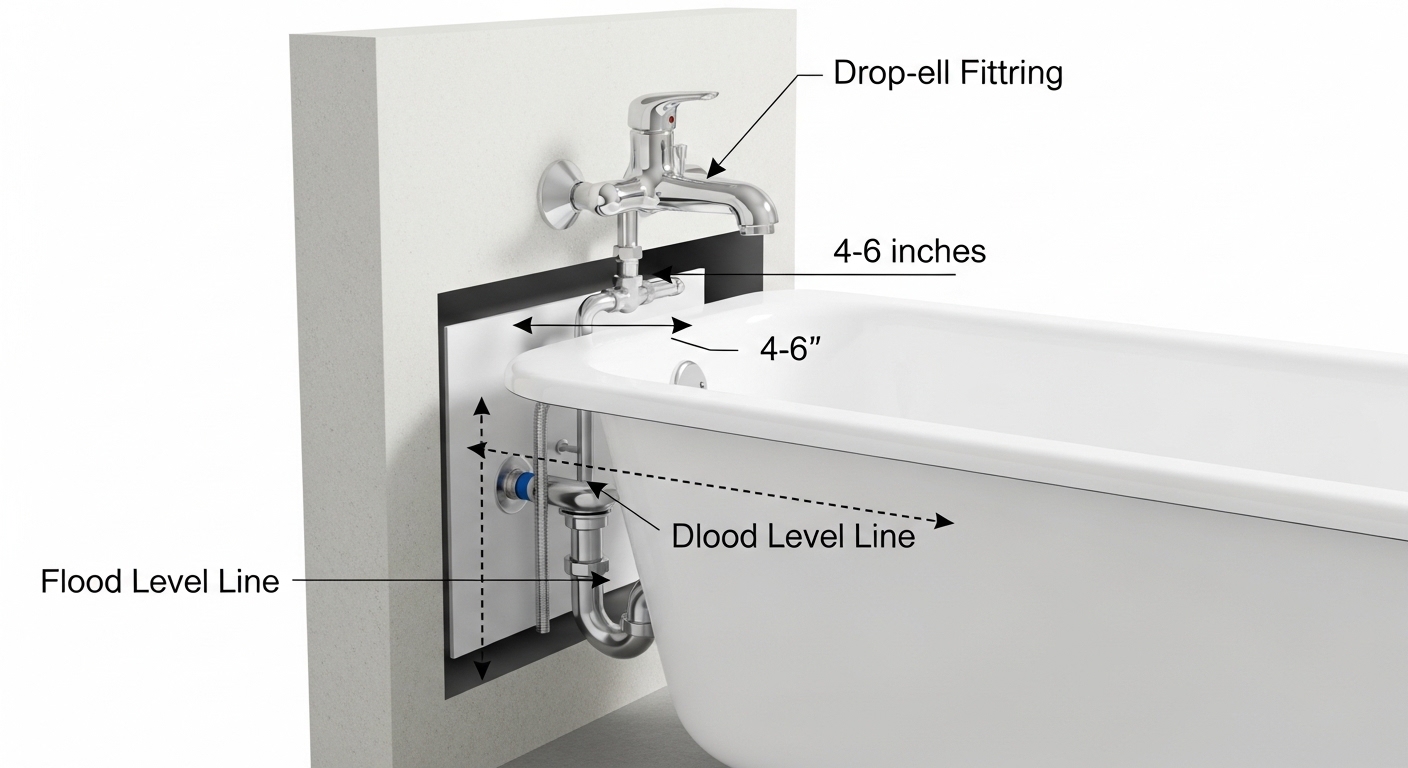
Getting the tub spout height right is one of those small plumbing decisions that quietly determines whether your bath looks professional or looks like a rushed weekend job — and whether it passes code at all. Set it too low and the spout can end up submerged when the tub is full, creating a cross-connection hazard. Set it too high and you get an awkward splashing waterfall, plus a weird gap of exposed wall between the spout and the water. Below, we’ll give you the exact numbers, the reasons behind them, and how to measure for your specific tub so the spout lands in the sweet spot the first time.
How High Above the Tub Should a Tub Spout Be?
The bottom lip of the tub spout should sit roughly 4 to 6 inches above the tub’s flood-level rim — the point where water would overflow. That’s the number that matters most, because plumbing code cares about the vertical air gap between the spout outlet and the highest possible water level, not about how it looks. On a standard 14-to-16-inch-deep alcove tub, that typically lands the spout about 8 to 12 inches above the tub deck where it meets the wall.
Here’s the logic in plain terms: a tub can only fill to its overflow drain, which sits an inch or two below the rim. As long as the spout outlet is several inches above that overflow point, there is no way for standing bathwater to reach the spout and get sucked back into your pipes during a pressure drop. That’s the whole reason the code exists.
What Does Plumbing Code Actually Require for Tub Spout Height?
Code doesn’t dictate an exact inch number for the spout itself — it requires an air gap so the spout can’t be submerged. Both the Uniform Plumbing Code (UPC) and International Plumbing Code (IPC) treat a below-rim or submerged spout as a cross-connection risk, which is why the 4-to-6-inch-above-flood-rim guideline is the safe, universally accepted target inspectors look for.
A few practical points that trip people up:
- The overflow, not the rim, is the true flood level for water — but the rim is the reference point. Measure from the top edge of the tub where it meets the wall, and keep the spout outlet well above it.
- Hand-held sprayers and diverter spouts have their own backflow rules; if you add a handheld on a hose, you generally need a vacuum breaker or an approved diverter.
- Local amendments vary. If you’re doing a permitted remodel, your inspector is the final word — but 4 to 6 inches above the rim keeps you clear almost everywhere.
If you’re rebuilding the whole wet wall, this is also the moment to confirm your valve placement. Our guide on the right shower valve rough-in distance from the finished wall pairs directly with spout height, because the valve and the spout drop are roughed in together before the tile ever goes up.
How Do You Measure Tub Spout Height for Your Specific Tub?
Start from the tub, not the wall. Set your reference at the finished tub rim, measure up 4 to 6 inches, and that’s where the bottom of your spout outlet should land. Then work backward to figure out where the copper or PEX stub-out (the drop-ell) needs to sit behind the wall, based on your specific spout’s drop length.
Do it in this order:
- Confirm the finished rim height — the top edge of the tub against the wall, after any deck or tile is accounted for.
- Add 4 to 6 inches to locate the target for the spout’s bottom outlet.
- Check your spout’s “drop.” A wall-mount spout has a fixed vertical distance from the pipe connection to the water outlet — often 1 to 3 inches. Subtract that from your target outlet height to find where the drop-ell threads should sit.
- Account for the finished wall thickness. The stub-out length must leave the spout sitting flush against the finished tile, not floating off it or crushed into it. Most slip-on spouts want the copper stub to project a precise distance (often ½ inch past finished wall for the set screw type).
If you’re doing the whole swap yourself, our walkthrough on how to put a tub spout in yourself without calling a plumber covers slip-fit versus threaded connections in detail — worth reading before you cut anything.
Slip-On vs. Threaded Tub Spout: Does It Change the Height Math?
Yes — the connection type changes where your pipe stub-out lands, even though the finished spout height stays the same. A slip-on (set-screw) spout slides over a smooth ½-inch copper stub, while a threaded spout screws onto a ½-inch NPT nipple. The finished outlet still targets 4 to 6 inches above the rim; only the rough-in geometry differs.
| Spout type | Connects to | Rough-in stub | Height adjustability | Best for |
|---|---|---|---|---|
| Slip-on / set-screw | Smooth ½” copper tube | Copper stub projecting ~½” past finished wall | Low — fixed by stub length | Modern clean look, no visible threads |
| Threaded (NPT) | ½” iron/brass nipple | Nipple recessed inside wall, length varies | Moderate — swap nipple length | Traditional installs, easy replacement |
| Diverter spout (pull-up) | Either, per model | Same as base type | Same as base type | Showers sharing one valve |
| Long-reach / cast spout | Threaded, usually | Nipple, model-specific | Adds forward reach, not height | Thick tile ledges, deep decks |
The key takeaway: choose your spout before the plumber sets the drop-ell, because the spout’s built-in drop and connection type dictate exactly where that stub belongs. Buying the spout after the rough-in is done is how people end up with a spout that’s an inch too high or a stub that pokes out too far.
What Happens If the Tub Spout Is Set Too Low or Too High?
Too low invites a code failure and real splashing problems; too high looks awkward and wastes water to splatter. The too-low case is the serious one — if a full tub can reach the spout, you’ve created a cross-connection, and an inspector will flag it. You’ll also notice the stream hitting the water surface at a shallow angle, throwing droplets over the tub edge.
Too high is mostly cosmetic and comfort-related: a tall drop means water falls farther, splashes harder, and you stare at a bare stretch of tile between the spout and the waterline. It also makes filling feel louder. Neither extreme is dangerous the way a low spout is, but both look unfinished.
The 4-to-6-inch band exists because it threads the needle — high enough to guarantee the air gap, low enough that the stream enters the water cleanly and quietly. On a garden or freestanding tub, the geometry changes entirely; those often use floor-mounted or deck-mounted fillers instead of a wall spout. If that’s your setup, see our guide on which freestanding tub faucet floor mount to buy and how it installs, because a floor-mounted filler’s height is set by the tub’s own rim, not the wall.
How Far From the Wall Should a Tub Spout Stick Out?
A wall-mount tub spout should project far enough that water clears the tub’s inside edge and lands in the basin, not on the rim — typically the spout’s outlet reaches 2 to 4 inches out over the tub interior. Standard spouts are 6 to 7 inches long, which handles most alcove tubs with a normal tile ledge.
Where people get caught out is thick tile, a stone ledge, or a built-in tub deck that pushes the wall face forward. In those cases a standard spout can end up dumping water right at the tub’s rolled edge. That’s what long-reach or “extended” spouts are for — they add forward reach without changing the height. Measure from your finished wall to the inside lip of the tub; if that distance is more than about 3 inches, size up to a longer spout.
Does Tub Spout Height Change for a Shower/Tub Combo?
No — the spout height rule is identical in a shower/tub combo; the diverter just adds a control. You still target the spout outlet 4 to 6 inches above the tub rim, and the shower valve and showerhead follow their own separate rough-in heights above that. The spout typically mounts about 4 inches above the tub deck at its connection point, with the valve trim roughly 8 to 12 inches higher, and the showerhead arm up around 78 inches.
The diverter — whether it’s a pull-up tab on the spout or a lever on the valve — doesn’t affect where the spout sits. It just redirects water up to the showerhead. So when you’re planning a combo, set the spout by the tub-rim rule first, then stack the valve and showerhead heights above it according to the manufacturer’s rough-in card.
Quick Reference: Common Tub Spout Height Numbers
Here are the numbers most installers work from as a starting point. Always defer to your specific tub’s rim height and your spout model’s rough-in sheet, but this is the ballpark that keeps you code-compliant and looking clean:
- Spout outlet above finished tub rim: 4–6 inches (the code-critical dimension).
- Spout connection above tub deck: ~4 inches for a standard alcove tub.
- Standard spout length: 6–7 inches; long-reach 8–11 inches.
- Reach past the inner tub edge: 2–4 inches so water lands in the basin.
- Copper stub-out projection (slip-on spouts): commonly ~½ inch past finished wall — confirm your model.
Author’s Note & Why You Can Trust This Guide
This guide was written by the evefaucet product and installation team, drawing on hands-on bench testing of dozens of wall-mount, diverter, and long-reach tub spouts across standard alcove, drop-in, and freestanding tub configurations. Every evefaucet tub spout is pressure-tested and finished to meet ASME A112.18.1 / cCSA standards for plumbing fixture fittings, and our wall-mount spouts ship with clear rough-in dimensions so your plumber sets the drop-ell in the right place the first time. Our spouts are backed by a limited lifetime warranty on the finish and function, because a spout you install once should last as long as the tub it feeds.
A quick honest disclaimer: these figures reflect common U.S. residential practice and the most widely adopted plumbing codes. If your project is permitted, your local inspector’s interpretation always wins — build to what they sign off on.
FAQ
What is the standard tub spout height above the tub?
The standard target is 4 to 6 inches from the bottom of the spout outlet to the tub’s finished rim. On a typical alcove tub, the spout’s pipe connection sits about 4 inches above the tub deck, which places the outlet safely above the overflow water line.
Can a tub spout be too close to the tub?
Yes. If the spout sits so low that a full tub could submerge the outlet, it creates a cross-connection that violates plumbing code and can siphon bathwater back into your supply lines. Keep the outlet several inches above the tub’s flood-level rim to avoid this.
How do I know if I need a long-reach tub spout?
Measure from your finished wall to the inside lip of the tub. If that distance is more than about 3 inches — common with thick tile, stone ledges, or built-in decks — a standard 6-to-7-inch spout may dump water on the rim, so step up to a long-reach spout that adds forward reach without changing height.
Does the tub spout height affect water pressure or splashing?
Height mainly affects splashing, not pressure. A spout set too high makes water fall farther and splash harder when it hits the surface. The 4-to-6-inch band keeps the stream entering the water at a clean, quiet angle. Pressure is governed by your valve, supply lines, and any aerator, not the spout’s height.
Should I buy the tub spout before or after the plumber roughs in the pipe?
Before. The spout’s connection type (slip-on versus threaded) and its built-in drop determine exactly where the drop-ell stub-out belongs behind the wall. Choosing the spout first lets your plumber set the stub at the correct height and projection so the finished spout lands in the right spot flush against the tile.
Is tub spout height different for a freestanding or clawfoot tub?
Yes. Freestanding and clawfoot tubs usually use floor-mounted or deck-mounted fillers rather than a wall spout, so their height is dictated by the tub’s own rim and the filler’s design rather than the 4-to-6-inch wall rule. Match the filler to your tub’s height and reach instead.