 EVE卫浴
EVE卫浴
What Is an Outdoor Faucet in Spanish — and Which Word Do You Actually Use When Shopping?
浏览次数:464 分类:公司产品
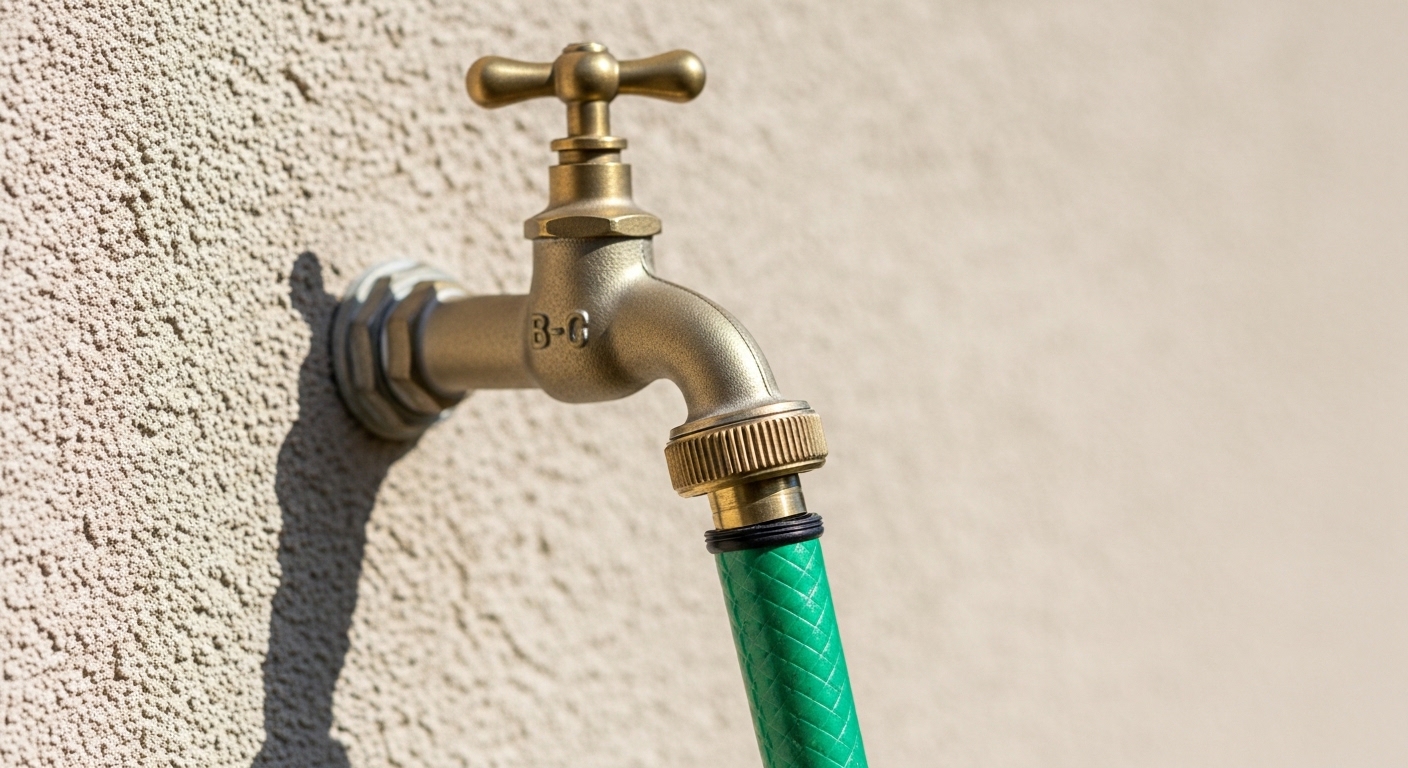
If you’ve searched for outdoor faucet in Spanish, you’re almost certainly trying to do one of three things: buy the right part online, tell a Spanish-speaking plumber exactly which fixture is leaking, or label something correctly for a bilingual household or job site. The problem is that Spanish doesn’t have one single universal word — the correct term changes depending on the country you (or the person you’re talking to) come from, and it also changes depending on whether you mean the whole outdoor spigot or one specific type. Get the word wrong and you’ll be handed a kitchen mixer instead of a garden spigot. This guide gives you the exact words, the regional differences, and the technical vocabulary you need so you order or describe the right fixture the first time.
At evefaucet, we ship outdoor faucets to bilingual customers across the U.S. and Latin America every week, so we hear all of these terms in real conversations — not just the textbook ones. Below is what people actually say.
What is the most common word for “outdoor faucet” in Spanish?
The most common everyday term is “llave de jardín” (literally “garden faucet/key”) in Mexico, Central America, Colombia, and much of the U.S. Hispanic market. If someone is standing in a hardware store pointing at the spigot on the side of a house, that’s usually the phrase they’ll use. The word “llave” literally means “key,” but across most of Latin America it’s the standard word for any faucet or tap.
Here’s the nuance that trips people up: “llave de jardín” describes what the faucet is for (the garden/outdoors), while the plumbing-supply term describes what it is. For the specific threaded outdoor faucet that a garden hose screws onto — what English speakers call a hose bibb, hose bib, or spigot — the precise Spanish term is “llave de manguera” (“hose faucet”). When you’re ordering a replacement part, “llave de manguera” is the safest, most accurate phrase because it tells the supplier the faucet has hose threads.
How do you say “outdoor faucet” in Spain vs. Mexico vs. Argentina?
It depends entirely on the country: Spain says “grifo,” most of Latin America says “llave,” and the Río de la Plata region (Argentina, Uruguay) says “canilla.” They all mean the same physical object — a faucet — but using the wrong regional word can get you a blank stare.
This is the single biggest source of confusion, so here’s a clear breakdown of how to say “outdoor faucet” region by region:
| Region / Country | Common word for “outdoor faucet” | Literal meaning | Also heard |
|---|---|---|---|
| Mexico | Llave de jardín / Llave de manguera | Garden faucet / Hose faucet | Llave exterior |
| Spain | Grifo de jardín / Grifo exterior | Garden tap / Exterior tap | Toma de agua |
| Argentina & Uruguay | Canilla de jardín / Canilla exterior | Garden tap / Exterior tap | Canilla de manguera |
| Colombia | Llave de jardín / Llave de paso exterior | Garden faucet | Grifo |
| Chile | Llave de jardín | Garden faucet | Llave de agua exterior |
| Puerto Rico & U.S. Hispanic | Pluma / Llave de afuera | Faucet / Outside faucet | Llave de manguera |
A couple of things worth flagging from that table. In Puerto Rico and parts of the Caribbean, people often say “pluma” for a faucet — a word that would confuse someone from Mexico (where “pluma” means “pen” or “feather”). And in Spain, “toma de agua” (“water intake/outlet”) is a very natural way to describe an outdoor water connection point. If you don’t know the person’s country, “llave de manguera exterior” is the phrase most likely to be understood everywhere, because it combines the near-universal “manguera” (hose) with “exterior.”
What’s the exact Spanish term for a “hose bibb” or “spigot”?
The exact term is “llave de manguera” in Latin America and “grifo de manguera” in Spain — and for a frost-free or freeze-proof outdoor faucet specifically, it’s “llave antihelada” or “llave de manguera anticongelante.” If you want the plumbing-grade term for the threaded outlet itself, that’s a “toma de manguera”.
This matters most when you’re buying, because outdoor faucets aren’t all the same. Here are the main types and their Spanish equivalents so you can specify exactly what you need:
- Standard hose bibb → Llave de manguera — the basic threaded outdoor spigot with a round or lever handle.
- Frost-free / freeze-proof faucet → Llave antihelada / antongelante — has a long stem that shuts water off inside the heated wall so the pipe won’t burst in winter.
- Ball valve / quarter-turn spigot → Llave de bola / de un cuarto de vuelta — turns on fully with a 90° handle flip.
- Wall hydrant → Hidrante de pared — a heavier-duty recessed outdoor faucet.
- Shutoff / stop valve for the outdoor line → Llave de paso — the interior valve that cuts water to the outdoor faucet.
That last one — llave de paso — is important. In Spanish, “llave de paso” specifically means a shutoff or stop valve, not the outdoor faucet itself. So if a plumber tells you to close the “llave de paso,” they mean go inside and shut off the supply line, which is exactly what you’d do before replacing an outdoor spigot. If your outdoor faucet won’t shut off no matter how hard you crank the handle, that interior llave de paso is your emergency stop — we walk through that exact scenario in our guide on why an outside faucet won’t turn off and how to stop the water fast.
Which Spanish word should I use when ordering a replacement online?
Use “llave de manguera” (or “grifo de manguera” for Spain) plus the thread size and finish — that’s the phrase that gets you the correct part. Adding “para exterior” (“for outdoors”) removes any doubt that you mean an outdoor fixture and not an indoor tap.
When you shop, don’t stop at the noun. Outdoor faucets have specs that must match, and those specs have their own Spanish vocabulary. Here’s a quick order-ready checklist you can copy:
- Type: “Llave de manguera para exterior” (outdoor hose bibb) — or “antihelada” if you need freeze protection.
- Thread size: “rosca de ¾ de pulgada” (¾-inch hose thread, the standard garden-hose size) or “½ pulgada” for the inlet connection.
- Connection: “conexión macho/hembra” (male/female connection) and “MIP/FIP” for the wall-side pipe thread.
- Material: “latón” (brass — the most durable), “acero inoxidable” (stainless steel), or “bronce” (bronze).
- Handle: “manija” or “manivela” (handle), sometimes “volante” for a round wheel handle.
Brass — latón — is the material we recommend for almost every outdoor faucet, and it’s worth knowing the word because cheaper zinc-alloy spigots corrode within a few seasons of sun and freeze cycles. When a customer asks us for a “llave de manguera de latón con rosca de ¾,” we know exactly what to ship, and it fits the first time. If you’re not sure what thread size your existing hose or pipe uses, measuring before you order saves a return.
Why does the Spanish word for outdoor faucet matter so much for repairs?
Because using the exact term prevents ordering the wrong part and prevents miscommunication with a plumber — which on an outdoor line can mean the difference between a five-dollar washer and a flooded wall cavity. A vague word gets you a vague result.
Take a common outdoor-faucet failure: a drip or leak coming from around the handle instead of the spout. In English that’s a packing or stem-seal problem; in Spanish you’d tell the plumber the leak is “por el vástago” (from the stem) or “por la empaquetadura” (from the packing). Knowing “empaquetadura” (packing) vs. “empaque” or “arandela” (washer/gasket) tells them whether to bring packing string or a rubber washer. We break down that specific fix in our article on what outdoor faucet packing is and how to stop a leak around the handle — the concepts translate directly.
Winter creates the other big vocabulary gap. A frozen outdoor faucet is “una llave de manguera congelada,” and the freeze-proof design that prevents it is “antihelada.” If you live somewhere that dips below freezing, specifying “antihelada” when you buy is one of the most valuable single words in this whole guide — it’s the feature that keeps a burst pipe from happening. If yours is already dripping and iced up, our guide on whether a dripping, frozen-solid outdoor faucet is a real emergency and how to fix it fast covers the immediate steps.
What about outdoor showers and other exterior fixtures?
An outdoor shower faucet in Spanish is a “grifo de ducha exterior” (Spain) or “llave/regadera de ducha exterior” (Latin America) — note that in Mexico, “regadera” means the shower head itself. Exterior water fixtures share the same core vocabulary as the garden spigot, just with the fixture type swapped in.
This is useful if you’re building out a full outdoor water setup — a hose bibb for the garden plus a rinse shower by the pool or back door. The word “exterior” is your anchor across all of them: grifo exterior, ducha exterior, llave exterior. If an outdoor or exposed-wall shower is what you’re really after, our roundup of the best external shower faucet for an outdoor or exposed-wall install covers the fixtures and finishes that hold up outside — the same corrosion and freeze concerns apply as with any garden spigot.
Quick reference: outdoor faucet vocabulary in Spanish
Here’s a compact glossary you can screenshot for the store or a text to a plumber. These are the terms that come up most often in real outdoor-faucet conversations:
- Outdoor faucet — llave de jardín / grifo exterior / canilla exterior
- Hose bibb / spigot — llave de manguera
- Frost-free faucet — llave antihelada / antongelante
- Shutoff valve — llave de paso
- Hose — manguera
- Handle — manija / manivela / volante
- Washer / gasket — arandela / empaque
- Packing (stem seal) — empaquetadura
- Stem — vástago
- Thread — rosca
- Leak / drip — fuga / goteo
- Brass — latón
Keep two things in mind. First, manguera (hose) is understood almost everywhere in the Spanish-speaking world, which is why “llave de manguera” travels well across regions. Second, if you’re ever unsure, describing the fixture — “la llave de afuera donde se conecta la manguera” (“the outside faucet where the hose connects”) — works even if you don’t nail the regional noun. Function beats vocabulary when you’re standing in front of a leaky spigot.
A note on evefaucet’s outdoor faucets and testing
Every outdoor faucet evefaucet sells is built from lead-free brass, pressure-tested to standard supply-line pressures, and backed by a limited lifetime warranty on the body and finish. Our hose bibbs use standard ¾-inch garden-hose threads (GHT) and ½-inch NPT inlets so they match North American plumbing, and our frost-free (“antihelada”) models are tested to shut off water inside the wall line to prevent freeze bursts. We meet the low-lead requirements set out under U.S. plumbing standards (NSF/ANSI 372), so the same faucet that’s safe for a drinking-water line is safe for filling a kids’ pool.
Author note: This guide was written by the evefaucet product content team, drawing on daily conversations with bilingual customers, contractors, and plumbing-supply partners across the U.S. and Latin America. We sell and support outdoor faucets year-round, which means we hear how real people describe these parts — in every regional dialect — not just how a dictionary defines them. When regional usage differs, we’ve noted it rather than pretending there’s one “correct” word.
FAQ
Is “llave” or “grifo” the right word for faucet in Spanish?
Both are correct — it’s regional. “Llave” is used across most of Latin America (Mexico, Colombia, Chile, Central America), while “grifo” is standard in Spain. Argentina and Uruguay use “canilla.” For an outdoor faucet specifically, “llave de manguera” or “llave de jardín” is understood most widely in Latin America, and “grifo de jardín” in Spain.
How do you say “hose bibb” in Spanish?
A hose bibb is a “llave de manguera” in Latin America or “grifo de manguera” in Spain. This is the most precise term because it specifies the faucet has hose threads for connecting a garden hose, which is exactly what a hose bibb is.
What is a frost-free outdoor faucet called in Spanish?
It’s called a “llave antihelada” or “llave de manguera antongelante.” The word “antihelada” means “anti-freeze,” referring to the long-stem design that shuts water off inside the heated wall so the exposed pipe can’t freeze and burst in cold weather.
What’s the difference between “llave de manguera” and “llave de paso”?
“Llave de manguera” is the outdoor faucet itself — the spigot the hose screws onto. “Llave de paso” is a shutoff or stop valve, usually located inside the wall or basement, that cuts the water supply to that outdoor line. You close the “llave de paso” before repairing or replacing the “llave de manguera.”
Which Spanish word should I use to order an outdoor faucet part online?
Use “llave de manguera para exterior” (or “grifo de manguera” for Spain), and add the thread size (“rosca de ¾ de pulgada”), material (“latón” for brass), and whether you need it frost-free (“antihelada”). That combination gives a supplier everything they need to send the correct part.
Does “pluma” mean faucet in Spanish?
Yes, in Puerto Rico and parts of the Caribbean and Colombia, “pluma” is commonly used to mean faucet or tap, so an outdoor faucet might be a “pluma de afuera.” Be aware that in Mexico and most other regions “pluma” means “pen” or “feather,” so it can cause confusion outside the Caribbean — “llave de manguera” is the safer cross-regional choice.