 EVE卫浴
EVE卫浴
Are Brushed Nickel Faucet and Handles Still the Safest Choice for a 2026 Bathroom or Kitchen?
浏览次数:12 分类:公司产品
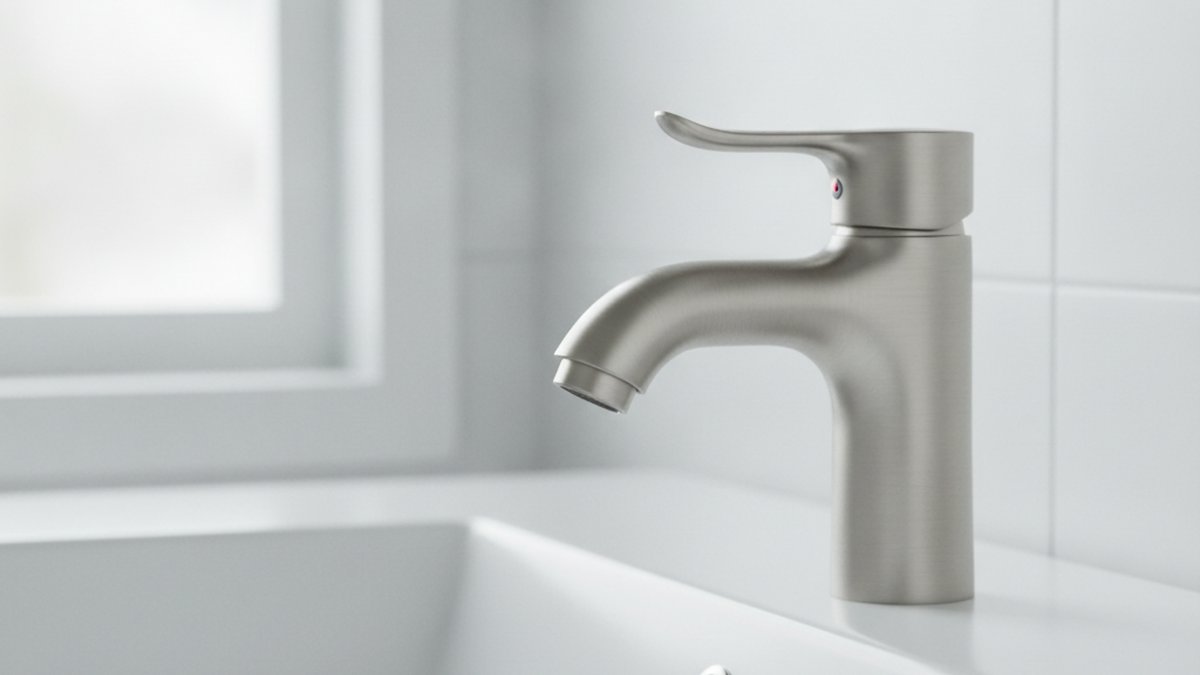
If you’re staring at a wall of finishes and wondering whether brushed nickel faucet and handles are a smart, timeless pick or a beige compromise, here’s the honest answer: brushed nickel is popular precisely because it’s hard to get wrong. It’s warm enough to feel inviting, neutral enough to survive a kitchen or bathroom remodel five years from now, and textured enough to hide the daily mess that makes polished chrome look filthy by noon. For a busy family bathroom or a hard-water kitchen, that combination is worth more than a trendier finish that photographs well and then disappoints you every morning.
Below, we’ll answer the real questions people actually ask before they buy — about durability, cleaning, hard water, matching hardware, and whether the extra money over chrome is justified — so you can order once and be done.
What exactly is a brushed nickel finish — and why do so many people choose it?
Brushed nickel is a real nickel layer over a brass or zinc base, then mechanically “brushed” to create a fine, directional satin texture instead of a mirror shine. That texture is the whole point: micro-scratches in the surface scatter light, so smudges, mineral spots, and fingerprints practically vanish. Where polished chrome is a mirror that broadcasts every drip, brushed nickel is a soft matte that quietly absorbs them.
People choose it for three practical reasons:
- It hides everything. Water spots, dried soap, kids’ handprints — the satin grain camouflages all of it, so the faucet looks clean between actual cleanings.
- It’s neutral, not boring. The warm gray-silver tone leans slightly warmer than chrome, so it plays nicely with warm woods, creams, and beiges as well as cool grays and whites.
- It ages gracefully. A small scratch on brushed nickel blends into the existing brushed texture. The same scratch on polished chrome is a permanent scar you’ll see forever.
One important distinction: “brushed nickel” and “satin nickel” are usually the same look, but “polished nickel” is not — that’s a bright, warm mirror finish. And “brushed nickel” is warmer and slightly darker than “brushed chrome” or “stainless.” If you’re matching an existing piece, always compare in person or against a real photo, because the tone difference is subtle but visible side by side.
Is a brushed nickel faucet and handles set actually harder to keep clean than chrome?
No — brushed nickel is easier to keep looking clean day to day, though it asks for a slightly gentler cleaning routine. Because the satin texture disguises spots, you can go longer between wipe-downs without the faucet looking neglected. Chrome looks spotless right after cleaning and terrible an hour later; brushed nickel looks “fine” almost all the time.
The trade-off is that the brushed grain can trap grime if you scrub it wrong. Here’s the routine that keeps it perfect:
- Wipe with a soft microfiber cloth and warm water for daily cleaning.
- For buildup, use a drop of mild dish soap, then rinse and dry with a clean cloth — drying is what prevents new mineral spots.
- Once in a while, wipe along the direction of the brushing, not across it, so any residue lifts out of the grain instead of packing into it.
- Never use abrasive pads, scouring powder, or acidic descalers (vinegar, CLR) directly on the finish — they can dull or etch the coating over time.
That’s genuinely it. No special polish, no spray. A brushed nickel faucet and handles set is one of the lowest-maintenance choices you can make, which is exactly why it dominates builder-grade and mid-range bathrooms alike.
Which finish is best for hard water — brushed nickel, chrome, or matte black?
For hard water, brushed nickel is the most forgiving finish you can buy, and matte black is the worst. Hard water leaves white, chalky mineral deposits when it dries. On glossy chrome and especially on matte black, those white spots stand out like snow; on brushed nickel’s silvery satin surface, they’re nearly invisible until you’re doing a deep clean.
Here’s how the common finishes actually compare for a real household:
| Finish | Hides water spots | Hides fingerprints | Scratch forgiveness | Best for |
|---|---|---|---|---|
| Brushed nickel | Excellent | Excellent | High — scratches blend in | Hard water, busy family baths & kitchens |
| Polished chrome | Poor | Poor | Low — scratches show | Low-use powder rooms, bright modern looks |
| Matte black | Poor (white spots) | Fair | Medium | Soft water, dramatic contrast designs |
| Brushed brass / gold | Good | Good | Medium-high | Warm, statement bathrooms |
| Stainless | Good | Good | Medium-high | Modern kitchens, appliance matching |
If your home has genuinely hard water, brushed nickel plus a good aerator is the combination that will frustrate you least. It’s also worth knowing that mineral buildup inside the spout tip is a separate issue from the finish — if flow gets weak, the aerator is usually the culprit, not the faucet. Our guide on why a tap barely trickles and how to fix a blocked aerator walks through that in a few minutes. And if you’re weighing a warmer statement finish instead, compare notes in our breakdown of whether a brushed brass Roman tub faucet is worth it.
Do the faucet and the handles have to match — and what about the rest of the bathroom hardware?
The faucet and its own handles should always match exactly — and on most modern faucets they’re sold as one coordinated set, so that’s automatic. The bigger question is whether your faucet needs to match the towel bars, drawer pulls, shower trim, and door handles. The relaxed 2026 answer: aim for a deliberate look, not a perfect one.
Practical guidelines that actually work in a real room:
- Match what’s close together. The faucet, drain, and any handles on the same sink should be the same finish. Mismatched metals inches apart look like a mistake.
- The “hero” metals can differ intentionally. Brushed nickel plumbing fixtures with matte black or brass cabinet hardware is a popular, on-purpose mix — as long as it repeats. One black pull looks accidental; black on every drawer looks designed.
- Keep the shower and faucet in the same family. In a single bathroom, the shower trim, tub filler, and sink faucet reading as one finish creates calm. This is the easiest place to stay consistent.
- Lighting and mirror frames are fair game to contrast. Those read as “décor,” not “plumbing,” so a different metal there feels curated rather than clashing.
Because brushed nickel is neutral and warm, it’s the easiest base finish to build a mixed-metal scheme around. If you’re leaning the other direction and want a moody, high-contrast bathroom, our comparison of whether a matte black shower faucet finish is worth it is a useful counterpoint.
What should you look for so a brushed nickel faucet lasts — solid brass, PVD, and cartridges?
The finish is only as good as what’s under it, so buy on three specs: a solid-brass body, a PVD (physical vapor deposition) brushed nickel coating, and a ceramic-disc cartridge. Those three together are the difference between a faucet that looks new in a decade and one that flakes, spots, or drips within a year.
Here’s what each one buys you:
- Solid brass body: Brass resists corrosion far better than zinc alloy or plastic internals, and it’s heavy — a reassuringly weighty faucet is usually a well-made one. Zinc-bodied “brushed nickel” faucets are cheaper but pit and corrode, especially in humid bathrooms.
- PVD coating vs. electroplating: PVD bonds the finish at a molecular level, making it dramatically more scratch- and tarnish-resistant than standard electroplated finishes. A PVD brushed nickel finish is what lets a manufacturer stand behind the color for the life of the product.
- Ceramic-disc cartridge: This is the valve that controls water. Ceramic discs are what stop drips and keep the handles feeling smooth for years. A cheap rubber-washer or plastic cartridge is the number-one reason budget faucets start dripping.
Also check the certification stamp. In North America, look for fixtures that meet NSF/ANSI 61 and 372 (lead-safe / “lead-free” wetted surfaces) and carry cUPC or WaterSense marks. These aren’t marketing — they’re independent standards that confirm the faucet is safe for drinking water and flows efficiently. A reputable brand will publish its flow rate (typically 1.2 GPM for bathroom faucets, 1.5–1.8 GPM for kitchen) and back the finish and cartridge with a warranty.
One more real-world tip: handles wear out or loosen long before a faucet body fails, and the set screw that holds a handle on is a common weak point. If you ever need to tighten or replace one, our guide on what size the faucet handle replacement screw is and how to get the right one saves a lot of guesswork.
Is a brushed nickel faucet worth the extra money over chrome in 2026?
For most homes, yes — brushed nickel is usually $10–$40 more than the identical faucet in chrome, and that small premium buys you years of a cleaner-looking, lower-maintenance fixture. If you hate cleaning, have hard water, or have kids, the upgrade pays for itself in wiped-down mornings you skip.
When is chrome the smarter buy? In a rarely used powder room where nobody’s leaving fingerprints, or when you specifically want a bright, high-shine modern look and you don’t mind the upkeep. Chrome is also marginally cheaper and slightly easier to find in bargain lines.
But for the primary bathroom, the kitchen, or any high-traffic sink, brushed nickel is the better long-term value. It’s the finish least likely to look dated when you sell — real-estate agents consistently note that brushed nickel and stainless read as “updated but neutral” to the widest pool of buyers, where bolder finishes can polarize. If you’re comparing warmer premium options too, it’s worth reading whether a copper faucet for bathroom sinks is actually worth it before you commit, since copper and nickel sit at opposite ends of the maintenance spectrum.
How do you buy the right brushed nickel faucet and handles for your specific sink?
Match the faucet configuration to your sink’s mounting holes first — everything else is finish and features. Get this wrong and no finish will save you, because the faucet physically won’t fit. Count the holes in your sink or countertop and measure the spread before you buy.
| Configuration | Holes needed | Hole spacing | Best for |
|---|---|---|---|
| Single-hole | 1 | N/A | Small vanities, modern minimal look |
| Centerset | 3 | 4 in. (spread) | Standard bathroom sinks |
| Widespread | 3 | 8–16 in. (spread) | Larger vanities, upscale look |
| Wall-mount | 2 (in wall) | Varies by rough-in | Vessel sinks, custom designs |
A few extra decisions worth making up front: pick single-handle if you want one-hand temperature control and easier cleaning, or two-handle (widespread) for a classic look and independent hot/cold. For kitchens, decide between pull-down and pull-out sprayers and confirm your spout height clears large pots. And always buy the matching drain assembly in brushed nickel at the same time — a chrome pop-up drain under a brushed nickel faucet is the most common finish mismatch we see.
If you’d rather shop a metal finish in person before committing, our take on finding a brass faucet nearby versus ordering online applies just as well to brushed nickel — the tone really does look different under store lighting than on a screen.
Author note & brand credibility
This guide was written by the evefaucet product team — plumbing-fixture specialists who spec, test, and stock brushed nickel faucets and handles across kitchen and bathroom lines every day. At evefaucet (www.evefaucet.com), our brushed nickel fixtures use solid-brass bodies, PVD finishes, and ceramic-disc cartridges, are certified to NSF/ANSI and cUPC standards, and are backed by our finish and drip warranty. Everything here reflects hands-on experience with real installs, real hard-water customers, and real returns — not spec sheets alone.
FAQ
Does brushed nickel tarnish or turn yellow over time?
A quality PVD brushed nickel finish won’t tarnish, yellow, or flake — the coating is molecularly bonded and rated for the life of the faucet. Cheaper electroplated finishes on zinc bodies can dull or discolor in humid bathrooms after a few years, which is exactly why the brass-body-plus-PVD combination is worth insisting on.
Can I mix brushed nickel faucets with stainless steel appliances?
Yes, and it’s one of the most common pairings in kitchens. Brushed nickel and brushed stainless share a similar satin sheen, so they read as coordinated even though nickel is slightly warmer. If they sit right next to each other, choose a brushed nickel with a cooler tone for the closest match.
Is brushed nickel going out of style?
No. Brushed nickel has been a top-selling finish for over two decades precisely because it’s neutral, so it doesn’t ride trend cycles the way matte black or brass do. It’s the safest resale-friendly choice, and designers still specify it constantly for exactly that reason.
What’s the difference between brushed nickel and satin nickel?
Practically none — most manufacturers use the terms interchangeably for the same low-sheen, brushed satin finish. Just don’t confuse either with “polished nickel,” which is a bright, warm, mirror-like finish that shows spots and fingerprints much more.
Will vinegar damage my brushed nickel faucet?
Undiluted vinegar or acidic descalers can dull or etch a brushed nickel finish over time, so avoid soaking the finish in them. To clear a clogged aerator, unscrew just the aerator and soak that small metal-and-mesh part in diluted vinegar, then rinse — keep the acid off the visible finish and wipe the faucet with mild soap and water instead.