 EVE卫浴
EVE卫浴
Is a Shower Faucet Black Matte Finish Worth It — and Which One Should You Actually Buy in 2026?
浏览次数:182 分类:公司产品
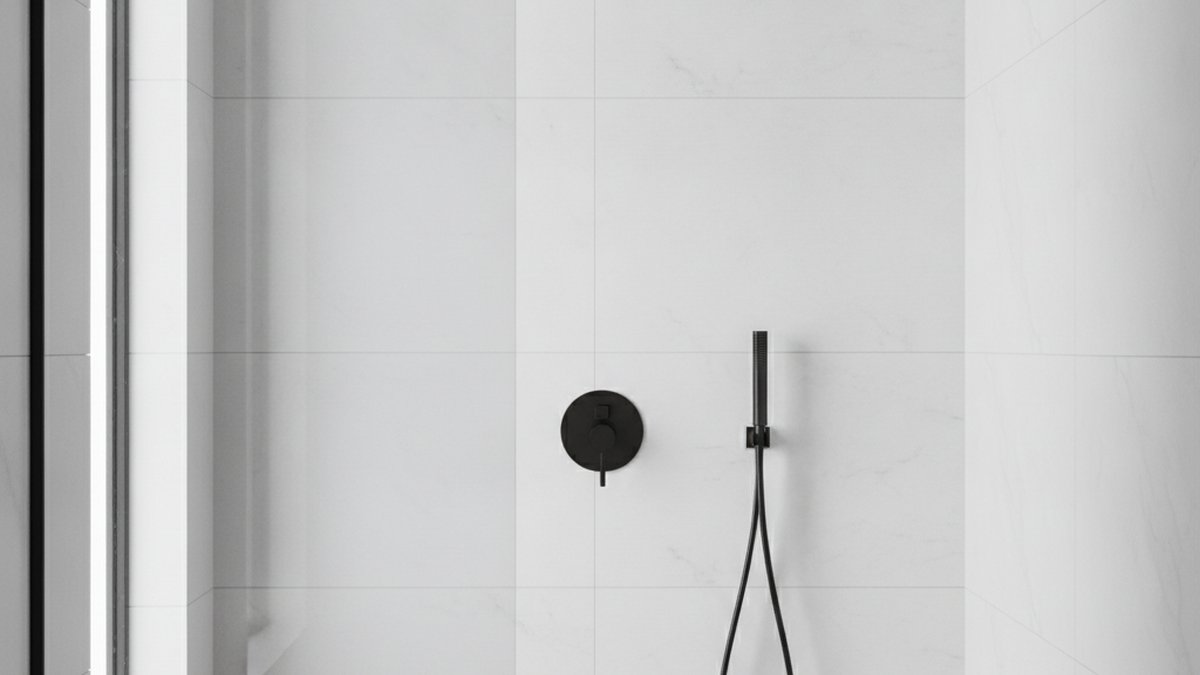
A shower faucet black matte finish has gone from a niche designer choice to one of the most-requested looks in American bathrooms, and for good reason: it reads as intentional, it disguises the hard-water spotting that makes chrome look dirty by Tuesday, and it pairs with almost any tile from white subway to moody charcoal. But “matte black” covers a huge quality range — from $40 painted trim that chips at the diverter to $300 PVD-coated brass that outlives your remodel. This guide answers the questions people actually ask before they buy: is it worth it, does it scratch, does it show water spots, which valve do you need, and which one you should actually pick.
Is a matte black shower faucet actually worth it, or just a trend?
It’s worth it for most people — matte black is now a mainstream finish, not a fad, and it solves a real problem chrome doesn’t: it hides water spots and fingerprints. The caveat is that “worth it” depends entirely on build quality, not the color.
Here’s the honest breakdown. The color itself is durable design: matte black is neutral enough that it won’t date the way, say, oil-rubbed bronze did a decade ago, and it’s a standard stocked finish from nearly every major manufacturer now, so replacement trim and matching accessories are easy to find. Where people get burned is finish quality. A cheap matte black shower faucet is often chrome or zinc that’s been spray-painted or thinly coated, and it chips at the high-wear points — the handle base, the diverter, the set screw. A good one uses a PVD (physical vapor deposition) coating or a baked powder coat over solid brass, which bonds at a molecular level and shrugs off years of daily use.
So the real question isn’t “is black matte worth it” — it’s “is this specific faucet built well enough to stay black.” Answer that and you’ll be happy for a decade.
Does matte black show water spots and soap scum more than chrome?
No — matte black shows water spots and fingerprints far less than polished chrome, which is one of its biggest practical advantages. The flat, non-reflective surface diffuses light instead of mirroring it, so mineral spotting and smudges essentially disappear at normal viewing distance.
That said, matte black isn’t magic. In very hard water areas (above roughly 7 grains per gallon), you’ll eventually see a faint whitish haze of calcium build-up if you never wipe the faucet — it’s just far less obvious than the crusty spotting chrome develops. The fix is easy and the same one that keeps any finish healthy: a quick wipe with a soft damp cloth after showers, and an occasional clean with mild dish soap and water. What you must avoid on matte black:
- Abrasive pads or powders (Scotch-Brite, Comet, Bar Keepers Friend) — they scuff the flat coating and create shiny spots.
- Acidic descalers left to sit (vinegar, CLR) — a brief wipe is usually fine, but prolonged contact can dull PVD and attack cheaper coatings.
- Ammonia and bleach-based bathroom sprays — they can etch or discolor the finish over time.
Stick to soap, water, and a microfiber cloth and a quality matte black finish stays looking new. If your home has aggressive hard water, the same mineral issues that spot a faucet also clog spray nozzles — our guide on why a faucet aerator gets blocked and barely trickles walks through the descaling routine that keeps shower nozzles flowing too.
What do I actually need to buy — just the trim, or the valve too?
You need two things: a rough-in valve body (the part inside the wall) and a trim kit (the handle, escutcheon plate, and spout/head you see). Many “shower faucet” listings sell only the trim, so the number-one buying mistake is ordering a beautiful matte black trim and discovering there’s no valve behind it — or that the valve you have doesn’t match.
Here’s how it breaks down:
- New installation or full remodel: buy a valve body + matching trim together (often sold as a “complete shower system” or “valve + trim combo”). Confirm the valve is a pressure-balancing or thermostatic anti-scald valve — required by U.S. code (ASSE 1016) for showers.
- Replacing an existing shower faucet: you may be able to reuse the in-wall valve and buy trim only — but ONLY if the new trim is made by the same brand/valve family. Trim is rarely cross-compatible between brands.
- Not sure what’s behind the wall? The brand and model are usually stamped on the valve cartridge or the plaster guard. Match that before ordering trim.
If you’re setting a valve from scratch, getting the rough-in depth right the first time is what makes or breaks the install — our walkthrough on setting up a shower valve rough-in correctly covers the exact depth and stud-mounting details, and if you’re working with a Delta-style system, installing the shower valve trim kit yourself in about an hour shows the trim side step by step.
Single-handle, dual-handle, or a full shower system — which matte black setup fits my bathroom?
For most bathrooms, a single-handle pressure-balancing valve is the simplest, cheapest, and code-compliant choice; step up to a thermostatic multi-function system only if you want a rain head plus handheld running independently. The right pick depends on your plumbing and how you actually shower.
Quick decision guide:
- Standard tub/shower, one spray: single-handle pressure-balancing valve with a matte black lever and showerhead. Simplest, most affordable, easiest to install.
- Walk-in shower, want a rain head AND a handheld: a valve with an integrated diverter (2- or 3-function) so you can switch between or combine sprays.
- Luxury / spa build, precise temperature control: a thermostatic valve, which holds your set temperature even when someone flushes a toilet elsewhere in the house.
A matte black rainfall shower head is the single most impactful upgrade for the money if you’re building a new system, and pairing it with a matching black handheld gives you both drenching coverage and practical rinse-down. If you go the handheld route, the way you mount and use it matters more than people expect — getting the most out of a handheld shower head covers bar height, hose length, and spray modes.
How do matte black shower faucets compare across price and quality tiers?
Below is a realistic comparison of what you get at each price point in 2026. Prices are for a valve + trim set unless noted; budget “trim-only” kits can look cheaper but leave out the most important part.
| Tier | Typical Price (valve + trim) | Finish Type | Body Material | Best For |
|---|---|---|---|---|
| Budget | $40–$110 | Painted / thin coat | Zinc alloy | Rentals, quick refresh; expect chipping in 2–4 yrs |
| Mid-range | $120–$250 | Powder coat or entry PVD | Brass + zinc mix | Most homeowners; solid 8–10 yr life |
| Premium | $250–$450 | Genuine PVD matte black | Solid forged brass | Forever homes, spa builds, hard water |
| Designer / thermostatic | $450–$900+ | PVD, multi-function | Solid brass, ceramic disc | Custom showers, precise temp control |
The sweet spot for most buyers is the mid-range to premium border — around $180–$300 — where you get solid brass in the wetted parts, a ceramic-disc cartridge (the part that determines how long it drips-free), and a PVD or high-grade powder-coat finish. Below about $120 you’re gambling on the finish and cartridge; above $450 you’re mostly paying for thermostatic control and designer styling.
Does matte black scratch, chip, or fade over time?
A quality PVD or powder-coated matte black finish resists scratching, chipping, and fading for the life of the fixture — PVD is one of the hardest coatings available and is used on premium watch cases for the same reason. Cheap painted finishes, on the other hand, chip and fade, especially at handles and diverters where fingers and rings make contact.
The difference comes down to how the color is applied. Spray paint sits on top of the metal and peels; powder coat is baked on for a tough, uniform layer; PVD is vaporized metal bonded into the surface itself, making it both scratch- and corrosion-resistant. Fading is almost never a coating-chemistry issue — it’s a sign the “matte black” was a dyed lacquer that UV and cleaners broke down. This is exactly why finish type belongs on your spec checklist right next to valve type. If you’re mixing metals in the bathroom, the same intentional-contrast logic that makes matte black work with a white sink is covered in our piece on whether a brushed finish faucet goes with a stainless steel sink — the principles transfer directly to pairing black fixtures with chrome or steel accents.
How do I install a matte black shower faucet myself?
If you’re only swapping trim on an existing compatible valve, you can do it in under an hour with basic tools; a full valve replacement means opening the wall and is a bigger job. Here’s the trim-swap version most DIYers can handle:
- Shut off the water — either the shower’s dedicated stops behind the trim, or the main supply.
- Remove the old trim — pop the handle cap, remove the set screw, pull the handle, then unscrew the escutcheon plate. Note the cartridge brand stamped on it.
- Check cartridge compatibility — new trim must match the existing valve/cartridge family. If it doesn’t, you’ll need matching-brand trim or a full valve swap.
- Install the new escutcheon and gasket — seat it flush against the tile with the foam or rubber gasket to keep water out of the wall.
- Attach the matte black handle — hand-tighten the set screw; over-torquing can mar a coated finish, so snug, not gorilla-tight.
- Install the shower arm and head — wrap the arm threads with plumber’s (PTFE) tape, thread on the matte black head, and hand-tighten plus a quarter turn with a padded wrench.
- Turn the water back on and test — check for leaks at the escutcheon, arm, and head; confirm hot/cold and diverter function.
One tile-specific caution: when you thread on the shower arm and head, don’t over-tighten against tile or you can crack it. Our guide on installing a shower head on tile without cracking it covers padding the wrench and supporting the arm — a five-minute read that saves an expensive tile repair.
What should I look for on the spec sheet before I buy?
Prioritize five things: solid brass body, ceramic-disc cartridge, genuine PVD or powder-coat matte black finish, an ASSE 1016 anti-scald valve, and a strong warranty. If a listing won’t tell you these, treat that silence as a red flag.
- Body material: “solid brass” for wetted parts. “Metal” or “alloy” with no detail usually means zinc.
- Cartridge: ceramic disc, ideally pressure-balancing or thermostatic. This is what keeps it drip-free for years.
- Finish: “PVD matte black” or “powder-coated.” Avoid vague “matte black finish” with no process named.
- Flow rate: shower heads are federally capped at 2.5 GPM in the U.S.; many quality heads offer 1.75–2.0 GPM for water savings without feeling weak.
- Standards & warranty: look for ASME A112.18.1 / CSA B125.1 compliance and a lifetime finish/function warranty. That warranty is the manufacturer betting the finish will last — a signal worth reading.
Cross-check the rough-in spec against what’s in your wall before you buy trim. Getting that mismatch wrong is the most common reason a “perfect” matte black faucet ends up returned.
FAQ
Is matte black or brushed nickel better for a shower faucet?
Both hide water spots better than chrome; the choice is aesthetic. Matte black gives high contrast and a modern, bold look and reads as intentional against light tile. Brushed nickel is warmer, more neutral, and more forgiving in traditional bathrooms. For durability they’re comparable when both use PVD — so pick by the look you want and the other fixtures already in the room.
Do matte black shower faucets need special cleaning products?
No — mild dish soap, warm water, and a soft microfiber cloth are all you need. Avoid abrasive pads, scouring powders, acidic descalers left to sit, and ammonia or bleach sprays, all of which can dull or scratch the flat finish. Wiping the faucet dry after showers keeps hard-water haze from ever forming.
Will a matte black shower faucet match black hardware from another brand?
Usually close, but not always identical — “matte black” varies slightly in warmth and sheen between manufacturers. For a seamless look, buy the shower trim, handheld, and any accessories as a matching set or from the same brand line. Small differences read as intentional at a distance, but two very different blacks side by side can look mismatched.
How long does a matte black shower faucet last?
A quality one with a PVD or powder-coat finish over solid brass and a ceramic-disc cartridge easily lasts 10–15+ years, and many carry lifetime warranties on finish and function. Budget painted models often start chipping within 2–4 years, especially at handles and diverters. The finish process and body material — not the color — decide lifespan.
Can I put a matte black shower faucet in a bathroom with chrome or nickel fixtures?
Yes, and mixed metals look deliberate when you make black the accent rather than a random one-off. Repeat the matte black in at least two spots — say the shower trim and a matching towel bar or drain — so the eye reads it as a chosen scheme. A single lonely black fixture among all-chrome can look like a mistake, so tie it in.
Does a matte black finish reduce water pressure or flow?
No — finish color has zero effect on flow. Water pressure and flow are determined by your home’s supply pressure, the valve, and the shower head’s GPM rating (federally capped at 2.5 GPM in the U.S.). If a black shower head feels weak, the cause is a clogged nozzle, a flow restrictor, or low household pressure — not the finish.
The bottom line: who should buy a matte black shower faucet?
Buy one if you want a modern, low-maintenance, spot-hiding finish and you’re willing to spend in the roughly $180–$300 range for a valve-plus-trim set built on solid brass with a genuine PVD or powder-coat finish and a ceramic-disc cartridge. Skip the sub-$120 painted kits unless it’s a short-term rental refresh — the color will outlast the coating on those, and a chipped matte black faucet looks worse than honest chrome. Match your valve and rough-in first, choose single-handle for simplicity or a thermostatic system for a spa build, and clean it with nothing harsher than soap and water. Do that, and a matte black shower faucet is one of the highest-impact, lowest-regret upgrades in the bathroom.
Author note: This guide was written by the evefaucet product team, drawing on hands-on testing of shower valves and finishes across hard-water and standard-water installs. About evefaucet: evefaucet designs and sells faucets, shower systems, and bathroom fixtures direct to homeowners, with products built to ASME A112.18.1 / CSA B125.1 standards and pressure-balancing valves that meet ASSE 1016 anti-scald requirements. Our matte black finishes are PVD- and powder-coat-applied over solid brass and backed by a limited lifetime warranty on finish and function — because a finish is only worth buying if the maker will stand behind it. Always confirm your rough-in and local plumbing code before purchase, and consult a licensed plumber for in-wall valve work.