 EVE卫浴
EVE卫浴
Bathroom Faucet Cold Water Low Pressure — Why Is Only the Cold Side Weak, and How Do You Fix It?
浏览次数:249 分类:公司产品
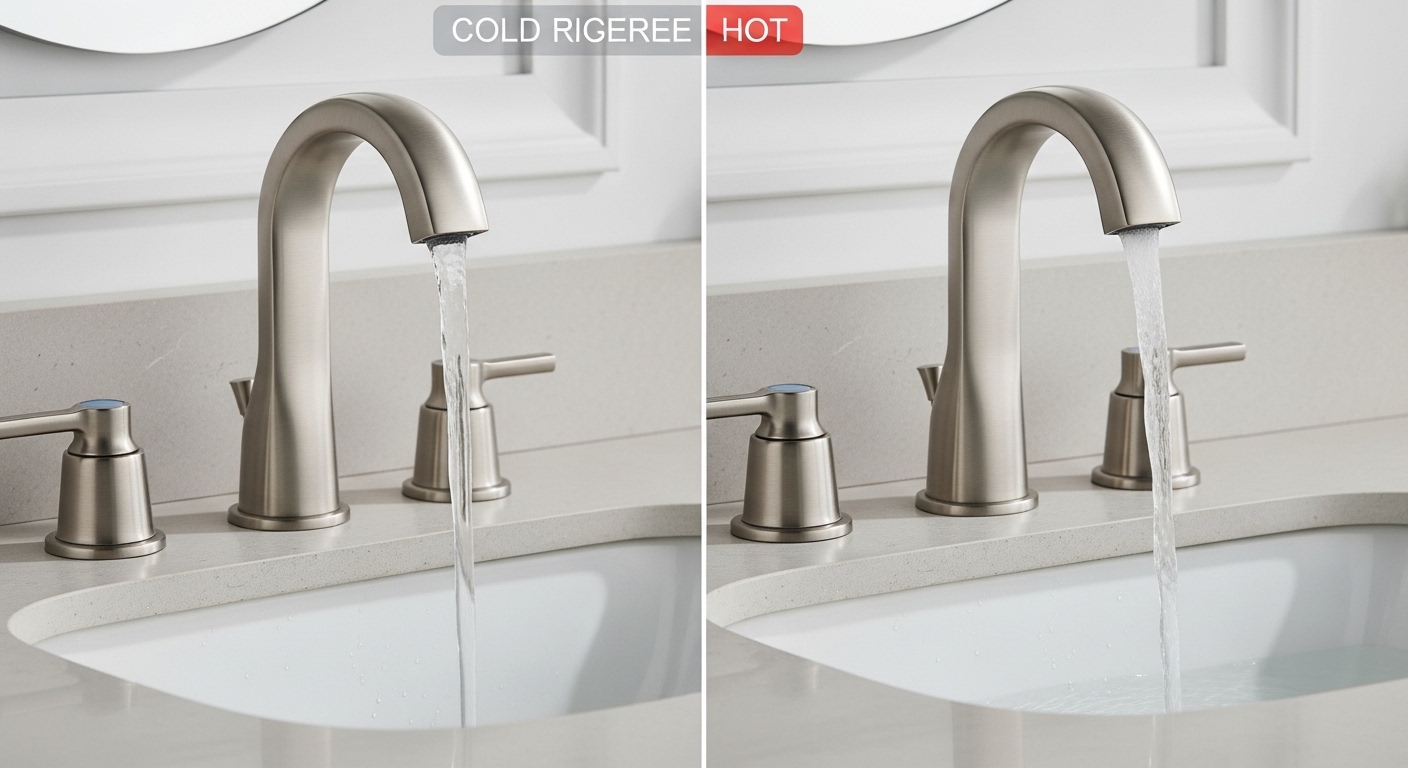
A bathroom faucet with cold water low pressure — where hot runs strong but cold barely trickles — is one of the most common (and most misdiagnosed) faucet problems in American homes. The good news: because the hot side works fine, you’ve already ruled out the expensive stuff. Whole-house pressure, the water main, and the pump are all clearly okay, because they’d starve both sides equally. When only cold is weak, the blockage lives somewhere on the cold path between your shut-off valve and the spout — and every one of those points is something you can inspect yourself with a flashlight and a wrench.
At evefaucet we’ve handled thousands of these support tickets, and the pattern is remarkably consistent. Below, we walk through exactly why one side goes weak, how to find the blockage in the right order (cheapest and easiest first), and when it’s actually your faucet cartridge — so you buy the right part instead of guessing.
Why is only the cold water low pressure on my bathroom faucet?
Because a one-sided pressure drop means a one-sided restriction. Water pressure entering your home is shared, so if the cold is weak but the hot is strong, the problem is a physical blockage or a not-fully-open valve on the cold line specifically — not low pressure from the street.
Here’s the logic plumbers use, and it saves hours: hot and cold water travel separate paths right up until they mix inside the faucet body. They share the same aerator at the very tip, but everything upstream — the supply line, the shut-off valve, the inlet port, the cartridge channel — is split by temperature. So a symptom that shows up on only one side has to come from a spot that’s unique to that side.
The most common cold-only offenders, in the order you should check them:
- A partially closed cold shut-off valve (angle stop). The #1 cause. Someone shut it during a repair and never fully reopened it, or it’s an old multi-turn valve that’s crept closed.
- A kinked or crushed cold supply hose. Braided lines get pinched behind the sink when a cabinet gets loaded or a hose is over-bent during install.
- Debris packed into the cartridge’s cold inlet. Sediment, pipe scale, or a chunk of old washer lodges in the narrow cold channel.
- A clogged aerator that happens to restrict cold flow. Less common as a cold-only cause, but worth ruling out because it’s the fastest to check.
How do I fix low cold water pressure at the bathroom faucet myself?
Work from the cheapest, easiest fix to the hardest — most people never get past step two. You’ll need a flashlight, a small bucket, an adjustable wrench, and maybe white vinegar. Total time is usually 15–30 minutes.
Step 1 — Fully open the cold shut-off valve. Look under the sink for the two small valves feeding up to the faucet; the cold one is on the right as you face the back wall. Turn it counterclockwise until it stops. On modern quarter-turn valves the handle should sit parallel to the pipe when fully open. This single step fixes the problem more often than any other.
Step 2 — Check the supply hose for kinks. Follow the cold braided line from the valve up to the faucet. Straighten any tight bend or pinch. If the hose is crushed flat anywhere, replace it — a $6 braided line restores full flow.
Step 3 — Clean the aerator. Unscrew the little screen at the tip of the spout (turn clockwise as you look up at it, or use tape-wrapped pliers). Rinse out the grit and soak it in white vinegar for an hour to dissolve mineral scale. If cold flow jumps once the aerator is off entirely, you’ve found it.
Step 4 — Flush or replace the cartridge. If cold is still weak, the blockage is inside the valve cartridge. Shut off both stops, pull the handle and cartridge, and check the cold inlet for debris. Flush it, or replace the cartridge if it’s worn.
If you’re comfortable pulling the valve apart, our step-by-step guide on how to replace a bathroom faucet cartridge on a single-handle faucet walks through the exact removal for cartridge and single-handle designs — the same procedure applies whether you’re clearing debris or swapping the part.
Is a clogged aerator or the cartridge causing my weak cold flow?
Do the aerator-off test: unscrew the aerator completely and run the cold. If flow becomes strong, the aerator was your problem. If cold is still weak with the aerator removed, the restriction is upstream — the valve, hose, or cartridge.
This one 30-second test splits every diagnosis cleanly in two, so do it before you order any parts.
| Test result | What it means | Fix | Cost / time |
|---|---|---|---|
| Strong cold with aerator removed | Aerator clogged with scale/grit | Soak in vinegar or replace aerator | $0–8 / 15 min |
| Still weak, but hot side strong | Cold valve, hose, or cartridge blocked | Open valve, straighten hose, flush cartridge | $0–25 / 30 min |
| Both sides weak from the spout | Aerator or shared spout blockage | Clean aerator / pull-out spray head | $0–8 / 15 min |
| Weak everywhere in the house | Whole-home pressure or PRV issue | Check pressure regulator / call plumber | Varies |
Note the last row: if you check other faucets and the whole house feels weak, this isn’t a faucet problem at all — it’s a pressure-regulator or supply issue, and cleaning aerators won’t help. For a broader look at brand-specific pressure quirks, our guides on why a Moen faucet has low water pressure and unclogging a trickling sink sprayer cover the same diagnostic tree applied to other fixtures.
Why does the cold side clog more than the hot side?
Cold lines collect more sediment because cold water carries and deposits particles differently, and because the cold side often sits on the incoming-supply side of your plumbing where debris arrives first. Mineral scale, on the other hand, tends to build faster on the hot side — so a cold-only clog usually points to loose sediment, rust flakes, or old washer debris rather than hard-water scale.
A few real-world reasons the cold side is the usual victim:
- It’s first in line. Cold water comes straight off your main; any grit stirred up by a water-main repair or a water heater flush hits the cold fixtures first.
- Recent plumbing work. After any repair that opened the pipes, sediment gets dislodged and travels downstream until it jams in the narrowest opening — often the cold cartridge inlet.
- Old galvanized or brass pipes. These shed rust and corrosion flakes that lodge in valve screens.
- A failing supply-hose gasket. The little rubber washer inside a braided line can swell or partially tear and flap over the opening, choking cold flow.
If you have hard water, the aerator is your recurring maintenance point regardless of which side is weak. Cleaning it every few months keeps both sides flowing — the same vinegar soak technique we cover for shower heads applies here.
When should you replace the faucet instead of repairing it?
Replace the faucet if the body is cracked, the cartridge is discontinued, or you’ve cleared every blockage and cold flow is still weak because the internal channels are corroded shut. For most faucets under 10 years old, a $15 cartridge and a cleaned aerator fix bathroom faucet cold water low pressure for a fraction of a replacement’s cost.
That said, there are honest tipping points where a new faucet is the smarter buy:
- The cartridge is no longer made. Orphaned parts on discontinued models make repair a scavenger hunt.
- The valve body is corroded internally. If you can see green corrosion or scale packed into the brass channels, cleaning won’t restore the original bore.
- It’s already leaking elsewhere. A faucet that drips at the base or handle and has weak flow is telling you the internals are done.
- You want better flow control. Modern faucets use pressure-compensating aerators and cleaner internal geometry that deliver a fuller stream at lower flow rates.
When you do upgrade, look for a faucet with a ceramic-disc cartridge (they resist debris jamming far better than old rubber-washer valves) and an easily removable aerator. evefaucet’s bathroom faucets ship with WaterSense-labeled 1.2 GPM aerators tuned for a strong, even stream at that lower flow — so you get pressure that feels full without wasting water. If your issue turns out to be a dripping-side failure rather than pressure, our guide on telling which side of a faucet is failing when it drips hot or cold water helps you pinpoint it before you buy.
How much does it cost to fix low cold water pressure?
Almost nothing if you DIY. The three most common fixes — opening a valve, straightening a hose, and cleaning an aerator — cost $0. A replacement braided supply line runs $6–12, a new aerator $4–8, and a replacement cartridge $10–30. A plumber’s service call for the same work typically runs $125–250, which is why this is one of the most worthwhile DIY faucet repairs.
| Fix | Part cost | DIY time | Plumber cost |
|---|---|---|---|
| Open shut-off valve | $0 | 2 min | — |
| Replace supply hose | $6–12 | 15 min | $100–150 |
| Clean / replace aerator | $0–8 | 15 min | $90–120 |
| Replace cartridge | $10–30 | 30–45 min | $150–250 |
FAQ
Why is my hot water pressure fine but cold water low at the bathroom sink?
Because hot and cold travel separate paths until they mix inside the faucet, a one-sided drop means a restriction on that one side only. For weak cold, check the cold shut-off valve (fully open it), the cold supply hose (straighten kinks), and the cold cartridge inlet (flush debris) — in that order.
Can a clogged aerator cause low pressure on just one side?
Usually the aerator restricts both sides equally since it sits at the shared spout tip, but debris can occasionally lodge so it chokes the cold channel more. Always do the aerator-off test first: if cold runs strong with the aerator removed, clean or replace it before looking upstream.
How do I know if my shut-off valve is fully open?
On a quarter-turn valve, the handle should sit parallel to the pipe when fully open and perpendicular when closed. On an older multi-turn (round) handle, turn it counterclockwise until it stops firmly. If the valve feels gritty or won’t fully open, it may be failing internally and worth replacing.
Will cleaning the aerator with vinegar really restore cold water pressure?
Yes, if mineral scale or grit in the aerator is the restriction. Soak the disassembled aerator in white vinegar for about an hour to dissolve hard-water buildup, scrub the screen, rinse, and reinstall. For heavier buildup, the same baking-soda-and-vinegar method used on barely-spraying shower heads works well here too.
How long should a bathroom faucet cartridge last before it restricts flow?
A quality ceramic-disc cartridge typically lasts 15–20 years; cheaper rubber-washer valves degrade in 5–10. If your faucet is older and you’ve cleared the valve and aerator without success, a worn or debris-packed cartridge is the likely cause — and it’s an inexpensive, screw-out replacement on most single-handle models.
Is low cold water pressure ever a sign of a bigger plumbing problem?
Occasionally. If multiple cold fixtures throughout the house are weak, the issue is upstream — a failing pressure-reducing valve, a partially closed main shut-off, or sediment from recent water-main work — not your faucet. In that case, cleaning individual aerators won’t help and you should check your home’s overall water pressure or call a plumber.
The bottom line
Weak cold water at a single bathroom faucet is almost never a serious plumbing emergency — it’s a localized blockage on the cold path, and you can find it by working from the shut-off valve outward. Fully open the cold valve, straighten the supply hose, clean the aerator, and flush the cartridge, in that order. One of those four steps clears the problem for the vast majority of people, usually for free and in under half an hour.
Author note: This guide was written by the evefaucet product and support team, drawing on years of hands-on faucet installation, repair, and customer troubleshooting. evefaucet designs and manufactures bathroom and kitchen faucets that meet ASME A112.18.1/CSA B125.1 performance standards and carry WaterSense certification for verified flow performance. Our bathroom faucets are backed by a limited lifetime warranty on finish and function, and every cartridge is pressure- and cycle-tested before it ships. Always shut off your water supply before servicing a faucet, and consult a licensed plumber for whole-house pressure issues.