 EVE卫浴
EVE卫浴
What Is a Sink Sprayer Quick Connect, and Is It the Easiest Way to Replace a Side Sprayer?
浏览次数:441 分类:公司产品
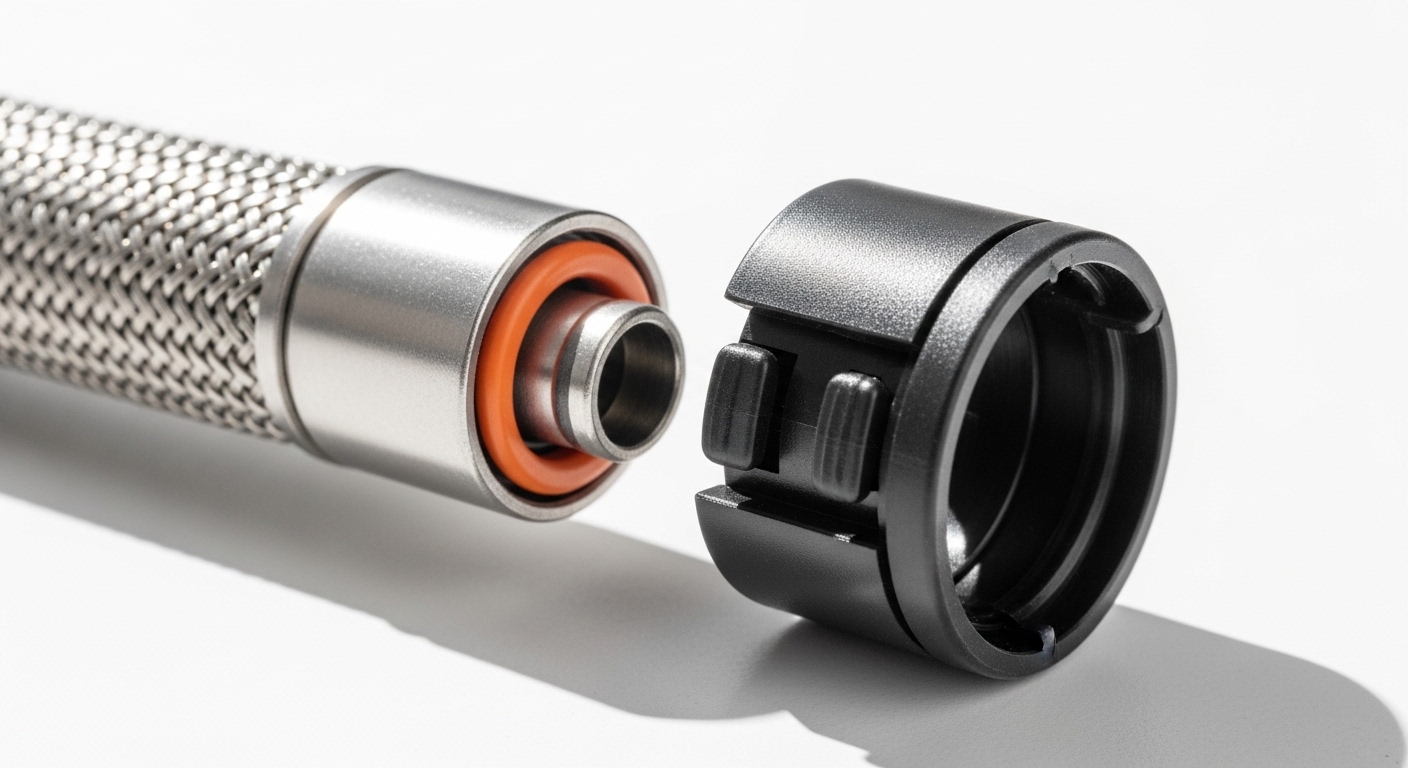
If you’ve ever crawled under a sink to fight a leaking side sprayer, a sink sprayer quick connect is the upgrade that makes you wonder why you waited. Instead of a threaded brass coupling that needs plumber’s tape and a wrench you can barely fit your hand around, a quick connect uses a spring-loaded collar or a push-fit fitting: you line up the hose, push until it clicks, and you’re done. This guide explains exactly how the system works, the connector types you’ll run into, how to pick the right one for your faucet, and how to install it without leaks — written from the bench at the EveFaucet workshop, where we test these couplings for pull-off force and drip resistance before they ever ship.
What exactly is a “quick connect” on a sink sprayer — and how is it different from the old screw-on kind?
A quick connect is a tool-free coupling that joins your sprayer hose to the faucet body (or to the diverter) using a mechanical latch and a captive rubber O-ring instead of threaded brass and tape. The old screw-on style relies on tapered or straight threads sealed with PTFE tape or a flat washer; you tighten it with a wrench, and the seal depends on how evenly you torque it. A quick connect seals on the O-ring the moment it clicks home, so the seal is built into the part, not into your wrist.
The practical difference is repeatability. A threaded fitting is fine the first time, but every time you disconnect it to clear a clog or replace a worn hose, you risk cross-threading the brass or wadding up old tape into the line. A quick connect is designed to be connected and disconnected hundreds of times. That’s why nearly every modern pull-down and pull-out faucet now uses one for the spray-head hose and the weight, and why aftermarket side sprayers increasingly ship with a quick-connect adapter in the box.
There are two broad families you’ll encounter:
- Collar / latch connectors — a spring-loaded plastic or metal collar you pull back to release. Common on faucet spray-head hoses (the part you’d touch during a kitchen faucet pull out hose replacement).
- Push-fit (John Guest–style) connectors — you push the tube in and a set of stainless teeth grips it; a collet ring releases it. Common on supply lines and some sprayer-to-diverter joints.
- Quick-connect adapters — a small fitting that converts a standard 1/4-turn or threaded sprayer nipple into a snap coupling, so an older faucet can use a modern hose.
How do I know if my kitchen faucet even has a quick connect for the sprayer?
Look under the sink at the point where the sprayer hose meets the faucet — if you see a colored plastic clip, a knurled collar, or a ring you can squeeze by hand, you have a quick connect; if you see a hex nut you’d need a wrench for, you have a threaded fitting. Take a flashlight and trace the hose from the sprayer head down through the deck to where it terminates.
Most faucets made after roughly 2015 use a quick connect for the spray head, and many also use one on the side-sprayer diverter. The connector is usually one of a handful of industry-standard sizes, but “standard” is doing some heavy lifting there — a Moen quick connect and a generic big-box quick connect can look identical and still not mate. The safest move is to photograph the existing connector, note any molded-in size or part number, and match it. If your sprayer is the problem rather than the connector, our guide on why a pull out kitchen faucet stops working walks through diagnosing the diverter, the hose, and the spray head before you start buying parts.
What size is a standard sink sprayer quick connect?
The most common consumer side-sprayer thread is a 1/4-turn or a standard hose nipple that pairs with a quick-connect adapter, while spray-head hose connectors are typically a proprietary 1/2-inch-class snap fitting. Because sizing isn’t universal, measure the outside diameter of the nipple or tube with calipers and check whether the connector is push-fit or collar-release. When in doubt, buy the sprayer and the connector as a matched kit from one brand rather than mixing a hose from one maker with a coupling from another.
Which type of sink sprayer quick connect is right for my setup?
Pick the connector that matches your faucet’s existing standard first, then choose the material based on water quality and how often you expect to disconnect it. Below is how the common options compare for a typical residential kitchen.
| Connector type | Best for | Tools needed | Typical lifespan | Watch out for |
|---|---|---|---|---|
| Plastic collar / latch | Spray-head hoses, frequent disconnects | None | 5–8 years | Collar can crack if forced; UV/heat brittleness |
| Brass push-fit | Long-term, hard-water homes | None | 10+ years | Costs more; verify tube OD before pushing in |
| Stainless quick-connect adapter | Converting an old threaded sprayer | Wrench (once, for the adapter base) | 10+ years | Adds one extra joint that can seep if O-ring dries out |
| Threaded (no quick connect) | Permanent installs you won’t touch | Basin wrench + tape | 10+ years | Slow to service; easy to cross-thread |
For most people replacing a worn side sprayer, a stainless or brass quick-connect adapter is the sweet spot: you sacrifice five minutes installing the adapter base with a wrench one time, and from then on the hose snaps on and off by hand. If you live somewhere with aggressive hard water, lean toward brass or stainless internals over all-plastic — the same mineral scaling that builds up on a faucet head will eventually crust an O-ring groove and cause weeping at the seal.
How do I install a sink sprayer quick connect without leaks?
Shut off the water, relieve the pressure, then push the connector together until it clicks and tug-test it — a properly seated quick connect will not pull apart by hand. The whole job is genuinely tool-free if you’re only swapping the hose, and the leaks that do happen almost always come from one of three things: a dry or pinched O-ring, a connector that clicked but didn’t fully seat, or debris on the sealing surface. Here’s the order of operations we recommend on the bench.
- Turn off both supply valves under the sink and open the faucet to bleed pressure. Put a towel and a small pan in the cabinet.
- Disconnect the old hose. For a collar type, pull the spring collar back and the hose slides off. For push-fit, press the collet ring flush and pull the tube straight out — don’t twist.
- Inspect and lubricate the O-ring. Wipe the sealing surface clean and add a thin film of silicone (plumber’s) grease — never petroleum jelly, which degrades rubber.
- Seat the new connector. Push straight in until you hear and feel the click. With push-fit, push past the initial resistance so the tube fully bottoms.
- Tug-test it. Pull firmly. If it moves, it isn’t seated. Re-seat before water touches it.
- Restore water slowly and watch the joint for 60 seconds under full pressure, then run the sprayer and check again.
One detail people miss: route the hose with a gentle loop, not a tight kink at the connector. A kink right at the coupling levers sideways on the O-ring every time the sprayer retracts, and over months that side-load is what starts a slow drip. If your sprayer also feels weak after the swap, the issue usually isn’t the connector at all — check the aerator or spray-face for scale, the same way you would if your aerator keeps getting clogged.
Are quick connect sink sprayers actually reliable, or do they leak more than threaded ones?
A quality quick connect is at least as reliable as a threaded fitting and usually more so, because the seal lives in a captive O-ring instead of depending on how well you taped and torqued the threads. The bad reputation comes from cheap all-plastic couplings with thin O-rings and loose tolerances — those do fail. The fix is to buy on materials and spec, not on price.
In our own pull-off and cycle testing, the failure pattern is predictable: plastic latches crack from over-flexing, and undersized O-rings take a compression set after a few years of hot water and harden. A connector with a brass or stainless body, a properly grooved EPDM or silicone O-ring, and a latch rated for repeated cycling will outlast the hose it’s attached to. That’s the standard EveFaucet builds to, and it’s why we publish the rated cycle count rather than just calling something “durable.”
Will a quick connect work with any brand of faucet?
No — quick connects are not universally cross-compatible, so a connector that physically clicks into a different brand’s hose may still leak or release under pressure. Match the connector to your faucet’s stated standard, or use a documented adapter. If you’re shopping for a whole new faucet rather than just a sprayer, it’s worth comparing how the major makers handle their hose connectors; our pull-down kitchen faucet brand comparison covers which systems are the easiest to service down the road.
When should I replace the quick connect versus the whole sprayer or faucet?
Replace just the quick connect if the leak is at the coupling and the hose and spray head are fine; replace the sprayer if the hose is cracked, the spray pattern is dead, or the trigger sticks; replace the faucet if the diverter inside the body has failed. The cheapest fix that actually solves the problem is almost always a new O-ring or a new connector — parts that cost a few dollars.
Here’s a quick decision guide:
- Drip only at the coupling, hose dry: new O-ring or new quick connect.
- Hose bulging, cracked, or stiff: new sprayer hose (snap the new one onto your existing connector).
- Weak or split spray pattern: clean or replace the spray head first; check the aerator/diverter.
- Water comes from the faucet AND sprayer at once, or neither switches: the diverter inside the faucet body is failing — that’s a faucet-level repair.
- Multiple worn parts on a 12+ year old faucet: replacing the whole faucet is often cheaper than chasing parts.
A note on quality, testing, and who wrote this
This guide was written by the EveFaucet product team — the same bench techs who assemble and stress-test our kitchen and bath fixtures. EveFaucet (伊唯伊) manufactures faucets, sinks, and sprayer assemblies, and we’ve been making 304 stainless and solid-brass fixtures for residential kitchens and bathrooms for years. Every sprayer quick connect we ship is cycle-tested for pull-off force and pressure-tested for drip resistance before it leaves the line, and our sprayer assemblies are backed by a manufacturer warranty against defects in the coupling and hose. The connector standards referenced here align with common North American sink and supply-line sizing; when a part is brand-specific, we say so rather than implying universal fit. We won’t tell you a fix is “guaranteed” — we’ll tell you what we tested and what we measured, and let you decide.
FAQ
Can I install a sink sprayer quick connect without any tools?
Usually yes. If you’re swapping a hose onto an existing quick-connect coupling, it’s entirely tool-free — pull the collar, snap the new hose on, tug-test it. You only need a wrench if you’re installing a quick-connect adapter onto an older threaded sprayer nipple for the first time, and that’s a one-time step.
Why is my quick connect sprayer leaking right after I installed it?
Nine times out of ten it’s the O-ring. Either it’s dry (add a thin film of silicone grease), it’s pinched or rolled out of its groove, or the connector clicked but didn’t fully seat. Disconnect, inspect the O-ring for nicks, clean the sealing surface, re-grease, and push until it bottoms — then tug-test before turning the water back on.
Are all sink sprayer quick connects the same size?
No. Spray-head hose connectors are often a proprietary snap fitting, while side-sprayer nipples commonly use a 1/4-turn or standard thread that pairs with an adapter. Measure the tube or nipple outside diameter with calipers and confirm whether yours is push-fit or collar-release before buying. Matching a hose and connector from the same brand avoids most fit problems.
How long does a quick connect sprayer coupling last?
An all-plastic connector typically lasts 5–8 years; a brass or stainless one with a quality O-ring lasts 10 years or more and usually outlives the hose. Hard water shortens that lifespan by scaling the O-ring groove, so in mineral-heavy areas, choose metal internals and clean the coupling when you descale the rest of the faucet.
Can I convert my old threaded side sprayer to a quick connect?
Yes — that’s exactly what a quick-connect adapter is for. You thread the adapter base onto your existing sprayer nipple once (with tape and a wrench), and from then on the hose snaps on and off by hand. Just confirm the adapter’s thread size matches your faucet’s sprayer port before ordering.
Does a quick connect reduce water pressure at the sprayer?
A correctly sized quick connect has a negligible effect on pressure — the internal bore matches the hose. If your sprayer feels weak after installing one, the cause is almost always a clogged spray face, a scaled aerator, or a failing diverter inside the faucet, not the coupling itself. Clean the spray head first before assuming the connector is restricting flow.