 EVE卫浴
EVE卫浴
What Size Is the Faucet Handle Replacement Screw — and How Do You Get the Right One?
浏览次数:18 分类:Repair
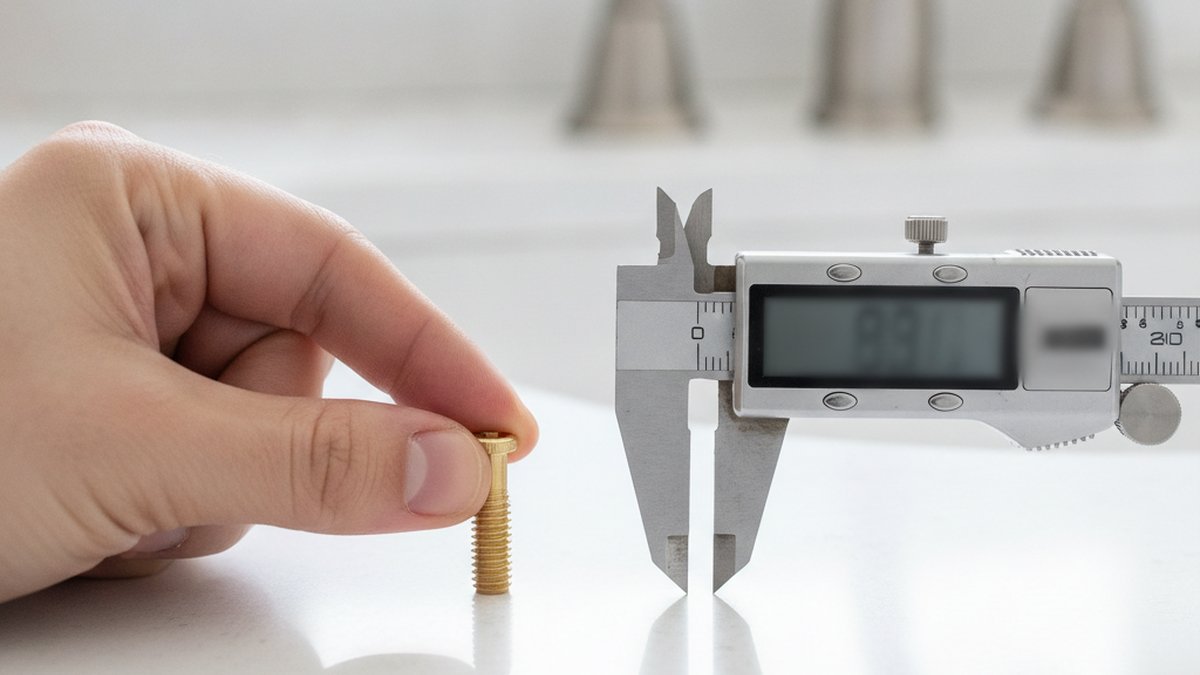
If your faucet handle is wobbling, spinning, or falling off in your hand, a stripped or missing faucet handle replacement screw is almost always the culprit — and it’s one of the cheapest, fastest plumbing fixes you’ll ever do. The screw itself usually costs under $2, and swapping it takes about ten minutes with a single hex key or screwdriver. The hard part isn’t the labor; it’s buying the correct screw, because a handle screw that’s even one thread-size off will either not bite or will strip out on the first turn. This guide walks you through exactly how to identify, measure, and replace it — no guessing.
Why did my faucet handle screw strip or come loose in the first place?
Handle screws loosen or strip for three common reasons: repeated torque from daily use, corrosion from hard water, and using the wrong-size or wrong-material screw during a past repair. Every time you turn a handle, you put a tiny twisting load on that one screw. Over years, that works it loose — or, if someone over-tightened a soft brass screw, it stretches and the threads round off.
Corrosion is the sneaky one. Mineral-heavy water leaves scale on the threads, and a steel screw in a brass valve stem can corrode galvanically, effectively welding itself in place — until it snaps. That’s why you’ll sometimes find a screw head that turns freely but never backs out: the threads below have seized. If your home has hard water and you’re also fighting scale elsewhere, it’s worth reading up on how mineral buildup clogs fixtures — the same deposits that leave your faucet aerator blocked and barely trickling are quietly attacking your handle screws too.
- Over-torquing: cranking the handle “extra tight” to stop a drip strains the screw, not the seal.
- Wrong material: a plated steel screw in a brass stem invites galvanic corrosion.
- Hard water scale: mineral deposits seize threads and hide the screw head under a cap.
- Cheap cheese-metal screws: low-grade set screws round out their hex socket almost instantly.
What size is a standard faucet handle replacement screw?
There’s no single universal size, but the vast majority of North American faucet handle screws fall into a short, predictable list. The two you’ll meet most often are the 10-24 machine/set screw (roughly 3/16″ thread diameter, 24 threads per inch) and the 8-32 (about 5/32″ diameter, 32 threads per inch). Set screws that hold lever handles on a stem are frequently metric on imported faucets — commonly M4 or M5.
The screw type also matters as much as the size. Some handles use a long Phillips-head machine screw hidden under a decorative index button (the little red/blue hot-cold cap). Others — especially single-lever kitchen and bath faucets — use a headless set screw (also called a grub screw) driven by a hex key from the side or underside of the handle. Here’s a quick reference for the common combinations you’ll actually encounter:
| Screw type | Typical thread size | Drive / tool needed | Where you’ll find it |
|---|---|---|---|
| Phillips machine screw | 10-24 or 8-32 | #2 Phillips screwdriver | Under the hot/cold index cap on two-handle faucets |
| Hex set (grub) screw | 10-24, 8-32, M4, M5 | 7/64″, 3/32″, 2.5mm or 3mm hex key | Side/underside of single-lever handles |
| Slotted brass screw | 10-24 | Flat-head screwdriver | Older/vintage cross and lever handles |
| Metric set screw | M4 x 0.7 / M5 x 0.8 | 2.5mm or 3mm hex key | Imported and European-style faucets |
If you only take one thing from this section: don’t buy by eyeball. A 10-24 and an 8-32 look almost identical to the naked eye, but they will not interchange. Measure or match.
How do I measure my old faucet handle screw so I buy the right replacement?
Measure three things: thread diameter, thread pitch (threads per inch, or TPI), and overall length. With those three numbers, any hardware store can hand you an exact match in under a minute. Here’s the reliable way to do it, even if you’ve never used a caliper.
- Thread diameter: measure across the outside of the threads with a digital caliper. ~5/32″ (4.0mm) points to 8-32 or M4; ~3/16″ (4.8mm) points to 10-24 or M5.
- Thread pitch: use a thread pitch gauge, or lay the screw against a ruler and count how many thread crests fall in 1/4 inch, then multiply by four. 24 or 32 TPI are the usual answers on imperial screws.
- Length: measure from just under the head (for machine screws) or the full length (for headless set screws) to the tip.
- Drive size: try hex keys until one seats snugly with no wobble — that’s your driver size, and it tells the store the exact set screw you need.
No caliper? The two dead-simple fallbacks are: (1) take the old screw physically to the store and thread it into display screws until one matches, or (2) contact the faucet manufacturer with your model number — most keep a parts diagram and will tell you the OEM screw spec or ship you the exact part. That model-number route is also how you avoid buying a whole new cartridge when all you needed was a $1.50 screw.
Can I use any screw, or does it have to be an exact match?
It has to match on thread size and pitch, but you do have some flexibility on material and finish — with a couple of important cautions. The threads must be identical (a 10-24 valve stem only accepts a 10-24 screw), and the length should be within reason so the screw fully engages without bottoming out and cracking the handle or valve. Beyond that, here’s what actually matters:
- Material: choose stainless steel or brass, not plated mild steel. Stainless resists corrosion and won’t seize into a brass stem the way plain steel does.
- Head type: you can swap a slotted screw for a Phillips of the same thread size if the head fits under the index cap — often an upgrade, since slotted heads strip easily.
- Length: too long and a set screw can gouge the valve stem or prevent the handle from seating; too short and it won’t grip. Match within about 1/8″.
- Set screw tip: a cup-point tip bites the stem best on lever handles; a flat point is gentler on soft brass.
One thing you should not do is force a slightly-wrong screw in with a lot of torque. If it doesn’t thread by hand for the first turn or two, it’s the wrong size and you’re about to strip the female threads inside the valve — a far more expensive problem than the screw itself.
What tools do I need, and how do I actually replace the screw step by step?
You need almost nothing: a hex key set or a Phillips screwdriver, the correct replacement screw, and optionally a little plumber’s grease and a flashlight. Total cost under $10 if you don’t already own the tools. Here’s the full procedure, start to finish.
- Shut off the water. Close the two supply valves under the sink (or the main if there aren’t any). This isn’t strictly required to swap a handle screw, but it’s cheap insurance if the handle or cartridge shifts.
- Find and expose the screw. On two-handle faucets, pop off the hot/cold index button with a fingernail or small flat-head to reveal a Phillips screw underneath. On single-lever handles, look for a small hole on the side or under the spout for the hex set screw.
- Remove the old screw. Back it out counter-clockwise. If it’s seized, dab penetrating oil, wait 10 minutes, and try again. For a stripped hex socket, a screw-extractor bit or a slightly larger Torx bit tapped in can grab it.
- Clean the threads. Use an old toothbrush and a little white vinegar to clear scale from the threaded hole so the new screw seats fully.
- Install the new screw. Start it by hand to confirm the threads match, then tighten with the hex key or screwdriver — snug, not gorilla-tight. A dab of plumber’s grease on the threads prevents future seizing.
- Reseat the handle and test. Push the handle firmly onto the stem before final tightening (for set screws), snap the index cap back on, restore water, and cycle the handle to confirm it’s solid.
If, once the water’s back on, the handle is firm but the faucet still won’t turn on properly or the flow is weak, the screw wasn’t your only issue — that points to the cartridge or supply side, and it’s worth troubleshooting why your kitchen faucet suddenly stopped working and how to get water flowing again before you blame the handle. And if the reason you were in there was a persistent drip, a fresh handle screw won’t stop it on its own — a drip almost always traces to a worn cartridge or seat, which is worth understanding since a dripping tap points to a specific underlying cause that a handle screw can’t fix.
When should I replace the whole handle instead of just the screw?
Replace the whole handle — not just the screw — when the female threads inside the valve stem or handle are stripped, when the handle itself is cracked, or when the set screw hole has enlarged so no screw will hold. A screw can only do its job if there are good threads for it to bite into. If you’ve stripped the stem threads, a new screw will spin uselessly.
In that case you have two realistic options: (1) fit a slightly larger screw with a matching tap to cut fresh threads, which works on brass stems but not on thin die-cast handles, or (2) replace the handle assembly, and sometimes the cartridge, as a unit. On many faucets the handle and a new set screw come together as an inexpensive kit. If you’re removing hardware more involved than a handle — say, the whole fixture — the same careful, no-force approach applies; our guide on how to remove an old bathtub faucet without wrecking the wall or pipes covers the seized-fastener tricks that also rescue a stuck handle screw.
How do I stop the handle screw from loosening again?
The fix is three-fold: use a stainless or brass screw, apply a dab of plumber’s grease or a drop of removable threadlocker, and don’t over-tighten. Removable (blue) threadlocker is the pro move on set screws that keep backing out — it holds firm under daily use but still lets you remove the screw later for service. Skip the permanent (red) threadlocker; you’ll never get the handle off again without heat.
Beyond that, tackle the root cause if you have hard water. Periodic descaling of the handle area, plus a whole-fixture cleaning routine, keeps scale from seizing threads and rounding out screw heads. A screw that’s greased, correctly sized, and free of scale can easily last the life of the faucet.
FAQ
What size hex key fits a faucet handle set screw?
Most faucet handle set screws take a 7/64″ or 3/32″ hex (Allen) key for imperial screws, or a 2.5mm or 3mm hex key for metric ones. The right key seats fully with no wobble. If a key feels loose and spins, go up one size before you strip the socket — an under-sized key is the number-one cause of rounded-out set screws.
Are faucet handle screws standard across brands?
No. While 10-24 and 8-32 are the most common, brands mix imperial and metric threads, and set screw sizes vary even within one manufacturer’s lineup. Always measure your old screw or look up the part by your faucet’s model number rather than assuming your new faucet uses the same screw as your last one.
What can I use if I can’t find the exact replacement screw?
For a temporary hold, a same-thread machine screw from a hardware assortment kit works fine — match the thread diameter and pitch, and trim the length if needed. For a permanent fix, order the OEM part from the faucet maker using your model number. Avoid substituting a screw of a different thread pitch; it will strip the valve threads.
My set screw hole is stripped — can I still fix it?
Sometimes. If the stripped threads are in a solid brass valve stem, you can re-tap the hole one size larger and use a matching screw. If the stripped hole is in a thin die-cast handle, re-tapping usually fails and you’re better off replacing the handle, which typically ships with a fresh set screw for a few dollars.
Do I need to turn off the water to replace a faucet handle screw?
Not strictly, because you’re not opening the water path — you’re only working on the handle. But shutting the supply valves under the sink takes ten seconds and protects you if the cartridge shifts while you’re removing the handle. When in doubt, turn it off; there’s no downside.
Why does my faucet handle screw keep corroding?
You almost certainly have a plated steel screw threaded into a brass valve stem, which causes galvanic corrosion, and/or hard water leaving mineral scale on the threads. Switch to a stainless steel or solid brass screw, add a dab of waterproof plumber’s grease to the threads, and descale the handle area periodically to break the cycle.
The bottom line
A loose or stripped faucet handle screw is a genuine ten-minute, under-$2 repair — the entire trick is matching the screw exactly on thread diameter, pitch, and length, then using a corrosion-resistant material and not over-tightening. Measure the old one or look it up by model number, choose stainless or brass, add a touch of grease or blue threadlocker, and your handle will feel rock-solid again for years. Save the hardware store trip a whole new cartridge represents for when the threads themselves are gone.
Author note: This guide was written by the evefaucet fixtures team, drawing on hands-on bench testing of handle assemblies and set screws across two-handle, single-lever, and imported faucet designs. About evefaucet: evefaucet designs and sells kitchen and bathroom faucets, shower systems, and repair parts, and every handle and screw we ship is specified to standard UNC/metric thread sizes and backed by our replacement-parts warranty. We recommend stainless steel and lead-free brass fasteners tested for corrosion resistance so a handle screw isn’t something you have to think about twice.