 EVE卫浴
EVE卫浴
Why Has My Kitchen Faucet Suddenly Stopped Working — and How Do I Get Water Flowing Again?
浏览次数:15 分类:公司产品
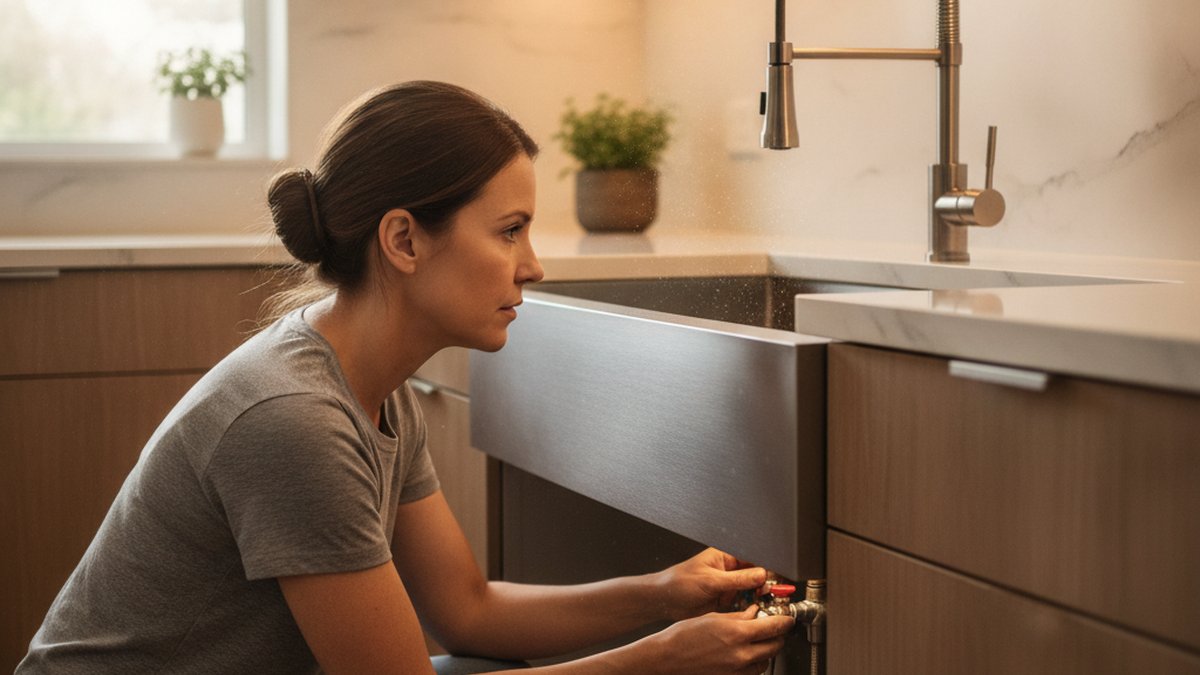
If your kitchen faucet suddenly stopped working — no water, a weak trickle, or the handle turns but nothing comes out — take a breath, because a faucet almost never “dies” all at once. Something upstream changed: a valve got bumped, mineral scale finally choked the aerator, a cartridge cracked, or (on a smart faucet) the batteries quit. This guide walks you through the exact order to check things, from the free 30-second fixes to the “yes, you need a new cartridge” repairs, with real numbers so you know when it’s worth fixing versus replacing.
At Eve Faucet we build and pressure-test kitchen faucets to WaterSense and NSF/ANSI 61 standards, so we field this question constantly from customers. The good news: the failure is usually cheap and DIY-friendly. Let’s diagnose it fast.
What’s the very first thing to check when the faucet stops out of nowhere?
Check the two shut-off valves under the sink first — a bumped or half-closed valve is the single most common reason a kitchen faucet suddenly stops working. Open the cabinet, look at the hot and cold supply lines running up to the faucet, and follow them down to the small oval or football-shaped handles on the wall or floor. Turn both counterclockwise (lefty-loosey) until they stop. It’s shockingly easy to knock these closed while storing cleaning supplies, sliding a trash can, or after a recent under-sink project.
If turning the valves does nothing, ask yourself: did the whole house lose water, or just this faucet? Test another tap — a bathroom sink or the tub. If every fixture is dry, the problem is your main supply (a municipal shutoff, a well pump, or a main-line valve someone closed), not the faucet at all. If only the kitchen is affected, keep going down this list.
- Both valves fully open? Yes → move to the aerator check.
- Hot works, cold doesn’t (or vice versa)? That points to one closed valve or a failing cartridge/mixer, not a total faucet failure.
- Recent work nearby? A dishwasher install, disposal swap, or filter change often ends with a valve left closed.
- Water just restored after a city repair? Air and grit in the line can briefly stall flow — run the tap 30 seconds.
Why did my faucet stop right after the water was shut off and turned back on?
Because sediment and trapped air got knocked loose and clogged your aerator — this is the most common “sudden” failure after any plumbing work or a city main repair. When water is shut off and restored, rust flakes and mineral debris break free inside the pipes and rush to the first restriction they hit: the little screen at the tip of your spout. It can go from full flow to a dribble in seconds.
The aerator unscrews right off the end of the spout. On most kitchen faucets it’s a threaded insert you can turn by hand or with a rag for grip (wrap the rag so you don’t scratch the finish; a strap wrench works if it’s stuck with scale). Rinse the screen, soak it in white vinegar for 15–20 minutes to dissolve hard-water crust, poke debris out of the mesh, and thread it back on. If flow jumps back to normal with the aerator removed, you’ve found your culprit. This exact “barely trickling” scenario is so common we wrote a full walkthrough on it — see our guide on why a blocked faucet aerator makes your tap barely trickle and how to fix it.
My touchless / touch kitchen faucet quit — is it the batteries or the faucet?
On a smart, touch, or motion-sensor kitchen faucet, a sudden dead stop is almost always dead batteries or a disconnected solenoid — not a mechanical failure. These faucets use a battery pack (usually 6× AA, sometimes an AC adapter) to power a solenoid valve that opens and closes the water. When batteries drain, the solenoid can’t open, and you get zero water even though the handle and hoses are perfectly fine.
Do this in order: (1) find the battery box tethered under the sink and swap in fresh batteries — a blinking LED on the box usually signals low power; (2) unplug and reconnect the thin control cable between the sensor, the battery box, and the solenoid, since a loose connector kills function instantly; (3) if there’s a manual override lever on the solenoid, test it. Touch faucets have their own quirks — if yours is unresponsive to touch specifically, our companion piece on why a touch faucet stops working and how to get it spraying again covers the sensor calibration steps in detail.
The handle still moves but no water comes out — what’s broken inside?
If the handle turns freely but delivers nothing, and your valves and aerator are fine, the cartridge inside the faucet body has failed — the single most common internal repair on a kitchen faucet. The cartridge is the plastic-and-ceramic core that controls flow and temperature. Grit can jam it, ceramic discs can crack, or an O-ring can shred, and any of those can shut flow off entirely or reduce it to a weak stream.
Cartridge replacement is very DIY-able and cheap — a genuine cartridge runs roughly $15–$45 versus $150+ for a plumber’s visit. The general process:
- Close both shut-off valves and open the faucet to relieve pressure.
- Pop off the decorative handle cap, remove the handle screw, and lift the handle.
- Unscrew the retaining nut or pull the retaining clip that holds the cartridge.
- Pull the old cartridge straight up (needle-nose pliers or a cartridge puller help if it’s stuck).
- Match it to an identical replacement — bring the old one or your faucet model number to the store, or order the exact OEM part.
- Grease the new O-rings with plumber’s silicone, seat it in the same orientation, reassemble, and slowly reopen the valves.
One tip that saves headaches: cartridges are not universal. A Moen cartridge won’t fit a Delta, and even within a brand there are dozens. Sourcing the right supply and parts for a specific brand matters — if you own an off-brand or big-box faucet, our note on what supply line size an Allen + Roth faucet needs is a good reminder of how brand-specific these components get.
How do I tell which problem I actually have — a quick comparison
Match your exact symptom to the likely cause below, and you’ll know whether it’s a free fix or a parts run before you touch a tool. Most people misdiagnose by starting at the faucet body when the real issue is a $0 valve or a $2 aerator clean.
| Symptom | Most likely cause | Fix | Typical cost |
|---|---|---|---|
| No water at all, both temps | Both shut-off valves closed / main off | Reopen valves, check main | Free |
| Sudden weak trickle after plumbing work | Clogged aerator / sediment | Clean or replace aerator | $0–$8 |
| Only hot or only cold stopped | One valve closed or worn cartridge | Open valve / replace cartridge | $0–$45 |
| Handle turns, no flow | Failed / jammed cartridge | Replace cartridge | $15–$45 |
| Touchless/touch faucet dead | Dead batteries / loose solenoid cable | New batteries, reseat cable | $5–$15 |
| Weak flow only in spray/pull-down mode | Clogged spray head or kinked hose | Descale head, straighten hose | $0–$20 |
Why does the pull-down spray head work but the regular stream doesn’t (or vice versa)?
If only one mode fails on a pull-down or pull-out faucet, the problem is in the spray head diverter or a kinked/scaled hose, not the whole faucet. The diverter is a small valve that routes water between stream and spray; mineral buildup or a stuck diverter makes one mode weak or dead while the other seems fine.
Unscrew the spray head from the hose, soak it in vinegar to clear the tiny nozzle holes (rubbing the rubber nubs clears a lot of scale on its own), and check the hose under the sink for kinks or a snagged weight. If your pull-down never had strong spray to begin with, it may just be a low-end head — when you’re ready to upgrade, our roundup of which pull-out kitchen faucet in black is actually worth buying in 2026 compares flow rates and spray-head quality across price points.
When is it time to stop repairing and just replace the faucet?
Replace the faucet instead of repairing it when the body is corroded, parts are discontinued, you’ve already replaced the cartridge once, or the faucet is 12+ years old — repairs stop being worth it past that point. A quality kitchen faucet lasts 15–20 years, but a builder-grade unit can be shot at 7–8. If you’re pouring money into a leaking, pitted faucet, a new one with a lifetime finish and ceramic-disc valve is the smarter buy.
Signs it’s replacement time, not repair time:
- Visible corrosion or green/white crust creeping out of the base or spout joints.
- The manufacturer no longer stocks your cartridge (common on discontinued or private-label models).
- Chronic drips even after new cartridge and O-rings — the seat inside the body is worn.
- You’ve done two or more repairs in a year.
- The finish is flaking, which also tells you the internal quality is likely low.
Modern faucets rated to NSF/ANSI 61 and 372 (lead-free) and carrying a WaterSense label give you cleaner water and lower flow (1.5–1.8 GPM) without the constant tinkering. And a faucet with a real lifetime warranty means the next cartridge is free.
A quick word on hard water — the hidden reason faucets “suddenly” fail
Most “sudden” kitchen faucet failures aren’t sudden at all — they’re slow hard-water scaling that finally crossed a threshold. If you have hard water (over ~7 grains per gallon), calcium and magnesium coat the aerator screen, spray nozzles, and cartridge seals over months until flow chokes off in what feels like one day. That’s why a faucet that was “fine yesterday” quits this morning.
The fix is maintenance, not panic: descale the aerator and spray head in vinegar every 3–6 months, and consider a whole-house softener if you’re replacing fixtures often. Persistent dripping after a cleaning can also signal seal wear from scale — if you’re hearing drips, our explainer on what a dripping tap actually points to and whether it’s serious helps you tell a harmless drip from a real problem.
Author note & how we test this
This guide was written by the Eve Faucet product team, which designs, assembles, and bench-tests kitchen and bathroom faucets. Every model we ship is cycle-tested (handles and cartridges are run through 100,000+ open/close cycles), pressure-tested to at least 60 PSI, and certified to NSF/ANSI 61 & 372 and WaterSense standards. We back our kitchen faucets with a limited lifetime warranty on the finish and function, which is why we’d rather teach you the 20-minute fix than sell you a faucet you don’t need yet. If a repair here doesn’t restore flow, reach out — a real person on our support team will help you identify the part.
FAQ
Why did my kitchen faucet stop working but the bathroom faucet is fine?
Because the problem is local to the kitchen — almost always a closed shut-off valve under the kitchen sink or a clogged kitchen aerator. If only one fixture is affected, the main house supply is fine; start at that faucet’s own valves and aerator.
Can a clogged aerator really stop water completely?
Yes. Heavy sediment or a solid mineral crust can reduce flow to a drip or block it entirely. Unscrew the aerator; if full flow returns with it off, the aerator was your problem — clean it in vinegar or replace it for a few dollars.
How much does it cost to fix a kitchen faucet that suddenly stopped working?
Most fixes are $0–$45 in parts if you DIY: valves are free to reopen, an aerator is under $8, a cartridge is $15–$45, and touch-faucet batteries are about $5. A plumber typically charges $150–$300, so the DIY savings are significant for a 20-minute job.
My faucet has water pressure everywhere else in the house — why not the kitchen?
That confirms the issue is at the kitchen faucet itself, not your home’s pressure. The usual suspects, in order, are a half-closed kitchen shut-off valve, a scaled aerator or spray head, and a failing cartridge inside the faucet body.
Do I need to turn off the water to replace a kitchen faucet cartridge?
Yes — always close both shut-off valves under the sink and open the faucet to relieve pressure before removing the handle and cartridge. If the under-sink valves won’t fully close or don’t exist, shut off the main water supply first.
Is it worth repairing a 10-year-old kitchen faucet or should I replace it?
A one-time cartridge or aerator fix on a decent faucet is worth it. But if the body is corroded, the part is discontinued, or you’ve already repaired it before, replace it — a new WaterSense, NSF-certified faucet with a lifetime warranty ends the recurring repairs.