 EVE卫浴
EVE卫浴
What’s the Best Faucet Extender for a Toddler to Wash Their Hands Without a Step Stool Wobble?
浏览次数:415 分类:公司产品
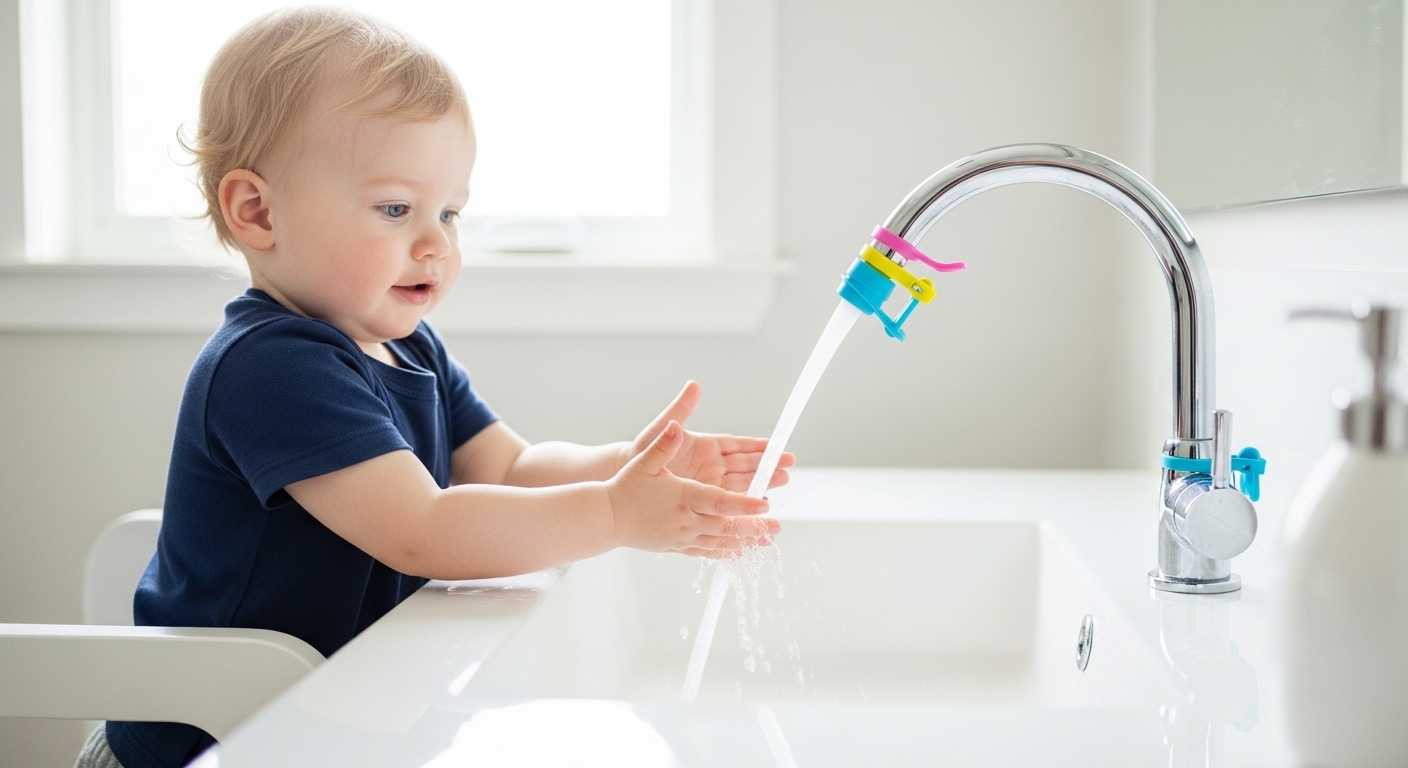
If you’ve ever watched a two-year-old stretch on tiptoes, belly pressed against the vanity, fingers waving a full inch short of the water, you already know why a faucet extender toddler setup exists. It’s a tiny, inexpensive accessory that solves a daily friction point: kids can’t reach the water, so they either skip washing or you end up lifting them over the sink ten times a day. An extender pulls the stream out and down toward the front edge of the basin, so the child reaches the water instead of the water staying tucked under the spout. It’s one of the cheapest “upgrades” in the whole bathroom, and for households with a newly potty-trained or hand-washing-obsessed toddler, it pays for itself in saved arguments by the end of week one.
Below, I’ll walk through how these actually work, the real differences between the types, what fits which faucet, the safety details parents miss, and how to install one so it doesn’t pop off the first time a kid yanks it. I run product testing in the EveFaucet workshop, so I’ll also flag the failure points we see when these get returned.
What exactly is a faucet extender, and how is it different from a faucet cover?
A faucet extender is a small attachment that redirects your faucet’s water stream forward and downward so a short person can reach it; a faucet cover is a soft pad that wraps the spout to stop head bumps. They’re often sold together or confused, but they do two different jobs. The extender is about reach. The cover is about cushioning. Many silicone toddler extenders combine both — the body is soft enough to double as bump protection — but if your only problem is reach, you don’t need the bulky animal-shaped covers.
Mechanically, an extender works by creating a little channel or trough under your spout. Water hits the inside of the channel and runs along it to the lip, which sits a few inches closer to the child. Some clip on with a flexible C-clamp; some are a full sleeve that slides over the spout; a few screw directly onto the aerator threads where your faucet’s aerator normally goes. That last type is the most secure but the least universal, because it depends on your faucet’s thread size.
- Clip-on silicone guide: A soft trough that clamps under the spout. Universal-ish, cheapest, easiest to move between sinks.
- Slide-over sleeve: Wraps the whole spout end like a sock. Best bump protection, but fit depends on spout diameter.
- Screw-on aerator extender: Replaces or attaches at the aerator. Most stable stream, no wobble, but you must match the thread.
Which type of faucet extender is best for a toddler — clip-on, sleeve, or screw-on?
For most families, a clip-on silicone guide is the best starting point because it fits almost any bathroom faucet and costs the least, but if your toddler is rough or your faucet has standard aerator threads, a screw-on extender is more durable and won’t slip. The “right” answer depends on your faucet shape and how aggressive your kid is with it. Here’s how the three stack up on the things that actually matter.
| Type | Fits which faucets | Stability (toddler-proof) | Reach gained | Typical price |
|---|---|---|---|---|
| Clip-on silicone guide | Most spouts (gooseneck, straight, low-arc) | Medium — can pop off if yanked hard | 3–4 inches forward | $6–$10 |
| Slide-over sleeve | Round/tapered spouts only | Medium-high if sized right | 2–4 inches forward + bump pad | $8–$13 |
| Screw-on aerator extender | Standard aerator threads (15/16″ M or 55/64″ F) | High — won’t slip | 4–5 inches forward, steady stream | $10–$18 |
My honest recommendation: start with a clip-on if you’re not sure of your faucet’s thread size, because it’s the lowest-risk purchase. If you find it slips off too often, step up to a screw-on and check your aerator thread first (more on that below). The slide-over sleeve is the pick if your real worry is your toddler cracking their forehead on a sharp spout edge during the lean-in.
Will a faucet extender fit my bathroom faucet?
It probably will, but check three things first: your spout shape, the gap under the spout, and — if you want a screw-on — your aerator thread size. The most common reason a toddler faucet extender gets returned is a fit mismatch, and all three failures are predictable.
- Spout shape. Clip-on guides love a standard arc or gooseneck where there’s room underneath for the clip to grab. Very fat industrial spouts or square-channel modern spouts can defeat a small C-clip.
- Clearance under the spout. You need a few inches between the spout lip and the basin so the extended stream has somewhere to fall. On compact vanities with a very low spout, an extender can put the water right at the basin lip — fine for a child, awkward for an adult. If you’re already dealing with a tight, short-reach faucet, our guide to a 5 inch spout reach faucet explains how spout reach changes where the water lands.
- Aerator threads (screw-on only). Unscrew your existing aerator. In the US, the two common sizes are 15/16-inch male and 55/64-inch female. A screw-on extender must match, or come with adapters.
One detail people miss: the extender attaches right where your aerator lives, and a clogged or scaled aerator can make the extended stream spit and splash sideways. If your water already sputters, clean or replace the aerator first — our faucet aerator repair guide from the EveFaucet workshop covers descaling and thread sizing, which is the same threading your screw-on extender will use.
Is a faucet extender safe for toddlers — what about hot water and bacteria?
A faucet extender is safe for toddlers as long as it’s BPA-free food-grade silicone, has no sharp clip edges, and you keep your water heater at a safe temperature — the extender itself doesn’t change your water temperature, so scald risk is about your plumbing, not the gadget. Two real safety points are worth taking seriously.
Scald protection. An extender brings the water closer to a child, which is great for reach but means a toddler can hit the stream faster — including hot water. Pediatric burn guidance generally recommends setting your home water heater to no hotter than about 120°F (49°C) so a momentary contact won’t scald. If your bathroom faucet has a single handle, teach the “start cold, nudge warm” habit, and consider a faucet with a temperature limit stop. The extender is not a substitute for controlling the source temperature.
Hygiene. Silicone extenders sit in a damp environment and can grow pink mold or mineral film where water pools in the channel. The fix is simple: pull it off once a week, rinse it, and let it dry, or run it through the top rack of the dishwasher if the maker says it’s dishwasher-safe. Avoid extenders with hidden internal cavities that never dry out — open-channel designs are easier to keep clean than fully enclosed novelty shapes.
- Choose BPA-free, food-grade silicone rated for potable-water contact.
- Set the water heater to ≤120°F for any sink a toddler uses unsupervised.
- Pick an open-channel shape you can see into and dry out.
- Check that clips and any metal parts have no sharp edges at toddler eye height.
How do I install a toddler faucet extender so it doesn’t fall off?
To install a faucet extender securely, clean and dry the spout first, push the clip or sleeve all the way back to the spout base (not just the tip), and for screw-on models, hand-tighten onto clean aerator threads with the rubber washer seated. The single biggest reason these pop off is that people clip them onto the very end of the spout, where there’s the least grip. Seat it deep.
- Clean the spout. Wipe off soap film and water minerals so silicone grips dry metal. A greasy spout is a slippery spout.
- For clip-on: Open the C-clip, slide it up under the spout as far back as it will go, and press until it snaps around the underside. Run the water and watch where the stream lands — adjust forward or back so it falls at the front-center of the basin.
- For slide-over: Wet the inside of the sleeve slightly so it slides, push it fully onto the spout, then let it dry to grip.
- For screw-on: Unscrew the old aerator, keep the rubber washer, screw the extender on by hand until snug — never force it with pliers, which cracks the plastic threads.
- Stress-test it yourself. Give it a firm tug and a sideways wiggle, exactly like a toddler will. If it shifts, reseat it deeper or size down.
If you’re choosing a brand-new bathroom faucet and want it to be toddler-friendly from day one, pay attention to spout reach and basin geometry rather than relying entirely on an add-on. A faucet with adequate reach over the bowl makes any extender work better; our 2026 widespread buyer’s comparison for 8-inch-spread bathroom faucets is a useful starting point for matching spout reach to your vanity before you add a child accessory on top.
How long do faucet extenders last, and when should a toddler stop needing one?
A good silicone faucet extender lasts one to three years of daily use before the silicone stiffens or the clip loosens, and most kids outgrow the need around age 4–5 once they can reach the basin with a stable step stool. These are genuinely consumable accessories — they’re cheap because they’re not meant to be forever. Plan to replace one when the silicone discolors permanently, the clip no longer grips, or the channel develops cracks that trap grime.
The “graduation” moment is less about a birthday and more about reach and balance. Once a child can stand confidently on a wide, non-slip step stool and lean to the spout without the belly-press, the extender becomes optional. Many families keep it on through age 5 anyway because it cuts splashing and keeps sleeves drier. There’s no harm in that, and an adult can usually use the sink normally with a low-profile extender still attached.
Author’s note & why trust this guide
I write and test fixtures for EveFaucet (伊唯伊), a brand that’s manufactured bathroom and kitchen faucets, stainless sinks, and accessories for over a decade, with a workshop that bench-tests spouts, aerators, and add-ons for flow, fit, and durability before they ship. The fit and thread guidance above (15/16″ male, 55/64″ female aerator threads) reflects standard US faucet sizing, and our flow-rate and lead-content testing follows the same standards reputable faucets are certified to in North America. We recommend buying extenders that state BPA-free, food-grade silicone and, for the faucet itself, choosing fixtures backed by a real manufacturer warranty rather than unbranded parts that can’t be replaced or supported. If you’re weighing a bigger upgrade rather than a clip-on fix, it’s worth comparing established brands the way we do in our best pull-down kitchen faucet brand comparison — the same “buy from a brand that honors warranty and stocks parts” logic applies to every fixture in the house.
FAQ
Do faucet extenders work on any faucet?
Clip-on and slide-over silicone extenders fit the large majority of standard bathroom faucets — gooseneck, arc, and straight spouts. They struggle on very fat industrial spouts, square-channel modern spouts, and touchless sensor faucets where the sensor sits at the spout tip. Screw-on extenders only fit faucets with standard aerator threads, so check your thread size first.
Will a faucet extender block my faucet’s aerator or reduce water pressure?
Clip-on and slide-over types sit outside the aerator and don’t affect pressure at all. Screw-on types replace or extend the aerator position, and a well-made one keeps a normal aerated stream. If you notice spitting or splashing after installing a screw-on, the cause is almost always a clogged aerator underneath — clean it and the stream steadies.
What temperature should my water heater be if my toddler uses the sink?
Set it to no hotter than about 120°F (49°C). At that temperature, brief skin contact is far less likely to cause a serious scald, which matters more once an extender puts the water within easy reach. The extender doesn’t change temperature — your water heater and faucet handle do.
How do I clean a silicone faucet extender?
Pull it off weekly, rinse it under hot water, and scrub the channel with a little dish soap or a soft brush to clear pink mold and mineral film. Many are top-rack dishwasher-safe — check the maker’s instructions. Let it air-dry fully before reattaching, and favor open-channel designs that actually dry out over enclosed novelty shapes.
Is a faucet extender better than a step stool for a toddler?
They solve different problems and work best together. A step stool raises the child’s whole body; an extender brings the water forward so they don’t have to lean dangerously over the sink edge. The safest setup for a 2–4-year-old is a wide non-slip stool plus an extender, so the child stands stable and the water meets them at the front of the basin.
Are faucet extenders safe — any BPA or lead concerns?
Choose one explicitly labeled BPA-free, food-grade silicone for the soft parts. For screw-on models with metal components, buy from a brand whose products meet North American low-lead standards for drinking-water contact. Avoid unbranded extenders that make no material claims, since they sit directly in your child’s wash water.