 EVE卫浴
EVE卫浴
Is a Copper Faucet for the Laundry Room Worth It — and Which One Should You Buy?
浏览次数:474 分类:公司产品
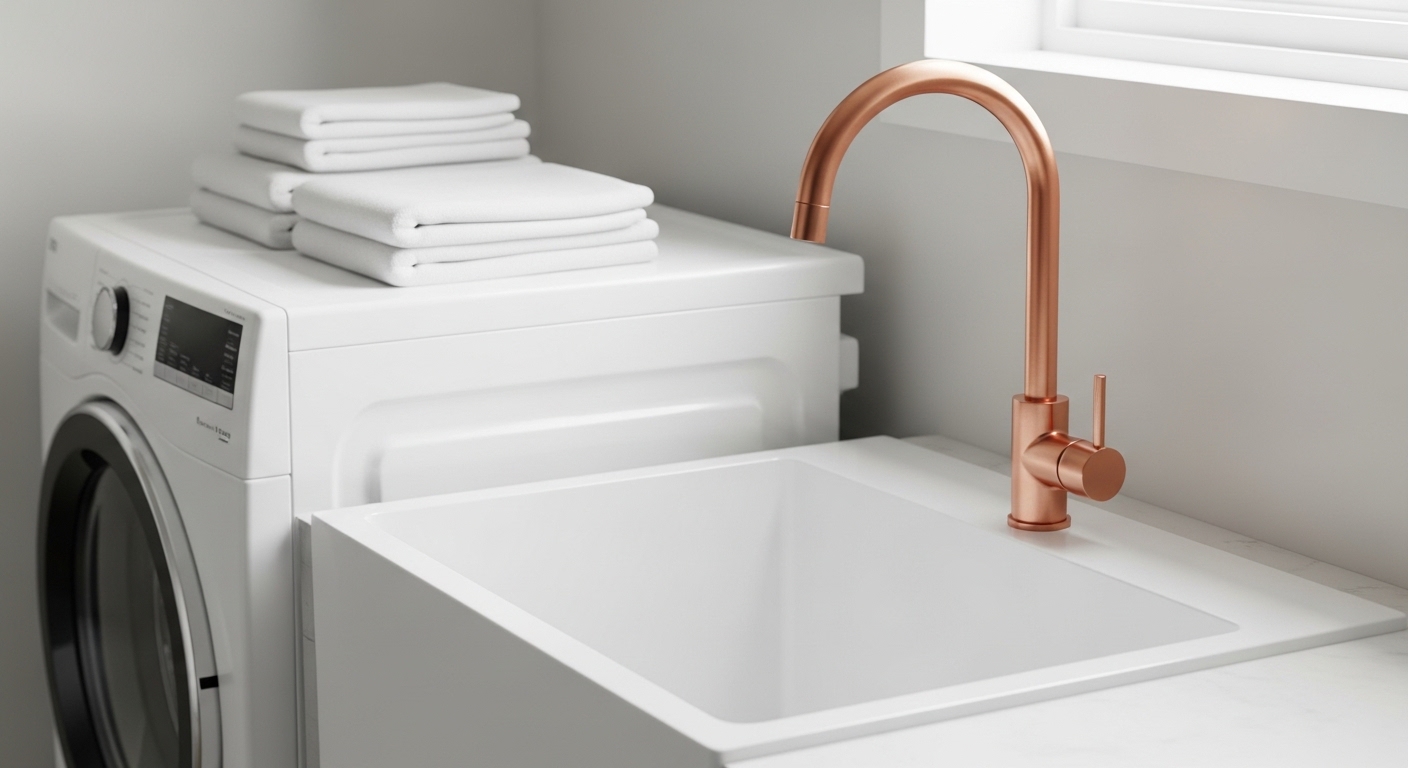
A copper faucet laundry setup is one of those upgrades people don’t think about until they’re staring at a scratched, mineral-crusted chrome tap over a utility sink and wondering why laundry-room fixtures always look tired. Here’s the honest answer: copper isn’t just a “farmhouse aesthetic” gimmick. In a laundry or utility room — where you fill buckets, soak clothes, hand-wash delicates, rinse paint rollers, and deal with splashy, hard water — the finish and the spout shape matter more than they do at a pretty powder-room sink. Copper happens to be genuinely good at hiding water spots, resisting corrosion, and taking abuse. Below, I’ll walk you through when it’s worth it, what to look for, and which style fits your sink.
Is a Copper Faucet Actually Good for a Laundry Room, or Is It Just for Looks?
Yes, copper is a genuinely practical choice for a laundry room — not just a style statement. Copper is naturally antimicrobial (bacteria and viruses die on copper surfaces far faster than on stainless or chrome), it resists corrosion from detergent, bleach splashes, and hard water, and its warm tone camouflages the water spots and limescale that make chrome faucets look grimy within weeks.
The laundry room is arguably the hardest-working plumbing spot in the house after the kitchen. You’re not just washing hands there. You’re filling 5-gallon mop buckets, pre-treating stains, soaking wool sweaters, rinsing garden tools, and sometimes bathing a muddy dog. That means the faucet gets splashed with detergent, hit with hot water, and left to dry with mineral-heavy droplets constantly. A chrome or brushed-nickel finish shows every one of those spots. Copper’s living finish — especially an oil-rubbed or antique copper — either hides them or absorbs them into an evolving patina that most people find attractive.
One caveat worth saying plainly: “copper look” and “solid copper” are not the same thing, and that distinction decides whether you’re getting the real benefits. We’ll cover that next.
Solid Copper vs. Copper-Plated vs. “Copper Finish” — What’s the Difference?
Solid copper (or copper over a brass body) gives you the real antimicrobial and durability benefits and ages into a genuine patina; a “copper finish” or PVD copper-tone coating is just a colored layer over zinc or stainless that mimics the look but can chip or wear at the touch points. For a laundry room that sees heavy use, spend the extra money on solid copper or copper-plated brass, not a spray-on tone.
| Type | What it really is | Durability | Typical price | Best for |
|---|---|---|---|---|
| Solid copper | Copper body, often hand-hammered | Excellent; develops living patina | $150–$400+ | Statement utility/farmhouse sinks |
| Copper-plated brass | Brass core with real copper layer | Very good; heavy and corrosion-resistant | $90–$220 | Everyday laundry workhorse |
| PVD copper-tone | Colored coating over zinc/stainless | Good if PVD, poor if painted | $50–$130 | Budget, low-use rooms |
| Antique/oil-rubbed copper | Darkened copper finish, sealed | Very good; hides spots best | $100–$250 | Hard-water areas |
Here’s the practical read on that table. If your laundry faucet runs 20 times a day, a painted “copper finish” from a $45 special will start showing silver or brass at the handle and spout tip within a year — the exact spots your hand touches. A PVD (physical vapor deposition) coating is far tougher and is what reputable brands use for a “copper” or “brushed copper” faucet that shouldn’t be solid-copper-priced. And genuine solid copper is the only one that will develop that dark, mottled patina over time; if you don’t want it to darken, look for a lacquered or “living finish sealed” copper.
What Spout and Handle Style Works Best Over a Deep Laundry Sink?
For a laundry or utility sink, choose a high-arc gooseneck spout (at least 8–10 inches of clearance) so you can fit a mop bucket or watering can underneath, and pick a single-handle lever or a pull-down sprayer for one-handed control when your other hand is full of wet laundry. Skip the short, low bathroom-style spout — it turns bucket-filling into a spill.
The number-one complaint people have about laundry faucets isn’t the finish — it’s clearance. Utility sinks are deep (often 10–14 inches), and if your spout only reaches a few inches above the rim, you can’t slide a bucket under it. A tall copper gooseneck fixes that. Here’s what to weigh:
- Pull-down sprayer: Best all-rounder. Lets you rinse the whole basin, spray mud off boots, and direct water where you need it. Look for a magnetic dock so the head doesn’t sag over time.
- Single lever handle: Easiest to operate with one wet or soapy hand. Fast temperature control.
- Two-handle (widespread or bridge): The classic copper farmhouse look. Beautiful, but slower to adjust and needs the right hole spacing.
- Wall-mount copper faucet: Great for freestanding utility sinks or where the backsplash has the supply lines — it keeps the deck clear and clean.
If a wall-mounted setup appeals to you, know that it’s a different install from a deck-mount and needs the right rough-in and hardware — our guide on whether you need a wall mount faucet installation kit and what’s inside one walks through exactly what the box should contain before you commit. And if you like the drama of a dark faucet over a light sink, the reasoning in whether a wall mount faucet in black is worth it applies to copper too — bold finish, light basin, high contrast.
Will a Copper Faucet Fit My Existing Laundry Sink and Holes?
It depends on your sink’s hole configuration: most laundry sinks are drilled for either a single hole (one faucet) or three holes (faucet plus two handles or a sprayer) on 4-inch or 8-inch centers, so measure your holes before buying. A single-hole copper faucet can often cover extra holes with an included deck plate, but a widespread model needs holes spaced correctly.
Before you order anything, flip the counting on its head and measure what you already have. Count the holes, then measure center-to-center between the outermost ones. Common laundry/utility standards are:
- Single-hole: One 1⅜” hole. Fits single-handle copper faucets directly.
- Centerset (4″): Three holes on 4-inch centers, common on older utility sinks.
- Widespread (8″): Three holes on 6–16 inch spread for bridge and two-handle copper styles.
Getting this wrong is the most common reason a beautiful faucet gets returned. If you have a three-hole sink and want a sleek single-hole copper faucet, buy one that ships with a matching copper escutcheon (deck plate) to cover the unused holes. If you’re unsure what your sink can take, our breakdown of the right 3-hole faucet hole size and whether it’ll fit your sink gives you the exact measurements to check with a tape measure in five minutes.
How Does Copper Hold Up Against Hard Water and Detergent in a Laundry Room?
Copper holds up very well: it doesn’t rust, it resists the pitting that plagues cheap chrome, and its warm color hides limescale and water spots far better than shiny finishes — but hard water minerals will still build up on any spout, so a copper faucet needs occasional cleaning, just less visibly-urgent cleaning. The key is cleaning it correctly so you don’t strip the finish.
Laundry rooms are ground zero for hard-water abuse because you run a lot of hot water there, and heat accelerates mineral scaling. On a chrome faucet, that scale shows up as chalky white crust and cloudy spots within days. On copper — especially antique or oil-rubbed copper — the same buildup is far less obvious against the darker, warmer tone. That’s a real quality-of-life win if you hate constantly wiping fixtures.
But “hides it” isn’t “prevents it.” Minerals still collect inside the aerator and around the spout tip, which can weaken your stream over time. The important part for copper owners: do not use harsh acidic descalers or abrasive pads on solid or living-finish copper — they’ll strip the patina or lacquer and leave bright blotches. Use a soft cloth, mild dish soap, and for stubborn scale, a diluted vinegar solution applied briefly and rinsed off, or a dedicated copper-safe cleaner. Our step-by-step guide to cleaning a faucet head from hard-water buildup without wrecking the finish covers the safe method in detail, and it’s worth reading before you reach for anything under your sink.
One more finish note: if your laundry sink is a dark composite or black utility basin, a copper or oil-rubbed faucet reads as intentional and high-end. If you’re weighing warm copper against a cooler chrome over a dark sink, the honest pros-and-cons in whether a chrome tap on a black sink actually looks good apply directly — copper tends to win on warmth and spot-hiding, chrome on brightness.
What Should You Look For Before Buying a Copper Laundry Faucet?
Prioritize the internal cartridge and material over looks: get a ceramic-disc cartridge (drip-proof for years), a solid-brass or solid-copper body (not zinc), a spout height that clears your tallest bucket, and a finish warranty. Those four things separate a faucet you’ll love for a decade from one you’ll be fixing in eighteen months.
Here’s my practical buying checklist, in order of importance:
- Ceramic-disc cartridge. This is the valve that controls flow. Ceramic-disc cartridges are the standard for drip-free longevity — rubber-washer designs wear out and start dripping. This one spec prevents most future headaches.
- Solid-metal body. Lift the faucet if you can — a solid-brass or copper body has real heft. Lightweight faucets are usually zinc alloy, which corrodes faster in a wet laundry environment.
- Spout reach and height. Measure your tallest bucket or watering can and make sure the spout clears it. 8–10 inches of clearance is the sweet spot for utility use.
- Flow rate. Many faucets ship at 1.8–2.2 GPM. For fast bucket-filling you want the higher end, but check that it meets your local code.
- Finish type and warranty. Confirm whether it’s solid copper, copper-plated brass, or PVD, and look for a finish warranty. Reputable brands back the finish, often for a lifetime on residential use.
- Included hardware. Supply lines, mounting nuts, and a deck plate if you have extra holes.
How Much Should You Spend on a Copper Laundry Faucet?
Budget $80–$150 for a solid copper-plated brass laundry faucet with a ceramic cartridge — that’s the value sweet spot. Go up to $200–$400 only if you specifically want hand-hammered solid copper as a design centerpiece; go below $60 and you’re almost certainly buying painted zinc that won’t last in a high-use laundry room.
The laundry room is a place where you can be smart about spend. You don’t need the $400 artisan hammered-copper showpiece that belongs over a farmhouse kitchen sink — but you also shouldn’t grab the $40 “copper look” bargain that’ll flake at the handle. The middle band, copper-plated solid brass with a real ceramic cartridge, gives you the durability and finish resistance that actually matter in a utility space, at a price that makes sense for a room guests rarely see. Put your design money where it earns its keep.
FAQ
Does a copper faucet turn green in a laundry room?
Solid copper can develop a green or brown patina over years as it oxidizes — that’s the “living finish” many people buy it for. If you don’t want any color change, choose a lacquered or sealed copper faucet, or a PVD brushed-copper finish, both of which lock in the current tone. The mild, humid laundry environment won’t dramatically speed up patina beyond normal use.
Is a copper faucet antimicrobial enough to matter for laundry?
Copper genuinely kills bacteria and viruses on contact far faster than chrome or stainless — this is well-documented and is why hospitals use copper touch surfaces. In a laundry room where you handle dirty clothes and rags, having an antimicrobial faucet handle is a real, if modest, hygiene bonus. Note that PVD “copper-tone” finishes over stainless don’t offer the same effect since the surface isn’t actual copper.
Can I install a copper laundry faucet myself?
Yes, most deck-mount copper laundry faucets are a straightforward DIY install: shut off the supply valves, disconnect the old faucet, drop the new one through the holes, tighten the mounting nut, and connect the braided supply lines. Wall-mount copper faucets are more involved because they tie into in-wall plumbing. If you’re doing a wall-mount, read up on the required kit and rough-in first.
Will hard water ruin a copper faucet faster?
No — copper resists hard water corrosion better than most finishes and hides the resulting spots, so it actually ages better than chrome in hard-water homes. Minerals will still collect in the aerator and can weaken the stream over time, so clean it periodically with mild soap or a brief diluted-vinegar treatment, avoiding abrasive pads that would strip the finish.
What’s the difference between a copper laundry faucet and a kitchen faucet?
Functionally they overlap, but laundry faucets prioritize tall spout clearance for bucket-filling and rugged durability over refined styling, while kitchen faucets emphasize pull-down sprayers, sleek looks, and features like touchless operation. Many people successfully use a copper kitchen faucet on a utility sink — just confirm the spout height clears your buckets and the hole configuration matches.
Do copper faucets need special cleaning products?
Not special, but gentle. Warm water and a soft cloth handle daily cleaning; mild dish soap tackles grease; and for scale, a short diluted-vinegar wipe followed by a thorough rinse works. Avoid abrasive scrubbers, bleach, and strong acidic descalers on solid or living-finish copper, since those can strip the patina or lacquer and leave uneven bright spots.
The Bottom Line
A copper faucet in the laundry room is a smart, not sentimental, choice: it hides hard-water spots, resists corrosion from detergent and bleach, adds a genuine antimicrobial touch surface, and looks far more intentional than the builder-grade chrome most utility sinks come with. Buy solid copper or copper-plated brass with a ceramic-disc cartridge and a tall gooseneck spout, match it to your sink’s holes, and you’ll have a fixture that outlasts and out-looks the cheap alternative for the same everyday spend.
About the author & brand: This guide was written by the product team at evefaucet, drawing on hands-on testing of copper, brass, and stainless fixtures across kitchen, bath, and utility applications. evefaucet designs and sells faucets and bathroom fixtures direct to homeowners, and our copper and copper-finish faucets are built on solid-brass bodies with ceramic-disc cartridges, tested to standard flow and durability benchmarks, and backed by our finish and cartridge warranty for residential use. We recommend confirming any faucet meets your local plumbing code and low-lead standards before installation.