 EVE卫浴
EVE卫浴
Faucet Sprayer Clogged? Why Is My Sink Sprayer Barely Trickling — And How Do I Fix It?
浏览次数:481 分类:公司产品
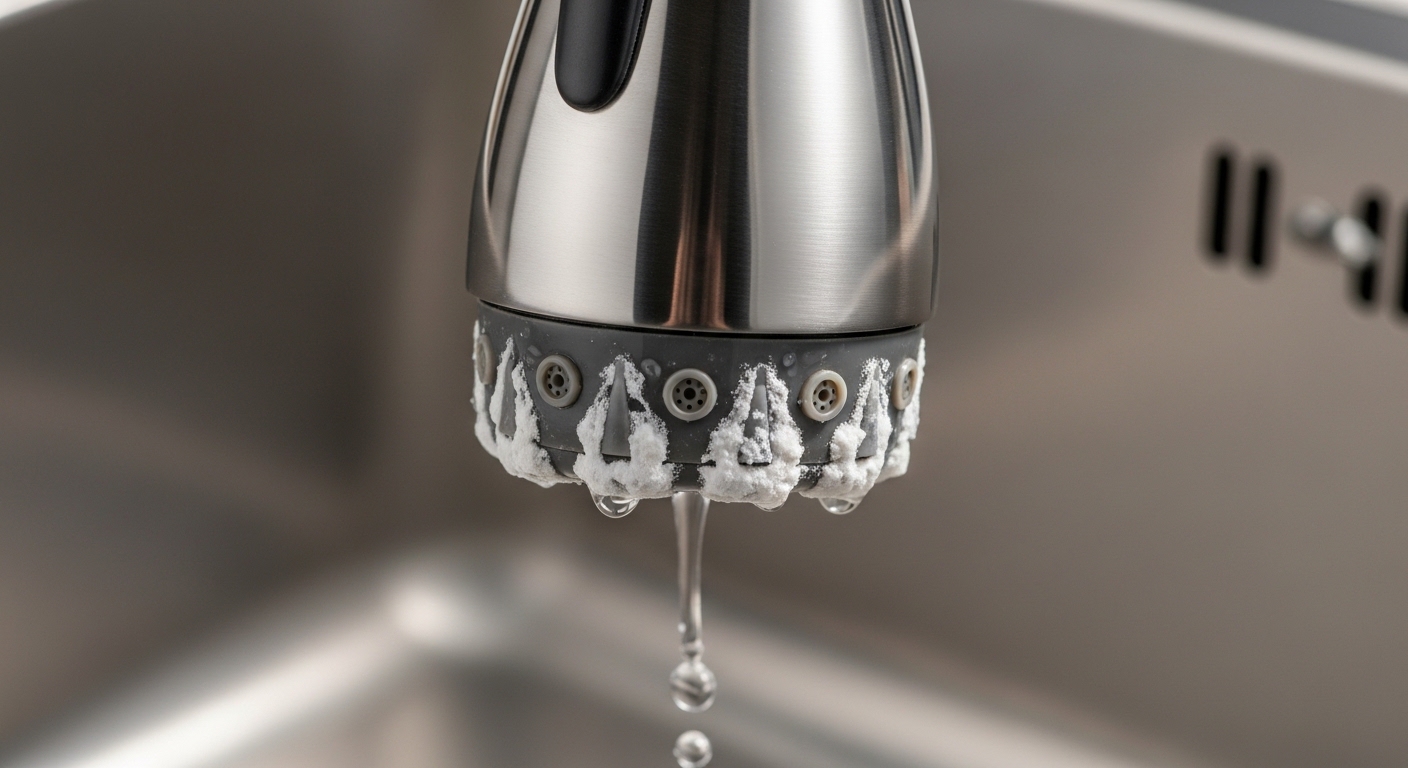
If your faucet sprayer clogged up overnight and now dribbles instead of spraying, you’re dealing with one of the most common kitchen faucet problems there is — and one of the easiest to fix without a plumber. Nine times out of ten it’s mineral buildup blocking the little nozzle holes, not a broken faucet. Below, our workshop team walks you through exactly how to diagnose it, clean it, and decide when it’s genuinely time to swap the spray head for a new one.
Why is my faucet sprayer clogged and only trickling water?
Your faucet sprayer is clogged and trickling because minerals — mostly calcium and magnesium from hard water — have crystallized on and inside the tiny rubber or metal nozzle holes on the spray face. Those holes are less than a millimeter wide, so it takes shockingly little scale to choke the flow.
Here’s what’s actually happening. Every time water sits in the spray head between uses, it evaporates a little and leaves mineral residue behind. Over months, that residue hardens into limescale that narrows or completely plugs the spray openings. The spray pattern goes patchy first — a few jets shooting sideways, some dead holes — then the whole thing weakens to a trickle. If you live somewhere with hard water (most of the US Midwest, Southwest, and Texas), this is the number-one reason a sprayer clogs.
But scale isn’t the only suspect. A clogged sprayer can also come from:
- A clogged aerator or screen inside the spray head — many modern spray heads hide a tiny mesh filter that catches sand, rust flakes, and pipe debris.
- A kinked, twisted, or scaled pull-down hose — the hose can crimp inside the cabinet or build up scale internally, strangling flow before it ever reaches the sprayer.
- A worn diverter valve — the little part that redirects water from the spout to the sprayer. When it fails, the sprayer gets only a fraction of the pressure.
- Sediment after plumbing work — if your sprayer clogged right after a water main repair or new water heater install, you likely have loosened pipe grit trapped in the screen.
The good news: every one of these is a DIY fix, and you can usually pin down the cause in about five minutes.
How do I unclog a faucet sprayer at home without any special tools?
To unclog a faucet sprayer at home, unscrew the spray head, soak it in warm white vinegar for 30 to 60 minutes, then scrub the nozzle holes and rinse. You need almost nothing — vinegar, a bowl, an old toothbrush, and maybe a safety pin. Here’s the exact process our techs use.
- Unthread the spray head. On a pull-down or pull-out faucet, grip the spray head and twist it counterclockwise off the hose collar. On an older side sprayer, the head usually unscrews from the hose too. Hand-tight is normal; if it’s stuck, wrap a rubber band or cloth around it for grip.
- Check the screen first. Look inside the connector end. If you see a small mesh filter or washer, pop it out with a toothpick and rinse away any grit or black rubber flecks. This alone fixes a lot of “sudden” clogs.
- Soak in warm white vinegar. Submerge the whole spray face in a bowl of plain white vinegar. Warm (not boiling) vinegar dissolves limescale faster. Thirty minutes handles light buildup; leave a badly crusted head for a full hour or overnight.
- Scrub and pick. After soaking, scrub the nozzle face with an old toothbrush. For the rubber “soft-touch” nozzles you see on most modern sprayers, just rub them with your thumb — the softened scale rolls right off. For metal-face heads, gently clear each hole with a safety pin or the corner of a toothpick.
- Rinse and reattach. Run the head under the tap to flush loosened debris out the back, then thread it back onto the hose. Run the sprayer for 15 seconds to blast out anything left inside.
One caution: never use a wire brush, steel wool, or bleach on a spray head. They’ll scratch chrome, strip brushed-nickel and matte-black finishes, and leave the surface even more prone to future buildup. White vinegar and CLR-type descalers are safe on virtually every finish; if you want the full finish-safe method, see our guide on how to clean a faucet head from hard water buildup without wrecking the finish.
What’s the difference between a clogged sprayer, a clogged aerator, and a clogged hose?
The quick way to tell them apart: a clogged sprayer gives a weak or patchy spray but the regular spout stream is fine; a clogged aerator weakens the main spout stream; and a clogged or kinked hose weakens both flow modes and often makes the head hard to pull out or retract.
They’re easy to confuse because all three produce “low water pressure,” but each lives in a different spot. Here’s how they break down.
| Problem | Where it lives | Telltale symptom | Typical fix |
|---|---|---|---|
| Clogged sprayer face | The nozzle holes on the spray head | Patchy, sideways, or trickling spray; spout stream normal | Vinegar soak + scrub the nozzles |
| Clogged aerator/screen | Inside the spout tip or spray-head connector | Weak main stream; sputtering; visible grit | Unscrew, rinse or replace the screen |
| Kinked or scaled hose | The flexible pull-down hose under the sink | Weak flow in both modes; head won’t retract smoothly | Straighten, unkink, or replace the hose |
| Failing diverter valve | Inside the faucet body | Sprayer weak while spout runs at full force | Replace the diverter (a few dollars) |
| Low home water pressure | Shutoff valves or supply lines | Everything in the house is weak | Open shutoffs fully; check pressure |
If cleaning the spray face didn’t help, the aerator is your next stop. Many spray heads have a serviceable aerator that clogs just like a spout aerator does — if you keep getting repeat clogs, our deep-dive on why a faucet aerator keeps getting clogged explains the water-chemistry reasons and how to break the cycle for good. And if the whole faucet feels weak, not just the sprayer, read why a pull-out kitchen faucet stops working before you assume the sprayer is the problem.
Why does my sprayer keep clogging again a few weeks after I clean it?
If your sprayer keeps re-clogging within weeks, you have hard water depositing scale faster than you clean it — and the fix is either regular maintenance, a whole-house or under-sink water softener/filter, or a spray head with self-cleaning silicone nozzles that resist buildup.
Water hardness is measured in grains per gallon (gpg). Anything over 7 gpg is “hard,” and much of the US sits at 10–15 gpg or higher. At those levels, scale can visibly return in three to four weeks. You have three realistic strategies:
- Stay ahead of it. A five-minute vinegar wipe on the nozzles once a month prevents the crust from ever hardening. Cheapest option, but it takes discipline.
- Treat the water. An under-sink filter or a whole-home softener dramatically slows scale everywhere — sprayer, aerator, dishwasher, and water heater included. Bigger upfront cost, but it protects your whole plumbing system.
- Buy hardware that resists scale. Modern spray heads with flexible silicone (rubber) nozzle tips let you wipe scale off with a fingertip. They clog far less visibly than old brass or chrome faces. Nearly all EveFaucet pull-down heads use these self-cleaning nozzles for exactly this reason.
If you’re on well water or notice orange-brown staining, you may also have iron and sediment, not just calcium. In that case an under-sink sediment filter upstream of the faucet does more than any spray head can.
Should I clean my clogged faucet sprayer or just replace the spray head?
Clean it first — a vinegar soak solves the vast majority of clogs for free. Replace the spray head only if the nozzles are cracked, the finish is pitting, the spray pattern stays broken after a thorough cleaning, or the head is more than a decade old. A replacement head runs about $15–$40 and installs in two minutes.
Here’s our honest rule of thumb from the workshop: if cleaning restores a strong, even spray, you’re done — don’t spend a dime. But scale that has been baking on for years can permanently corrode the nozzle plate, and once the rubber nozzles crack or the metal pits, no amount of vinegar brings them back. At that point a new head is cheaper and faster than fighting it.
The critical thing when buying a replacement is thread compatibility. Pull-down spray heads are not universal. Before ordering, check:
- The connector type — most pull-downs use a threaded plastic or metal collar; some use a quick-connect coupling.
- The thread size — the two common standards are close enough to look identical but won’t seal if mismatched.
- The number of spray modes — stream, spray, and sometimes a pause or “boost” button. Match your original if you want the same buttons.
If your faucet uses the tool-free coupling style, our explainer on the sink sprayer quick connect shows how those snap on and off in seconds. When in doubt, take a photo of your old head and the hose connector and match it against the product specs before you buy.
How do I fix a clogged sprayer if the hose or diverter is the real problem?
If cleaning the spray head didn’t restore flow, straighten the hose under the sink, check the weight and retraction, and — if the sprayer is weak only while the spout runs strong — replace the diverter valve. These are the two hidden causes people miss after they’ve cleaned the obvious part.
The hose. Open the cabinet and watch the hose as someone pulls the sprayer out and lets it retract. Look for a hard kink, a spot where the hose loops over the shutoff valve, or a counterweight that’s snagged. A kinked hose is a free fix — just reroute it. But if the hose is old and internally scaled, or the plastic has gone brittle and cracked, replace it. Our step-by-step on a kitchen faucet pull-out hose replacement covers the whole swap in about 20 minutes.
The diverter. This is the tell: turn on the faucet in spout mode — strong flow. Then engage the sprayer — weak flow. That pressure drop between the two means the diverter (the internal valve that shunts water to the sprayer) is worn or gummed with scale. It’s usually a small brass or plastic cartridge inside the faucet body, and a replacement costs just a few dollars. Cleaning it in vinegar sometimes revives it; if not, swap it.
One more sanity check before you blame the faucet: make sure both under-sink shutoff valves are fully open, and confirm the rest of your kitchen tap isn’t weak too. If the whole faucet is underpowered, the problem may be system-wide — the same diagnostic path we lay out for a Moen faucet with low water pressure applies to almost any brand.
The EveFaucet workshop take: prevention beats repair
After rebuilding thousands of pull-down faucets, here’s what we tell customers: a clogged sprayer is a maintenance signal, not a defect. The faucets that “never clog” belong to people who wipe the nozzles once a month and treat hard water at the source. Build that five-minute habit and you may never unscrew your spray head in anger again.
When you do need new hardware, buy a spray head with silicone nozzles and a documented thread standard so replacements are painless years down the road. That’s the whole design philosophy behind our kitchen line — serviceable, standard-thread, self-cleaning heads that you can maintain instead of throw away.
FAQ
Can I use CLR or Lime-A-Way instead of vinegar on a clogged sprayer?
Yes. Commercial descalers like CLR and Lime-A-Way work faster than vinegar on heavy scale, and they’re safe on chrome, brushed nickel, and stainless. Follow the bottle’s contact-time limit (usually a couple of minutes for these stronger products), rinse thoroughly, and avoid prolonged soaking on brass or antique finishes. Vinegar is gentler and fine for regular monthly upkeep.
How long should I soak a faucet spray head in vinegar?
Thirty minutes for light buildup, a full hour for moderate scale, and overnight for a badly crusted head. Warm vinegar dissolves calcium faster than cold, so warming it slightly speeds things up. After any soak, scrub the nozzles and flush the head with clean water before reinstalling.
Why is my sprayer spraying water sideways in different directions?
A sideways or crossing spray means some nozzle holes are partially blocked with scale while others are clear, so the jets fire at odd angles. It’s an early stage of clogging. A vinegar soak and a scrub of the nozzle face almost always restores a straight, even spray. If a nozzle is physically cracked, though, replace the head.
Do all replacement spray heads fit all pull-down faucets?
No. Spray heads vary by connector type (threaded vs. quick-connect) and thread size, so you must match the replacement to your faucet’s hose. Take a photo of your old head and the hose end, note your faucet brand and model if you can, and confirm compatibility before buying. Many brands, including EveFaucet, list the exact thread standard in the product specs.
My sprayer clogged right after plumbing work — is that a coincidence?
No, it’s very common. Repairs to your water main, water heater, or supply lines shake loose pipe sediment, rust flakes, and mineral debris that get caught in the spray head’s screen or aerator. Unscrew the head, pull out the mesh filter, rinse away the grit, and reattach. Run the faucet for a minute afterward to flush any remaining debris.
Is a weak sprayer ever a sign I need a whole new faucet?
Rarely. A weak sprayer is almost always the head, hose, or diverter — all cheap, individual parts. Consider a full faucet replacement only if the faucet body itself is corroded, leaking internally, or so old that parts are discontinued. Otherwise, a $15–$40 spray head or a few-dollar diverter solves it.
Author note: This guide was written and field-tested by the EveFaucet workshop team, who repair, rebuild, and pressure-test pull-down and pull-out kitchen faucets every week. Our spray heads and cartridges are tested to standard flow and durability benchmarks (cUPC/NSF-compliant components), and EveFaucet kitchen faucets are backed by a limited lifetime warranty on the finish and function — so if a genuine defect, not everyday scale, is behind your clogged sprayer, we’ll stand behind it.