 EVE卫浴
EVE卫浴
Faucet Aerator Kohler Replacement: Which One Fits and How Do You Swap It?
浏览次数:512 分类:公司产品
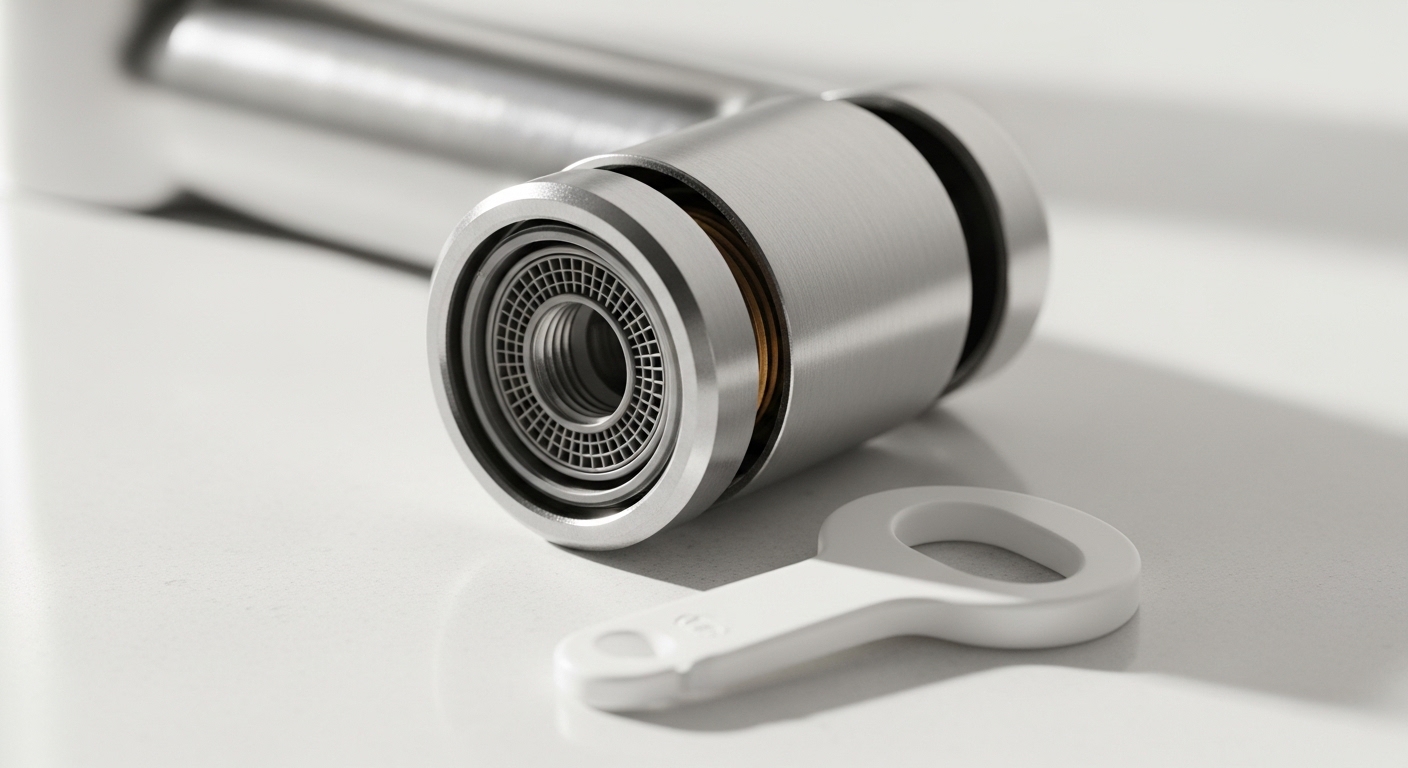
If you’re shopping for a faucet aerator kohler replacement, the single thing that trips people up isn’t the swap — it’s picking the right size and style, because Kohler leans heavily on hidden aerators that don’t look like the screw-on mesh caps you remember from older faucets. Get the match right and this is a two-minute, hand-tight job. Get it wrong and you’re standing at the sink with a part that won’t thread. This guide walks you through exactly which aerator your Kohler faucet takes, how flow rates change the water feel, and how to install it cleanly the first time.
An aerator is the small screen-and-housing tip at the very end of your faucet spout. It mixes air into the stream so the water comes out soft, splash-free, and straight — while quietly cutting how many gallons per minute (GPM) you use. When it clogs with mineral scale, the fix is almost always a clean or a swap, not a whole new faucet.
What kind of aerator does a Kohler faucet actually use?
Most modern Kohler faucets use a recessed (hidden) aerator — the housing sits up inside the spout so you see a smooth edge instead of a knurled ring. These need a small keyed tool (Kohler calls it a “cache” aerator key) to unthread, and each key has teeth that match the notches inside a specific aerator. Older and some utility Kohler faucets still use a standard exposed aerator you can grip with your fingers or pliers.
Here’s why this matters for buying: a hidden aerator and a standard aerator are not interchangeable by looks alone. You need to know your thread size and thread gender before you order.
- Male thread (15/16″-27): the threads are on the outside of the aerator, and it screws up into the spout. Common on many Kohler kitchen faucets.
- Female thread (55/64″-27): the threads are inside the aerator, and it screws down over the spout tip.
- Junior / Tom Thumb sizes: smaller diameters used on some Kohler bathroom lavatory faucets — easy to buy wrong if you assume “standard.”
The fastest way to know for sure: find your faucet’s model number (often on the original box, the spec sheet, or stamped under the spout), then look up the aerator part on Kohler’s site or ours. If you can’t find a model number, unscrew the old aerator and take it to compare, or measure the opening with a caliper.
How do I know which size Kohler aerator to buy if I can’t find the model number?
Measure the diameter of the threaded opening and note whether the threads are inside or outside — that alone narrows it to one or two options. A US male aerator opening measures about 15/16 inch (roughly 23.6 mm) across the threads; a female opening measures about 55/64 inch (roughly 21.8 mm) on the inside.
If you don’t have calipers, do the quarter test: a standard male aerator face is very close to the diameter of a US quarter (about 24 mm). If your spout opening is noticeably smaller, you’re likely looking at a junior-size bathroom aerator. When you’re still unsure, buy a universal aerator kit that includes both male and female inserts plus a rubber washer — it covers the vast majority of Kohler bathroom and kitchen spouts, and you keep the spare.
One caution specific to hidden aerators: the removal key is model-specific. A universal mesh aerator won’t help you if you can’t get the old recessed one out. If your Kohler faucet has a smooth, keyless-looking tip, order the matching cache key at the same time — they’re inexpensive and you’ll need it every time you clean the aerator, not just today. If your old aerator is truly seized, our step-by-step on taking apart a faucet aerator that won’t budge covers the penetrating-oil and grip tricks that get stubborn ones loose without cracking the finish.
What flow rate should I choose — 1.0, 1.5, or 2.2 GPM?
Choose 1.5 GPM for most bathroom sinks, 1.8–2.2 GPM for kitchen faucets where you fill pots, and 1.0 GPM only where you want maximum water savings and don’t mind a gentler stream. The number is the maximum gallons per minute at 60 psi, and lower isn’t automatically better — it changes how the faucet feels and how fast it fills things.
The federal maximum for kitchen and bathroom faucets is 2.2 GPM, and states like California cap bathroom faucets at 1.2 GPM. A good aerator hits its rated flow across a range of household water pressure, so the stream stays consistent whether your pressure is 45 psi or 75 psi. Here’s how the common ratings actually behave at the sink.
| Flow rate | Best for | Feel at the sink | Water use vs. 2.2 GPM |
|---|---|---|---|
| 1.0 GPM | Powder rooms, water-saving priority | Soft, gentle; slower to rinse | ~55% less |
| 1.2 GPM | California-compliant bathroom sinks | Comfortable for handwashing | ~45% less |
| 1.5 GPM | Most bathroom lavatory faucets | Full-feeling, low splash | ~32% less |
| 1.8 GPM | Kitchen faucets, balanced | Strong enough to fill and rinse | ~18% less |
| 2.2 GPM | Kitchen, fast pot-filling | Fastest fill, most water | Baseline |
A quick real-world example: dropping a kitchen faucet from 2.2 to 1.8 GPM is barely noticeable when you’re washing dishes, but over a year of normal use it trims a meaningful amount off your water bill. Going all the way to 1.0 in the kitchen, though, and you’ll feel the pot take longer to fill — that’s the trade-off to weigh.
Should I clean my clogged Kohler aerator or just replace it?
Clean it first — a clogged aerator is almost always mineral scale, not a broken part, and a 30-minute vinegar soak usually restores full flow for free. Replace it only if the screen is torn, the housing is cracked, or the plastic threads are stripped from a previous over-tightening.
If your Kohler faucet has gone weak or sputtery, the aerator is the first suspect. Unthread it, and you’ll typically find white or greenish crust choking the mesh. To clean it: disassemble the parts in order (photograph them first), soak everything in a 1:1 white vinegar and water solution for 20–30 minutes, then scrub the screen gently with an old toothbrush and rinse. Reassemble in the same order. We break down the full process, including how to keep the tiny internal washers and flow restrictor in the right stack order, in our guide on why a faucet aerator keeps getting clogged.
If your whole faucet head is crusted, not just the aerator, the scale is a symptom of hard water and it’ll come back. Our walkthrough on cleaning a faucet head from hard water buildup without wrecking the finish covers doing it safely on brushed and polished Kohler finishes so you don’t dull the coating. When cleaning stops restoring flow — or the mesh literally falls apart in your fingers — that’s your cue to replace.
Signs it’s time for a new aerator, not another cleaning
- Flow is still weak or uneven after a vinegar soak and scrub.
- The mesh screen is torn, missing, or crumbling.
- The stream sprays sideways or splits no matter how you seat it.
- The plastic housing threads are stripped and won’t tighten.
- You want to change the flow rate or switch to a swivel/spray aerator.
How do you actually install a Kohler faucet aerator step by step?
Hand-tighten it — that’s the whole secret. A faucet aerator is designed to seal with a rubber washer, not with force, so you thread it on by hand and add at most a quarter-turn with a cloth-wrapped tool. Here’s the clean sequence.
- Close the drain or lay a towel in the sink so you don’t lose small parts.
- Remove the old aerator. For a standard one, turn it counterclockwise by hand (or with pliers padded by a rag). For a hidden Kohler aerator, insert the matching cache key and turn counterclockwise.
- Check the threads. Wipe the spout threads clean and confirm your new aerator matches — male vs. female, and the correct diameter.
- Seat the rubber washer inside the new aerator or housing. No washer, no seal — this is the most common cause of a post-install drip.
- Thread it on by hand, clockwise, until snug. If it fights you in the first turn, stop — you’ve likely cross-threaded it. Back off and restart straight.
- Add a light final snug, no more than a quarter-turn with a cloth-wrapped wrench or the cache key.
- Test. Run hot and cold. Look for drips at the collar and confirm the stream is straight and full. If it drips, the washer is missing, pinched, or the aerator isn’t fully seated.
Over-tightening is the number one way people ruin a brand-new aerator — it deforms the plastic threads or the washer and causes the exact leak you were trying to avoid. Snug beats cranked every time.
Are aftermarket aerators okay on a Kohler faucet, or should I stick with genuine Kohler?
A quality aftermarket or universal aerator works fine on most Kohler faucets as long as the thread size and gender match — but for hidden (recessed) Kohler aerators, genuine or Kohler-specified parts are the safer bet because the keyed housing is proprietary. For exposed standard aerators, a good third-party part with the right thread is essentially identical in performance.
The trade-offs come down to fit certainty and finish. Genuine Kohler aerators guarantee the cache key matches and the finish lines up with polished chrome, brushed nickel, or matte black spouts. Reputable aftermarket kits win on price and on including multiple adapters so one purchase covers several faucets in the house. What you want to avoid is a bargain aerator with a thin washer or a mismatched restrictor that either drips or kills your flow.
| Option | Fit certainty | Finish match | Best when |
|---|---|---|---|
| Genuine Kohler aerator | Exact, including cache key | Matches Kohler finishes | You have a hidden/recessed aerator |
| Universal aerator kit | High, with included adapters | Standard chrome/nickel | Standard exposed aerator, multiple sinks |
| EveFaucet-compatible aerator | Matched by thread + flow | Chrome, brushed, matte black | You want a specific GPM or finish |
If you’re weighing Kohler against other brands for a full faucet — not just the aerator — it’s worth reading our head-to-head on Moen vs. Kohler kitchen faucets before you spend on a replacement fixture instead of a two-dollar part.
FAQ
What size is a Kohler faucet aerator?
Most Kohler kitchen faucet aerators use a male 15/16″-27 thread (about 23.6 mm outside diameter) or a female 55/64″-27 thread (about 21.8 mm inside diameter). Some bathroom lavatory faucets use smaller junior sizes. Measure the threaded opening or check your faucet’s model number to confirm before buying.
Why does my Kohler faucet aerator have no visible screen?
Because it’s a recessed (hidden) aerator that sits up inside the spout for a cleaner look. You remove it with a model-specific Kohler cache key that has teeth matching notches inside the housing — not with pliers. If you plan to clean or replace it, buy the matching key at the same time.
Can I use a non-Kohler aerator on a Kohler faucet?
Yes, on standard exposed aerators, as long as the thread size and gender match — a quality universal aerator performs the same. For hidden recessed aerators, stick with genuine or Kohler-specified parts, because the keyed housing is proprietary and universal mesh aerators won’t seat correctly.
My new aerator drips at the collar — what did I do wrong?
Almost always a washer problem: the rubber washer is missing, pinched, or the aerator was over-tightened and deformed. Unthread it, confirm the washer is seated flat inside, then hand-tighten and add only a quarter-turn. If it still drips, check that you matched male vs. female threading correctly.
Will a lower-GPM aerator fix my low water pressure?
No — a lower-flow aerator reduces flow, it doesn’t boost pressure. If your Kohler faucet suddenly went weak, the cause is usually a clogged aerator (clean it) or debris in the supply lines. Clean the aerator first; only if flow stays weak after a vinegar soak should you replace it or look upstream.
How often should I clean or replace a Kohler aerator?
Clean it every 3–6 months in hard-water areas, or whenever the flow weakens. A well-made aerator can last several years; replace it only when the screen tears, the housing cracks, or cleaning no longer restores full flow.
A note on who wrote this — and our testing standard
This guide comes from the EveFaucet workshop team, who assemble, bench-test, and disassemble faucets and aerators every week as part of our own manufacturing and QC. We test replacement aerators for flow consistency across a range of household water pressures (45–75 psi) and check thread fit against standard US 15/16″-27 and 55/64″-27 sizing before we recommend a part. Aerators we sell are designed to meet the federal 2.2 GPM maximum and are available in lower water-saving ratings, and our fixtures carry a manufacturer warranty. As always, if your faucet is under an active Kohler warranty, using a genuine Kohler aerator keeps that coverage intact — check your specific terms before swapping in a third-party part.
EveFaucet has manufactured and supplied kitchen and bathroom faucets, aerators, and replacement parts for years, shipping to homeowners and trades who want the right part the first time. When you match thread size and flow rate correctly, a faucet aerator kohler replacement is one of the cheapest, highest-impact fixes you can do at your sink — usually a couple of dollars and five minutes, no plumber required.