 EVE卫浴
EVE卫浴
Faucet Aerator Keeps Getting Clogged? A Complete Repair Guide From the EveFaucet Workshop
浏览次数:646 分类:Repair
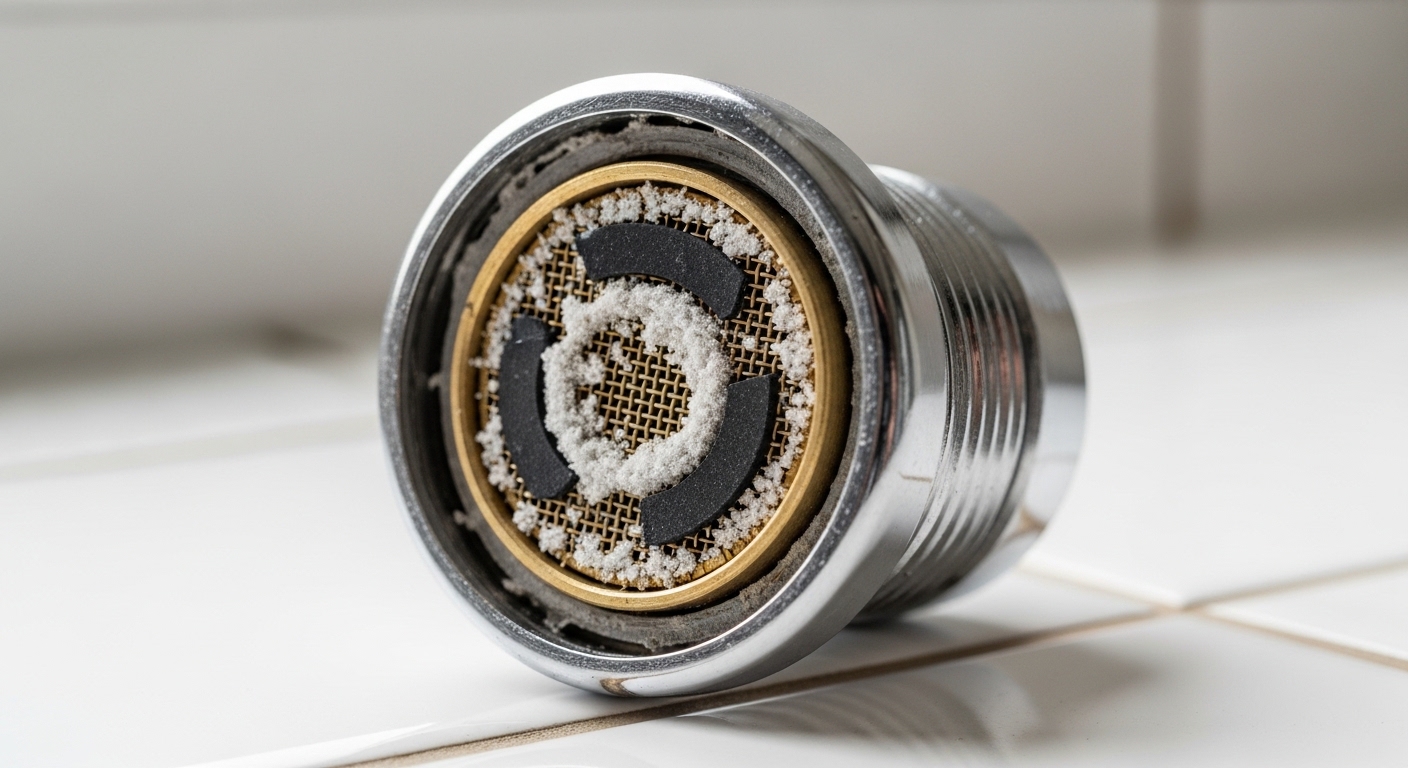
If your faucet aerator keeps getting clogged no matter how many times you clean it, you are not imagining things — and you are not alone. This is one of the most common service calls our EveFaucet technicians receive, and nearly 90% of the time the fix is something a homeowner can handle in fifteen minutes with a pair of pliers, a soft cloth, and a cup of white vinegar. The trick is understanding why your particular aerator keeps clogging, because the repair steps for limescale buildup are different from the repair steps for rust flakes or rubber gasket fragments shedding from old supply hoses.
In this guide we walk through every realistic cause, give you a repeatable cleaning routine, compare aerator types so you can pick a replacement that resists clogging, and explain the long-term plumbing upgrades that finally stop the cycle. Everything here is based on the real-world testing our quality team performs on pull-down kitchen faucets, bathroom basin mixers, and wall-mounted spouts at the EveFaucet manufacturing facility.
Why Your Faucet Aerator Keeps Getting Clogged in the First Place
The aerator is the small threaded fitting at the very tip of your spout. Inside it sits a stack of components — usually a flow restrictor, a honeycomb diffuser, and one or two fine wire mesh screens — that mix air into the water stream to reduce splashing and save water. Because every drop you use passes through that mesh, the aerator is the natural choke point where anything floating in your water supply ends up.
When a faucet aerator keeps getting clogged repeatedly, one of five things is going on inside your plumbing. Identifying which one applies to your home determines whether you need a five-minute soak or a more substantial fix.
1. Hard Water Mineral Scale
Calcium and magnesium carbonate precipitate out of hard water and form crusty white or pale-green deposits on the mesh. This is the most common cause in homes with water hardness above 7 grains per gallon. Scale builds slowly but persistently, and a clogged aerator that releases white flakes when tapped against a paper towel is almost always the scale story.
2. Water Heater Sediment
If your hot water side clogs faster than the cold side, point the finger at your water heater. Tanks accumulate a sandy layer of calcium and corroded anode-rod particles on the bottom. Every time the burner cycles, some of that sediment lifts and travels through the hot supply. Brown or rust-colored grit on the aerator screen is the signature.
3. Galvanized or Old Copper Pipe Corrosion
Homes plumbed with galvanized steel before the 1970s, or with aging copper joints, can shed metallic flakes — dark gray, black, or copper-green — that lodge in the aerator the first time water flow disturbs them. You will often see this right after a water main repair on the street.
4. Deteriorating Supply Hose Rubber
The braided supply hoses under your sink contain rubber inner cores. After 8–10 years they begin to delaminate, sending tiny black rubber crumbs downstream. If you see soft, rubbery black bits on the screen, replace the supply hoses immediately — a hose burst is the next stage. Our team covers compatible hardware in the EveFaucet stainless steel braided supply hose guide.
5. Construction or Repair Debris
Any plumbing work — a new shutoff valve, a remodel, or even municipal hydrant flushing — can dislodge solder beads, PEX shavings, pipe dope chunks, or sand. This usually clogs the aerator once, dramatically. If you just had work done, that is your answer.
How to Tell Exactly What Is Clogging Your Aerator
Before you can stop the cycle, you need to identify the debris. Unscrew the aerator (counterclockwise when looking up at the spout — a strip of masking tape on your pliers prevents scratching the finish), then disassemble it over a white paper towel. The color, texture, and behavior of what falls out tells you everything.
| Debris Appearance | Likely Cause | Fix Difficulty | Long-Term Solution |
|---|---|---|---|
| White, crusty, dissolves in vinegar | Calcium/magnesium scale | Easy | Water softener or scale-inhibiting filter |
| Brown or rust-colored grit (hot side) | Water heater sediment | Easy | Annual tank flush; consider anode rod replacement |
| Dark metallic flakes | Galvanized pipe corrosion | Moderate | Whole-home repipe or sediment filter |
| Soft black rubber crumbs | Failing supply hoses | Easy | Replace braided hoses with stainless-jacketed versions |
| Mixed sand, plastic shavings, solder | Recent plumbing work | Easy | One-time flush; install whole-house pre-filter |
| Green-blue tint | Copper corrosion (acidic water) | Moderate | pH neutralizer system |
Step-by-Step: Cleaning a Clogged Faucet Aerator the Right Way
Most homeowners scrub the aerator with a toothbrush and reinstall it. That removes visible grime but leaves invisible scale that becomes the seed crystal for the next clog. The professional cleaning sequence below is what we use in our service training, and it dramatically extends the time between cleanings.
- Shut nothing off. You do not need to close supply valves for an aerator cleaning — the aerator is downstream of the cartridge.
- Wrap the aerator collar with painter’s tape or a thin rubber band before gripping with slip-joint pliers. This protects brushed nickel, matte black, and PVD gold finishes from claw marks.
- Turn counterclockwise from below. If it is seized, hold it firmly and let penetrating oil sit for ten minutes — never twist harder, because you risk cracking the spout casting.
- Disassemble fully. Note the stack order on a paper towel: most aerators stack as housing → washer → restrictor → diffuser → screen → secondary screen.
- Soak in pure white vinegar for 30 minutes. Distilled vinegar dissolves calcium carbonate without damaging brass, stainless, or polymer parts. Do not use CLR or muriatic acid on PVD finishes — they will dull the plating.
- Scrub gently with a soft toothbrush, then back-flush the mesh by running tap water through it in reverse (from the bottom up).
- Inspect the rubber washer. A flattened or torn washer causes drip-around and accelerates scale buildup along the threads. Replace it for a few cents.
- Flush the spout before reinstalling. Run hot and cold for 30 seconds each with the aerator off — this clears any debris loosened during disassembly.
- Hand-tighten only, then a quarter-turn with taped pliers. Overtightening crushes the washer and warps the housing.
If your faucet aerator keeps getting clogged within a week or two of this process, the issue is upstream and cleaning will never be a permanent fix. That is when you move to the prevention strategies below.
Stop the Cycle: Five Upstream Fixes That Actually Work
Once you know what is fouling your aerator, you can install a fix that prevents the debris from reaching the screen at all. Here are the five interventions our engineering team recommends, ranked by cost-effectiveness.
- Inline sediment filter at the angle stop. A small $15–$25 mesh filter installed on the supply riser catches everything larger than 50 microns. It is the single highest-ROI upgrade for clog-prone aerators.
- Whole-house spin-down sediment filter. For homes on well water or with old galvanized mains, a 5-micron pre-filter at the point of entry protects every fixture, not just the kitchen faucet.
- Water heater flush, annually. Connect a garden hose to the drain valve, shut off the cold inlet, and run until the water flows clear. This single habit prevents the majority of hot-side clogs.
- Replace 10+ year-old supply hoses with stainless-jacketed PEX-core lines. Look for hoses rated to ASME A112.18.6 / CSA B125.6.
- Upgrade to a self-cleaning aerator with silicone nubs that flex when you wipe the spout, breaking up scale before it locks in. These are standard on modern EveFaucet pull-down kitchen models.
Homeowners who tackle the upstream issue while also upgrading the fixture itself often find the problem disappears for years. If you are already shopping for a new fixture, our pull-down kitchen faucet buyer’s comparison guide explains which aerator styles resist scale best, and the wall-mounted basin faucet collection uses a fully removable spout tip that makes annual maintenance trivial.
Comparing Aerator Types: Which Clogs Least?
Not all aerators handle hard water equally. The geometry of the mesh, the diffuser material, and the presence of a flow restrictor all change how quickly debris accumulates. Here is what we have learned from over 5,000 hours of accelerated hard-water testing on EveFaucet production samples.
| Aerator Type | Typical GPM | Clog Resistance | Best Use Case |
|---|---|---|---|
| Standard wire mesh | 1.5–2.2 | Low | Soft-water regions, budget builds |
| Laminar flow (no aeration) | 1.0–1.5 | Medium | Healthcare, where airborne pathogens are a concern |
| Pressure-compensating | 1.2–1.8 | Medium | Homes with fluctuating water pressure |
| Self-cleaning silicone-nub | 1.5–2.0 | High | Hard-water kitchens and bathrooms |
| Dual-spray (stream + spray) | 1.8–2.2 | Medium-High | Kitchen prep sinks |
| Hidden cache aerator | 1.2–1.5 | Low | Modern minimalist designs; sacrifice serviceability for looks |
If you live in an area with hardness above 10 grains per gallon, a self-cleaning silicone-nub aerator will outlast a traditional mesh design by roughly four-to-one in service intervals. They cost a few dollars more but pay for themselves in saved weekends.
When to Replace the Aerator Entirely
Aerators are consumables. Even with perfect cleaning, the brass housing pits, the plastic diffuser cracks, and the washer hardens after years of thermal cycling. Replace the whole aerator — not just the screen — when you notice any of the following:
- The flow is uneven or sprays sideways even after a fresh cleaning
- You see green corrosion or pitting on the brass body
- The threads strip or it leaks at the spout-aerator junction
- You cannot find a replacement washer that seals
- You upgraded your fixture finish and the aerator no longer matches
Standard sizes are 15/16″–27 male (most kitchen faucets), 55/64″–27 female (most bathroom faucets), and the newer “Tom Thumb” 13/16″–24 cache versions used in some premium designer spouts. Match thread size, not just diameter, or it will leak.
Special Cases: Pull-Down Sprayers, Bidet Sprayers, and Sensor Faucets
The aerator is not the only place water gets filtered. Pull-down kitchen heads have their own internal screen at the hose coupling; bidet and toilet sprayers have a tiny mesh inside the trigger; and sensor faucets have a solenoid screen that almost no one ever thinks about. If your aerator is clean but flow is still weak, check these secondary screens before blaming the cartridge. Our troubleshooting walkthrough for common sensor faucet problems covers solenoid screen cleaning in detail, and the technique is the same for any electronic fixture in the bathroom.
Testing Standards, Materials, and Warranty Notes
Every EveFaucet aerator shipped from our factory is tested against NSF/ANSI 61 for drinking-water safety and ASME A112.18.1 for flow accuracy. Brass housings use lead-free C46500 alloy. Our self-cleaning silicone diffusers are rated for 500,000 actuation cycles and are backed by a five-year functional warranty when used with municipal or properly filtered well water. If your aerator clogs faster than once per quarter despite normal water conditions, contact our support team — we replace defective parts under warranty without charge, and we will help diagnose the upstream cause at no cost.
FAQ
Why does my faucet aerator clog so quickly, sometimes within a week?
Rapid reclogging almost always points to an upstream source rather than the aerator itself. The most likely culprits are sediment from a water heater that needs flushing, deteriorating rubber supply hoses shedding crumbs, or aggressive hard water that needs a softener or scale-inhibiting filter. Clean the aerator once, then watch what falls out — the debris itself tells you where to look.
Can I just remove the aerator and run the faucet without one?
You can in the short term, but you will lose water-efficient flow, gain a lot of splashing, and your local plumbing code may technically require an aerator on potable-water fixtures. More importantly, you will be sending all that sediment into your dishwasher, ice maker, and water filter pitcher, which is worse than dealing with a clogged aerator.
Is it safe to use CLR or other commercial descalers?
For brass and stainless aerators with no decorative coating, CLR is fine if you rinse thoroughly. Do not use CLR or muriatic acid on matte black, PVD gold, brushed bronze, or anodized aluminum finishes — these chemicals will permanently dull or strip the surface. Plain white distilled vinegar is safe for every finish we ship.
My hot water clogs the aerator but cold doesn’t — why?
That pattern is the signature of water heater sediment. Sediment settles to the bottom of the tank, then gets stirred up every time the burner fires or the dip tube draws water. Flushing the tank annually and replacing the anode rod every five years prevents almost all of it. If your heater is more than 12 years old and sediment is heavy, replacement is often more cost-effective than ongoing flushing.
How do I know which thread size aerator to buy as a replacement?
Unscrew the existing aerator and measure the outer diameter of the threads with calipers, or take it to any hardware store for matching. Most American kitchen faucets use 15/16″-27 male threads; most bathroom faucets use 55/64″-27 female threads. If your spout has no visible aerator at the tip, you likely have a cache (hidden) aerator that requires a special key — check the original fixture documentation.
Will a water softener completely stop the clogging?
A properly sized ion-exchange softener will eliminate calcium and magnesium scale, which is the most common clog source. It will not, however, stop sediment, rust, or rubber debris, so pair the softener with a sediment pre-filter for full protection. Homes with both rarely see recurring aerator clogs.
Should I upgrade my whole faucet if the aerator keeps clogging?
Only if the fixture itself is over a decade old or the cartridge is failing as well. The aerator is usually replaceable for a few dollars, so a faucet swap is overkill for clog issues alone. That said, if you are already considering an upgrade, choose a model with a self-cleaning aerator and serviceable internal screens — modern designs make recurring maintenance dramatically easier.
About the Author and the EveFaucet Workshop
This guide was written by the EveFaucet technical content team and reviewed by our in-house plumbing engineers, who collectively hold over 25 years of experience designing, manufacturing, and servicing residential faucets. EveFaucet has been producing 304 stainless steel and lead-free brass fixtures since 2011, with all products tested to NSF/ANSI 61, NSF 372, and ASME A112.18.1 standards. Replacement aerators, supply hoses, and serviceable parts for every product we sell are available through our customer service team — see our pre-sale and after-sale guide for warranty registration and parts ordering procedures.