 EVE卫浴
EVE卫浴
Which Single Hole Faucet for a Utility Sink Should You Actually Buy in 2026?
浏览次数:6 分类:公司产品
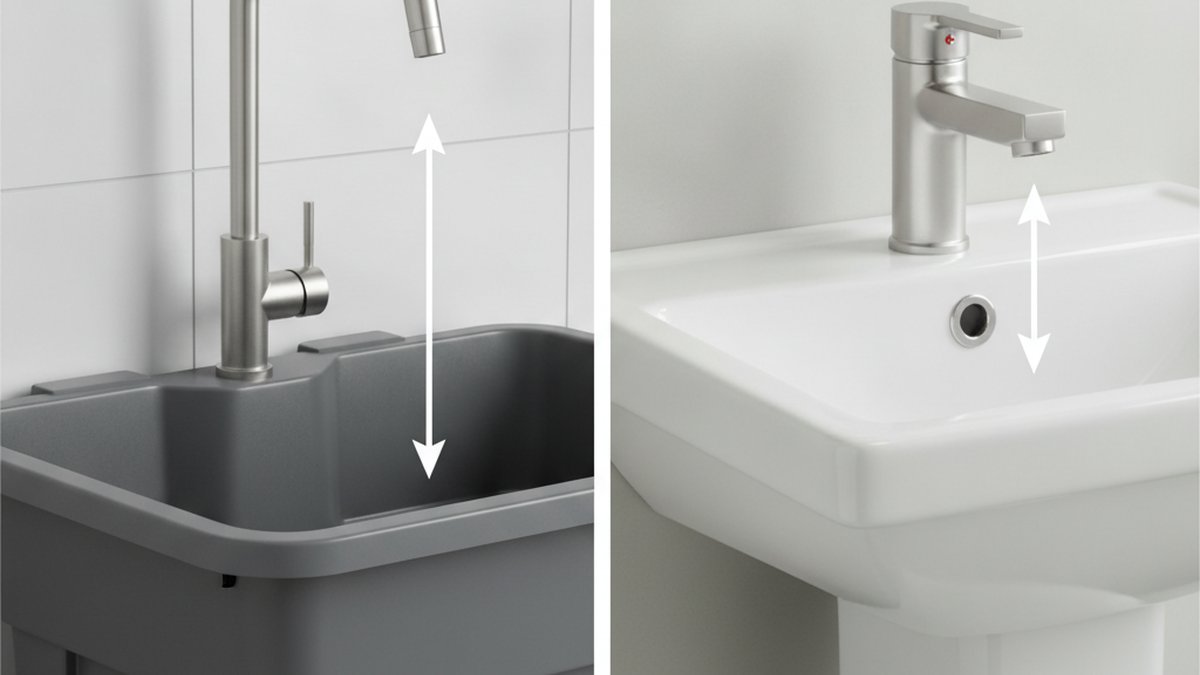
A single hole faucet for utility sink use is exactly what it sounds like — one faucet body that mounts through a single 1⅜-inch (about 35 mm) hole in your utility, laundry, or slop sink, combining hot and cold into one handle or one spout. It’s the most common setup for modern plastic laundry tubs and deep stainless garage basins because those sinks are almost always drilled with a single center hole. The trick is picking one with enough spout height to fill a mop bucket, a body tough enough for cold-garage duty, and mounting hardware that fits the specific hole and deck thickness you actually have.
This guide walks you through hole count, spout clearance, finishes, materials, and the exact specs that matter — plus how to make a single-hole faucet work even if your sink has three holes. Everything here is aimed at real utility-sink questions, not showroom fluff.
What exactly is a single hole faucet for a utility sink — and how is it different from a bathroom one?
A single hole utility faucet is a one-piece unit built for a deep, no-frills basin: taller spout, higher flow, tougher body, and usually a lever or a pull-down sprayer instead of a delicate bathroom handle. It mounts through one hole and needs no separate handles or spread.
The difference from a bathroom single-hole faucet comes down to scale and duty. A bathroom lavatory faucet is designed for gentle handwashing over a shallow sink — short spout, roughly 1.2 GPM flow, and a compact reach. A utility faucet has to fill buckets, rinse paint rollers, wash the dog, and clean muddy boots, so it wants:
- Height: 8 to 12 inches of clearance from deck to spout so a 5-gallon bucket slides underneath.
- Flow: often 1.75–2.2 GPM, faster fill than a bathroom tap.
- Reach and swivel: a spout that swings 360° to cover a wide, deep basin.
- Body toughness: materials that shrug off cold garages, harsh detergents, and the occasional whack from a tool handle.
So while both mount in a single hole, don’t grab a pretty bathroom faucet for the laundry room — it’ll be too short to fit a bucket and too lightweight for the abuse.
Will a single hole faucet fit my utility sink — how do I check the holes?
Check by counting the drilled holes in your sink deck and measuring the diameter. If there’s exactly one hole around 1⅜ inches, a single-hole faucet drops right in. If there are three holes, you can still use a single-hole faucet — you just add an escutcheon (deck plate) to cover the extras.
Here’s the two-minute inspection:
- Count the holes. Utility tubs come in single-hole, or three-hole with 4-inch centerset spacing. Peek under the sink if the top is covered by an old faucet.
- Measure hole diameter. Standard is 1⅜” (35 mm). Some sinks are 1½” (38 mm). Most single-hole faucets fit both; a few need the larger opening.
- Measure deck thickness. Thin steel decks (⅛”) and thick composite tubs (up to 1½”–2″) need mounting studs and a nut long enough to clamp down. Check the faucet’s max deck thickness spec.
- Check clearance behind. Make sure a tall spout won’t hit a shelf, window, or the wall.
If you’ve got three holes and want the clean single-hole look, a deck plate (also called a base plate) bridges 4-inch or even 8-inch spacing and lets one faucet cover all three. If instead you have one leftover hole you want to plug — say from a removed side sprayer — a simple cover plate does the job; our guide on what a chrome faucet plug is and whether you need one to cover an extra sink hole walks through that exact fix.
Single-handle vs. two-handle vs. pull-down: which style is best for a laundry or garage sink?
For most people, a single-handle pull-down is the best utility-sink faucet — one lever controls temperature and flow, and the pull-down sprayer reaches every corner of a deep basin. Choose a two-handle wall-mount only if your sink is fed by exposed hot/cold pipes rather than under-deck supply lines.
Here’s how the common styles stack up for utility use:
| Style | Best for | Spout height | Typical price | Watch-outs |
|---|---|---|---|---|
| Single-handle, fixed gooseneck | Simple laundry tubs, bucket filling | 8″–12″ | $50–$110 | No sprayer; spout must swivel to cover basin |
| Single-handle pull-down sprayer | Garage, pet washing, rinsing gear | 9″–15″ | $70–$170 | Hose needs room under sink; check spray-head weight |
| Two-handle single-hole (mini-widespread) | Precise temp control in one hole | 6″–10″ | $60–$130 | Rarer; confirm it’s truly single-hole |
| Wall-mount two-handle | Sinks with exposed wall pipes | N/A (wall) | $40–$120 | Not a deck-mount; different install entirely |
The single-handle pull-down wins for versatility. You get one-lever operation (easy with wet or soapy hands), a magnetic or clip-docked spray head, and enough hose to fill a bucket sitting on the floor beside the sink. If you’re leaning toward a black finish for that commercial look, the same buying logic in our breakdown of which pull-out kitchen faucet in black to actually buy applies directly to a utility sink — spray-head docking, hose retraction, and finish durability all matter the same way.
What finish and material hold up best in a cold garage or damp laundry room?
For durability, choose a solid brass or 304 stainless steel body with a brushed nickel, stainless, or matte black finish. Those resist corrosion, hide water spots and detergent splashes, and survive temperature swings far better than cheap zinc-alloy or plastic-bodied faucets.
Material matters more than looks in a utility space:
- Solid brass body: the gold standard — corrosion-resistant, handles freeze-thaw cycles, and threads won’t strip. Heaviest and longest-lasting.
- 304 stainless steel: lightweight, rust-resistant, lead-free, and great for a modern commercial look.
- Zinc alloy: cheaper and fine for light use, but more prone to cracking in freezing garages and to internal corrosion over years.
- Ceramic-disc cartridge: non-negotiable inside — it’s what stops drips. A quality ceramic cartridge is rated for 500,000+ open/close cycles.
On finishes: brushed nickel and stainless are the most forgiving with hard water and won’t show every splash. Matte black looks sharp and hides grime, but in very hard water it can show white mineral streaks, so wipe it down occasionally. Chrome is cheapest and easy to clean but shows spots fastest.
One real-world note for garages: if your utility sink shares a wall with an outdoor spigot or an unheated space, cold is your enemy. A faucet body that holds standing water can crack in a hard freeze the same way an outdoor tap does — the physics are identical to what we cover in how an outdoor faucet anti-freeze design keeps pipes from bursting. In freeze-prone garages, drain the supply lines or keep the space above freezing.
How much should I spend — is a $60 utility faucet good enough or should I go higher?
A $60–$90 single-hole utility faucet is genuinely good enough for a laundry room used a few times a week, as long as it has a solid metal body and a ceramic cartridge. Step up to $110–$170 if you want a pull-down sprayer, a lifetime finish warranty, or heavy garage/workshop duty.
Think of it in three tiers:
| Budget tier | What you get | Best fit |
|---|---|---|
| $40–$70 | Basic single-handle gooseneck, often zinc or partial brass, ceramic cartridge | Light laundry use, rental units, backup sinks |
| $80–$130 | Solid brass or stainless body, 360° swivel, better finish warranty, sometimes a sprayer | Daily laundry, pet washing, hobby cleanup — the sweet spot |
| $140–$220+ | Commercial-style pull-down, high-arc, magnetic dock, lifetime warranty | Busy households, workshops, garage utility hubs |
The mistake people make is overspending on a designer bathroom-style faucet that can’t fill a bucket, or underspending on a $25 all-plastic tap that drips within a year. Match the spend to how hard you’ll actually use it. For a laundry sink you fill a bucket in twice a week, the mid-tier is plenty and will outlast the sink.
Can I install a single hole utility faucet myself — and what will I need?
Yes — a single-hole utility faucet is one of the easiest faucets to install, usually 30–45 minutes with basic tools, because there’s only one mounting point and two supply connections. If your shutoff valves and supply lines are already in place, no soldering or special skills are needed.
Here’s the basic sequence:
- Shut off the water at the under-sink valves (or the main) and open the old faucet to relieve pressure.
- Disconnect and remove the old faucet — unthread the supply lines and the mounting nut underneath.
- Feed the new faucet through the single hole, seating its gasket or deck plate on top.
- Tighten the mounting nut from below until snug — don’t overtighten a plastic tub deck.
- Connect supply lines to the hot and cold shutoffs. Confirm you have the right size and length first — getting the connection size right saves a second trip, as our guide on what supply line size a faucet needs and how to get it right explains.
- Turn the water back on slowly, remove the aerator, and run both hot and cold to flush debris. Then check every connection for drips.
Tools you’ll want: an adjustable wrench, a basin wrench (for tight under-sink nuts), plumber’s tape (PTFE) for threaded connections, a bucket, and a towel. If the new faucet trickles instead of flowing after install, the aerator is usually the culprit — leftover debris clogs the screen, a quick fix covered in our piece on why a tap barely trickles and how to fix a blocked aerator.
FAQ
What size hole does a single hole utility faucet need?
Most single-hole utility faucets fit a standard 1⅜-inch (35 mm) hole, and many also fit a 1½-inch (38 mm) opening. Always check the faucet’s spec sheet against your sink’s actual hole diameter and deck thickness before buying.
Can I put a single hole faucet on a sink with three holes?
Yes. Add a deck plate (escutcheon) that spans the standard 4-inch centerset spacing — it covers the two outer holes so a single-hole faucet mounts cleanly in the center. Most utility faucets include a deck plate or offer one as an add-on. If you only need to cap one leftover hole, a simple hole cover or faucet plug works.
How tall should the spout be on a utility sink faucet?
Aim for at least 8 inches of clearance between the sink deck and the underside of the spout so a standard 5-gallon bucket fits underneath. A high-arc gooseneck of 10–14 inches is even better for filling large buckets and washing tall or bulky items.
Do utility faucets come with a sprayer?
Some do. Single-handle pull-down models have a spray head built into the spout that pulls out on a hose — ideal for rinsing gear, pets, and the whole basin. Fixed-spout models don’t have a sprayer but usually swivel 360° to cover the sink. Choose based on whether you rinse a lot of large or awkward items.
What’s the best finish for a utility sink faucet in hard water?
Brushed nickel and stainless steel are the most forgiving in hard water — they hide mineral spots and detergent splashes and are easy to wipe clean. Matte black looks great and hides grime but can show white mineral streaks, so it needs an occasional wipe. Polished chrome shows water spots the fastest.
Is a single-handle or two-handle faucet better for a laundry sink?
A single-handle faucet is usually better for a laundry or utility sink because one lever controls both temperature and flow, which is easier with soapy or full hands. Two-handle single-hole faucets exist for precise temperature control, but they’re rarer and offer no real advantage for basic bucket-filling and cleanup tasks.
The bottom line
A single hole faucet for a utility sink is the simplest, most reliable choice for the vast majority of laundry tubs and garage basins — as long as you match the spout height to your bucket, pick a solid brass or stainless body with a ceramic cartridge, and confirm the hole size and deck thickness before you buy. For most people, a mid-tier single-handle pull-down in stainless or matte black is the faucet that will outlast the sink it’s mounted on.
Author note: This guide was written by the evefaucet product team, drawing on hands-on testing of deck-mount and utility faucets across laundry, garage, and workshop installs. evefaucet designs and manufactures faucets and bathroom fixtures with lead-free, corrosion-resistant materials, and every utility faucet we ship uses a ceramic-disc cartridge tested to industry cycle standards and is backed by our finish-and-function warranty. Specs referenced here (hole sizes, GPM flow, clearance) follow common North American plumbing conventions — always verify against the individual product’s spec sheet and your local code.