 EVE卫浴
EVE卫浴
How Does an Outdoor Faucet Anti Freeze Design Actually Keep Your Pipes From Bursting?
浏览次数:159 分类:公司产品
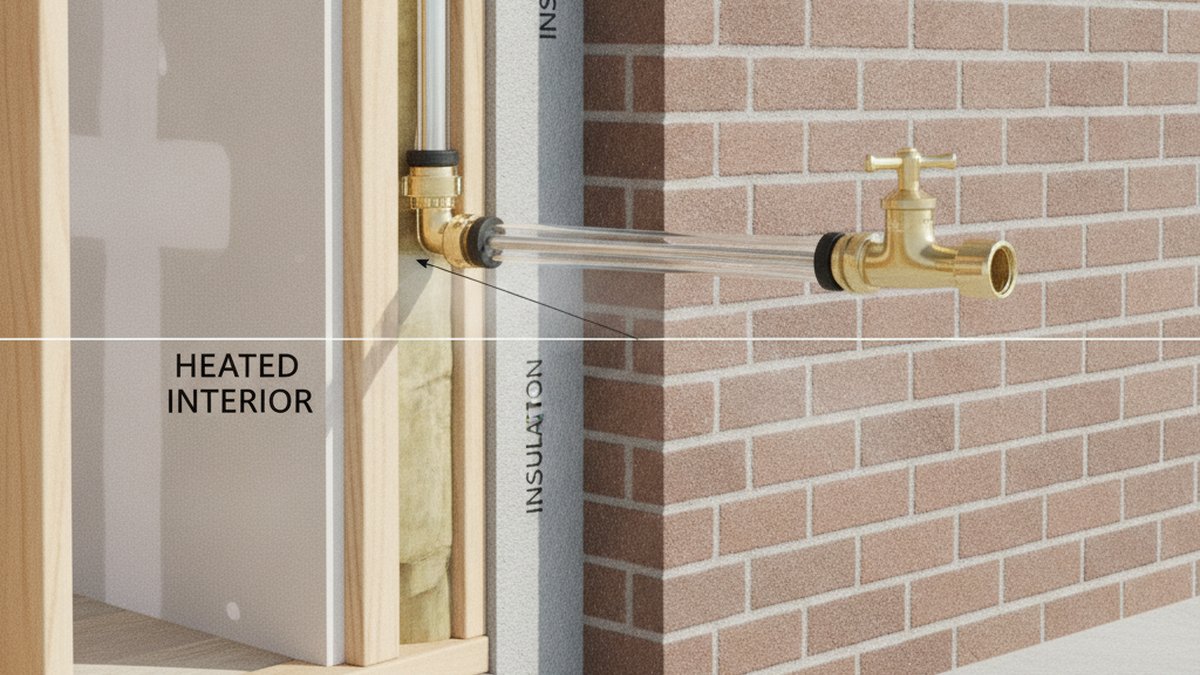
If you’ve ever walked out in spring to a wet basement wall and a cracked wall behind the faucet, you already know why an outdoor faucet anti freeze setup matters. The whole point of a freeze-proof (frost-free) hose bib is simple: it keeps standing water out of the part of the pipe that gets cold. A standard spigot holds water right at the wall, and water expands about 9% when it freezes — enough pressure to split brass or copper. A properly installed anti-freeze faucet drains that water back inside every time you shut it off, so there’s nothing left to freeze and burst.
Below, I’ll walk you through exactly how these faucets work, how they differ from a cheap standard spigot, what length you actually need for your wall, and the mistakes that quietly cancel out the freeze protection you paid for. This is the same guidance we give evefaucet customers who call in every October asking “will this one survive the winter?”
What exactly is an “outdoor faucet anti freeze” (frost-free sillcock)?
A frost-free sillcock is an outdoor faucet with a long stem — usually 4 to 24 inches — that places the actual shut-off valve deep inside the warm wall instead of at the outside spigot. When you turn the handle off, the valve closes indoors, and the water still sitting in the long horizontal tube drains out the front by gravity. That’s the “anti freeze” part: the exposed pipe is empty when it’s cold.
Compare that to a standard hose bib (sometimes called a compression sillcock). On those, the shut-off happens right at the handle, inches from the outside air. Water sits trapped in the wall-side pipe all winter. One hard freeze and that trapped water expands until the pipe splits — often several feet inside the wall where you can’t see it until the thaw floods your basement.
- Frost-free / freeze-proof: valve seat is indoors; exposed section self-drains. Best for any climate with real winters.
- Standard hose bib: valve at the wall; water sits in the cold. Fine only for freeze-free climates or fully drained seasonal lines.
- Anti-siphon vacuum breaker: a small cap on top that prevents dirty hose water from being sucked back into your drinking supply. Most modern anti-freeze faucets include this by code.
How does the anti freeze design actually stop pipes from bursting?
It stops bursts by never letting water pool in the cold zone. Three things have to work together: the deep valve seat, gravity drainage, and a disconnected hose. Get all three right and the freeze has nothing to act on.
Here’s the sequence in plain terms. You shut the handle. The rubber washer at the far end of the stem — inside your warm wall — seals off the supply. The 8 or 10 inches of pipe between that seal and the outside spout is now closed off from the water supply but open to air at the spout. Gravity pulls that leftover water out the front. Within a few seconds the exposed tube is empty. When the temperature drops to 10°F overnight, there’s simply no water in the cold section to expand and crack anything.
The catch — and this is the one that trips people up — is that gravity drainage only works if the faucet is pitched slightly downhill toward the outside and the hose is disconnected. Leave a hose attached and the trapped water can’t drain; it backs up into the stem, freezes, and can still split the pipe even on a “freeze-proof” faucet. More on that below, because it’s the single most common failure we see.
Frost-free vs. standard spigot: which one do you actually need?
If you get any freezing temperatures at all, buy the frost-free one — the price difference is small and a single burst pipe repair costs far more. A standard spigot only makes sense in genuinely frost-free climates (think coastal Florida or Southern California) or on a line you fully shut off and drain from an interior valve each winter.
| Feature | Frost-Free / Anti-Freeze Sillcock | Standard Hose Bib |
|---|---|---|
| Shut-off valve location | Inside heated wall (6–12″+ in) | At the outside wall |
| Self-drains when off | Yes (with proper pitch) | No |
| Burst risk in freezing weather | Very low | High |
| Built-in anti-siphon vacuum breaker | Usually yes | Often no |
| Typical price | $20–$60 | $8–$20 |
| Best for | Any climate with winter freezes | Frost-free climates only |
| Install effort | Moderate (needs correct stem length + pitch) | Easy |
One thing to know: a frost-free faucet is not magic. It’s the correct tool, installed correctly. A frost-free faucet that’s pitched uphill, or has a hose left on, offers about the same protection as a standard spigot — which is to say, not much. Think of the design as the potential for protection, and the install and fall routine as what unlocks it.
What length stem do you need — and how do you measure it?
You need a stem long enough to place the valve seat inside the heated part of your home, past the wall insulation. Measure the thickness of your exterior wall (siding, sheathing, studs, insulation, and interior drywall) and pick a stem that clears it with a few inches to spare. Too short and the valve seat ends up sitting inside cold, uninsulated space — which quietly defeats the whole anti freeze purpose.
- Measure your wall depth from the outside face to the interior surface. A typical 2×4 framed and insulated wall runs about 6–8 inches; a 2×6 wall or one with thick foam can be 10 inches or more.
- Add a buffer. Choose a stem that puts the valve at least a few inches inside the interior wall line so it stays in warm air.
- Common lengths are 6, 8, 10, and 12 inches for homes; longer stems exist for thick masonry or brick walls.
- Match the connection — most residential frost-free sillcocks come with a 1/2″ or 3/4″ MIP/sweat/PEX inlet. Confirm what your supply line uses before you buy.
When in doubt, size up. A stem an inch or two longer than strictly necessary still drains fine as long as it’s pitched correctly, but a stem that’s too short leaves the seal exposed to the cold. If your reach to the connection point is awkward, an outdoor faucet extender can help you position and access the valve without fighting a cramped crawlspace — just make sure any extension doesn’t undo the downward pitch the faucet needs to drain.
How do you install an anti freeze outdoor faucet so it actually drains?
The one rule that matters most: pitch the faucet slightly downhill toward the outside — about a quarter-inch of drop over the length of the stem. That tiny slope is what lets gravity empty the exposed pipe. Beyond that, it’s a straightforward swap for most DIYers with basic plumbing tools.
Here’s the short version of the process:
- Shut off the water to that line at the interior valve and open the old faucet to relieve pressure.
- Remove the old sillcock. Depending on the connection, that means unthreading it, unsweating a soldered joint, or disconnecting a PEX/compression fitting inside.
- Dry-fit the new frost-free faucet and confirm the stem clears the wall and the valve seat lands in heated space.
- Set the pitch. Angle the faucet so the outside end sits slightly lower than the inside end. Verify by eye or with a small level — you want a hair of downhill.
- Connect the supply using the appropriate method (threaded with PTFE tape, soldered, or push-fit), then seal the exterior escutcheon with silicone to keep drafts and water out of the wall.
- Turn the water back on and test: run it, shut it off, and confirm you get a brief last dribble from the spout — that’s the exposed pipe draining, exactly what you want.
That last dribble is your proof the anti freeze design is doing its job. If water keeps trickling long after shut-off, the valve washer may not be seating — a sign the internal stem washer needs adjustment or replacement, similar to how a worn cartridge or washer causes an indoor dripping tap. And if you’re unsure about your existing supply plumbing or want to inspect the guts of a faucet that’s misbehaving, it helps to understand how the cartridge or stem washer inside a faucet handle controls the seal.
Do you still have to winterize a frost-free faucet? (Yes — here’s the routine)
Yes. Even the best anti freeze faucet needs one small fall ritual: disconnect the hose. A connected hose traps water against the valve and blocks the drainage that makes the faucet freeze-proof in the first place. This is the number-one reason “freeze-proof” faucets still burst.
Your simple fall checklist:
- Disconnect every hose before the first hard freeze, and drain and store them.
- Run the faucet briefly, then shut it off and confirm the drain-out dribble.
- Remove any splitters, timers, or quick-connect adapters — these trap water just like a hose does.
- Check the pitch if the faucet has ever leaked when off; settling or a bumped pipe can flatten the slope.
- If you have an interior shut-off with a bleeder cap for that line, closing it and draining adds a second layer of protection for extreme cold.
Do those five things and a quality frost-free sillcock will shrug off winter for years. Skip the hose step and you can crack even a $60 freeze-proof faucet on the first cold snap.
What are the signs your anti freeze faucet has already failed?
The clearest sign is water where it shouldn’t be: a spraying leak inside the wall or a wet spot on the interior wall or ceiling below the faucet — but only when you turn the faucet ON. That’s the tell-tale symptom of a pipe that split over winter. The crack stays sealed while the valve is off, then gushes inside the wall the moment you open it in spring.
Other warning signs:
- Weak or no flow when you open the faucet — the line may be blocked by ice or debris.
- Constant dripping from the spout when it’s supposed to be off — the internal washer isn’t sealing.
- A bulged or split visible pipe section in the basement or crawlspace near the wall penetration.
If you turn on your outdoor faucet in spring and hear water rushing inside the wall but little comes out the spout, shut it off immediately and check for interior leaks before using it again. Catching a split early can save you from serious water damage.
How to choose a quality anti freeze faucet that lasts
Look for solid brass construction, an integrated anti-siphon vacuum breaker, a replaceable stem washer, and a stem length matched to your wall. Cheap pot-metal spigots corrode and seize; a lead-free brass body with a serviceable internal stem will last decades and can be rebuilt rather than replaced when the washer wears.
A few buying tips from experience: pick a model with a replaceable internal seal so you can service it instead of tearing out the whole unit; confirm the connection type matches your supply (sweat, MIP, or PEX); and if this is your first plumbing purchase, buying from a source that clearly lists specs and stands behind the product matters more than saving a couple of dollars. If you’d rather see and handle fittings before buying, our guide to finding a quality brass faucet nearby versus ordering online walks through the trade-offs.
FAQ
Can a frost-free faucet still freeze and burst?
Yes — most often when a hose is left attached. The hose traps water in the stem and blocks drainage, so water freezes right at the valve and can split the pipe. It can also freeze if the faucet was installed pitched uphill (so it can’t self-drain) or if the stem is too short and the valve seat sits in cold, uninsulated space. Fix those three things and burst risk drops close to zero.
How long does an anti freeze outdoor faucet need to be?
Long enough for the shut-off valve to sit inside your heated wall. Measure your total exterior wall thickness and add a few inches of buffer. Most homes need a 6″ to 12″ stem; a standard insulated 2×4 wall usually takes an 8″ model, while thick masonry or 2×6 walls may need 10–12″ or longer.
Do I still need to shut off the water inside for a frost-free faucet?
Not necessarily, but it’s a smart backup for severe cold. A properly installed and pitched frost-free faucet with the hose removed drains itself and doesn’t need the interior line shut off in most winters. In extreme climates, closing an interior shut-off and draining via a bleeder cap adds a reliable second layer of protection.
Which way do I turn off an outdoor faucet for winter?
Turn the handle clockwise (righty-tighty) until it stops to close the valve, disconnect the hose, then briefly confirm you get a small drain-out dribble from the spout. That dribble means the exposed pipe emptied. If it keeps dripping steadily, the internal washer isn’t sealing and should be serviced before winter.
Is an anti-siphon vacuum breaker the same as anti freeze protection?
No — they solve different problems. An anti-siphon vacuum breaker prevents contaminated hose water from being drawn back into your drinking supply (backflow), which is a health/code requirement. The anti freeze (frost-free) design prevents your pipe from bursting in the cold. Most modern outdoor faucets include both, but they’re separate features.
Can I replace a standard spigot with an anti freeze one myself?
Usually yes, if you’re comfortable with basic plumbing. It’s a moderate DIY job: shut off and drain the line, remove the old sillcock, fit the new frost-free unit with the correct stem length and a slight downward pitch, connect the supply, and test for the drain-out dribble. The trickiest parts are matching the connection type and getting the pitch right — both are what make the freeze protection actually work.
Author note: This guide was written by the evefaucet product team, drawing on years of helping homeowners select and install outdoor faucets across cold and mild climates. evefaucet designs and sells faucets and bathroom fixtures built to modern plumbing standards; our lead-free brass sillcocks are pressure-tested and backed by warranty, and every model lists its stem length, connection type, and backflow certification so you can match the faucet to your wall and code the first time.