 EVE卫浴
EVE卫浴
Does a Brushed Nickel Faucet Go With a Stainless Steel Sink? (And How Do You Make It Look Intentional?)
浏览次数:261 分类:公司产品
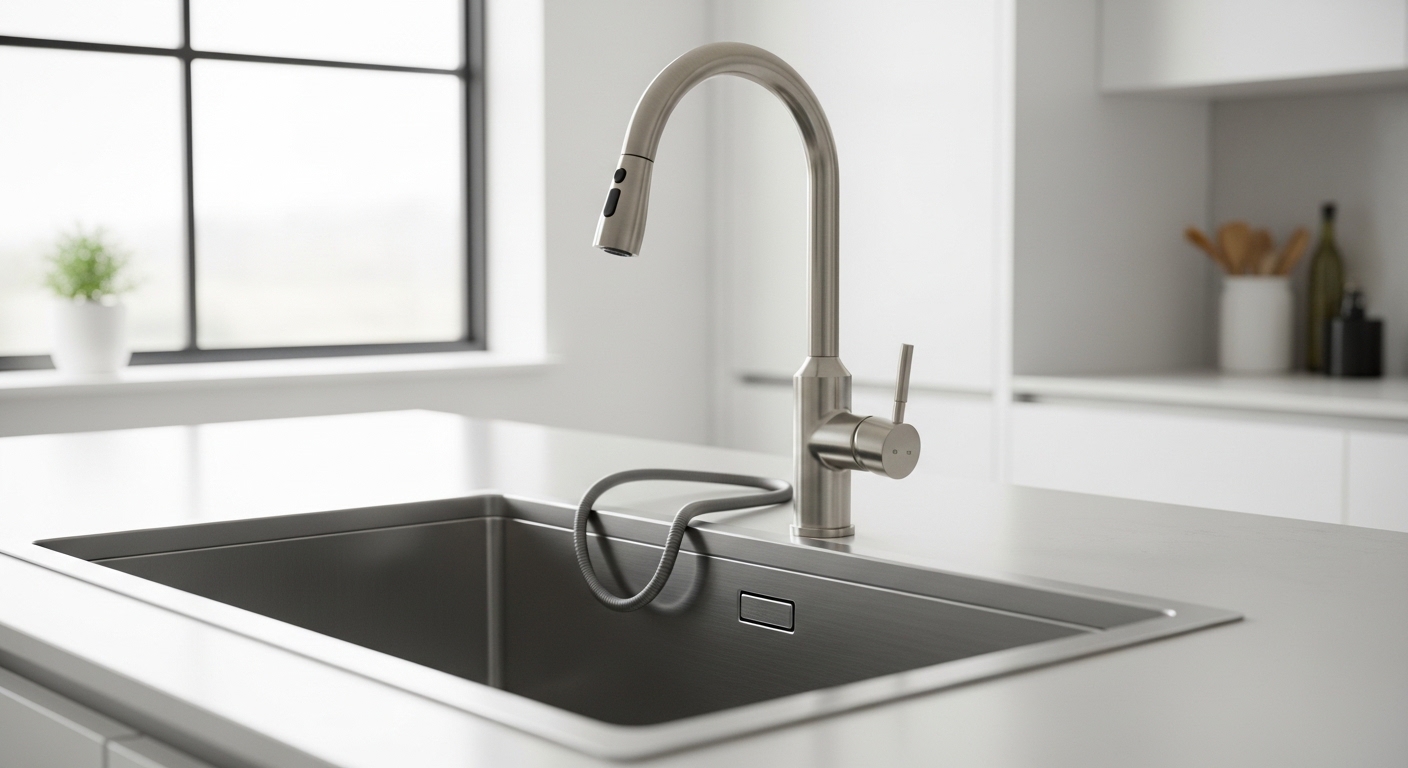
So, does a brushed nickel faucet go with a stainless steel sink? Absolutely — and it’s actually one of the safest, most forgiving finish decisions you can make. The reason people hesitate is understandable: you assume “matching metals” means the faucet and sink have to be the exact same color. They don’t. Kitchen sinks and faucets are almost never a perfect metal-to-metal match, even when a brand sells them together, because they’re made from different base materials with different manufacturing finishes. What actually makes a kitchen look pulled-together is tone harmony and sheen harmony — and brushed nickel and stainless steel share both.
Below, I’ll walk you through exactly why the pairing works, the one scenario where it can look slightly off (and how to fix it), and how to style the rest of your kitchen so the combo looks like a designer chose it on purpose.
Why do brushed nickel and stainless steel actually look good together?
They look good together because they’re close cousins on the metal color wheel — both are cool-to-neutral silvers with a soft, matte, non-mirror finish. When two metals share the same undertone and the same sheen level, your eye reads them as belonging to the same “family,” even if one is a hair warmer or cooler than the other. That’s the whole secret.
Here’s the breakdown of what your eye is really judging:
- Undertone: Stainless steel typically has a very slightly warm, grayish undertone. Brushed nickel has a warm, faintly golden-gray undertone. Both lean warm-neutral, so they harmonize instead of clashing (unlike, say, polished chrome, which is distinctly cool and bright).
- Sheen: Brushed nickel is a satin, low-glare finish with fine directional brush marks. Most stainless sinks — especially satin or “brushed” stainless — have that same muted, non-reflective quality. Matching sheen matters more than matching exact color.
- Fingerprint behavior: Both finishes hide smudges and water spots far better than shiny chrome or glossy black, so they age gracefully side by side.
Because they’re so close, the difference between them is subtle enough to look intentional. Designers call this a “tone-on-tone” pairing — you get a little visual depth (the faucet doesn’t just disappear into the sink) without the jarring contrast you’d get from, say, matte black on stainless.
Won’t the slight color difference between them look like a mistake?
No — a small, visible difference is a feature, not a flaw. If your faucet and sink were the exact same shade, the faucet would blend in and lose all presence. The gentle contrast between brushed nickel’s warmer silver and stainless’s cooler silver is what gives the faucet a defined, sculptural look against the sink basin.
The only time the difference can read as “off” is when a bright, mirror-polished stainless sink meets a matte brushed nickel faucet. In that case it’s not the color that clashes — it’s the sheen mismatch. A glossy, reflective sink next to a flat satin faucet can look slightly unbalanced because one bounces light and the other absorbs it.
The fix is easy:
- Choose a satin or brushed stainless sink instead of a high-polish one. Most modern undermount sinks are already satin, so you’re likely fine.
- Or lean into the contrast on purpose by repeating the polished note elsewhere (polished nickel cabinet pulls, a shiny kettle) so it looks styled rather than accidental.
- Add a “bridge” element — a soap dispenser or drain flange in brushed nickel ties the faucet visually to the sink zone.
This is the same principle behind pairing metals with dark sinks — the trick is controlling sheen and repetition, not chasing an impossible perfect match. If you’re weighing a bold contrast instead, it’s worth reading how a bright tap reads against a dark basin in our guide on whether a chrome tap on a black sink actually looks good, because the same sheen-and-repetition rules apply there too.
Brushed nickel vs. other faucet finishes on a stainless sink — which pairs best?
Brushed nickel is the safest all-around choice, but it’s not the only finish that works with stainless. Here’s an honest comparison of the most common faucet finishes against a stainless steel sink, so you can see where brushed nickel lands.
| Faucet Finish | Match with Stainless Sink | Best For | Watch Out For |
|---|---|---|---|
| Brushed / Satin Nickel | Excellent — tone & sheen both align | Warm, cohesive, low-maintenance kitchens | Avoid pairing with a mirror-polished sink |
| Stainless Steel (PVD) | Excellent — closest literal match | A near-seamless, monochrome look | Can look flat if the faucet blends in too much |
| Polished Chrome | Good — but cooler and shinier | Bright, crisp, contemporary spaces | Sheen mismatch with satin sinks; shows spots |
| Matte Black | Good — high contrast, intentional | Modern, statement kitchens | Needs black accents elsewhere to look styled |
| Champagne Bronze / Gold | Fair — bold mixed-metal move | Warm, luxe, curated kitchens | Requires repeating the gold in hardware/lighting |
| Oil-Rubbed Bronze | Fair — very warm vs. cool sink | Traditional / rustic kitchens | Can look disconnected without warm accents |
The takeaway: brushed nickel and PVD stainless are the two “you basically can’t get it wrong” options. Everything below them requires you to intentionally repeat that finish elsewhere in the room for it to look deliberate. If you want the closest literal match instead of a subtle contrast, a true stainless-finish faucet is worth a look — our roundup of the best single-handle pull-down sprayer kitchen faucets covers several models that come in both brushed nickel and stainless.
What’s the real difference between “brushed nickel” and “stainless steel” as finishes?
The core difference: stainless steel is a material, while brushed nickel is usually a plated finish over brass or zinc. Understanding this clears up a lot of confusion.
Your sink is (usually) made of solid stainless steel alloy — the metal goes all the way through. Its “look” comes from how the surface is treated: bead-blasted, satin-brushed, or polished. A brushed nickel faucet, on the other hand, is typically a brass or zinc body coated with a layer of nickel that’s then given a fine brushed texture, sometimes sealed with a PVD (physical vapor deposition) topcoat for durability.
Why this matters for you:
- Color: Nickel plating is slightly warmer and more golden than raw stainless. That’s the subtle tonal gap you’ll see — and it’s what makes the pairing look layered rather than flat.
- Durability: A quality PVD-coated brushed nickel faucet resists corrosion and tarnish extremely well. Cheaper electroplated finishes can wear at high-touch spots over years. Always check whether the finish is PVD-sealed.
- Cleaning: Both wipe clean with mild soap and water. Skip abrasive pads and harsh acidic cleaners on either finish — they can dull the brushed texture.
This is also why a “stainless steel faucet” and a “stainless steel sink” often don’t match perfectly either — the faucet is usually a stainless-look PVD finish over brass, not the same alloy as the sink. So worrying that brushed nickel won’t match is a bit of a false alarm: nothing matches stainless perfectly except stainless itself, and even then it’s rarely identical.
How do I style the rest of my kitchen so the combo looks intentional?
Pick one metal family and repeat it at least three times around the room — that’s the rule that makes any mixed-metal kitchen look designed instead of accidental. With brushed nickel and stainless, you’re already in the “brushed/satin silver” family, so you just need to echo it.
Here’s a simple, repeatable formula:
- Anchor with the faucet. Your brushed nickel faucet is the visual star at the sink. Let it lead.
- Repeat the finish 2–3 more times. Cabinet pulls, drawer knobs, the soap dispenser, or a pot filler in brushed nickel or brushed stainless all reinforce the family.
- Let the sink be neutral. Stainless is a workhorse neutral — it plays nicely with almost anything, so you don’t have to “match” it, just harmonize around it.
- Keep sheen consistent. If your hardware is satin, keep your lighting and appliance finishes satin too, so nothing screams for attention.
- Add one warm accent if you want depth. A single warm element — wood cutting boards, a brass utensil holder — makes the cool silvers feel richer without breaking the scheme.
You don’t have to be rigid about it. Mixed metals are very on-trend, and a controlled two-metal palette (brushed nickel + stainless, or brushed nickel + matte black) almost always looks more expensive than a flat single-finish room. The key word is controlled — repetition is what turns “a bunch of different metals” into “a curated palette.”
What if my sink and faucet have to share the same three mounting holes?
Finish aside, make sure your brushed nickel faucet physically fits your sink’s deck configuration before you fall in love with a look. A gorgeous finish match means nothing if the faucet doesn’t fit the holes.
Most stainless kitchen sinks come pre-punched with one to four holes. A single-handle pull-down faucet needs just one hole; if your sink has extra holes, you’ll want to cover them or use them for a soap dispenser or side sprayer — ideally in matching brushed nickel. If you’re mixing and matching sink and faucet from different brands, confirm:
- Number of deck holes and their spacing (single-hole vs. 3-hole/8-inch spread).
- Faucet hole diameter — most standard faucets need roughly a 1⅜” hole.
- Whether you need a deck plate (escutcheon) in matching brushed nickel to cover unused holes cleanly.
If you’re not sure your sink’s holes line up with the faucet you want, our explainer on the right 3-hole faucet hole size and whether it’ll fit your sink walks through the exact measurements. Getting the finish right is the fun part; getting the fit right is what actually lets you install it.
Does the same rule apply to bathroom sinks and vessel sinks?
Yes — brushed nickel pairs just as well with a stainless steel bathroom or vessel sink, and the logic is identical: tone and sheen harmony. In a bathroom, the stakes are lower because the sink is smaller and the faucet is the dominant fixture, so the faucet’s finish tends to lead the whole vanity’s palette anyway.
A few bathroom-specific notes:
- Vessel sinks change the proportions. A tall brushed nickel vessel faucet over a stainless vessel bowl is a striking, cohesive look — the height of the faucet becomes the focal point.
- Match the drain and pop-up. In a bathroom, the visible drain assembly should be brushed nickel to tie the faucet to the sink zone.
- Coordinate towel bars and the mirror frame in the same brushed/satin family for a finished look.
If a stainless vessel bowl is on your shortlist, it’s worth confirming the faucet height and reach suit an above-counter basin first — our guide on whether a stainless steel vessel faucet is the right choice for your above-counter sink covers the sizing details so your brushed nickel faucet actually clears the rim comfortably.
Will a brushed nickel faucet on a stainless sink hurt my resale value or date my kitchen?
No — if anything, it’s one of the most timeless, resale-friendly combinations you can pick. Brushed nickel and stainless are both neutral, broadly appealing, and have stayed in style for well over two decades. Real estate agents consistently flag “stainless everything” as a safe, buyer-pleasing choice, and brushed nickel is warm enough to keep the kitchen from feeling cold or clinical.
Trendier finishes — matte black, champagne bronze, gunmetal — can look fantastic, but they’re more likely to feel dated to a future buyer or to you in ten years. Brushed nickel on stainless is the “little black dress” of kitchen finishes: quietly correct, hard to get wrong, easy to live with. If you’re renovating to sell, or you just don’t want to redo this decision in five years, it’s the low-risk pick.
Quick answer recap: is this pairing a yes?
It’s a clear yes. Brushed nickel and stainless steel share a warm-neutral undertone and a soft, matte sheen, which is exactly what makes two different metals read as one intentional palette. The only thing to watch is pairing matte brushed nickel with a super-glossy polished sink — and even that is easily solved by choosing a satin sink or repeating the shiny note elsewhere. Add a couple of brushed-nickel touches around the room, confirm the faucet fits your sink’s holes, and you’ve got a combination that looks designed, cleans easily, and holds its value.
FAQ
Does a brushed nickel faucet match a stainless steel sink exactly?
Not exactly — and that’s a good thing. Brushed nickel is a touch warmer and more golden than stainless steel, which gives the faucet subtle definition against the sink instead of letting it disappear. The two share the same low, satin sheen, so they harmonize as an intentional tone-on-tone pairing. A perfect metal-to-metal match is neither necessary nor typical, even between a stainless faucet and a stainless sink.
Should I choose brushed nickel or stainless steel for my kitchen faucet?
Choose stainless (PVD) if you want the closest literal match to your sink and a nearly monochrome look; choose brushed nickel if you want a slightly warmer tone with a bit of contrast so the faucet stands out. Both are excellent, durable, fingerprint-resistant choices. Brushed nickel is marginally warmer and more forgiving alongside wood and warm accents, which is why many designers lean toward it.
Can I mix brushed nickel and stainless steel with other metals in the same kitchen?
Yes, as long as you keep it controlled. The safe formula is to pick one secondary metal (like matte black or brushed brass), repeat it at least two or three times — cabinet pulls, lighting, bar stools — and keep the sheen levels consistent. Mixed metals look intentional when finishes are repeated, and accidental when a single odd finish appears just once.
Does brushed nickel show water spots and fingerprints on a stainless sink setup?
Far less than polished chrome or glossy finishes. Both brushed nickel and satin stainless have a fine textured surface that scatters light and hides smudges and hard-water spots well. Wipe with mild soap and water and dry with a soft cloth; avoid abrasive pads and acidic or ammonia-based cleaners, which can dull the brushed texture over time.
Is brushed nickel more expensive than a stainless steel faucet?
They’re usually in the same price range, and the finish is rarely the main cost driver — the faucet’s build quality, valve/cartridge, and spray technology matter far more. Look for a solid brass body and a PVD-sealed finish (in either color) for the best long-term durability. A quality PVD brushed nickel faucet should resist tarnish and wear for many years and is often backed by a limited lifetime finish warranty.
What faucet finish goes best with a stainless steel sink if not brushed nickel?
A true stainless-look (PVD) faucet is the closest match, followed by polished chrome for a brighter, cooler look. Matte black works well as a high-contrast, modern statement if you repeat black elsewhere. Warmer finishes like champagne bronze or oil-rubbed bronze can work but require intentional styling with matching warm accents to avoid looking disconnected.
About the author: This guide was written by the evefaucet product team, drawing on years of hands-on experience helping homeowners match faucets to sinks across kitchen and bathroom renovations. At evefaucet, we design and test faucets and fixtures against industry standards for finish durability and flow performance, and we back our finishes with a limited lifetime finish warranty — because a pairing should still look great years after installation, not just on day one. Every finish recommendation here reflects how these metals actually age and clean in real homes, not just how they look in a showroom.