 EVE卫浴
EVE卫浴
What Is a Chrome Faucet Plug — and Do You Need One to Cover That Extra Sink Hole?
浏览次数:322 分类:公司产品
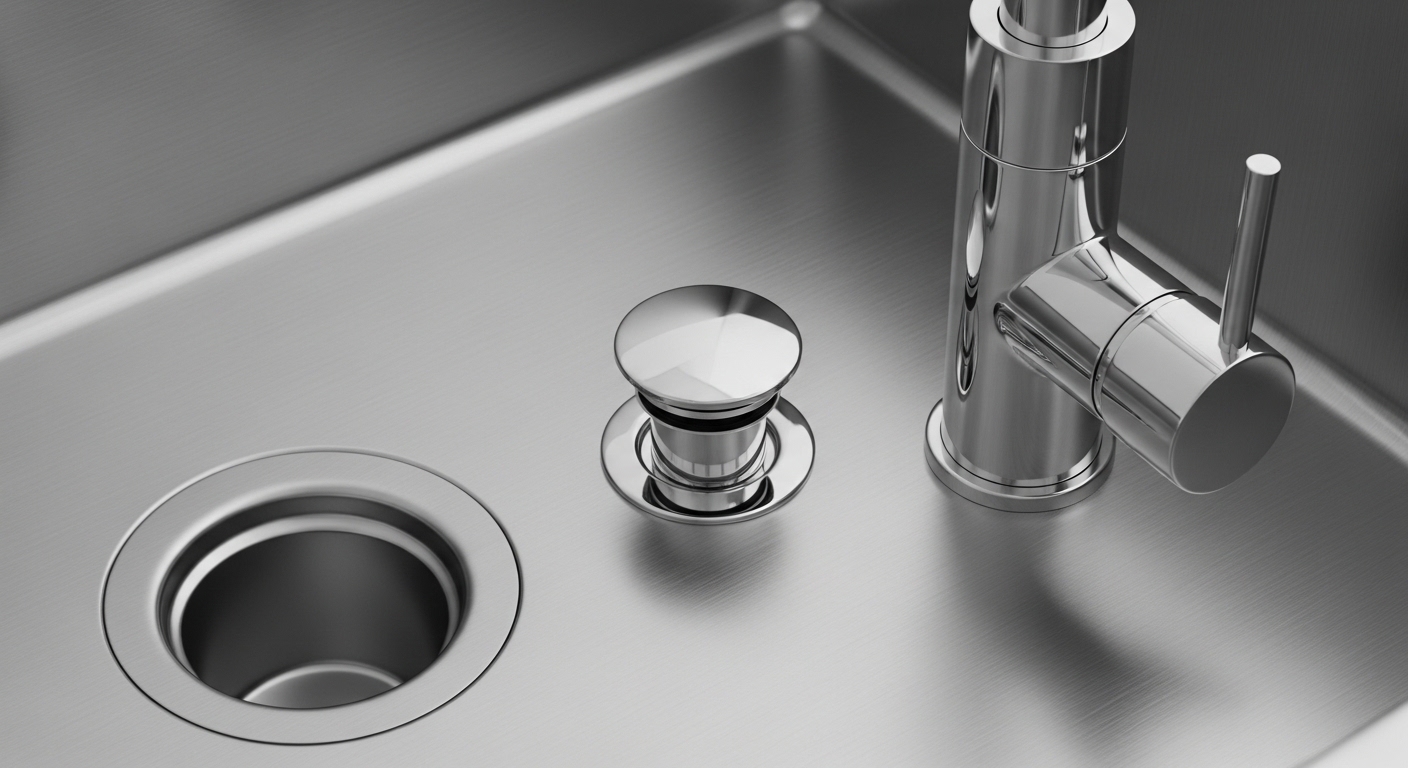
If you just pulled off an old sprayer or side handle and you’re staring at a naked hole in your countertop, a chrome faucet plug is almost certainly the fix you’re looking for. It’s one of the cheapest, most satisfying upgrades in the whole bathroom-and-kitchen world: no plumber, no re-drilling, no epoxy — just a polished metal button that snaps the look of your sink back together. But “chrome faucet plug” gets used for two slightly different products, and buying the wrong one is the difference between a 10-minute job and a leaky annoyance. Let’s clear that up first, then walk through sizing, finishes, installation, and which one to actually buy.
What exactly is a chrome faucet plug — a hole cover or a drain stopper?
It’s a hole cover — not a drain stopper. When people search “chrome faucet plug,” 90% of the time they mean a sink deck hole cover: a chrome dome or disc that plugs an unused mounting hole on the top of the sink or countertop. The other 10% mean a chrome drain plug (the stopper that sits in the basin). This article is about the first kind — the deck hole cover — because that’s the “faucet” plug people are hunting for after a faucet swap.
Here’s why the confusion matters: a deck hole cover mounts from the top down and seals against the sink surface with a rubber or silicone gasket, held by a threaded post and a nut you tighten from underneath. A drain stopper does the opposite job entirely. If you order a chrome faucet plug expecting it to stop water in your basin, you’ll be disappointed. If you order it to hide an empty faucet hole, it’s exactly right.
Most standard faucet holes in North American sinks are 1⅜ inch to 1½ inch (about 35mm) in diameter. A quality chrome faucet plug is built to cover that range, and the better ones include an adjustable or oversized gasket so a single plug fits both 1⅜” and 1½” holes.
Why would I have an extra hole in my sink in the first place?
You have an extra hole because your old faucet used more holes than your new one does — that’s the single most common reason. Sinks are pre-drilled at the factory for a specific faucet layout, and when you change faucet styles, the hole count often doesn’t match anymore.
The usual culprits:
- You went from a 3-hole faucet to a single-hole faucet. The new faucet covers the center hole; the two outer holes (where the separate handles or spout sat) are now empty.
- You removed a side sprayer. Pull-down faucets have the sprayer built into the spout, so the old dedicated sprayer hole is left orphaned.
- You ditched the soap dispenser or air gap. Same deal — an accessory hole with nothing in it.
- You have a 4-hole sink and only need 1–2. Common on older kitchen sinks drilled for faucet + sprayer + soap + hot-water dispenser.
Before you buy, count your holes and know your layout. If you’re unsure whether your holes are standard spacing, our guide on the right 3-hole faucet hole size and whether it’ll fit your sink walks through the exact measurements so you don’t end up with a plug that’s too small to seal or too big to seat.
What size chrome faucet plug do I need, and how do I measure the hole?
Measure the hole’s diameter across the widest point — most sink faucet holes are 1⅜” (35mm) or 1½” (38mm), and the vast majority of chrome faucet plugs are made to cover that exact range. Grab a tape measure or ruler, lay it across the empty hole, and read the inside-edge-to-inside-edge distance.
Then check three things before you buy:
- Hole diameter — must fall within the plug’s rated range (a good plug lists something like “fits 1.25″–1.5″ holes”).
- Deck thickness — the threaded post and nut have to reach through your countertop or sink deck. Thin stainless sinks are fine; a thick granite or quartz counter (¾”–1¼”) needs a plug with a longer stud and enough thread. Confirm the plug’s maximum deck thickness.
- Underside clearance — you need room to spin the nut on beneath the sink. Tight cabinets are usually fine because the hardware is small, but it’s worth a glance.
If your hole is oddly sized — say a European sink at 40mm, or an oversized 1¾” cut — read the fitment carefully. A standard chrome faucet plug won’t cover a hole larger than its gasket, and a gasket that’s too big won’t compress into a small hole. When in doubt, measure twice and match the spec sheet.
Which finish should I pick — and will chrome actually match my faucet?
Pick chrome if your faucet, drain, and handles read as bright, mirror-like silver; pick a different finish if your fixtures are brushed, matte, or warm-toned. Chrome is the safest, most universal finish because it pairs with the largest number of existing faucets — but “silver-ish” is not a guarantee it’ll match.
Here’s the honest breakdown of when chrome works and when it clashes:
| Your existing faucet finish | Does a chrome plug match? | Better alternative |
|---|---|---|
| Polished chrome | Yes — perfect, mirror-bright match | — |
| Polished / bright stainless | Close — very slightly warmer than chrome but usually fine | Brushed nickel plug if faucet is satin |
| Brushed nickel / satin | No — chrome looks too shiny beside a matte finish | Brushed nickel plug |
| Matte black | No — chrome pops as a bright dot | Matte black plug |
| Champagne bronze / gold | No — cool silver clashes with warm gold | Brushed gold / bronze plug |
| Oil-rubbed bronze | No | Oil-rubbed bronze plug |
One thing people forget: chrome and polished stainless look almost identical from three feet away but subtly different up close — chrome is bluer and mirror-bright, stainless is a touch warmer. On most kitchen sinks nobody will ever notice. On a bathroom vanity where your face is 12 inches from the fixture, it can be visible. If you’re deliberately mixing metals for a designer look, that can absolutely work — we cover exactly when contrasting metals succeed in our piece on whether a chrome tap on a black sink actually looks good or is a mistake.
How do I install a chrome faucet plug myself — no plumber?
You install it top-down in about 5–10 minutes with just your hands and maybe an adjustable wrench — there’s no water line to touch, so a slip-up can’t flood anything. This is genuinely one of the easiest fixture jobs there is. Here’s the sequence:
- Clean the hole and surrounding deck. Wipe off old gunk, mineral scale, or dried plumber’s putty so the gasket seats flat. A clean surface is the whole game for a watertight seal.
- Disassemble the plug. A typical chrome faucet plug has: the chrome cap, a rubber/silicone gasket, a threaded post, a mounting washer, and a nut. Loosen the nut so the post can drop through the hole.
- Insert from the top. Set the gasket under the chrome cap, push the post down through the empty hole. The cap and gasket stay on top; the threaded post pokes through underneath.
- Tighten from below. Reach under the sink, slide on the washer, thread the nut up the post, and snug it by hand — then a quarter-turn with a wrench. Don’t overtighten; you’ll compress the gasket enough to seal without cracking anything.
- Check the seal. Run water over the top of the plug and feel underneath for drips. If it’s dry, you’re done.
Some cheaper plugs use a spring-clip or expanding rubber grommet instead of a threaded nut. Those are faster (just push in) but less secure over time and can pop loose if the hole is on the larger end of tolerance. For a permanent, leak-proof result, the threaded post-and-nut design is worth the extra couple of dollars.
Chrome faucet plug vs. deck plate vs. escutcheon — what’s the difference?
A chrome faucet plug fills ONE hole; a deck plate (escutcheon) is a long cover that spans MULTIPLE holes under a single faucet. They solve related problems but aren’t interchangeable. Picking the wrong one leaves you with either a gap or an oversized plate that looks wrong.
| Product | What it does | Best when |
|---|---|---|
| Chrome faucet plug (hole cover) | Fills a single unused hole | One or two isolated empty holes, faucet stays put |
| Deck plate / escutcheon | Covers 3 holes (8″ or 4″ spread) under one faucet base | Installing a single-hole faucet on a 3-hole sink and hiding all extra holes at once |
| Sink hole cover set | Multiple plugs bundled together | Several scattered holes in different spots |
Rule of thumb: if your empty holes are grouped tightly under where a faucet base sits, a deck plate is cleaner and hides them all in one sweep. If the empty hole is off on its own — like an old sprayer hole to the right of the faucet — a single chrome faucet plug is the right call. If you’re deciding between the two for a specific brand setup, our guide on whether you need a deck plate for a Moen faucet and how to install one is a good companion read. And if you’re still choosing your faucet layout altogether, the centerset vs. widespread vs. single-hole comparison explains how hole count drives every one of these accessory decisions.
Will a chrome faucet plug leak or rust over time?
A properly installed, quality chrome faucet plug won’t leak or rust — but a cheap one with thin plating over pot metal can pit and spot within a year, especially in hard-water areas. The finish is what separates a plug that still looks new in five years from one that looks corroded in one.
What to look for in a durable plug:
- Solid brass or stainless base metal under the chrome plating — not zinc alloy or “pot metal,” which corrodes once the plating chips.
- Multi-layer electroplated chrome (nickel-chrome) rather than a single thin flash coat.
- A silicone or EPDM rubber gasket rather than cheap foam — silicone stays flexible and keeps sealing for years.
- Rated to a recognized finish standard like ASME A112.18.1 / CSA B125.1, the same durability and corrosion benchmark used for faucets themselves.
Hard water is the real enemy — not of the seal, but of the shine. Mineral deposits leave white spots on any chrome fixture. A quick wipe with a soft cloth after cleaning, or an occasional pass with diluted vinegar, keeps it mirror-bright. The seal itself, if the gasket is good silicone and the nut is snug, will outlast the rest of your sink.
Author note & why trust this guide
This guide was written by the product team at evefaucet, a dedicated faucet and bathroom-fixtures brand. We design, pressure-test, and finish-test kitchen and bathroom fixtures — including deck accessories like hole covers and deck plates — against recognized North American plumbing standards (ASME A112.18.1 / CSA B125.1) for finish durability and leak resistance, and we back our fixtures with a manufacturer warranty. The sizing, finish-matching, and installation advice here reflects hands-on experience fitting these plugs to real 1⅜”–1½” sink holes across stainless, granite, and quartz decks. When we say a threaded post-and-nut plug outlasts a push-in grommet, it’s because we’ve watched both in the field.
FAQ
What size hole does a standard chrome faucet plug fit?
Most standard chrome faucet plugs fit sink holes from 1⅜ inch to 1½ inch (35mm–38mm) in diameter, which covers the vast majority of pre-drilled kitchen and bathroom sinks. Measure across the widest point of the empty hole before buying, and check the plug’s rated range plus its maximum deck thickness so the nut reaches through your countertop.
Can I use a chrome faucet plug to cover a sprayer hole after installing a pull-down faucet?
Yes — that’s one of the most common uses. When you install a pull-down faucet with the sprayer built into the spout, the old dedicated side-sprayer hole is left empty, and a chrome faucet plug fills it in about 5–10 minutes with a watertight top-down seal. Just make sure the plug’s finish matches your new faucet.
Do chrome faucet plugs come in other finishes if my faucet isn’t chrome?
Yes. The same hole-cover design is sold in brushed nickel, matte black, champagne/brushed gold, oil-rubbed bronze, and stainless. Chrome only matches bright, mirror-polished silver fixtures — if your faucet is satin, matte, or warm-toned, buy the matching finish instead so the plug doesn’t stand out as a mismatched dot.
Is a chrome faucet plug the same as a chrome drain stopper?
No. A chrome faucet plug is a deck hole cover that fills an unused faucet mounting hole on top of the sink; a drain stopper sits in the basin and holds water. They mount differently and aren’t interchangeable. If you’re covering an empty hole left by a removed faucet or accessory, the hole cover is what you want.
Will installing a chrome faucet plug damage my sink or countertop?
No — installation requires no drilling, cutting, or plumbing changes. The plug uses the existing hole and seals with a rubber gasket compressed by a nut you hand-tighten from underneath. It’s fully reversible: if you ever add an accessory back, just unthread the nut and remove the plug, leaving the original hole intact.
How much should a good chrome faucet plug cost?
A quality chrome faucet plug with a solid brass or stainless base and a silicone gasket runs about $8–$25 for a single plug, or a bit more for a multi-pack. Avoid the very cheapest zinc-alloy plugs under a few dollars — the thin plating tends to pit and spot within a year, especially in hard-water homes.