 EVE卫浴
EVE卫浴
What’s the Best Bathroom Faucet for a Pedestal Sink — and How Do You Pick the Right One?
浏览次数:12 分类:Compare
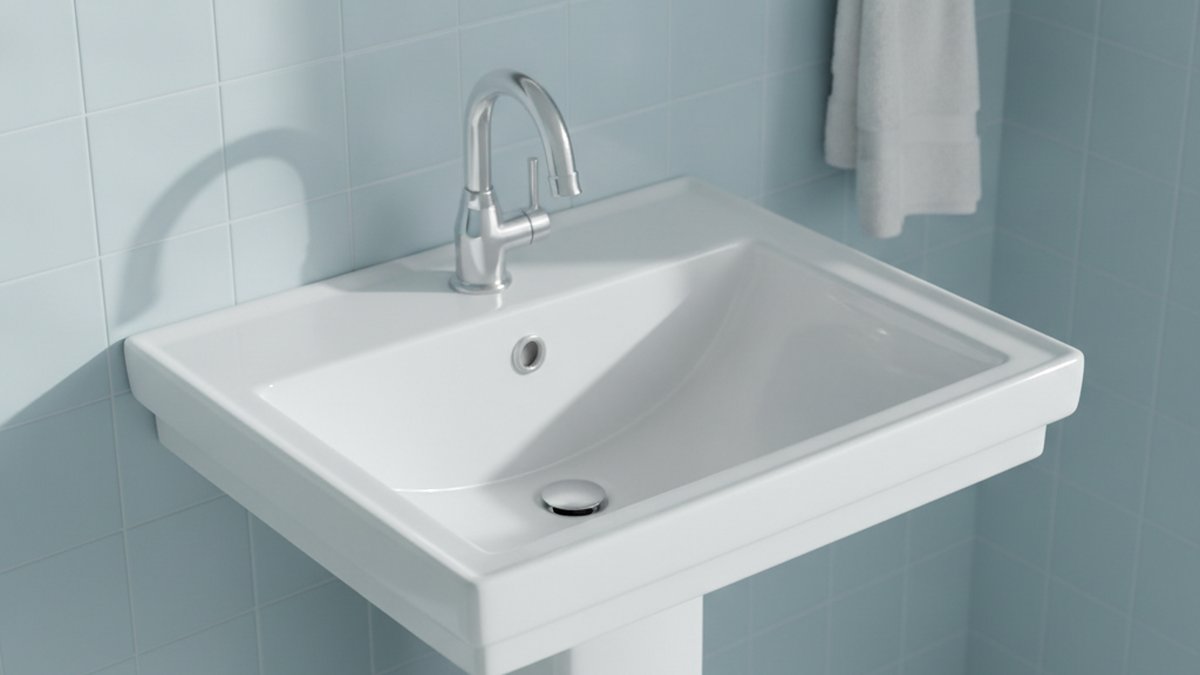
Choosing the best bathroom faucet for pedestal sink setups comes down to one thing most buyers overlook until the box is open: the hole configuration. A pedestal sink is tight, shallow, and usually pre-drilled for a specific faucet type, so the “prettiest” faucet on the shelf can be physically impossible to install. Get the drilling and proportions right first, then choose finish and features. This guide walks you through exactly how to match a faucet to your pedestal sink, what specs actually matter, and which faucet types win in real bathrooms.
What kind of faucet fits a pedestal sink — single-hole, centerset, or widespread?
It depends entirely on how many holes your sink is drilled for — that’s the deciding factor, not your taste. A pedestal sink almost always comes pre-drilled in one of three ways, and your faucet must match:
- Single-hole (1 hole): The most common on modern pedestals. Takes a single-hole faucet — spout and handle(s) mount through one opening. Cleanest look, easiest install.
- Centerset (3 holes, 4 inches apart): Handles and spout are 4 inches center-to-center on one connected base plate. Very common on traditional and budget pedestal sinks.
- Widespread (3 holes, 6–16 inches apart): Separate hot handle, spout, and cold handle. Needs a wide deck — many pedestals are simply too narrow for this. Measure before you buy.
Flip your sink or check the manufacturer’s spec sheet before shopping. If you see one hole, buy a single-hole faucet. If you see three holes 4 inches apart, buy a centerset. Trying to put a widespread faucet on a sink drilled for centerset (or vice versa) will not work without re-drilling porcelain — which you should not attempt. If you want a deeper breakdown of these three configurations and when each makes sense, our guide on centerset vs widespread vs single-hole bathroom faucets covers it in detail.
Why single-hole faucets are the default winner for pedestal sinks
For most pedestal sinks, a single-hole faucet is the best all-around choice — here’s why. Pedestal sink decks are narrow (often just 4–6 inches front to back and tight side to side), so a single-hole faucet keeps the footprint small, avoids a cramped, cluttered look, and gives you the most usable basin space. It’s also the fastest to install: one supply set, one mounting nut, done. Single-handle versions let you control temperature and flow with one hand — genuinely convenient at a small sink where elbow room is limited.
If your sink has three holes but you love the single-hole look, don’t force it — you’d leave two holes exposed. Instead, cover them with a coordinating chrome faucet plug or hole cover, or choose a centerset faucet that comes with a base plate to hide the extra openings.
What spout height and reach do you actually need on a pedestal sink?
Aim for a spout height of 4–6 inches and a reach that lands the water 1–2 inches in front of the drain — that’s the sweet spot for a pedestal basin. Go too tall and you get heavy splashing in a shallow bowl; too short and washing your hands feels cramped. Reach (how far the spout extends horizontally) matters just as much: if the water hits the back wall of the basin, it splashes back at you; if it overshoots the drain, it splashes the front rim.
Here’s the practical way to check: measure your basin’s depth and the distance from the mounting hole to the center of the drain. Most pedestal basins are 4–5 inches deep. A gooseneck or high-arc faucet can look striking but often splashes in a shallow pedestal bowl — a mid-height spout (around 4–5 inches) is usually the smarter match. Save the dramatic high-arc for a deep vessel or undermount sink.
| Faucet type | Best for pedestal sink? | Typical spout height | Why |
|---|---|---|---|
| Single-hole, single-handle | Best overall | 4–6 in | Compact, easy install, one-hand control, fits narrow decks |
| Centerset (4 in) | Great if sink is 3-hole | 4–6 in | Base plate hides holes; classic two-handle look |
| Widespread (6–16 in) | Only if deck is wide enough | 5–7 in | Elegant but needs space many pedestals don’t have |
| Tall gooseneck / high-arc | Usually not ideal | 8–12 in | Splashes in shallow pedestal basins |
| Wall-mounted | Situational | N/A | Frees the deck but requires in-wall plumbing behind the sink |
Which finish is best for a pedestal sink — chrome, brushed nickel, or matte black?
For a classic white pedestal sink, chrome and brushed nickel are the safest, most forgiving finishes; matte black and brushed gold make a bolder statement but demand more upkeep. Because a pedestal sink is usually a standalone, eye-level focal point (no vanity to hide behind), the faucet finish carries the whole look — so pick one that ties into your other bathroom hardware.
- Polished chrome: Brightest, most reflective, cheapest, and easiest to find matching accessories for. Shows water spots but wipes clean instantly. The default for traditional pedestal sinks.
- Brushed nickel: Warm, satiny, and the best at hiding water spots and fingerprints — ideal for a hard-water household. Pairs beautifully with white porcelain.
- Matte black: Modern and high-contrast against a white pedestal, but shows dust, hard-water film, and toothpaste splatter more readily. Wipe it regularly.
- Brushed gold / champagne bronze: On trend and elegant, usually a premium price, and you’ll want your towel bar and mirror frame to match.
The golden rule: match your faucet finish to the other metal in the room — the towel ring, robe hook, and light fixtures. Mixing one or two metals intentionally can look designed; mixing four looks accidental. If you’re pairing a metal finish with a specific sink or hardware color, our piece on whether brushed nickel goes with a stainless steel sink shows how to make finish combinations look intentional rather than mismatched.
How do you measure a pedestal sink before buying a faucet?
Grab a tape measure and record four numbers — this five-minute step prevents 90% of returns. Do it before you add anything to a cart:
- Number of holes: One, or three? Look at the deck top and underside.
- Hole spacing (if 3 holes): Measure center-to-center between the outer holes. About 4 inches = centerset; 6+ inches = widespread.
- Deck depth: From the front edge to the back edge where the faucet mounts. This tells you if a widespread even fits.
- Basin depth and drain position: So you can choose a spout height and reach that won’t splash.
Also confirm your supply line situation underneath. Pedestal sinks expose their plumbing, so you want clean, correctly sized supply lines. Faucet supply connections are commonly 3/8-inch compression at the valve and 1/2-inch at the faucet shank — using the right size and length avoids leaks and kinks. If you’re unsure what fittings you need, the fundamentals in our explainer on choosing the correct faucet supply line size apply directly to pedestal installs too.
Should you get a single-handle or two-handle faucet for a pedestal sink?
Go single-handle if you want convenience and a modern look; go two-handle if you want classic style and precise separate hot/cold control. Both work fine on a pedestal sink — the real constraint is your hole configuration, not preference. A single-hole sink pushes you toward single-handle (or a single-hole faucet with a small integrated lever); a 3-hole centerset sink naturally suits a two-handle faucet.
From a maintenance standpoint, single-handle faucets have one cartridge to service, while two-handle faucets have two (one per side). Either way, the cartridge is the part that actually controls water and eventually causes drips when it wears — so buy a faucet with a quality ceramic-disc cartridge and, ideally, one from a brand that sells replacement parts. If you’ve ever dealt with a drip, you know why this matters; our guide to the cartridge inside a faucet handle explains how it works and why it’s the heart of a long-lasting faucet.
What about touchless or high-tech faucets on a pedestal sink?
Touchless faucets can work on a pedestal sink, but they add complexity you may not want in this setup. They need battery or hardwired power, and the electronics live under the sink — which is fully visible on a pedestal. If a clean, minimal look is the whole reason you chose a pedestal sink, exposed battery packs and sensor wiring can undercut it. For most pedestal sinks, a simple, reliable manual faucet is the better fit. If you do go touchless, make sure there’s a discreet spot for the control box.
What’s the best budget for a good pedestal sink faucet?
You can get a genuinely good single-hole bathroom faucet in the $80–$200 range, and that’s the sweet spot for most pedestal sinks. Below about $60 you often get plastic internals and thin plating that pit or drip within a couple of years. Above $250 you’re mostly paying for premium finishes and designer names — worth it if this faucet is your bathroom’s centerpiece, but not necessary for solid performance.
| Budget tier | Price range | What you typically get |
|---|---|---|
| Entry | Under $60 | Basic look, plastic parts, shorter lifespan, limited finishes |
| Sweet spot | $80–$200 | Solid brass body, ceramic cartridge, good finishes, replaceable parts |
| Premium | $250+ | Designer finishes, lifetime warranties, statement styling |
Look for a few concrete quality signals regardless of price: a solid brass (not zinc or plastic) faucet body, a ceramic-disc cartridge, WaterSense certification (flow of 1.2 GPM or less, saving water without a weak stream), and a lead-free waterway that meets NSF/ANSI 61 and 372 standards. Those specs, not the marketing, tell you whether the faucet will last.
How do you install a faucet on a pedestal sink — is it hard?
Installing a faucet on a pedestal sink is a beginner-friendly job that takes about 30–60 minutes with basin wrench, adjustable wrench, and plumber’s tape. The one thing that makes it slightly trickier than a vanity is working space — a pedestal has no cabinet, so you’re reaching up under a narrow deck. Here’s the short version:
- Turn off the hot and cold shutoff valves and open the old faucet to relieve pressure.
- Disconnect and remove the old faucet (a basin wrench helps with the top-mounting nuts).
- Set the new faucet into the hole(s), align it straight, and tighten the mounting nut from below.
- Wrap threads with plumber’s tape and connect the supply lines — hand-tight plus a quarter turn with a wrench.
- Turn the water back on slowly and check every connection for drips.
Because the plumbing under a pedestal is exposed and often close to the floor, give yourself room and a flashlight. If your new faucet came with a base plate (deck plate) to cover extra holes, install that before setting the faucet.
Author note & why trust evefaucet
This guide was written by the evefaucet product team, drawing on years of designing, testing, and selling bathroom fixtures for real homes. At evefaucet we manufacture and quality-test faucets against industry standards — our lead-free waterways meet NSF/ANSI 61 & 372, our finishes are tested to resist corrosion and tarnish, and our bathroom faucets are backed by a limited lifetime warranty against leaks and finish defects. We’ve helped thousands of customers match faucets to specific sink configurations, and everything above reflects the questions our support team answers every day. When in doubt, measure first and match the drilling — that single step prevents the most common return we see.
FAQ
Can any bathroom faucet fit a pedestal sink?
No. The faucet must match how your pedestal sink is drilled — single-hole faucets need a 1-hole sink, centerset faucets need three holes spaced 4 inches apart, and widespread faucets need a wider 3-hole layout that many pedestals don’t have. Always check the hole count and spacing before buying.
What size faucet is best for a small pedestal sink?
A compact single-hole faucet with a spout height of about 4–6 inches and a moderate reach is best for a small pedestal sink. It keeps the shallow basin from splashing and doesn’t crowd the narrow deck. Avoid tall high-arc goosenecks, which splash badly in a shallow pedestal bowl.
What’s the best faucet finish for a white pedestal sink?
Polished chrome and brushed nickel are the best matches for a white pedestal sink — both look clean against white porcelain, are widely available, and are easy to find matching accessories for. Brushed nickel hides water spots best, while matte black and brushed gold make a bolder statement but need more frequent wiping.
Do I need a deck plate for a pedestal sink faucet?
You need a deck plate only if your sink has three holes but you’re installing a single-hole faucet — the plate covers the two unused holes. If your faucet and sink hole counts already match, you don’t need one. Alternatively, cover unused holes with a coordinating hole cover or plug.
How much should I spend on a pedestal sink faucet?
Budget $80–$200 for a quality single-hole bathroom faucet with a solid brass body and ceramic-disc cartridge. That range gives you durability and good finishes without overpaying. Faucets under $60 tend to use plastic internals and thinner plating that wear out faster.
Is a single-handle or two-handle faucet better for a pedestal sink?
Single-handle is more convenient and modern and suits single-hole sinks, while two-handle offers classic styling and separate hot/cold control and suits 3-hole centerset sinks. Neither is objectively better — let your sink’s hole configuration decide, then pick the style you prefer.