 EVE卫浴
EVE卫浴
Copper Taps Industrial Style: The Complete Buyer’s Guide to Industrial Copper Faucets
浏览次数:520 分类:公司产品
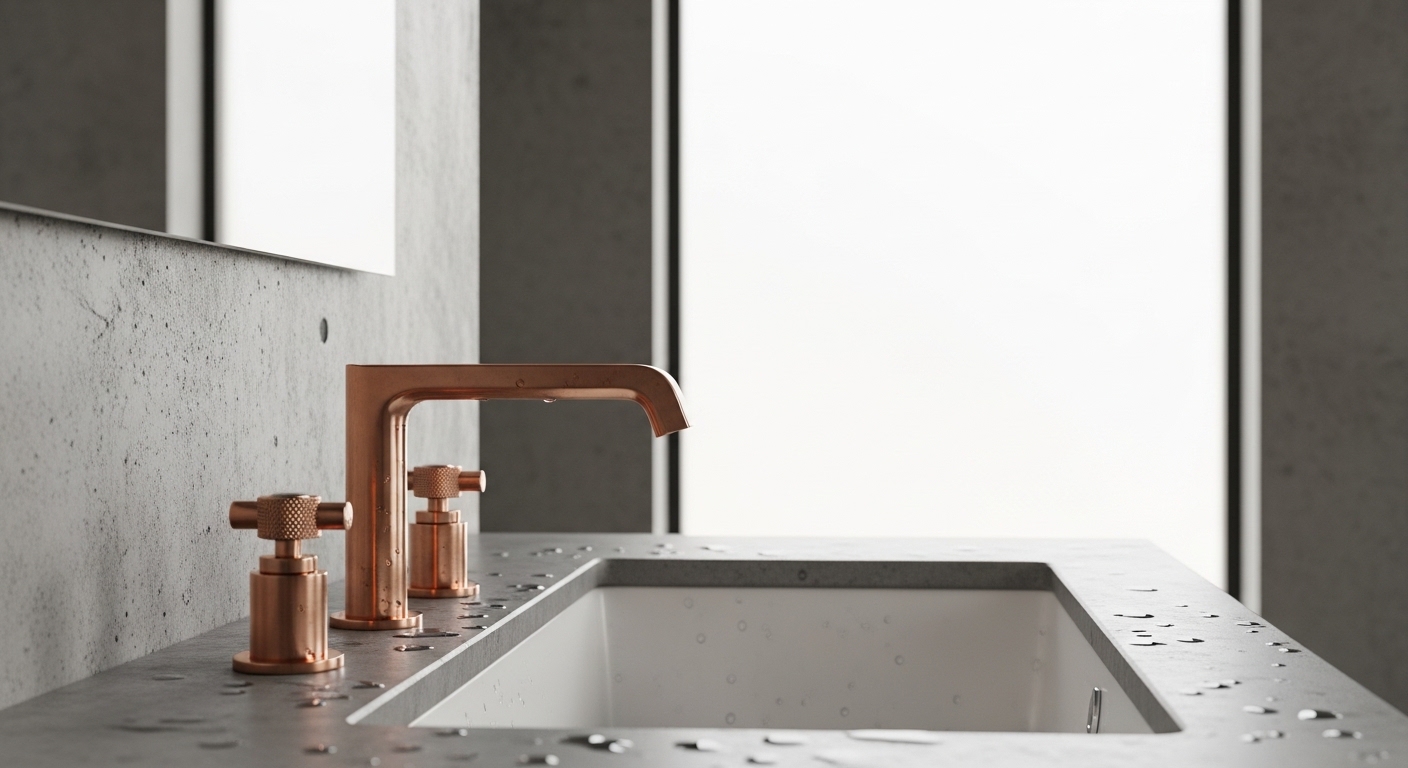
Few fixtures change the character of a room as fast as copper taps industrial designs do. With their living finishes, raw exposed-tube silhouettes, and substantial weight in the hand, industrial copper faucets turn an ordinary sink into a focal point. But “copper” hides a lot of variation — from solid copper bodies to copper-plated brass, from sealed lacquer to unsealed patina finishes — and choosing wrong means callbacks, leaks, or a tap that turns green in a way the client never wanted. At EveFaucet, we’ve manufactured and shipped copper-toned and stainless fixtures for years, and this guide distills what actually matters when you specify industrial copper taps for a kitchen, bathroom, bar, or commercial fit-out.
Why Copper Taps Industrial Styling Has Taken Over Kitchens and Baths
The appeal of copper taps industrial styling is part aesthetic, part performance. Copper and copper alloys are naturally antimicrobial, corrosion-resistant, and easy to machine into the heavy, tubular forms the industrial look depends on. Designers love the warm reddish-gold tone because it reads as both vintage and modern — equally at home next to reclaimed wood, blackened steel, exposed brick, or polished concrete.
The “industrial” half of the phrase refers to the visual language, not just the metal. Think factory plumbing brought indoors: straight runs of pipe, visible joints and unions, knurled grips, gauge-style levers, and an honest, unpolished surface. A true industrial copper tap looks like it could survive a workshop, even when it lives in a designer loft.
What “Industrial” Really Means in Copper Tap Design
Not every copper-colored faucet earns the industrial label. The defining cues are:
- Exposed pipework or bridge construction — visible tubing connecting the hot and cold sides or feeding the spout.
- Raw or aged finishes — antique copper, unlacquered (living) copper, or weathered patina rather than mirror-bright plating.
- Mechanical-looking controls — cross handles, lever arms, or knurled knobs that echo valves and gauges.
- Heavy, honest materials — thick-wall brass or copper that feels substantial, not hollow.
- Function-first geometry — high gooseneck arcs, articulating joints, and pull-down sprays borrowed from commercial kitchens.
When you combine these cues, you get a fixture that reads as authentically industrial instead of merely “copper-finished.” That distinction matters for resale, for design-magazine credibility, and for clients who can tell the difference between a sprayed-on color and a real metal finish.
Types of Industrial Copper Taps and Where Each One Fits
Industrial copper taps come in several functional families. Picking the right body style is the single biggest decision, because it dictates the sink, the deck, and the plumbing rough-in.
Industrial Copper Kitchen Faucets
This is the most popular category. Look for a tall gooseneck or articulated bridge with a pull-down or pull-out spray head. The industrial versions often expose a spring coil around the spout — the classic “pro-style” or “semi-pro” silhouette — finished in antique or brushed copper. These pair beautifully with apron-front and stainless workstation sinks. If you’re comparing brands and spray mechanisms before committing, our breakdown of what makes the best pull-down kitchen faucet brand walks through the spray-head, hose, and weight details that separate a tap that lasts from one that sags after a year.
Industrial Copper Bathroom Basin Taps
For bathrooms, industrial copper taps appear as deck-mounted single-lever mixers, two-handle cross-handle widespread sets, and — increasingly — wall-mounted versions that hide the plumbing in the wall while leaving a clean copper spout and a single lever or pair of crosses exposed. Wall mounting reads as especially “industrial” because it strips the deck of clutter. If you’re weighing a wall-mounted approach, our guide to a wall-in concealed basin faucet covers the rough-in valve depth and finished-wall coordination you need before tiling.
Industrial Copper Bar, Prep, and Utility Taps
Smaller-footprint bar and prep faucets carry the industrial copper look into secondary sinks, butler’s pantries, and laundry rooms. These often use a compact high-arc spout with a single cross handle. Because they’re lower-flow and lower-traffic, they’re a budget-friendly way to introduce the finish into a project without specifying a full-size kitchen unit.
Copper Tap Finishes Compared
“Copper” on a spec sheet can mean very different things. The finish determines maintenance, patina behavior, and how the tap ages. Here’s how the common industrial copper finishes stack up.
| Finish | Look | Patinas Over Time? | Maintenance | Best For |
|---|---|---|---|---|
| Polished Copper | Bright, mirror-like warm gold-red | Yes, unless lacquered | High — fingerprints, water spots | Statement pieces, low-use powder rooms |
| Brushed / Satin Copper | Soft matte warm tone | Slowly | Low — hides spots well | Busy kitchens, family bathrooms |
| Antique / Aged Copper | Dark, weathered, vintage | Pre-aged; stable | Low | Loft, farmhouse, industrial themes |
| Unlacquered “Living” Copper | Starts bright, ages naturally | Yes — continuously | Owner-dependent (embrace or polish) | Design-led clients who want evolution |
| Copper-Plated Brass (PVD) | Consistent, durable copper color | No — sealed | Very low | Commercial, high-traffic, contract jobs |
For most commercial and contract specifications, a PVD (physical vapor deposition) copper finish over a brass body is the safest bet: it holds color for years, resists scratching, and survives commercial cleaning chemicals. For residential clients chasing authenticity, an unlacquered living finish or pre-aged antique copper delivers the genuine patina that defines the industrial aesthetic.
Body Material: Solid Copper vs. Copper-Plated Brass
This is where buyers get burned. The visible finish tells you nothing about what’s underneath. The two main constructions are:
- Solid copper body — premium, heavy, and naturally antimicrobial throughout, but softer and more expensive. Often used for the decorative outer shell with a brass core for threads and valve seats.
- Copper-finished brass — the workhorse of the industry. A lead-free (DZR) brass body machined for strength, then plated or PVD-coated in a copper tone. Stronger threads, better valve life, lower cost.
For drinking-water applications, insist on a lead-free brass or stainless waterway regardless of the exterior finish. The smartest industrial copper taps pair a durable brass or stainless internal waterway with a copper-toned exterior — you get the look without compromising potable-water safety. Ask any supplier for the body alloy spec and the cartridge type before you buy in volume.
How to Choose the Right Industrial Copper Tap
Use this checklist to narrow the field before you request samples or place a bulk order:
- Match the mount to the sink: confirm single-hole, three-hole widespread, or wall-mount, and verify the deck thickness range the tap supports.
- Check the spout reach and height: high-arc goosenecks look great but need clearance under cabinets and shouldn’t overshoot a small basin.
- Verify the cartridge: ceramic-disc cartridges are the standard for drip-free, long-life operation. Ask how many open/close cycles it’s rated for.
- Confirm flow rate: commercial projects often must hit a maximum GPM/flow limit for code or sustainability targets.
- Plan for finish behavior: decide up front whether the client wants a stable sealed finish or a living patina, and document it so there are no surprises.
- Confirm certifications: look for recognized potable-water and material standards, plus a clear warranty on both the finish and the cartridge.
If your project is a kitchen and you’re torn between an industrial bridge faucet and a pull-down, weigh how the sink is actually used. Heavy-rinse, big-pot kitchens favor the reach and flexibility of a pull-down spray, while design-forward, lighter-use kitchens can show off a fixed bridge or articulating arm.
Installation and Maintenance of Industrial Copper Taps
Industrial copper taps install much like any quality mixer, with a couple of finish-specific cautions. Always shut off the supply, dry-fit the tap to confirm hole spacing and spout clearance, then seat it on the supplied gasket or a thin bead of plumber’s putty where specified. Hand-tighten the mounting nut, snug it with a basin wrench, and connect the supply lines with the included braided hoses, taking care not to mar the finish with tool jaws — wrap copper jaws in a cloth.
Maintenance depends entirely on finish. Sealed and PVD copper need nothing more than a soft cloth and mild soap; avoid acidic or abrasive cleaners that can etch the coating. Living, unlacquered copper is a choice: let it patina for the aged industrial look, or restore the shine periodically with a copper polish. Either way, dry the spout after heavy use to control water spotting.
One maintenance issue is universal across faucet finishes: the aerator. Mineral scale and grit collect in the aerator screen and slowly choke flow or split the stream. It’s a five-minute fix that prevents a service call — our complete aerator repair guide from the EveFaucet workshop shows how to unthread, clean, and reseat the aerator so your copper tap keeps a crisp, even flow for years.
Buying Industrial Copper Taps for Commercial and Contract Projects
When you’re specifying at volume — for a hotel refurbishment, a restaurant group, a co-working build-out, or a developer’s apartment block — the priorities shift from pure aesthetics to consistency, lead time, and total cost of ownership. A few rules that save money and headaches:
- Standardize on one finish and one body alloy across the project so replacements and spares always match.
- Favor sealed PVD finishes for high-traffic public restrooms — they tolerate aggressive cleaning schedules far better than living copper.
- Order spare cartridges in the same PO. Cartridge replacement is the most common service event; having matching spares on the shelf keeps rooms in service.
- Request samples before committing. Color tone varies between manufacturers; “antique copper” from two suppliers rarely matches.
- Confirm certification and warranty paperwork up front for the building inspector and the facilities team.
Before any large order, it’s also worth reviewing the supplier’s pre-sale and after-sale terms so warranty claims and replacement parts are clearly documented. EveFaucet publishes a clear pre-sale and after-sale shopping guide covering exactly what’s included, how returns work, and how to source spares — read it before you place a contract order.
Industrial Copper vs. Other Popular Finishes
Copper isn’t the only industrial-friendly finish, and it helps to know where it wins. Matte black is the other dominant industrial choice — graphic, modern, and forgiving of water spots. Brushed nickel and gunmetal sit between the two. Copper’s edge is warmth: it softens the hard edges of concrete and steel in a way black never will, and it brings genuine vintage authenticity that newer finishes can only imitate. The trade-off is maintenance awareness — clients must understand whether they’re getting a stable sealed finish or an evolving living one. Set that expectation clearly and copper outperforms nearly every alternative on character.
FAQ
Are industrial copper taps real copper or just copper-colored?
Both exist. Some are solid copper or copper-shelled, while many are lead-free brass bodies with a copper-toned PVD or plated finish. The exterior color doesn’t reveal the body material, so always ask the supplier for the body alloy and the finish type. For drinking water, the key is a lead-free brass or stainless internal waterway regardless of the outer finish.
Do copper taps turn green or tarnish?
Unlacquered “living” copper will patina and can develop a darker or greenish tone over time — that’s the authentic industrial aging many designers want. Sealed, lacquered, or PVD copper finishes are stabilized and keep their original color for years with simple cleaning. Choose the finish based on whether your client wants evolution or consistency.
Are industrial copper faucets good for commercial bathrooms?
Yes, provided you specify a sealed PVD copper finish over a durable brass body and a high-cycle ceramic-disc cartridge. These tolerate frequent use and commercial cleaning chemicals far better than unlacquered copper. Standardize on one finish across the project and stock matching spare cartridges to keep service fast.
How do I clean an industrial copper tap without ruining the finish?
Use a soft cloth with mild soap and water for everyday cleaning, then dry to prevent spotting. Avoid acidic, ammonia-based, or abrasive cleaners on sealed and PVD finishes, as they can etch the coating. For living unlacquered copper, you can either let it patina or restore shine with a dedicated copper polish.
What’s the difference between industrial copper kitchen and bathroom taps?
Kitchen versions are taller, higher-flow, and often include a pull-down or pull-out spray with a coiled “pro-style” spout for rinsing pots and produce. Bathroom basin taps are lower, lower-flow, and come as single-lever mixers, cross-handle widespread sets, or wall-mounted spouts. The rough-in plumbing and sink compatibility differ, so never substitute one category for the other.
Should I choose a single-hole or widespread industrial copper tap?
It depends on your sink or deck. Single-hole units are quicker to install and give a cleaner, modern industrial look; three-hole widespread cross-handle sets read as more vintage-industrial and need matching pre-drilled holes. Confirm the existing hole count and spacing before ordering, or choose a wall-mount to bypass deck holes entirely.
Author note: This guide was written by the EveFaucet product team, drawing on hands-on experience specifying, installing, and servicing kitchen and bathroom fixtures. EveFaucet (伊唯伊 / EVE) manufactures faucets, 304 stainless sinks, drains, and bathroom accessories, and supplies both individual buyers and contract projects. Our fixtures are built around lead-free bodies and long-life ceramic-disc cartridges, and they’re backed by documented testing, recognized potable-water material standards, and a manufacturer warranty on the finish and working parts. For warranty terms and parts support, see our pre-sale and after-sale guide linked above.