 EVE卫浴
EVE卫浴
What Is a Laundry Faucet Trap Seal Primer — and Do You Really Need One for Your Laundry Room?
浏览次数:9 分类:公司产品
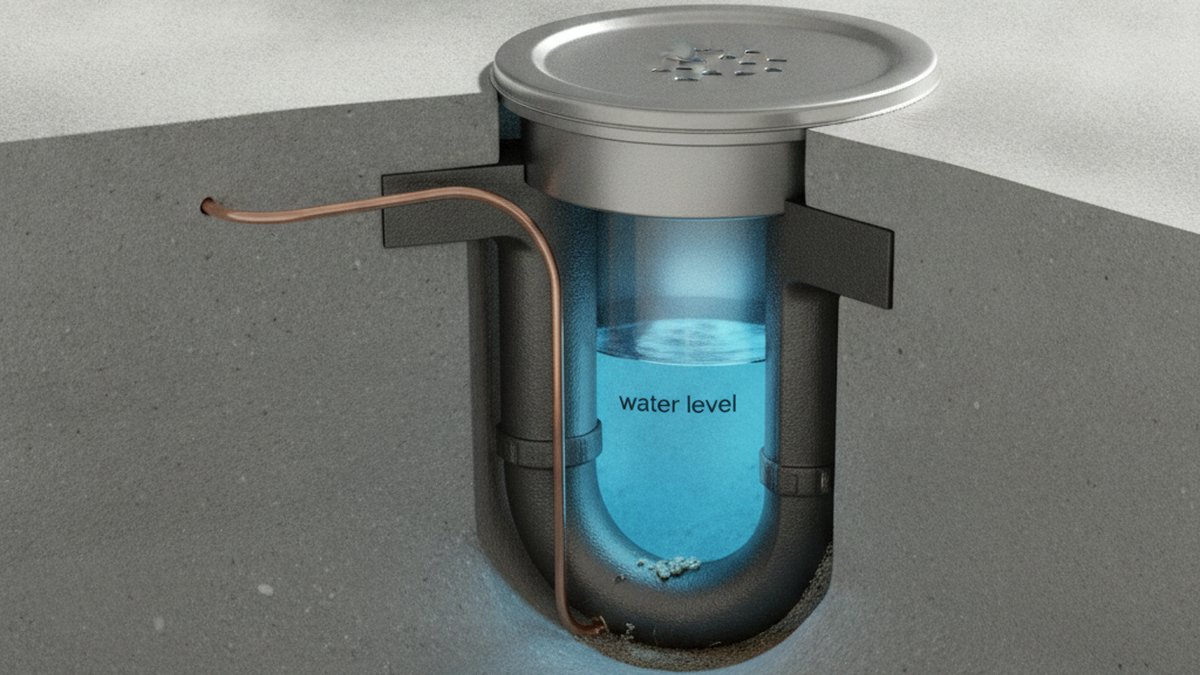
A laundry faucet trap seal primer solves one very specific, very smelly problem: the water sitting in a floor-drain trap slowly evaporates when the drain isn’t used, the seal disappears, and sewer gas rises up into your laundry room. The primer taps into the water line feeding your laundry faucet (or laundry box) and dribbles a controlled amount of fresh water into the trap on a schedule tied to fixture use — refilling the seal before it can ever go dry. It’s a cheap, code-driven little device that quietly prevents one of the most common “why does my laundry room smell like a sewer?” complaints in the whole house.
Below, I’ll walk you through exactly what this device does, how it works, the different types, how to spec and size one, what it costs, and how to install it — in plain English, the way I’d explain it to a friend standing in their utility room holding a stinky floor drain.
What does a laundry faucet trap seal primer actually do?
It keeps the water seal in a trap topped up so sewer gas stays in the pipe where it belongs. Every drain in your house has a U-shaped trap that holds a plug of water; that water plug is the only thing blocking sewer gases (hydrogen sulfide, methane, and friends) from venting straight into your living space. On drains you use daily — a kitchen sink, a shower — the trap refills constantly, so you never think about it. But a laundry floor drain might go weeks between uses, and in a dry, warm utility room the trap water can evaporate in as little as 2–4 weeks.
The trap seal primer connects to a pressurized cold-water line — commonly the same supply feeding your laundry faucet or washing machine box — and delivers a metered shot of water (typically a few ounces) into the trap whenever there’s a pressure change from the fixture being used. No dry trap, no rotten-egg smell, no code violation. That’s the whole job.
Why is my laundry room floor drain the one that always smells?
Because it’s the drain you use least and the room is often the warmest and driest in the house. Floor drains in laundry rooms and utility closets sit near dryers and water heaters, so ambient heat speeds up evaporation. Add low humidity and infrequent use, and that trap can be bone-dry before you notice. A trap primer removes the human element entirely — you don’t have to remember to pour a cup of water down the drain every couple of weeks, which nobody actually does.
Do I really need a trap primer, or can I just pour water down the drain?
You can pour water down manually, but a primer is the only reliable long-term fix — and in most modern construction it’s required by code, not optional. The manual “pour a pitcher of water in every month” trick works right up until the week you forget, go on vacation, or the room is dry enough that four weeks becomes two. For a rarely used drain, that’s a gamble you’ll lose eventually.
The Uniform Plumbing Code (UPC 1007.0) and the International Plumbing Code (IPC 1002.4) both require floor-drain traps to be protected against evaporation — via a trap seal primer, a barrier-type trap seal, or an approved deep-seal trap. Inspectors in most jurisdictions will flag a floor drain with no seal-protection method on new work. So if you’re building, remodeling, or bringing a laundry room up to code, this isn’t a “nice to have.”
- You have a floor drain that’s used less than once a week — prime candidate for a primer.
- You’ve smelled sewer gas near the laundry drain — a dry trap is the #1 cause.
- You’re passing a plumbing inspection on new construction or a remodel — likely required.
- You have a second laundry sink that sits unused for long stretches — its trap can dry out too.
- You leave the home vacant seasonally — evaporation over a long empty stretch is guaranteed.
How does a trap seal primer connect to my laundry faucet’s water line?
It tees into a cold-water supply line under pressure — most often the same line feeding the laundry faucet or washing-machine box — then runs a small ½-inch or ⅜-inch tube to the trap’s priming port. The primer valve senses the pressure drop when a nearby fixture is used and releases a measured slug of water down that tube into the trap. When you understand how your laundry supply lines are routed, siting the primer is straightforward; if you’re unsure what size supply your faucet uses, our guide on what supply line size an Allen + Roth faucet needs is a good primer (no pun intended) on reading and matching supply connections.
There are three main hookup styles:
- Pressure-drop (differential) primers — the classic. They mount on the supply line and fire when pressure fluctuates from fixture use. Simple, no power, code-accepted almost everywhere.
- Electronic timer primers — plug into an outlet and release water on a set schedule (say, once every 24 hours) regardless of fixture use. Great when no nearby fixture cycles often.
- Faucet/fixture-integrated primers — a device (like an integral trap-primer valve on a laundry faucet or a “trap primer tee”) that diverts a little water each time that specific faucet is turned off.
Where should the primer valve be installed so it’s actually accessible?
Put it on an accessible cold-water line above the flood level of the fixture, with the discharge tube running downhill to the trap — and never bury it behind finished drywall without an access panel. Trap primers have moving parts and can eventually need service or replacement, so accessibility matters. Common spots: inside the laundry-box recess, in the wall cavity behind an access panel, or in an adjacent utility cabinet. The discharge line should slope continuously toward the trap with no upward loops, since it relies partly on gravity to deliver the water.
What types of laundry trap seal primers are there, and which is best for my setup?
The best type depends on whether a fixture near the drain gets used regularly and whether you have power nearby. Here’s how the main options stack up so you can match one to your laundry room instead of guessing.
| Type | How it triggers | Needs power? | Best for | Typical price |
|---|---|---|---|---|
| Pressure-drop (differential) | Fixture use nearby causes a pressure change | No | Laundry rooms with a faucet or washer used at least weekly | $25–$60 |
| Electronic timer | Set schedule (e.g., every 24 hrs) | Yes (120V or battery) | Drains with no regularly used nearby fixture; vacation homes | $120–$300 |
| Faucet/fixture-integrated | Each shutoff of that specific faucet | No | New laundry-faucet installs where you control the fixture choice | $40–$90 |
| Distribution unit (multi-trap) | One primer feeds 2–4 traps via a manifold | Varies | Utility rooms with several floor drains | $60–$150 |
For a typical home laundry room where you run the faucet or washer at least once a week, a good pressure-drop primer is the sweet spot: no electricity, low cost, code-accepted, and essentially maintenance-free. If your floor drain is off in a corner with nothing nearby that gets used often — think a rarely touched utility closet — spend the extra money on an electronic timer so priming doesn’t depend on human behavior.
How do you install a laundry faucet trap seal primer step by step?
You shut off the water, tee into a cold supply line, mount the primer valve, run the discharge tube to the trap’s priming port, then restore water and test. A handy DIYer with soldering or push-fit experience can do a pressure-drop primer in about an hour or two. Here’s the sequence:
- Turn off the cold-water supply to the laundry area and open the faucet to relieve pressure.
- Cut into the cold line and install the primer’s tee fitting (compression, push-fit, sweat, or PEX depending on your plumbing). Keep it above the fixture’s flood rim.
- Mount the primer valve on the tee, oriented per the manufacturer’s arrow for flow direction.
- Run the ½-inch or ⅜-inch discharge tube from the primer down to the floor drain’s priming port (or into the trap via an approved priming tap), sloping downhill the whole way.
- Restore water and check every joint for leaks under full pressure.
- Test the trap: run the nearby faucet a few times and confirm water is reaching the trap — you should hear or see it trickle in.
Two things trip people up. First, if you’re drilling through a cabinet or floor to route the discharge tube, take the same care you would sizing any pass-through — our note on getting the right hole size before you drill applies just as well to routing a primer line cleanly. Second, if the primer’s discharge ever slows to a trickle, mineral buildup is usually the culprit — the same hard-water scaling that clogs a faucet aerator can partially block a primer orifice, so periodic cleaning keeps it delivering a full charge.
Can I install one on an existing floor drain without a priming port?
Yes — you retrofit a priming connection into the trap using a trap-primer adapter tee or by tying the discharge into the trap through an approved fitting. Many older floor drains have no dedicated priming tap, so you either add one at the trap arm or use a floor-drain body that accepts a priming inlet. If the trap is buried in a slab with no access, an electronic timer primer feeding the nearest accessible cleanout or an added trap-primer distribution fitting is often the more realistic route. When in doubt, this is the point to loop in a licensed plumber, because you’re working on the DWV (drain-waste-vent) side, not just supply.
How much does a laundry trap seal primer cost — and is it worth it?
The device itself runs $25–$60 for a quality pressure-drop primer and $120–$300 for an electronic model; installed by a plumber, budget roughly $150–$450 depending on access. Weighed against the alternative — chronic sewer-gas odor, failed inspections, and the health nuisance of hydrogen sulfide seeping into a room where you fold clothes — it’s one of the highest-value-per-dollar fixes in a laundry room. A single primer protecting one trap for a decade of trouble-free service is genuinely cheap insurance.
Where cost climbs is accessibility. If the primer and discharge line can be reached easily near the laundry box, installation is quick. If your floor-drain trap is under a slab with no cleanout, expect more labor. That’s the number one variable, so before you buy, confirm you can actually reach a spot to tee in and a path to the trap.
How do I keep my trap primer working long-term?
Give it a quick check once or twice a year: confirm water still reaches the trap, and clean any mineral scale off the valve orifice if the flow has dropped. Trap primers are low-maintenance, but they’re not zero-maintenance — hard water is their main enemy. If you’re in a hard-water region, a periodic descale (soaking the removable orifice or cartridge in white vinegar) keeps the metered charge full. Also verify the discharge tube hasn’t been kinked or pinched during any nearby work.
If you ever notice the laundry-room smell creeping back, don’t assume the primer failed — first pour water directly into the drain. If the smell goes away, the trap was dry and the primer isn’t delivering enough water (clean it or check its trigger). If the smell persists, you may have a venting problem or a cracked trap, which is a different repair entirely.
Author note & why trust this guide
This guide was written by the evefaucet product team, which designs and tests laundry, bathroom, and kitchen fixtures for residential and light-commercial use. We spec our laundry faucets and companion plumbing components to meet ASME A112.18.1/CSA B125.1 fixture standards and cross-reference trap-seal-protection requirements against UPC 1007.0 and IPC 1002.4, so the parts you buy from us are built to pass inspection, not just to look good. Our laundry-fixture hardware carries a limited lifetime warranty on the faucet body and finish, and we bench-test primer-compatible valves for consistent metered delivery before they ship. When we cite a spec or a code section here, it’s because we build to it every day.
FAQ
Is a trap seal primer required by code for a laundry floor drain?
In most modern jurisdictions, yes. Both the UPC (Section 1007.0) and the IPC (Section 1002.4) require floor-drain traps to be protected against evaporation using a trap seal primer, a barrier-type trap seal insert, or an approved deep-seal trap. Always confirm with your local building department, since amendments vary by area, but new construction and remodels generally must include one.
Will a trap primer work if my laundry faucet is rarely used?
A pressure-drop primer only fires when a nearby fixture is used, so if your laundry faucet or washer sits idle for long stretches, that type won’t reliably prime the trap. In that case choose an electronic timer primer that releases water on a fixed schedule regardless of fixture use — it’s the right tool for low-traffic or seasonally vacant spaces.
Can I use my laundry faucet’s hot-water line for the primer instead of cold?
No — always tap the cold-water line. Trap primers are designed and rated for cold potable supply; using a hot line can damage the valve’s seals and isn’t code-compliant. Tee into the cold side of your laundry faucet or washing-machine box supply.
Why does my laundry room still smell even though I have a trap primer?
Usually one of three things: the primer’s orifice is scaled up with hard-water minerals and isn’t delivering enough water, the discharge tube is kinked or disconnected, or the odor is actually a venting or cracked-trap issue rather than a dry seal. Pour water directly into the drain first — if the smell clears, the primer isn’t priming and needs cleaning or adjustment; if it doesn’t, call a plumber to check the vent and trap.
How often does a trap primer add water to the trap?
A pressure-drop primer adds a few ounces each time a nearby fixture cycles, which is more than enough to offset evaporation in normal use. An electronic timer primer is typically set to release water once every 24 hours, though the interval is adjustable. Either way, the goal is simply to refresh the seal faster than the room can evaporate it.
Can one trap primer serve more than one floor drain?
Yes — a distribution-unit (multi-port) primer uses a single valve feeding a manifold that splits the metered water among two to four traps. This is common in utility rooms or small commercial spaces with several floor drains. Just size the unit for the number of traps and keep each discharge run sloped downhill to its trap.